
YJ-20 Hypersonic Missile Confirmed on Type 052D Destroyers
New CCTV footage confirms the YJ-20 hypersonic anti-ship missile is now fielded on Type 052D destroyers, expanding hypersonic strike reach across the PLAN fleet.
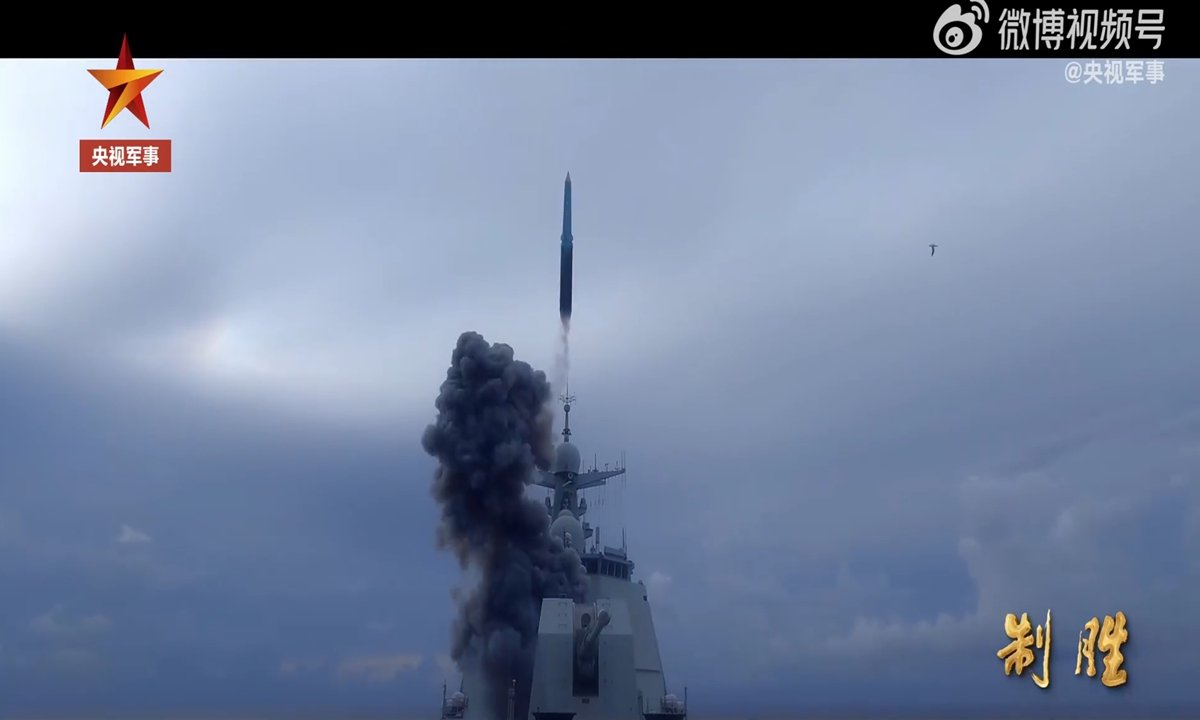
The release of new footage on July 29, 2026, from China’s state broadcaster marked a quiet but consequential shift in how outside observers track Beijing’s naval modernization. The clip showed a Type 052D destroyer cold-launching the YJ-20 hypersonic anti-ship missile from its forward vertical launch system, with the missile ejecting cleanly before its solid rocket motor ignited. Produced as part of the six-episode documentary “Zhìshèng” ahead of the PLA’s 99th anniversary, the sequence was the first official confirmation that this weapon had moved beyond the Type 055 class. With roughly 35 Luyang III destroyers already in service and production lines still active, the integration expands the number of hulls capable of firing long-range hypersonic strikes. The timing, amid live-fire drills near Taiwan and renewed carrier presence in the South China Sea, invited immediate scrutiny of how quickly the capability could reach operational scale across the fleet.
The Footage That Changed the Picture
The sequence released by CCTV’s military channel on July 29 captured the YJ-20 emerging from one of the 32 forward VLS cells on a Type 052D. The cold-launch technique allowed the missile to clear the deck before ignition, reducing thermal stress on the ship and preserving the option for rapid reloads in a contested environment. Chinese military expert Zhang Junshe noted that the bicone glide vehicle generates shock waves that enable air-rudder maneuvering during terminal flight, improving the chance of evading interceptors. The footage formed part of the trailer for the documentary series marking PLA Army Day on August 1, 2026, a year explicitly framed as critical to the 2027 centenary goal. Observers immediately recognized that the most numerous surface combatant in the People’s Liberation Army Navy now possessed a weapon previously associated only with larger Type 055 hulls.
Until this release, open-source analysts had tracked YJ-20 integration exclusively on the 10,000-ton Wuxi, where a December 2025 test was described as a finalization firing. The new imagery demonstrated that the same standardized VLS arrangement—32 cells forward and 32 aft—could accommodate the larger missile without structural modification. This standardization matters because it removes the need for dedicated launchers and allows fleet commanders to mix YJ-20 rounds with HHQ-9 surface-to-air missiles or CJ-10 land-attack weapons within the same magazine. The visual confirmation therefore altered assessments of how many Chinese destroyers could realistically threaten high-value targets at extended range.
Analysts at USNI News observed that the disclosure aligned with Beijing’s pattern of revealing incremental progress through state media rather than formal announcements. The timing, days before the documentary series began airing on July 30, suggested deliberate signaling ahead of the 2027 milestone. By showing the missile departing a 7,500-ton hull, the footage widened the geographic footprint from which hypersonic anti-ship strikes could originate, complicating any opponent’s attempt to map and neutralize launch platforms in the western Pacific.
From Parade Float to Fleet Standard
The YJ-20 first appeared publicly on September 3, 2025, during the V-Day parade commemorating the 80th anniversary of victory over Japan. It shared the display with the YJ-15, YJ-19 scramjet missile, and YJ-17 hypersonic system, signaling a family of weapons intended for multiple launch environments. At the time, many observers treated the parade vehicle as a developmental showpiece. The July 2026 footage demonstrated that the weapon had completed type approval and entered serial integration on at least two destroyer classes within eleven months of its unveiling.
Song Zhongping, another Chinese military commentator, stated that the YJ-20 has reached a level of standardization allowing it to serve as common armament across advanced PLAN surface combatants. Both the Type 055 and Type 052D now share fore-and-aft VLS configurations sized for the missile, which removes previous constraints that limited hypersonic weapons to the largest hulls. This shift reflects a deliberate design choice to embed the capability in the most numerous class rather than concentrating it in a small number of prestige ships. The result is a more distributed and resilient strike network that can regenerate combat power after initial losses.
Production data further underscores the transition. While only about ten Type 055s are currently in service, the approximately 35 Type 052Ds already afloat represent the backbone of the surface fleet. Continued construction of additional Luyang III hulls means the YJ-20 will likely appear on new ships still under construction, accelerating the rate at which the capability proliferates. The move from parade float to fleet standard therefore represents not merely a technical milestone but a force-structure decision with lasting implications for fleet-wide readiness.
The Numbers on the Missile
Open-source estimates place the YJ-20’s cruise speed above Mach 6, with terminal velocities reaching Mach 10. Its reported range of 1,000 to 1,500 kilometers positions it to engage targets well beyond the first island chain from Chinese coastal bases. The aero-ballistic profile, featuring a rocket booster and bicone glide vehicle, allows the missile to approach surface ships at near-vertical angles, exploiting gaps in traditional shipborne air-defense envelopes designed primarily for low-altitude cruise missiles.
The Type 052D carries 64 VLS cells in total, split evenly between forward and aft magazines. This capacity permits commanders to allocate a portion of cells to the YJ-20 while retaining sufficient HHQ-9 interceptors and CY-5 anti-submarine rockets for multi-mission flexibility. In contrast, the Type 055’s 112-cell configuration offers greater magazine depth but at the cost of fewer hulls available for distributed operations. The numerical advantage of the 052D class therefore multiplies the operational reach of the hypersonic weapon far beyond what the smaller 055 fleet could achieve alone.
Expert commentary from Zhang Junshe emphasized the terminal maneuverability provided by the bicone design, which generates sustained shock layers allowing control surfaces to remain effective at hypersonic speeds. This feature directly addresses one of the principal challenges of boost-glide weapons: maintaining accuracy and evasive capability during the final descent. Combined with the missile’s speed and range, these characteristics create a threat profile that existing naval air-defense systems were not originally engineered to defeat at scale.
Why the 052D Changes the Calculus
The most numerous guided-missile destroyer class in the Chinese navy can now launch long-range hypersonic anti-ship missiles, according to reporting from USNI News on July 31, 2026. This development multiplies the number of platforms capable of holding large surface combatants at risk without requiring additional ship construction. The 052D’s 7,500-ton displacement and 64-cell VLS layout make it an efficient carrier for the YJ-20, balancing magazine capacity against the ability to operate in greater numbers across dispersed operating areas.
Because the missile fits the same standardized VLS cells already installed on both 052D and 055 classes, logistics and training pipelines can be consolidated. Crews familiar with cold-launch procedures for other munitions require minimal additional certification, shortening the time between delivery of new ships and full operational capability. The decision to field the weapon across the larger 052D fleet rather than restricting it to the Type 055 therefore reflects a conscious effort to maximize both quantity and readiness within existing force-structure constraints.
The resulting density of launch platforms complicates any adversary’s targeting problem. Instead of focusing on a handful of high-value 055s, opposing forces must now account for dozens of 052Ds that can contribute to salvos. This distributed architecture aligns with broader Chinese doctrinal emphasis on saturation attacks that overwhelm defensive interceptors through sheer volume and mixed flight profiles.
What This Means
The integration of the YJ-20 onto the 052D class strengthens Beijing’s anti-access and area-denial posture across the western Pacific by increasing the number of warships able to conduct hypersonic strikes. Previously, only the limited number of Type 055s could perform this role; the addition of roughly 35 052Ds expands the threat envelope significantly. This change forces any potential opponent to allocate more defensive resources across a wider set of platforms, raising the cost and complexity of maintaining sea control in contested waters.
Regional ripple effects extend beyond immediate military calculations. Allies and partners monitoring Chinese naval activity must now incorporate the YJ-20’s 1,000-to-1,500-kilometer range and Mach 6-plus cruise speed into their own force-posture planning. The presence of such weapons on more numerous hulls also alters the risk calculus for carrier strike groups operating within the first island chain, where response times to incoming hypersonic threats are already compressed.
At the same time, the disclosure underscores the PLA’s progress toward its 2027 centenary goal. The documentary framing emphasizes the ability to “fight and win battles,” linking technical achievements to broader political objectives. While the precise operational status of the YJ-20 on 052Ds remains classified, the public demonstration signals confidence that the weapon has reached sufficient maturity for fleet-wide adoption.
The Regional Backdrop
The footage emerged against a backdrop of heightened tensions, including live-fire drills near Taiwan and repeated clashes between Chinese and Philippine vessels at Scarborough Shoal and Second Thomas Shoal. The return of the USS George Washington to the South China Sea and the conduct of Balikatan 2026 exercises in the Philippines added further context. In this environment, the decision to publicize the YJ-20 on the 052D class carries both operational and signaling value, demonstrating resolve while calibrating the level of detail released.
Tokyo-based observers note that the expansion of hypersonic anti-ship capability on the most common Chinese destroyer class directly affects the strategic balance in the East China Sea and around the Senkaku Islands. Japanese maritime forces must now plan for a larger number of Chinese surface combatants that can deliver strikes at ranges previously associated only with specialized platforms. This shift influences both alliance planning and domestic procurement priorities for stand-off weapons and layered air defense.
Beijing’s approach remains consistent with its preference for incremental revelation through state media rather than abrupt announcements. By embedding the capability demonstration within a documentary series celebrating PLA history, authorities frame the development as part of a longer modernization trajectory rather than an isolated escalation. The result is a measured increase in perceived capability that avoids overt crisis signaling while still reshaping adversary planning assumptions.
The Road to 2027
The documentary “Zhìshèng” positions the YJ-20 integration as tangible progress toward the PLA’s 2027 centenary goal of building a world-class military. The theme of “being able to fight and win battles” runs through the series, linking specific weapon systems to broader institutional objectives. With the 052D now confirmed as a launch platform, the navy demonstrates that hypersonic strike capacity is no longer confined to a small number of capital ships but is becoming a distributed fleet attribute.
Continued production of additional 052D hulls suggests the capability will expand further before 2027. Each new destroyer adds 64 VLS cells that can accommodate the YJ-20, steadily increasing the total magazine depth available for hypersonic salvos. This quantitative growth, paired with the qualitative improvements in speed and maneuverability, supports the narrative of steady advancement toward the political benchmarks set by the leadership.
Whether the weapon achieves full operational integration across the entire 052D force by the centenary deadline remains an open question. The public footage nevertheless serves as evidence that the technical and organizational hurdles have been cleared for at least initial fielding. As the PLA approaches its 2027 milestone, the YJ-20 on the Luyang III class stands as one concrete indicator of how far the modernization drive has progressed and how much further it may extend in the years immediately ahead.
— Kenji Tanaka, China CorrespondentBy Kenji Tanaka, Staff Writer
This article was produced with AI-assisted research and editorial support. Reporting is based on sources cited in the article.
What's Your Reaction?
 Like
0
Like
0
 Dislike
0
Dislike
0
 Love
0
Love
0
 Funny
0
Funny
0
 Wow
0
Wow
0
 Sad
0
Sad
0
 Angry
0
Angry
0

Japan Correspondent at Global1.News. Tokyo-based voice covering Japanese politics, technology, economy, and culture. Tracks the intersection of tradition and innovation in one of the world's most dynamic societies.















Comments (0)