
A Sunday of Raids and Fire: 13 Detained Across the West Bank as Settler Violence Intensifies
RAMALLAH, Occupied West Bank — The Israeli army detained at least 13 Palestinians, including a child, during a wave of raids across the occupied West Bank on Sunday, while separate attacks by Israeli settlers left a family’s home in flames, agricultural land scorched, and olive trees torn from the.
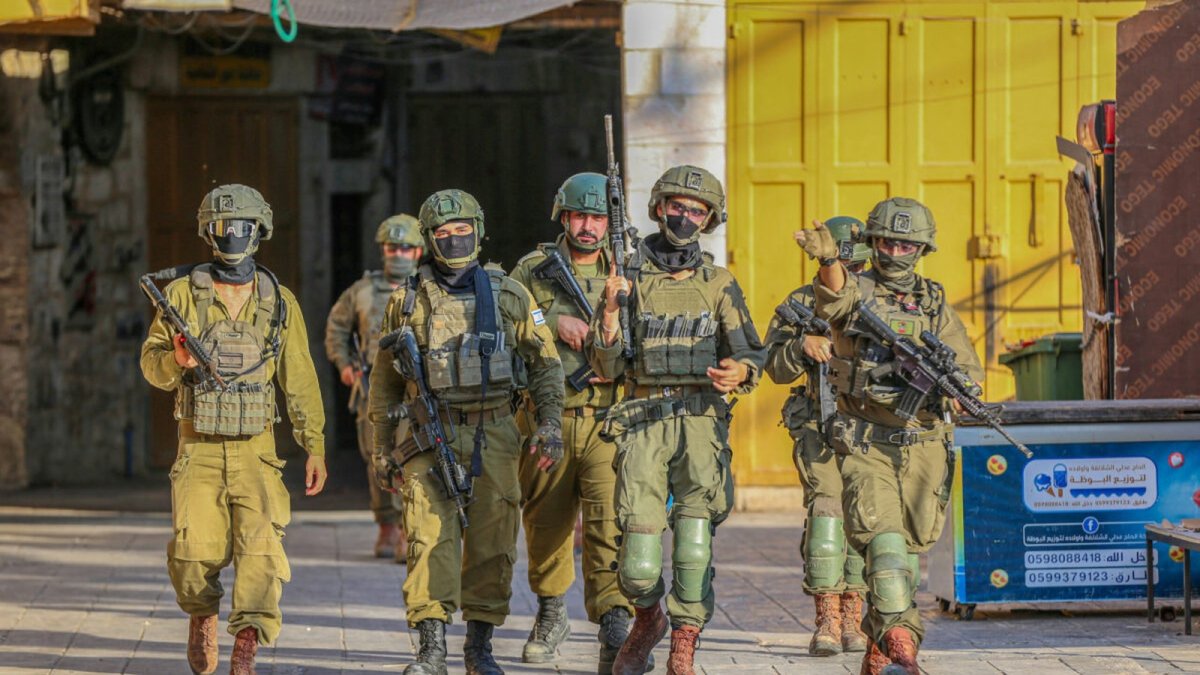
RAMALLAH, Occupied West Bank — The Israeli army detained at least 13 Palestinians, including a child, during a wave of raids across the occupied West Bank on Sunday, while separate attacks by Israeli settlers left a family’s home in flames, agricultural land scorched, and olive trees torn from the earth. The coordinated escalation, documented by local sources and the official Palestinian news agency Wafa, underscores the relentless pressure bearing down on Palestinian communities as the war in Gaza grinds into its third year.
The arrests and property destruction were not isolated incidents but part of a synchronized pattern of military incursions and settler violence that has become a grim daily reality for Palestinians in the occupied territory. From the northern governorate of Nablus to the southern hills of Bethlehem, the evidence of a systematic campaign to displace and intimidate was stark.
Arson and Racist Graffiti in Osarin
In the northern West Bank, local sources told Anadolu that Israeli settlers burned a residential room attached to a Palestinian home in the northern part of the town of Osarin, south of Nablus. The attack also saw a vehicle set alight, leaving it partially burned. The perpetrators spray-painted racist slogans on the walls of the property before fleeing the scene, a tactic frequently employed by extremist settlers operating with impunity.
The targeting of residential structures in Osarin is part of a broader strategy of "price tag" attacks—a term used by settlers to describe violence aimed at punishing Palestinians for any perceived challenge to Israeli control. These attacks often occur in areas adjacent to illegal settlement outposts, where the Israeli military frequently provides security or turns a blind eye. The family whose home was attacked was left to survey the charred remains of their living space, a space that represented years of work and a lifetime of memories.
Bethlehem’s Agricultural Heartland Under Assault
Further south, in the Bethlehem governorate, the assault on the land was equally destructive. In the Khala'il al-Louz area, east of the city, Israeli settlers attacked Palestinian agricultural infrastructure, damaging irrigation pipes essential for the dry-season survival of crops. The attackers also cut down mature trees and damaged Palestinian property, according to Wafa. This is not merely vandalism; it is the systematic destruction of the economic lifeline of rural Palestinian communities.
In the nearby village of al-Minya, also east of Bethlehem, the destruction took on a symbolic and economic weight that resonates across the West Bank. Occupiers uprooted olive and grape trees from Palestinian-owned land. The olive tree is the beating heart of the Palestinian agricultural economy and a powerful symbol of steadfastness, or sumud. To uproot a mature olive tree is to erase decades of family history and to sever a community’s connection to its land. The loss of a single mature tree represents a financial blow that a family may feel for a generation, as it takes years for a new sapling to reach full productivity.
Night Raids and Detentions in Qalqilya and Tulkarem
While settlers were burning fields and homes, the Israeli army was conducting its own operations in the northern cities of Qalqilya and Tulkarem. In Qalqilya, a city completely encircled by Israel’s separation wall, the army raided the city and searched homes in the Kafr Saba and al-Naqqar neighborhoods, arresting six Palestinians. The incursion turned residential streets into military zones, with soldiers searching homes, terrifying families and detaining men and youth without charge.
In a separate incursion into Tulkarem, a city that has seen some of the most intense military operations in the West Bank over the past year, the army rounded up five Palestinians. These arrests are often administrative in nature, with detainees held without trial or charge for months, or they are "preventive" arrests, designed to disrupt any potential resistance activity. No details about the charges or the location of the detainees were immediately announced, leaving families in a state of agonizing uncertainty.
Al-Mughayyir: A Village Under Siege
In the Ramallah district, the village of al-Mughayyir is facing a slow-motion strangulation. On Sunday, Israeli forces closed the western entrance to the village, northeast of Ramallah, preventing Palestinians from entering or leaving. This closure is particularly devastating because, as local sources told Anadolu, the western entrance is currently the village's only access point. The Israeli army closed the eastern entrance on Oct. 7, 2023, the day the war on Gaza began.
This dual closure effectively traps the village’s residents, cutting them off from hospitals, schools, and markets. The army also subjected some Palestinians to field interrogations at the closed checkpoint and fired tear gas toward vehicles, a tactic that creates a climate of fear and intimidation. The closure of al-Mughayyir is a microcosm of the broader fragmentation of the West Bank, where movement is a privilege granted by the occupier, not a right. Villages are being turned into isolated enclaves, their residents held hostage to the whims of the military and the settlers they protect.
Burqa: Livelihoods Reduced to Ashes
The destruction in the Ramallah district extended to the outskirts of the village of Burqa, east of Ramallah. Local sources reported that Israeli settlers burned a tent, equipment, and animal feed belonging to a Palestinian farmer. For a farmer, this is a catastrophic loss. The tent was likely his shelter during the harvest season, the equipment his tools for tilling the land, and the animal feed the sustenance for his livestock. In one night, his entire operation was reduced to ashes.
This attack on a farmer’s livelihood is a direct assault on the viability of rural life in the West Bank. It sends a clear message to Palestinian communities: you cannot live here, you cannot work here, and you cannot prosper here. The goal is to make life so unbearable that families will eventually leave, clearing the land for further settlement expansion.
The Architecture of Occupation: Oslo’s Broken Promise
These events on Sunday are not random acts of violence but are the logical outcome of a political and legal framework that has enabled the systematic dispossession of Palestinians. The West Bank was divided into Areas A, B, and C under the 1995 Oslo II Accord. Area C, which makes up about 60% of the West Bank, remains under full Israeli military and administrative control. It is here that the vast majority of illegal settlements are built, and it is here that the Israeli military exercises unchecked authority over Palestinian life.
The scale of the settlement enterprise is staggering. A Palestinian government body said on Saturday that the number of illegal Israeli settlements and outposts has reached 592, with Israel controlling about 42% of the territory. Around 780,000 Israeli settlers now live in the West Bank, including occupied East Jerusalem, in communities that are considered illegal under international law. These settlements are not just housing projects; they are strategic outposts that fragment the land, control water resources, and dominate strategic hilltops, making the creation of a viable, contiguous Palestinian state physically impossible.
A Surge in Violence Since October 7
The West Bank has witnessed a surge in settler attacks and Israeli military raids since the outbreak of Israel's war on the Gaza Strip in October 2023. The international community, including the United Nations, has repeatedly warned of the consequences of this continued escalation. The Palestinian Authority and human rights groups have warned that the combination of settlement expansion, army checkpoints, and nightly raids is strangling Palestinian communities and pushing the two-state reality out of reach.
The violence is not just physical; it is psychological and economic. The constant threat of night raids leaves children traumatized. The destruction of agricultural land undermines food security. The closure of roads prevents access to work and healthcare. The cumulative effect is a slow, grinding process of displacement that is as effective as it is brutal. On Sunday, in Osarin, Bethlehem, Qalqilya, Tulkarem, Ramallah, and Burqa, the machinery of this occupation was on full display, leaving behind a trail of ash, uprooted trees, and shattered families.
Figures for the total number of Palestinians detained in the West Bank since October 7 were not immediately available, but the trend is unmistakable: the occupation is tightening its grip, and the lives of ordinary Palestinians are being squeezed from all sides.
By Fatima Al-Rashid, Staff Writer
This article was produced with AI-assisted research and editorial support. Sources: Middle East Monitor, Anadolu Agency, Wafa.
What's Your Reaction?
 Like
0
Like
0
 Dislike
0
Dislike
0
 Love
0
Love
0
 Funny
0
Funny
0
 Wow
0
Wow
0
 Sad
0
Sad
0
 Angry
0
Angry
0

Gulf/MENA Correspondent at Global1.News. Based in Doha, covering Gulf politics, energy markets, diplomacy, and development across the Middle East and North Africa. Tracks the economic transformation of the Gulf states.











Comments (0)