
US Awards Record $58.6 Billion Lockheed Martin Contract to Rebuild Patriot Missile Stockpiles
In a recent i24NEWS report, The Rundown broke down one of the largest weapons procurement contracts in American history: the US Department of Defense's $58.6 billion agreement with Lockheed Martin to rebuild America's Patriot interceptor arsenal through 2032.
In a recent i24NEWS report, The Rundown broke down one of the largest weapons procurement contracts in American history: the US Department of Defense's $58.6 billion agreement with Lockheed Martin to rebuild America's Patriot interceptor arsenal through 2032. The deal lands at a moment when the missile war with Iran has exposed how quickly modern air defense consumes its ammunition — a lesson Israelis know all too well as sirens continue to sound and the country holds elections under the threat of Iranian rocket fire.
US Awards Record $58.6 Billion Lockheed Martin Contract to Rebuild Patriot Missile Stockpiles
Jerusalem, Israel – July 31, 2026 — The Pentagon has signed one of the largest procurement contracts in its history, awarding Lockheed Martin up to $58.6 billion to manufacture Patriot Advanced Capability-3 Missile Segment Enhancement (PAC-3 MSE) interceptors through fiscal 2032. The multiyear agreement is designed to roughly triple annual production from about 600 missiles to 2,000 and to restore an American interceptor inventory that the conflict with Iran has depleted to levels that worry even Washington's most seasoned defense analysts.
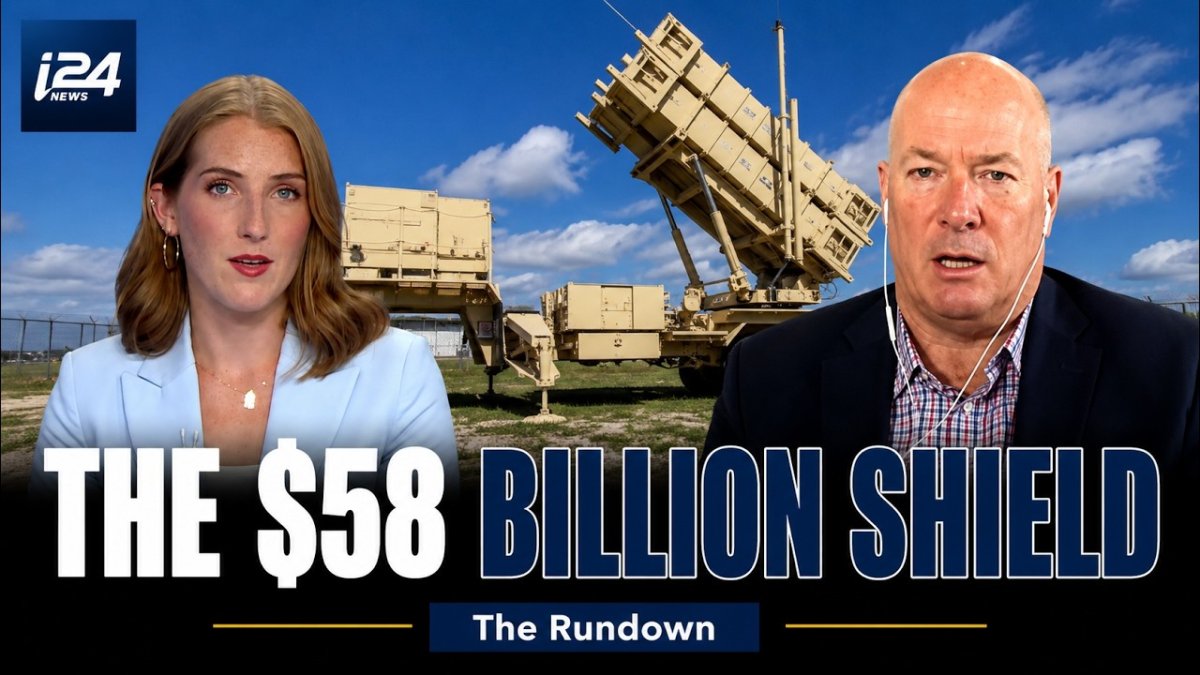
The $58.6 Billion Bet on Patriot
The contract, announced this week by the US Army, covers more than 10,000 interceptors and is expected to reduce the unit cost of each missile to at least $4 million. Lockheed Martin has said it will invest up to $9 billion in its manufacturing facilities in Alabama and Arkansas by 2030 and hire more than 1,000 additional employees, while suppliers of rocket motors, guidance systems, and warheads expand their own production lines.
The scale of the award reflects a shift in Pentagon thinking after decades of shrinking defense production. The United States has not attempted to rebuild a major munitions stockpile at this pace since the Cold War, and senior defense officials have been pressing companies to invest in manufacturing capacity rather than returning cash to shareholders through buybacks. The contract also carries an implicit warning: the wars in Ukraine and Iran, plus preparations for a possible future confrontation with China, have left the US military with less margin than it has enjoyed in a generation.
On the Ground: Depleted Arsenals and the Missile War
The urgency is not theoretical. According to a July 27 analysis by the Center for Strategic and International Studies (CSIS), US forces expended roughly 65 percent of their pre-war Patriot interceptor inventory during the conflict with Iran, leaving fewer than 1,000 missiles in the stockpile. THAAD inventories fell by about 38 percent, to an estimated 234 to 278 interceptors. CSIS analysts Mark Cancian and Chris Park concluded bluntly that "there are no good alternatives to Patriot and THAAD for ballistic missile defense."
The conflict began on February 28, when Israel and the United States launched Operations Roaring Lion and Epic Fury after airstrikes killed senior Iranian officials, including Supreme Leader Ali Khamenei. After an April ceasefire and the June Islamabad Memorandum, fighting resumed on July 8 and has continued since. Iranian launches have come at a lower rate than in the first phase, but they are steady enough to keep consuming interceptors — and some missiles have gotten through, causing casualties and extensive damage at coalition bases.
Israel's own home front has been the testing ground for how a modern layered defense holds up under sustained fire. During the conflict, the Israeli Air Defense Command ran Iron Dome against short-range rockets, David's Sling against medium-range threats, and the Arrow 2 and Arrow 3 systems against ballistic missiles, with interception rates that officials described as high but not perfect. Every interceptor expended on the Israeli side is also a bill that must eventually be paid by domestic production lines — another reason the global scramble to rebuild stocks matters in Tel Aviv and Jerusalem.

Regional Context: Gulf Allies, Ukraine, and Israel's Own Arsenal
The Patriot is not an American weapon alone. Gulf states that host US forces — Saudi Arabia, the United Arab Emirates, Qatar, Kuwait, and Bahrain — operate Patriot systems, and the Pentagon has made clear that protecting them is the priority. Deliveries to Ukraine have been halted, and Switzerland's order has been postponed to 2032. To stretch the advanced PAC-3 stocks, the Pentagon recently ordered older PAC-2 interceptors from Raytheon in a $441 million deal, the first such purchase in 30 years, because PAC-2 can still intercept aircraft and drones even though it was not designed to counter ballistic missiles.
The Gulf dimension is personal for the region: Iran has fired missiles toward US-allied Arab states during the war, including a reported launch toward Jordan in recent days, and Patriot batteries in the Gulf have been active in defending coalition assets. Ukrainian officials, meanwhile, have been openly shopping for anti-ballistic missile systems after US deliveries were halted, underscoring how the Iran war reshuffled the entire global air-defense queue.
Israel knows the system well. The Israeli Air Force's Air Defense Command operated eight PAC-2/GEM+ "Yahalom" Patriot batteries for decades before transitioning to homegrown systems — David's Sling and the Arrow family — in 2024. The transition was on display at the Juniper Cobra exercise at Hatzor Air Force Base in February, where Israeli crews lined up Iron Dome, Patriot, and Arrow 3 side by side. The contrast in costs is striking: each Patriot PAC-3 interceptor now runs at least $4 million, while Israel's Rafael-built David's Sling interceptor costs about $1 million per unit — a gap that reinforces Israel's strategic bet on domestic production.
Diplomatic and International Reactions
The award has drawn attention far beyond Washington. The CSIS analysis warns that the greatest risk is not sustaining the current conflict but responding to another high-intensity contingency before Patriot and THAAD inventories can be rebuilt. Diminished stockpiles could force the United States and its coalition partners to accept greater operational risk, conserving interceptors and prioritizing only the highest-value threats.
The production timeline compounds the concern. "It takes several years to produce a missile. If you put money into the system today, you wouldn't get a missile for three or four years. Sometimes even five," Cancian told the BBC. "What we're getting now are missiles that were funded in 2023." The Trump administration has requested $95 billion for munitions in the fiscal 2027 defense budget, plus a $21 billion war supplemental, reflecting the urgency — though the Pentagon has not publicly confirmed the CSIS inventory estimates.
Analysis and What This Means
For Israel, the Patriot deal is a reminder that the region's security architecture rests on an American industrial base still catching its breath. Iran's ballistic missile arsenal remains a central threat, and this week i24NEWS reported that Israel is preparing for missile attacks on election day, with air defenses on heightened alert across the country. Even with Iron Dome, David's Sling, and the Arrow system performing well, Israel's security establishment watches allied interceptor stocks closely: what protects US forces in the Gulf today helps define the balance of deterrence across the entire region tomorrow.
The deal also signals how the Iran war has permanently reshaped defense planning. The renewed hostilities that began on July 8 have already tested coalition air defenses, and analysts warn that the window of vulnerability will last until new production lines come online in the early 2030s. For Washington, the race is against the clock — and against the possibility that a second front, whether in the Pacific or the Middle East, opens before the stockpiles are full again.
For Israeli readers, the lesson of the $58.6 billion contract is straightforward: in a region where missiles fly faster than factories can build them, the race to rebuild is as important as the race to intercept. The coming years will be defined by whether the ceasefire holds, how quickly Lockheed Martin and its suppliers can deliver, and whether Israel's homegrown systems continue to prove that smaller, smarter interceptors can carry the load.
By Hannah Berg, Staff Writer
This article was produced with AI-assisted research and editorial support. Reporting is based on sources cited in the article.
What's Your Reaction?
 Like
0
Like
0
 Dislike
0
Dislike
0
 Love
0
Love
0
 Funny
0
Funny
0
 Wow
0
Wow
0
 Sad
0
Sad
0
 Angry
0
Angry
0

Israel Correspondent at Global1.News. Based in Tel Aviv, covering Israeli politics, security, technology, and society. Provides balanced, deeply-sourced reporting on one of the most closely-watched regions in the world.















Comments (0)