
Turtle power: Volunteer to protect Mexico’s sea turtles
Every sunrise over the Gulf of Mexico brings a quiet promise to the families of Veracruz: another day to protect the ancient rhythm of sea turtles that have nested on these sands for centuries.
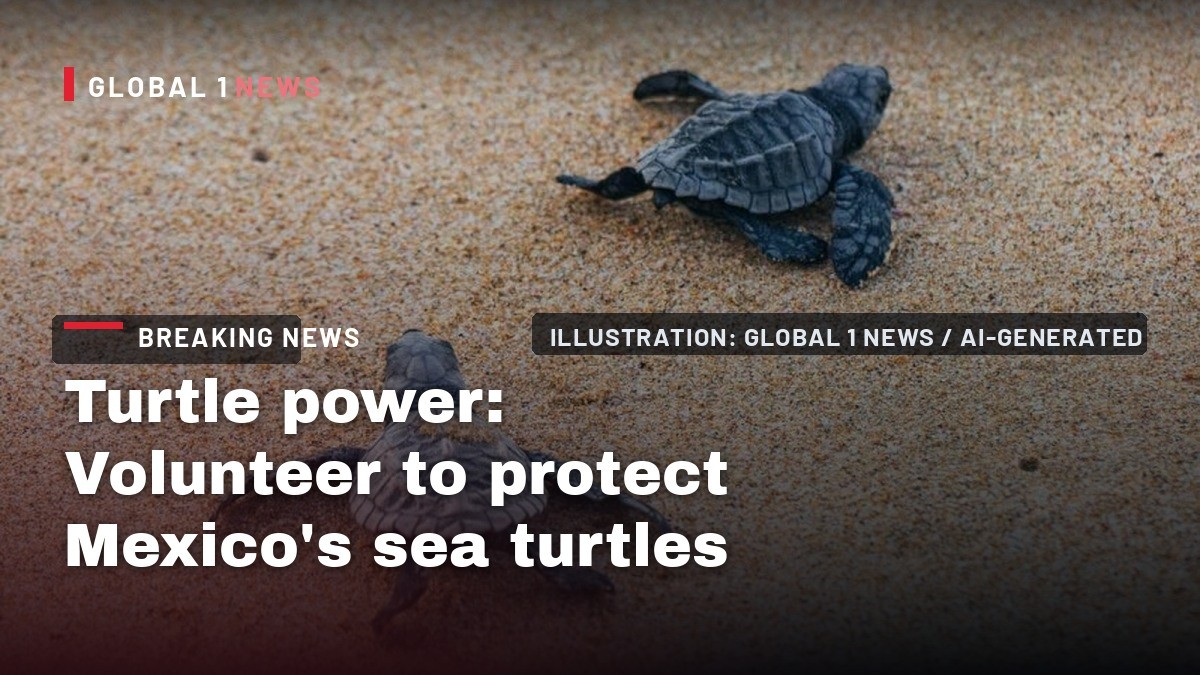
Every sunrise over the Gulf of Mexico brings a quiet promise to the families of Veracruz: another day to protect the ancient rhythm of sea turtles that have nested on these sands for centuries. From the bustling tianguis of Veracruz city to the tranquil dunes of Tecolutla, volunteers—young and old—gather each morning to guard nests, monitor hatchlings and, in a ceremony that feels like a modern‑day ritual, release newborn turtles into the surf. This grassroots movement, rooted in a legacy that stretches back to the 1960s, illustrates how a state famed for its seafood and historic port has become a cornerstone of Mexico’s national turtle‑conservation network.
From federal beginnings to local devotion
The first federal steps to protect sea‑turtle nesting in Mexico were taken in 1962, when the National Institute of Biological and Fisheries Research launched a program that spanned both coasts. A year later, the Center for Turtle Culture opened on Isla Mujeres, Quintana Roo, signaling the start of an institutional focus on these vulnerable reptiles. By 1966, the Rancho Nuevo camp in Tamaulipas—just north of Veracruz—joined the effort as one of the earliest formal turtle‑conservation sites. The National Commission of Protected Natural Areas highlighted the importance of these early camps, noting that they helped sustain turtle populations through increased local awareness and participation.
These pioneering initiatives laid the groundwork for the National Sea Turtles Conservation Program, which would later expand into a nationwide network of 26 federally operated centers and numerous independent nonprofits across 13 coastal states. Veracruz, with its 450 miles of Gulf Coast, emerged as a natural hub for this work, its beaches offering easy access for nesting females and a cultural affinity for the sea that fuels community involvement.
Veracruz’s unique geography and its impact
Marine biologist Jeanne A. Mortimer, known as “Madame Torti,” has explained that the central coast of Veracruz is especially suited for turtle nesting because its shores lack the rocky outcrops, steep slopes or heavy coastal development that can hinder adult females. This accessibility allows turtles to move freely along the length and breadth of the beach, increasing the likelihood of successful nesting. The region’s complex orography, diverse habitats and rich biogeographic history further contribute to its status as a biodiversity hotspot.
A 2023 study in the Revista Mexicana de Biodiversidad confirmed that southeastern Mexico—including Veracruz, Oaxaca and Chiapas—holds the greatest species richness and endemism for turtles in the country. The research highlighted that this area supports three‑quarters of the families and more than half of the genera of turtles found nationwide, underscoring Veracruz’s critical role in national and global conservation efforts.
The evolution of protection laws
Mexico’s legal framework for turtle protection took a decisive turn in 1990 when President Carlos Salinas de Gortari issued a decree ending the commercial harvesting of all sea turtles and related products. This landmark decision transformed former hunting communities, such as those in Mazunte, into centers of conservation. The following year, Mazunte opened the Mexican Turtle Center, which has since become a model for ecotourism and community‑driven protection.
Further legal reinforcement came from the Supreme Court, which, in a major ruling, restricted the construction of industrial ports in endangered turtle habitats within the Veracruz Reef System National Park. Although reports suggest that enforcement has been uneven, the ruling reflects a growing recognition of the need to safeguard critical nesting grounds from development pressures.
Vida Millenaria: A community’s legacy
Among Veracruz’s most prominent conservation groups is Vida Millenaria, founded in Tecolutla in 1974 by Fernando Manzano—affectionately called “Papá Tortuga.” Over the past half‑century, the nonprofit has expanded its team and now protects and releases thousands of hatchlings each year. Visitors travel year‑round to the camp, located about a 20‑minute drive north of the town center along a mostly deserted dirt path, to learn about turtle biology and participate in releases.
The volunteer experience is immersive. Early in the morning, around 7:30 a.m., groups gather at the camp’s central area where a local expert shares the organization’s history, a musician plays turtle‑themed songs, and maps illustrate the state’s conservation milestones. After a brief orientation, participants head to a nearby souvenir shop where every purchase—ranging from plush turtles to shirts—covers the cost of a set of hatchlings for release. A local volovanero provides freshly baked pastries, adding a taste of Veracruz’s culinary tradition to the day’s activities.
The ritual of release
When the sun climbs higher, volunteers line up on the sand, each holding a tiny, trembling turtle. Together, they guide the hatchlings toward the surf, watching as dozens of tiny heads bob in the shimmering water before disappearing into the horizon. The sight is both joyous and solemn, a reminder of the fragile beginnings of a life that must navigate predators, currents and human impacts.
While Veracruz offers a well‑established camp, the spirit of participation extends across the nation. The article notes that turtle camps exist all along Mexico’s coastline, from the Gulf to the Pacific, allowing volunteers everywhere to join the effort. Whether in a remote beach in Oaxaca where a record 34 million olive‑ridley hatchlings emerged in a single season, or in a small community center in Chiapas, the act of liberating hatchlings connects people to a shared responsibility for the marine ecosystem.
Why the effort matters for Mexico’s future
Sea turtles play a vital ecological role, from maintaining healthy seagrass beds to supporting fisheries that many coastal families depend on. Protecting their nesting sites helps preserve the balance of marine habitats that sustain local economies, especially in regions where tourism and fishing are intertwined with daily life. The 2008 Semarnat report highlighted that Mexico hosts seven of the eight known sea‑turtle species, with two—Kemp’s ridley and the black sea turtle—nesting exclusively on Mexican beaches. This unique status makes the country a global steward of turtle biodiversity.
As climate change and coastal development intensify, the work of volunteers, NGOs and government agencies becomes ever more crucial. The continued success of programs like Vida Millenaria, the enforcement of protective rulings, and the participation of ordinary citizens—families, students, retirees—ensure that the ancient pilgrimage of turtles from sea to sand will endure for generations to come. By joining a turtle camp, a visitor not only experiences a memorable weekend under the stars but also contributes to the preservation of an ecosystem that sustains the very fabric of Mexican coastal life.
This article was produced with AI-assisted research and editorial support. Reporting is based on the source material cited below. Sources: Mexico News Daily; mexiconewsdaily.com; Global1.News (12 September 2026).
By Rosa Martinez, Staff Writer
What's Your Reaction?
 Like
0
Like
0
 Dislike
0
Dislike
0
 Love
0
Love
0
 Funny
0
Funny
0
 Wow
0
Wow
0
 Sad
0
Sad
0
 Angry
0
Angry
0

Latin America/Andes Correspondent at Global1.News. Based in Bogota, covering politics, environment, energy, and social movements across the Andean region. Passionate about environmental journalism and communities protecting their land.















Comments (0)