
Trump Halts Planned Iran Strikes, Says Deal 'Rapidly' Within Reach — But Tehran Isn't Talking
Folks, let me be blunt: this is the closest we have come to the edge since this war started — and then, at the last second, the President flinched. On Saturday, Donald Trump announced he was canceling planned attacks on Iran, claiming progress in talks, contingent on "being able
Folks, let me be blunt: this is the closest we have come to the edge since this war started — and then, at the last second, the President flinched. On Saturday, Donald Trump announced he was canceling planned attacks on Iran, claiming progress in talks, contingent on "being able to rapidly make a DEAL." But here's what the White House isn't shouting from the rooftops: Iran says there are no current talks with the United States at all.
This war has raged since February 28, 2026, when the United States and Israel launched Operation Epic Fury — airstrikes that killed senior Iranian officials, including Supreme Leader Ali Khamenei. Five months later, the conflict has pulled in Egypt, choked the Strait of Hormuz, and sent oil past $90 a barrel.
A Last-Minute Reversal That Caught Everyone Off Guard
The announcement came Saturday evening after a day of extraordinary movement behind the scenes. Trump told reporters the United States would not proceed with a fresh round of strikes on Iran, citing progress in negotiations — the pause contingent on "being able to rapidly make a DEAL."
The timing matters. Just a day earlier, the State Department issued an urgent warning to American citizens across the Middle East, telling them to prepare immediately for widespread disruptions to air traffic, including flight cancellations and airspace closures in several countries. When the State Department starts telling Americans to brace for closed airspace, something big was expected — and then it didn't happen.
By Sunday, the President was doubling down. He announced negotiations with Tehran would resume Monday afternoon, and told reporters that Mideast allies had reached the outlines of a deal to end the war. In the same breath, Defense Secretary Pete Hegseth declared on X that the U.S. military is "locked and loaded" and "remains ready — at levels not seen since World War 2."
The Saudi Phone Call That Shook the White House
Here's what actually moved the needle, folks: a phone call from Riyadh. Multiple outlets, including Axios, CBS News and the Associated Press, reported that Saudi Crown Prince Mohammed bin Salman called Trump on Saturday to urge him to stand down. Saudi state media confirmed the conversation, saying MBS stressed "the necessity of prioritizing dialogue to de-escalate tensions" and "prevent a wider conflict." The Crown Prince has close business and personal ties to Trump and his family — and Riyadh knows that a war that shuts down the Gulf means its own oil revenues go up in flames with it.
The Guardian reported that Trump climbed down after both Saudi alarm and threats from Tehran, while Iran's state media framed it as a humiliating retreat — the Tehran Times ran the headline "Iran's red line holds."
Iran and Oman Talk — But Tehran Denies Talking to Washington
Here's the contradiction that should give every reader pause. The New York Times reported Sunday that Iran and Oman have been holding talks on reopening the Strait of Hormuz — the waterway that carries roughly a fifth of the world's oil. Trump cited progress in those negotiations when he canceled the threatened attack. But when asked about talks with the United States, Iran said there are no current negotiations happening with Washington at all.
That gap between what the President claims and what Tehran confirms is the whole ballgame. Trump has announced halts to strikes on Iran on several occasions since the war began in late February — this is a pattern, not an exception. And each time, the fighting eventually resumed. The Institute for the Study of War noted Sunday that IRGC-affiliated Fars News denied that Iran agreed to any plan to reopen the strait, even as the diplomatic machinery churned in Oman and Doha. Everyone is talking to someone — but nobody seems to be talking to everyone.
Egypt Just Got Pulled Into the Fight — and That Changes Everything
While Washington was debating whether to strike, the war quietly expanded to a new front: Egypt. On Wednesday, July 30, a drone attack set two vessels on fire at the Mediterranean port of Damietta — a key liquefied natural gas hub with an annual export capacity of about 5.2 million tons. Egypt's cabinet confirmed a drone caused the blaze, and maritime security firm Ambrey said a U.S.-owned LNG carrier was struck while docked.
This was the first attack on Egyptian soil since the war began in February. CNN's Erin Burnett reported that no one has claimed responsibility for the Damietta strike. But the target selection is telling: a U.S.-owned LNG vessel at a port that serves as a gateway for gas exports to Europe. This war is no longer just about the Persian Gulf — it now has a Mediterranean front, and Cairo's response in the coming days will tell us whether it gets even wider.
Hormuz Nearly Shut as Tankers Burn and Oil Spikes
The economic shock of this war is already here, and it's measurable. On Thursday, the price of crude pushed past $90 a barrel when the U.S. struck Iran in retaliation for attacks on American bases in Jordan. Brent has hovered around $86 and WTI around $83 in recent market snapshots. The strait has been almost completely closed to traffic since fighting resumed two weeks ago.
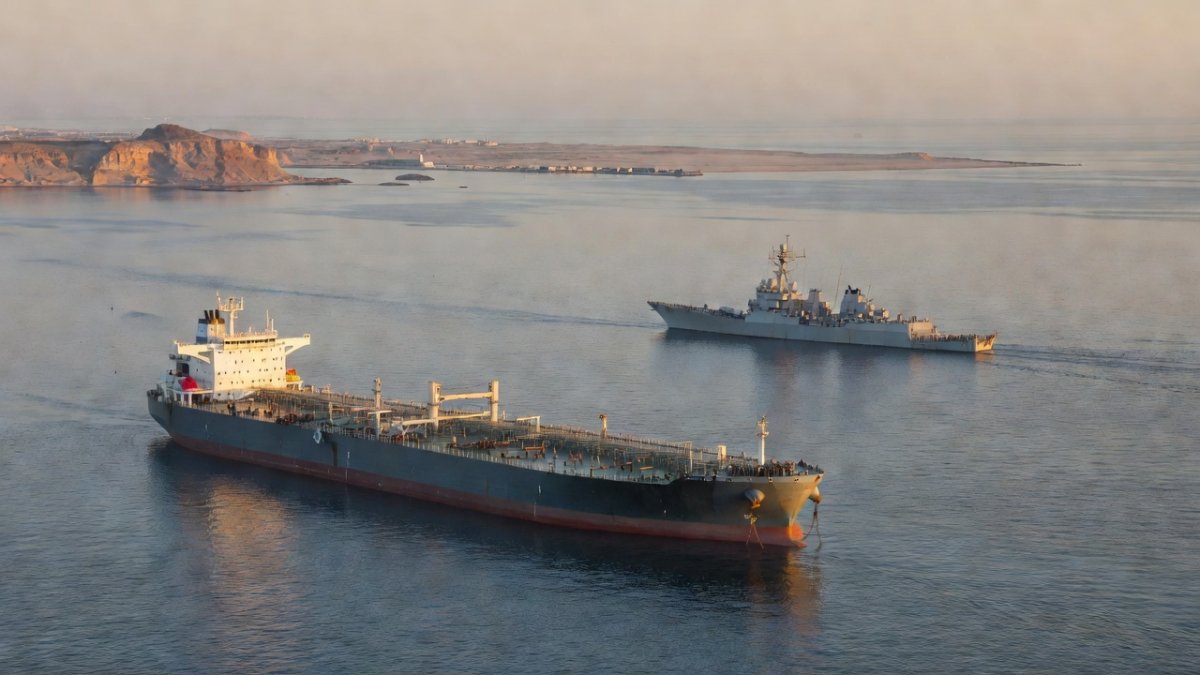
Last Friday, Iran's Islamic Revolutionary Guard Corps said it struck two oil tankers attempting to transit the strait under U.S. military escort; four other tankers changed course. Kpler shipping data shows just how thin traffic has become: only two tankers transited Hormuz on Thursday, while 25 commodity vessels moved through the Bab al-Mandeb strait. Secretary of State Marco Rubio's response was blunt: "The Strait of Hormuz are international waterways, and they continue to launch against the ships in that international waterway."
Here's the thing the markets already understand: a coordinated release of 400 million barrels from global strategic reserves — ordered by the International Energy Agency in March, the largest in history — has kept this from becoming the worst energy crisis in history, so far. But reserves are finite, and every day the strait stays closed is another day the world's supply chain bleeds.
Israel Caught Off Guard as the Alliance Shows Cracks
Here's a detail that tells you everything about how uncoordinated this reversal was: Israel appeared to be caught off guard. The Jewish Telegraphic Agency reported over the weekend that the U.S. alerts warning citizens to evacuate the Middle East — followed by Trump's announcement that he was canceling the planned strike — caught Israel by surprise, leaving Jerusalem scrambling.
That's a big deal, folks. Israel was the co-architect of Operation Epic Fury. Netanyahu endorsed the campaign publicly on day one. If Washington is now making war-and-peace decisions on a phone call from Riyadh without close coordination with Jerusalem, the alliance that started this war is showing real strain. The Israelis have their own red lines on Iran's nuclear program — and they have shown they are willing to act on them alone.
The broader region is watching too. When Saudi Arabia — a country that has been in a cold war with Iran for decades — starts lobbying Washington to stand down, it tells you how dangerous regional leaders believe the current trajectory is. Everyone wants the fighting to stop. Nobody wants to blink first.
What Happens Monday — and What to Watch
So where does this leave us? The President says negotiations resume Monday afternoon. Hegseth says the military remains "locked and loaded" at levels not seen since World War 2. Iran says there are no current talks with the United States. One of those statements is going to prove wrong very quickly — and the markets and every American family feeling the pinch at the gas pump will find out which one this week.
The parameters of a potential deal, according to reporting from CBS and others, would involve reopening the Strait of Hormuz and addressing Iran's nuclear program — the same two issues on the table since before the war started. But the last time the United States and Iran were negotiating a nuclear deal, we know how that ended: withdrawal, maximum pressure, and ultimately war. The scar tissue from 2015 to 2018 is real, and it runs through every negotiating room on this file.
Here's my bottom line, and I'm not going to sugarcoat it. Trump has announced halts to strikes on Iran multiple times since February, and each pause has been followed by a resumption of fighting. This time may be different — the Saudi intervention, the Oman channel, and the midterm calendar all create real pressure for a deal. But "may be different" is not a peace treaty. Until there's a signed agreement that reopens Hormuz and puts verifiable limits on Iran's nuclear program, the prudent assumption is that this war is paused, not over. Watch what Tehran actually says, not what the White House claims — and if you're an American citizen in the Middle East, heed that State Department warning now.
By Jessica Ali, Staff Writer
This article was produced with AI-assisted research and editorial support. Reporting is based on sources cited in the article.
What's Your Reaction?
 Like
0
Like
0
 Dislike
0
Dislike
0
 Love
0
Love
0
 Funny
0
Funny
0
 Wow
0
Wow
0
 Sad
0
Sad
0
 Angry
0
Angry
0

Editor-in-Chief at Global1.News. Atlanta-based journalist who cuts through the BS and tells it like it is. Lead anchor, host, and the voice you hear when the spin stops and the truth starts.












Comments (0)