
Türkiye marks 105th anniversary of victory over Greece in epic battle
As the centennial generation of the Turkish Republic looks back on its formative wars, the 105th anniversary of the Battle of Sakarya offers a vivid reminder of how the early Turkish state forged its sovereignty amid a volatile post‑World War I landscape.
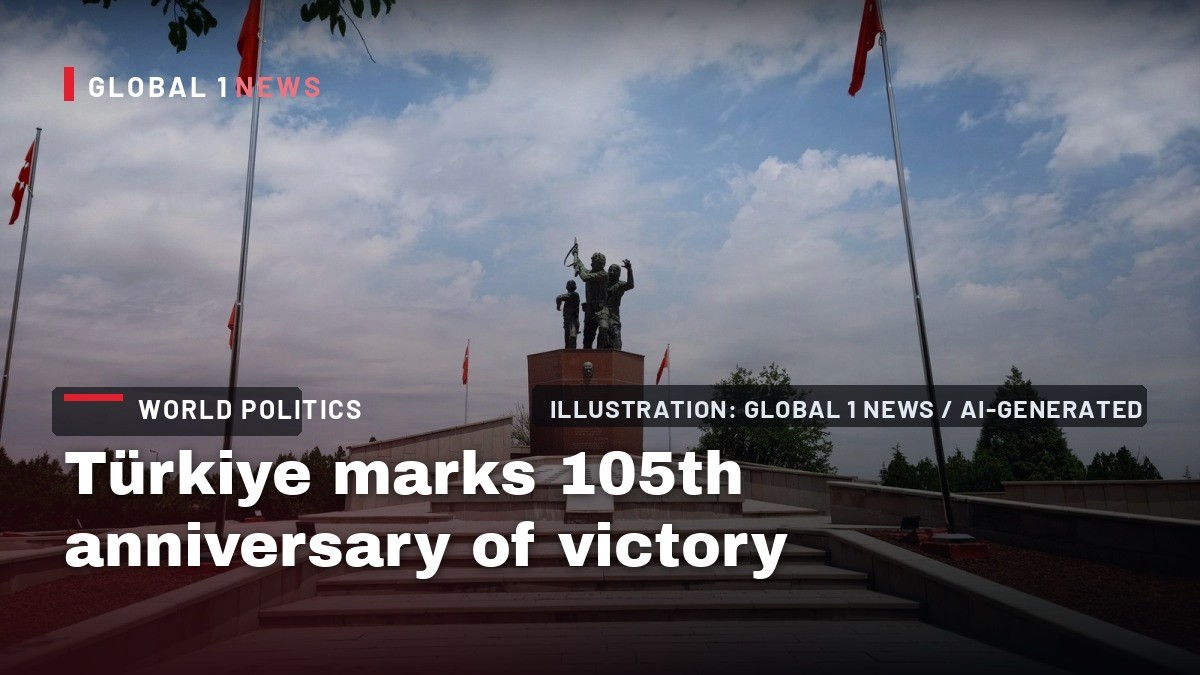
As the centennial generation of the Turkish Republic looks back on its formative wars, the 105th anniversary of the Battle of Sakarya offers a vivid reminder of how the early Turkish state forged its sovereignty amid a volatile post‑World War I landscape. The clash, fought between August 23 and September 13 1921 along the banks of the Sakarya River, marked a decisive halt to the Greek advance that threatened Ankara, the future capital. In a written statement, President Recep Tayyip Erdoğan framed the battle as a testament to the nation’s capacity to endure scarcity and external pressure, invoking the legacy of Mustafa Kemal Atatürk and the broader narrative of Anatolia’s defence against “enemy nations.”
Historical backdrop: the war of independence and the Greek “Megali Idea”
The Turkish War of Independence unfolded against the backdrop of the dismemberment of the Ottoman Empire and the ambitions of the Entente Powers to reshape the Near East. Greece, motivated by the nationalist “Megali Idea” – the aspiration to annex territories historically linked to ancient Greek civilization – launched a campaign into Anatolia after the Ottoman defeat in World War I. The 1920 Treaty of Sevres, never recognised by Atatürk’s nationalist movement, opened the way for Greek forces to push deep into western Turkey, capturing key ports such as İzmir on the Aegean coast.
These advances set the stage for the 1921 offensive that aimed at Ankara, the political heart of the nascent Turkish resistance. Greek hopes of seizing the capital were therefore not merely strategic but also symbolic, promising to deliver a decisive blow to the fledgling Turkish state and to cement the territorial ambitions of the Megali Idea.
The strategic significance of Sakarya
Geographically, the Sakarya River runs from the northwest of Anatolia to the borders of modern Ankara, making it a natural defensive line. The battle’s name derives from this river, and the fighting concentrated around Polatlı – now a district of Ankara – before shifting southward toward the Haymana district. By establishing a defensive front along a roughly 100‑kilometre (62‑mile) line, Turkish forces created a “field of defence” that spanned the entire homeland, echoing Atatürk’s famous exhortation that “there is no line of defence, there is a field of defence, and this field is the entire homeland.”
When the Greeks crossed the Sakarya in late August, they encountered a Turkish army that had been rallied by Atatürk’s direct appeals to the public to donate weapons, food and other supplies. This mobilisation of civilian resources helped offset the exhaustion that Turkish troops felt after World War I, allowing them to sustain a prolonged defence despite heavy casualties.
The battle’s human cost and military outcome
While exact figures remain uncertain, the source material notes that Turkish losses approached 14,000 dead, with Greek casualties described as “similar.” The intensity of the fighting made the Battle of Sakarya one of the bloodiest engagements of the war. Turkish units, though occasionally forced into brief retreats, largely held their ground, a testament to the morale boost generated by Atatürk’s leadership and the nation‑wide mobilisation effort.
By September 13, the Greek offensive had stalled completely, and the entire Greek army was compelled to withdraw. This withdrawal not only halted the immediate threat to Ankara but also set the conditions for the subsequent Turkish counter‑offensive that culminated in the Battle of Dumlupınar in August 1922, effectively ending Greek ambitions in Anatolia.
Political ramifications for Atatürk and the nascent Republic
The victory at Sakarya elevated Mustafa Kemal from a military commander to a national hero. In the aftermath, Parliament awarded him the rank of Field Marshal and the honorific title of Ghazi, recognising his role in defending the homeland. This elevation cemented Atatürk’s political authority, paving the way for the proclamation of the Republic of Turkey in 1923 and the subsequent reforms that reshaped Turkish society.
Erdoğan’s 2026 commemoration underscores the continuity of this narrative: the battle is portrayed as a cornerstone of Turkish self‑confidence on the road to statehood, reinforcing a collective memory that the Republic continues to invoke when confronting contemporary challenges.
Greek perspective and the “Asia Minor Catastrophe”
In Greece, the same events are remembered as part of the “Asia Minor Catastrophe,” a series of defeats that forced the Greek government to sign the Armistice of Mudanya in 1922. The loss of the Anatolian front effectively ended the Megali Idea, curtailing Greek aspirations to expand eastward and reshaping Greece’s national identity in the interwar period.
The source material highlights that the Greek retreat after Sakarya was part of a broader sequence of setbacks that culminated in the 1922 armistice, marking the end of the Turkish‑Greek conflict that had erupted in the wake of World War I.
Contemporary resonance: nationalism, security and regional narratives
President Erdoğan’s statement ties the historic sacrifice at Sakarya to present‑day imperatives of national unity and territorial integrity. By invoking “the rights of our beloved nation” and the willingness to “defend… every inch of our homeland, whatever the cost may be,” the commemoration reinforces a narrative that links past victories to current security concerns, including Turkey’s role in regional power balances and its stance toward neighbouring states.
The emphasis on “drawing strength and determination from the glorious victories of our past” reflects a broader pattern in Turkish political discourse, where historical milestones are mobilised to legitise contemporary policy choices, whether in the context of energy projects, military deployments, or diplomatic negotiations with the European Union and NATO allies.
Strategic lessons for the Middle East
The Battle of Sakarya illustrates how a determined, centrally coordinated defence can offset numerical or material disadvantages, especially when bolstered by popular mobilisation. For contemporary Middle Eastern states facing external pressure, the episode underscores the importance of linking national identity to territorial defence, a dynamic that continues to shape regional security calculations.
Moreover, the battle’s outcome demonstrates how a single, well‑chosen defensive line can halt an advancing force and create the conditions for a decisive counter‑offensive. In the current era of great‑power rivalry and energy‑security competition, such lessons remain relevant for nations seeking to protect their sovereignty against both conventional and hybrid threats.
This article was produced with AI-assisted research and editorial support. Reporting is based on the source material cited below. Sources: Daily Sabah Middle East; dailysabah.com; Global1.News (13 September 2026).
By Malik Hassan, Staff Writer
What's Your Reaction?
 Like
0
Like
0
 Dislike
0
Dislike
0
 Love
0
Love
0
 Funny
0
Funny
0
 Wow
0
Wow
0
 Sad
0
Sad
0
 Angry
0
Angry
0

Middle East Correspondent at Global1.News. Based in Beirut, covering politics, conflict, energy, and society across the Middle East. Brings context and depth to a region often reduced to headlines.













Comments (0)