
Israel launches fresh airstrikes, artillery attacks on southern Lebanon
On Sunday, 13 September 2026, Israeli military aircraft and artillery units carried out a coordinated series of strikes across southern Lebanon, targeting forested areas, hills and towns near Nabatieh al‑Fawqa.
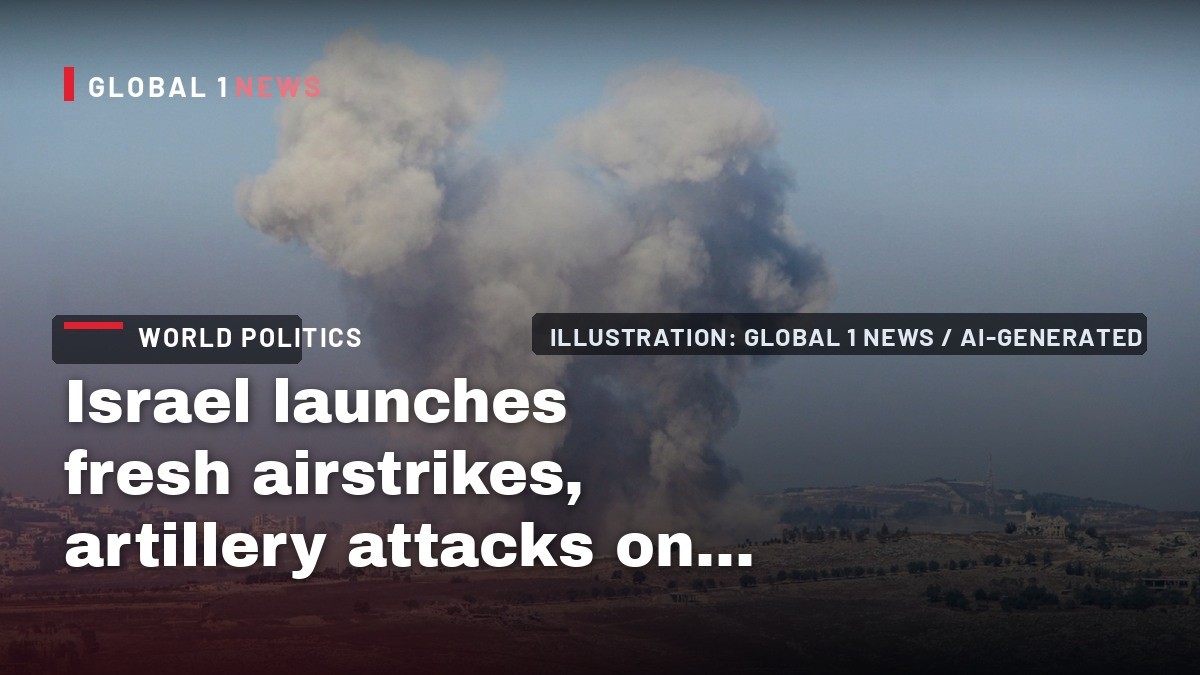
On Sunday, 13 September 2026, Israeli military aircraft and artillery units carried out a coordinated series of strikes across southern Lebanon, targeting forested areas, hills and towns near Nabatieh al‑Fawqa. The attacks were reported by Lebanon’s state‑run National News Agency (NNA) and confirmed by Anadolu Agency correspondents on the ground. While immediate casualty figures remain unavailable, the pattern of repeated hits on the same locations within short intervals raises grave concerns about the proportionality and distinction required under international humanitarian law.
Chronology of the air and artillery strikes
According to the NNA, Israeli warplanes first struck the Ali al‑Taher forest on the outskirts of Nabatieh al‑Fawqa. Within fifteen minutes, a second strike hit the nearby town of Kfar Roummane, indicating a rapid succession of attacks on closely situated targets. The aircraft then turned to Kfar Tebnit, delivering two consecutive strikes before a third hit the same town less than thirty minutes after the initial assault. This sequence suggests a deliberate focus on specific locales rather than a broad, indiscriminate campaign.
In addition to the aerial bombardment, the Israeli military launched an airstrike near al‑Dabsha hill, also on the periphery of Nabatieh al‑Fawqa, and deployed artillery fire on Zawtar al‑Sharqiyah. The use of both airpower and ground‑based artillery in the same operational window underscores a coordinated effort to saturate the area with kinetic force.
Geographic focus: Nabatieh al‑Fawqa and its surroundings
The targeted sites cluster around Nabatieh al‑Fawqa, a town in southern Lebanon that sits amid a patchwork of forested hills, agricultural fields and small villages. The Ali al‑Taher forest, a wooded area that also serves as a livelihood source for local communities, was the first point of impact. Its proximity to civilian habitations raises questions about the potential for collateral damage, especially given the rapid follow‑up strikes on nearby populated places.
Kfar Roummane and Kfar Tebnit, both small villages, suffered multiple airstrikes within a narrow time frame. Zawtar al‑Sharqiyah, another locality in the same region, was hit by artillery fire. The concentration of attacks in this limited geographic corridor suggests that the Israeli forces may be aiming to disrupt specific infrastructure or perceived militant positions, yet the lack of publicly disclosed intelligence on the targets makes it difficult to assess the legitimacy of the strikes under the principle of distinction.
Humanitarian implications for civilians
Although the source material reports no immediate information on casualties or damage, the pattern of repeated strikes on the same towns within minutes heightens the risk of civilian harm. Forested areas like Ali al‑Taher often host local foraging, hunting and small‑scale timber activities that are essential to the livelihoods of nearby residents. Damage to such environments can have long‑term socioeconomic repercussions, compounding the immediate physical danger posed by the blasts.
In the absence of verified casualty figures, humanitarian agencies must prepare for potential displacement, medical needs and loss of property. The repeated targeting of Kfar Tebnit, for instance, could have resulted in structural damage to homes, schools or community facilities, amplifying the humanitarian burden on an already vulnerable population. The lack of transparent reporting on civilian impact hampers the ability of aid organizations to respond effectively.
Legal considerations under international humanitarian law
The principle of distinction obliges parties to a conflict to differentiate between combatants and civilians, and to direct operations only against legitimate military objectives. The rapid succession of strikes on the same civilian‑adjacent locations raises concerns about whether the attacks were proportionate to any anticipated military advantage. Without clear evidence that the targeted sites housed armed groups or weaponry, the legality of the strikes under the Geneva Conventions remains uncertain.
Furthermore, the principle of precaution requires parties to take all feasible measures to minimize civilian harm. The use of artillery on Zawtar al‑Sharqiyah, a town without reported military installations, underscores the need for independent verification of target selection. The absence of immediate casualty data does not absolve the attacking force from the duty to investigate and disclose the impact of its operations.
Context of ongoing hostilities and diplomatic efforts
The latest strikes occur against a backdrop of continued Israeli operations in southern Lebanon, despite diplomatic initiatives aimed at de‑escalation. The source material notes that the attacks come amid “continued Israeli strikes on southern Lebanon despite diplomatic efforts to de‑escalate tensions and reach a settlement.” This suggests a disconnect between political negotiations and on‑the‑ground military actions, potentially undermining confidence in any forthcoming agreements.
Repeated military pressure on southern Lebanese communities can exacerbate grievances and fuel cycles of retaliation. The lack of a clear ceasefire or mutually agreed framework heightens the risk that isolated incidents may spiral into broader confrontations, further endangering civilians on both sides of the border.
Impact on Lebanon’s agricultural sector
While the current article does not provide specific figures on agricultural damage, previous reporting referenced in the source material indicates that Israeli attacks have already damaged a substantial portion of southern Lebanon’s farmland. The mention of “Israeli attacks damage 22.5% of agricultural land in southern Lebanon” in related coverage highlights the vulnerability of the region’s food production capacity. The recent strikes on forested and rural areas could exacerbate this trend, threatening food security for local families and the national economy.
Loss of arable land, combined with potential contamination from unexploded ordnance, may render fields unsafe for cultivation. This, in turn, could force farmers to abandon their lands, leading to displacement and loss of income. The humanitarian implications extend beyond immediate physical injury to longer‑term socioeconomic stability.
International response and the need for accountability
Given the limited transparency surrounding the strikes, the international community faces a challenge in assessing compliance with humanitarian norms. Independent monitoring bodies, such as the United Nations Office for the Coordination of Humanitarian Affairs (OCHA) and the International Committee of the Red Cross (ICRC), would require unfettered access to the affected sites to verify damage and civilian impact. The current lack of casualty data underscores the necessity for such verification missions.
Calls for accountability must be grounded in factual evidence. As the situation unfolds, it is essential that humanitarian organizations, journalists and civil society document the consequences of each strike, ensuring that any violations of international law are recorded and addressed. Only through rigorous documentation and transparent reporting can the rights of affected Lebanese civilians be protected and the principles of international humanitarian law upheld.
This article was produced with AI-assisted research and editorial support. Reporting is based on the source material cited below. Sources: Middle East Monitor; middleeastmonitor.com; Global1.News (13 September 2026).
By Fatima Al-Rashid, Staff Writer
What's Your Reaction?
 Like
0
Like
0
 Dislike
0
Dislike
0
 Love
0
Love
0
 Funny
0
Funny
0
 Wow
0
Wow
0
 Sad
0
Sad
0
 Angry
0
Angry
0
Gulf/MENA Correspondent at Global1.News. Based in Doha, covering Gulf politics, energy markets, diplomacy, and development across the Middle East and North Africa. Tracks the economic transformation of the Gulf states.











Comments (0)