
Super El Niño 2026: A Record-Breaking 2027 Looms Over Latin America
The air in Manaus carries the scent of smoke even in August, a bitter premonition of what is to come. From the drought-parched banks of the Amazon to the flooded streets of Piura, Peru, the hemisphere is bracing for a climatic assault unlike any in living memory. The 2026 Super El Niño is no longer...
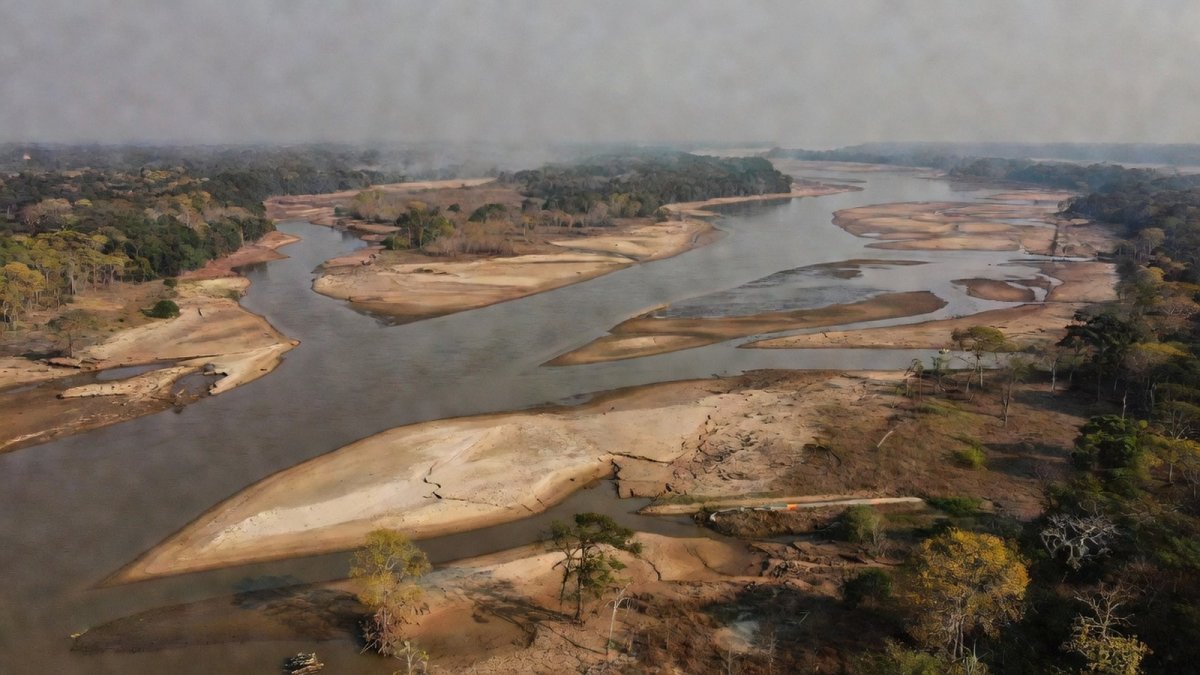
The air in Manaus carries the scent of smoke even in August, a bitter premonition of what is to come. From the drought-parched banks of the Amazon to the flooded streets of Piura, Peru, the hemisphere is bracing for a climatic assault unlike any in living memory. The 2026 Super El Niño is no longer a distant forecast; it is a gathering storm in the Pacific with the power to redraw the map of extreme weather across Latin America, threatening to push the planet into a new, terrifying era of heat.
This is not a routine climate fluctuation. It is a confluence of a record-breaking El Niño and the relentless march of human-induced global warming, a double blow that scientists warn could make 2027 the hottest year ever recorded. For the 650 million people of Latin America and the Caribbean, this is not an abstract statistic; it is a threat to their water, their food, their homes, and their very lives.
Super El Niño 2026: A Record-Breaking 2027 Looms Over Latin America
Rio de Janeiro, Brazil – August 24, 2026 — The world’s meteorological agencies are issuing unprecedented warnings as a Super El Niño event of staggering intensity takes shape in the tropical Pacific. With sea-surface temperatures projected to soar past 3°C above normal, the forecast for the coming months and into 2027 is one of extreme drought, catastrophic flooding, and global heat that could shatter all existing records. For Latin America, the region most acutely exposed to El Niño’s whims, the time for preparation has ended; the time for impact is now.
An 'Unprecedented' Event Taking Shape in the Pacific
The scientific consensus is clear: this is not an ordinary El Niño. In a stark statement released on Friday, August 21, 2026, the UK Met Office declared that the impact of the current El Niño is expected to be the most intense in more than a century, driving a heightened risk of drought, extreme temperatures, intense rainfall, and a cascade of other extreme weather events across the globe. The warning is unequivocal, backed by forecast models that are pushing the boundaries of what was previously considered possible.
Prof Adam Scaife, the Met Office’s head of long-range forecasting, did not mince words. "We should be clear that this is an unprecedented event," he stated. "I have never seen an El Nino signal this intense in our forecasts." His concern is rooted in the raw data. If this spike plays out as projected, he warned, "2026 will far exceed our recent experience of El Nino and its worldwide climate influences." The sheer magnitude of the oceanic warming is the primary driver of this alarm.
The numbers are staggering. A typical El Niño raises sea-surface temperatures in the central Pacific by 1-2°C. The 2026 forecasts, however, predict record values of more than 3°C (5.4°F) in the coming months. A Met Office chief forecaster described this projection to the BBC as "unheard-of in modern climate records." Independent measures paint the same picture: NOAA's Oceanic Niño Index (RONI) forecast mean of 2.66 would rank as the strongest in the historical record if it verifies, surpassing the previous highest three-month mean of 2.0 during the monster 1997-98 event. The Niño 3.4 index — the standard gauge of El Niño intensity — had already climbed to +1.7°C by mid-June 2026, with international models from the European Centre for Medium-Range Weather Forecasts (ECMWF) projecting it could exceed +2.0°C by autumn. This is not a marginal event; it is a fundamental shift in the ocean-atmosphere system that will have planetary consequences, with the most severe impacts projected to be concentrated in the Tropics, precisely where Latin America lies.
2027 on Track to Shatter Global Heat Records
The implications of this Super El Niño extend far beyond the immediate weather chaos. The Met Office has stated that this event is "very likely" to make 2027 the hottest year on record globally, a grim milestone that would be achieved when the massive heat released from the Pacific Ocean is superimposed on the long-term warming trend caused by greenhouse gas emissions. This is not a prediction made in isolation; it is a logical and terrifying conclusion drawn from the physics of the climate system.
The World Meteorological Organization (WMO) has lent its authoritative voice to this forecast. In its Global Seasonal Climate Update, the WMO projects that the El Niño will intensify into a strong event during the August-October 2026 period. Leon Hermanson, a Met Office scientist and the update’s lead author, explained the mechanism: "There is an El Niño predicted for the end of 2026, which increases the chances of [2027] being the next record-breaking year." The heat stored in the ocean during this period will be released into the atmosphere, driving global temperatures to unprecedented levels.
The context is sobering. 2024 was the hottest year on record, with global temperatures averaging about 1.55°C above the 1850-1900 pre-industrial average. The last El Niño contributed to making 2023 the second-hottest year. Now, with a far stronger event brewing, the trajectory is clear. The UN has already warned that the hottest year on record is almost certain by the end of 2030, but the 2026 Super El Niño is accelerating that timeline, making 2027 the likely benchmark for a world that is rapidly overheating.
South America in the Crosshairs: Drought, Floods and the Andes
For South America, the Super El Niño is a dual-edged sword, promising both devastating drought and catastrophic flooding. Prof Adam Scaife has highlighted that particularly strong effects are expected throughout the Tropics, "where we expect really severe droughts in places like South America, and the West Pacific." This is a direct threat to the continent’s agricultural heartlands, its hydroelectric power generation, and the daily water supply for millions of people in cities like Bogotá, Lima, and São Paulo.
The Andean region is on high alert. The warming of the Pacific disrupts the delicate balance of the Andean climate system, leading to a rapid melting of glaciers that provide crucial dry-season water for communities in Peru, Bolivia, and Ecuador. This year, the lack of rainfall in the highlands, combined with extreme heat, is accelerating glacial retreat, threatening both water security and increasing the risk of glacial lake outburst floods. The mountains, a source of life, are becoming a source of peril.
Meanwhile, the southern cone of the continent, including parts of Argentina and Chile, is bracing for the opposite extreme. El Niño often brings increased rainfall to these regions, but the intensity of this event could lead to severe flooding and agricultural losses. The entire continent is being pulled in different directions by the same oceanic force, creating a complex web of crises that will test the resilience of every nation from the Caribbean coast to Patagonia.
Peru and Ecuador: Ground Zero for Rain, Landslides and a Stricken Fishery
If there is a ground zero for the 2026 Super El Niño, it is the coastal nations of Peru and Ecuador. These countries are directly in the path of the warm water anomalies, which bring torrential rains, devastating floods, and landslides. Peru has already experienced El Niño-linked flooding and landslides this year, and the forecast for the coming months is for conditions to worsen dramatically. The heavy rains overwhelm drainage systems, destroy homes, and isolate entire communities in the northern coastal deserts.
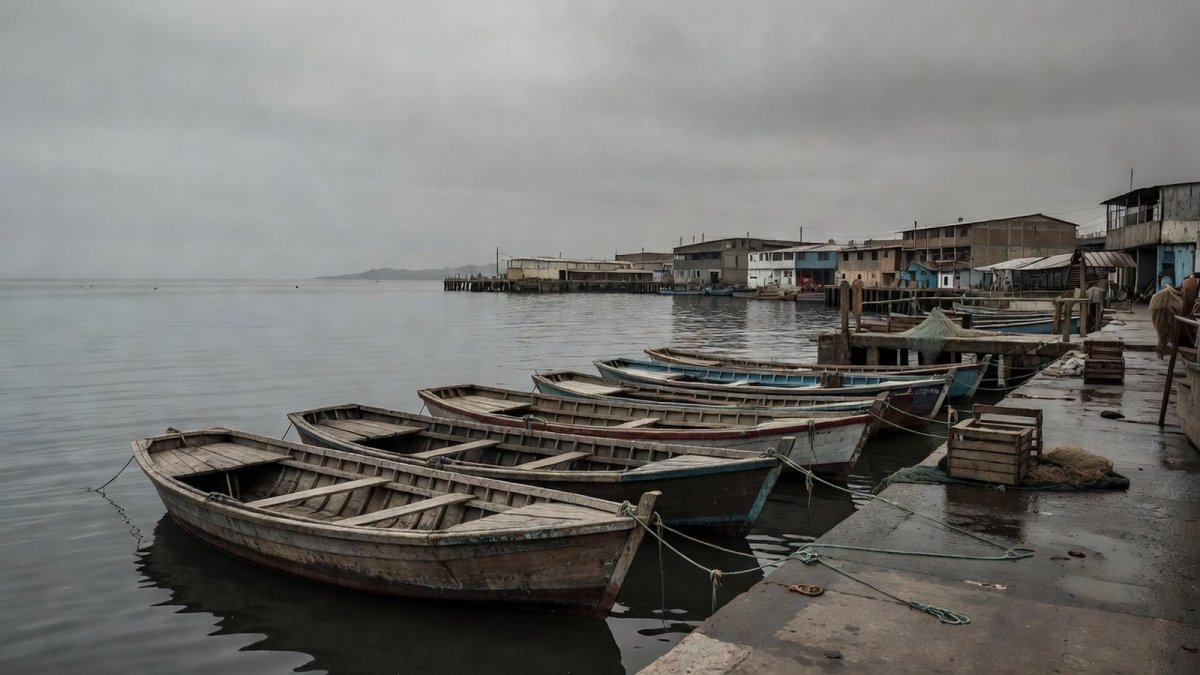
The impact on the marine ecosystem is equally catastrophic. The warming Pacific weakens the cold, nutrient-rich Humboldt upwelling that supports South America's fisheries, one of the most productive in the world. This is an existential threat to the region's fishing communities. Peru's anchoveta fishery, the largest by volume in the world, is already feeling the pinch. The 2026 first fishing season in the North-Central zone opened with a Total Allowable Catch (TAC) of 1.914 million metric tonnes, a 36.2 percent reduction from 2025 and the lowest quota in a decade, excluding 2023.
The situation on the water is even more dire. A significant portion of that reduced quota went uncaught after an extended fishery pause from June through August, as anchovies moved to deeper, cooler waters or became scarce. Peru's Ministry of Production (PRODUCE) is now closely monitoring anchovy stocks, facing the prospect of a second season with a severely reduced quota or none at all. For the thousands of artisanal fishermen and the massive fishmeal industry, this is an economic disaster that will ripple through the entire national economy.
The Amazon and Brazil: A Drought Worse Than 2015?
Brazil, the region's largest economy, is facing a threat that could eclipse its recent climate disasters. Technical reports are warning that the 2026 El Niño may trigger a drought worse than the infamous 2015 Amazon drought, which turned the rainforest into a tinderbox and caused massive fish kills in its tributaries. The mechanism is clear: El Niño reduces rainfall over the Amazon basin, raises temperatures, and delays the summer rainy season, creating a perfect storm for ecological and agricultural collapse.
Brazil's national weather service, Inmet, has issued stark warnings. It states that El Niño reduces Amazon rainfall, raises temperatures, and delays the summer rainy season, favoring longer drought, reduced water availability, and a significantly higher risk of wildfires. The risks are not confined to the 2026 dry season; they are expected to extend into 2027, meaning the rainforest could face two consecutive years of extreme stress, pushing its ecosystems and the communities that depend on them to the breaking point.
The consequences for Brazil are multifaceted. Reduced water levels in the Amazon's rivers will disrupt the vital transportation network that is the lifeblood of the region, isolating cities like Manaus and Belém. Hydroelectric dams, which rely on consistent rainfall, will see their reservoirs drop, threatening energy security. And the agricultural powerhouse of the central-south, the Cerrado, will face water stress that could decimate soybean and corn harvests, driving up food prices and threatening the nation's economic stability.
Mexico, Central America and the Panama Canal: Water Under Pressure
The crisis extends northward into Mexico and Central America, where the Super El Niño is tightening its grip on water resources. In Mexico, El Niño typically brings drought to the northern and central regions, while increasing the risk of flooding in the northwest and heightening hurricane activity in the Pacific. Scientists are warning that a strong "Super El Niño" could bring historic impacts in 2026-2027, with climate projections estimating up to an 80 percent probability of ENSO conditions. Regional institutions have already met to prepare for the worst.
The human cost is already visible. On August 19, the government of Honduras placed 80 percent of the country on drought alert, a stark admission of the severity of the situation. Small farmers across the "Dry Corridor" of Central America—a region already plagued by food insecurity—are watching their crops wither. The lack of rain is not just an agricultural problem; it is a driver of migration, as families are forced to leave their land in search of water and work.
Nowhere is the economic impact more tangible than at the Panama Canal, a linchpin of global trade. The El Niño-associated drought has cut May-August rainfall in the canal watershed by 34 percent. This has forced the Panama Canal Authority to impose severe restrictions on shipping. Daily vessel transits will drop from 36 to 34 on September 3 and to 32 on September 15, with possible further restrictions on the horizon. Each reduction represents a significant loss of revenue for Panama and a disruption to global supply chains, a stark reminder that climate change is an economic issue as much as an environmental one.
Health, Agriculture and the Bottom Line for Latin America
The Super El Niño is not just a meteorological phenomenon; it is a public health emergency in the making. The Pan American Health Organization (PAHO) has reported that dengue cases across the Americas are up 209 percent compared to 2023 and up 387 percent compared to the five-year average. Brazil has the most cases, followed by Argentina, Mexico, Paraguay, and Colombia. El Niño conditions, with their associated heat and rainfall patterns, can amplify vector-borne disease risk, creating ideal breeding grounds for mosquitoes and increasing the spread of dengue, Zika, and chikungunya.
The strain on public health systems comes at a time when they are already stretched thin. Heat stress, particularly in urban areas, will lead to increased hospitalizations, especially among the elderly and those with pre-existing conditions. Water scarcity will compromise sanitation and hygiene, leading to outbreaks of waterborne diseases. The combination of heat, drought, and flooding creates a perfect environment for a public health crisis that could overwhelm national health services across the continent.
The economic bottom line is equally grim. Latin American governments, as reported by the AP on July 17, 2026, are stepping up preparations as El Niño strengthens, but the scale of the challenge is immense. The global context is a warning: wildfires have burned through more than 200,000 hectares in Indonesia, blazes in southwestern Europe have forced the displacement of at least 325,000 people in Spain and France, and the UK recorded its hottest day of the year in mid-August at 38.1°C in west London. The world is on fire, and Latin America is on the front line. The cost of inaction is measured not just in dollars, but in lost lives, lost livelihoods, and a lost future for a generation that will inherit a planet fundamentally altered by the fury of the 2026 Super El Niño.
By Elena Vasquez, Staff Writer
This article was produced with AI-assisted research and editorial support. Sources: Al Jazeera English, UK Met Office, World Meteorological Organization, NOAA, ECMWF, Reuters/AFP, Associated Press, Pan American Health Organization.
What's Your Reaction?
 Like
0
Like
0
 Dislike
0
Dislike
0
 Love
0
Love
0
 Funny
0
Funny
0
 Wow
0
Wow
0
 Sad
0
Sad
0
 Angry
0
Angry
0

Latin America Correspondent at Global1.News. Based in Mexico City, covering politics, economics, energy, and culture across the region. Brings an on-the-ground perspective to stories spanning from the Rio Grande to Patagonia.












Comments (0)