
Space Data Centers — the Hype That Proves the AI Buildout Has Hit a Wall
Space data centers are the hype that proves the AI buildout hit a wall. Starcloud proved an H100 can train a model in orbit — but the physics, maintenance, and launch economics don't close, and independent hosting still wins.
Space Data Centers — the Hype That Proves the AI Buildout Has Hit a Wall
I watched the DW News segment "Musk vs Bezos: Will space data centres save earth - or destroy it?" and I had to sit with it for a minute. Not because the idea is new — I've been hearing orbital compute pitches since 2021 — but because of what it says about where this industry is right now. When the two richest men on the planet are selling investors on data centers in orbit, it means the terrestrial buildout has hit a wall so hard they're willing to leave the planet to get around it.
Let me be straight with you. I've been running hosting infrastructure for over a decade. I've watched the AI boom go from GPU scarcity to power scarcity to water scarcity to community backlash. And now the escape hatch narrative is in full swing. Space data centers aren't a technology story. They're a desperation story wearing a rocket costume. And I'm here to tell you exactly why.
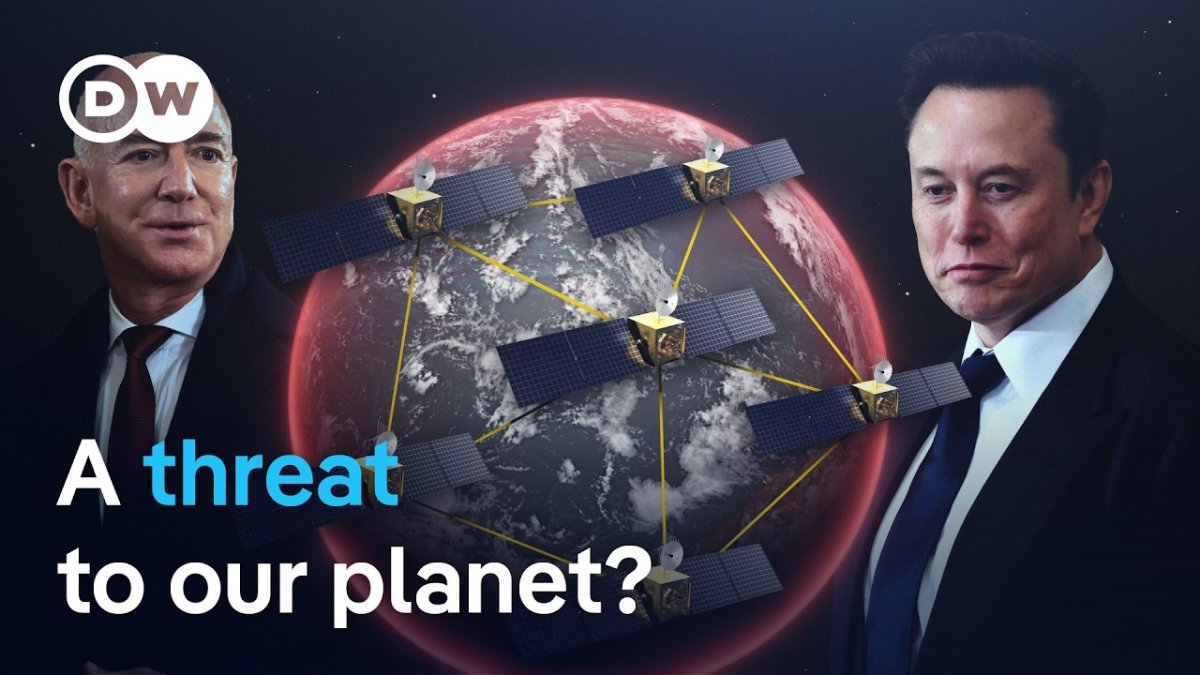
The Proof of Concept — Nvidia's H100 Just Trained a Model in Orbit
Start with the one real data point. In November 2025, a Washington-based startup called Starcloud — Nvidia-backed, formerly Lumen Orbit — launched a satellite carrying a single Nvidia H100 GPU. That chip was 100 times more powerful than any GPU compute that had ever been in space before. They trained Andrej Karpathy's NanoGPT on the complete works of Shakespeare, in orbit, and then ran Google's Gemma model up there too.
CEO Philip Johnston told CNBC: "Anything you can do in a terrestrial data center, I'm expecting to be able to be done in space." That's the pitch, in one sentence. It works. Congratulations. You proved you can run a small language model on a single GPU 400 kilometers above the Earth. That's like proving you can cook an egg on a camp stove and announcing you're going to open a restaurant chain.
The $2 Trillion Story — SpaceX's Valuation Is Riding on This
Here's where it gets interesting. TechCrunch reported in July 2026 that SpaceX's plans to launch a fleet of orbital data centers for AI inference are a main driver behind the company's $2 trillion valuation. Read that again. The world's most valuable private company is partially priced on data centers that don't exist yet, in a location where nothing has been proven at scale.
Musk's answer to the skeptics: "We start flying them next year." And the Starship test program is the linchpin — the 13th test flight was expected as soon as mid-July 2026. But here's the detail that should make every investor nervous: SpaceX itself conceded during its IPO roadshow that Starship may not be fully reusable in the near term, and would need to throw away each second stage on every launch. And if you're expending your second stage every flight, your launch costs never get low enough to make orbital data centers economic. The whole business case collapses.
The Feud — Altman Called It, and He's Right
The tell came in July 2026, when Sam Altman and Elon Musk traded barbs on social media. Musk accused Altman of being a scammer. Altman fired back: "homeboy you're the one selling public market investors on short-term space datacenters."
Forget the trash talk. Altman is saying what most experts already believe. He told the TBPN podcast back in February that space-based compute wouldn't give OpenAI any meaningful capacity within two, five, or even ten years. And when you talk to the engineers who've actually done the numbers — the people at Google working on orbital compute, the entrepreneurs running other space data center startups — you get the same answer. This doesn't make a dent until rockets get dramatically cheaper and you can mass-produce high-powered satellites. That's a 2030s problem, not a next-year problem.
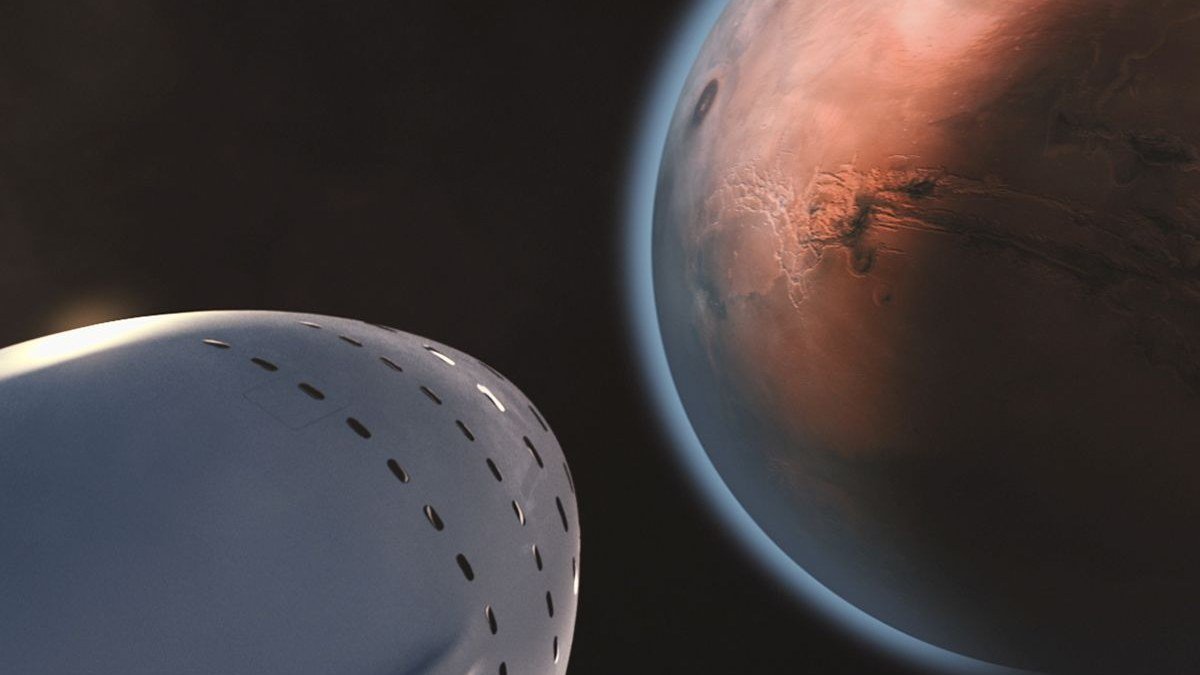
The Physics Nobody Wants to Talk About
Let me walk you through what a production orbital data center actually faces, because nobody selling this story wants to talk about it.
First, latency. Low Earth orbit is 400 to 2,000 kilometers up. The round trip for light is fast — 5 to 20 milliseconds — but you're still routing through laser links and ground stations, and that's before any relay hops. Fine for batch inference, useless for the interactive workloads that pay the bills.
Second, maintenance. A GPU in a terrestrial rack fails all the time. I know — I've swapped hardware at 3 a.m. more times than I can count. You cannot swap a GPU in orbit. You cannot add a drive. You cannot reseat a cable. When it breaks, it's a $10 million piece of space junk that keeps orbiting you like a monument to a bad decision.
Third, power and cooling. Solar panels in orbit do give you power around the clock — no nights, no weather. But you're still dumping heat into a vacuum. Radiation hardening costs performance. And every watt you push into compute is a watt you have to radiate away. The NYT reported on July 30 that Caltech and a startup called Sophia Space are developing solar-powered systems to cool chips in orbit — which is nice — but it's a lab solution for a production problem.
The "Save Earth" Argument — and Why It Cuts the Other Way
The environmental pitch is the clever part. AI data centers are guzzling power and water on Earth — I've written about the 264 billion gallons a year and the drought-stricken communities fighting new builds. So the sales pitch goes: put the compute in space, where solar power is unlimited and there's no water at all. Save the planet by leaving it.
But critics — including scientists quoted in the NYT — point out that orbital data centers add to the growing mountain of space trash, increase consumer power costs, and could make the electric grid less reliable. Every launch is a massive carbon event. Every defunct satellite is debris that threatens the satellites we actually depend on. The Pentagon is reportedly skeptical too. You don't solve a terrestrial infrastructure crisis by creating an orbital waste crisis. You just move the problem up 400 kilometers and make it 100 times harder to fix.
What This Actually Means for Independent Hosting Providers
First, don't panic. If you're an independent hosting provider, orbital compute is not coming for your customers this decade. The scale economics don't close, and the maintenance model is a joke. Your 3 a.m. hardware swaps are a feature, not a bug — they're why your customers can sleep at night.
Second, watch Starship's reusability as your early warning signal. If SpaceX starts flying Starship at high cadence with recovered second stages, the economics shift — slowly. If they keep expending stages, the orbital data center thesis stays a story, and you can ignore it entirely.
Third, read the signal behind the hype. When a $2 trillion valuation leans on infrastructure that doesn't exist, it tells you the hyperscaler capex story is running low on real bottlenecks to point at. The power, water, and community-consent problems aren't solved. They're being escaped. And escaping doesn't scale.
Fourth, position yourself as the boring, reliable alternative. The market is going to keep swinging between "AI is everything" and "AI is a bubble." Your job is to be the infrastructure that works either way — fiber, power redundancy, human support, real maintenance. Orbit can't compete with that, and it knows it.
The Bottom Line
Space data centers are the most expensive distraction in the history of the industry. They're the ultimate sign that the AI buildout has hit the physical limits of Earth — power, water, land, community consent — and the people who promised infinite growth are now promising infinite escape instead.
But here's the truth bomb: you can't fix a grid crisis by leaving the planet. You fix it by building better grid infrastructure, better cooling, better water stewardship, and better relationships with the communities hosting these facilities. That's hard work. It's not glamorous. Nobody's putting it on a rocket. But it's the work that actually matters — and it's the work independent hosting providers are already doing every single day.
When the space data center hype deflates — and it will, because the physics always wins — the providers who stayed grounded, kept their prices honest, and kept their customers' workloads running will still be here. The ones who bet on orbit? They'll be watching their satellites go by, wondering what the hell they were thinking.
— Allan Ali, Founder
This article was produced with AI-assisted research and editorial support. Reporting is based on sources cited in the article.
What's Your Reaction?
 Like
0
Like
0
 Dislike
0
Dislike
0
 Love
0
Love
0
 Funny
0
Funny
0
 Wow
0
Wow
0
 Sad
0
Sad
0
 Angry
0
Angry
0

Publisher of Global1.News. Automation architect, systems builder, and the guy making sure the truth gets published.














Comments (0)