
Jamaica-DR visa waiver leads to embassy closure in Santo Domingo
Jamaica's decision to close its embassy in Santo Domingo from August 2026 highlights the quiet challenges small Caribbean nations face when they pursue closer ties through visa liberalisation. The move, driven by lost revenue rather than any cooling in relations, raises practical questions for Jamaican nationals living or travelling in the Dominican Republic and for the wider region as CARICOM countries weigh the costs of free movement against the realities of funding overseas missions.
Jamaica's decision to close its embassy in Santo Domingo from August 2026 highlights the quiet challenges small Caribbean nations face when they pursue closer ties through visa liberalisation. The move, driven by lost revenue rather than any cooling in relations, raises practical questions for Jamaican nationals living or travelling in the Dominican Republic and for the wider region as CARICOM countries weigh the costs of free movement against the realities of funding overseas missions.
Jamaica-DR visa waiver leads to embassy closure in Santo Domingo
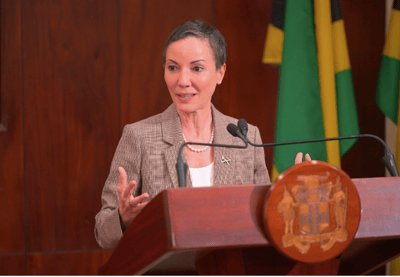
Kingston, Jamaica — The announcement was made by Minister of Foreign Affairs and Foreign Trade, Senator Kamina Johnson Smith, at a post-Cabinet press conference at Jamaica House on 30 July 2026, with the temporary closure taking effect on 1 August.
The Closure Announcement
Jamaica's Minister of Foreign Affairs and Foreign Trade, Senator Kamina Johnson Smith, made the announcement at a post-Cabinet press conference at Jamaica House on 30 July 2026. She stated that the embassy in Santo Domingo would close temporarily from 1 August 2026. Johnson Smith was clear that the decision does not signal any strain in diplomatic, political or trade relations between Jamaica and the Dominican Republic. Instead, the closure stems directly from a shift in how the mission is financed.
The embassy had long operated on a self-funding model that relied on fees collected from visa applications. Once those fees disappeared, the mission could no longer sustain itself in its current form. The government is now reviewing financing and administrative arrangements during the temporary closure period.
Jamaica maintains a modest diplomatic footprint across the hemisphere, with missions often serving multiple roles in trade promotion, consular support and political engagement. A temporary closure allows breathing space for officials in Kingston to reassess without severing the bilateral thread that has connected the two islands for decades.
In practice such a step means the physical premises in Santo Domingo will stand quiet while core functions shift elsewhere, a common adjustment among small states that must stretch limited resources. The post-Cabinet setting itself carried the measured tone typical of Caribbean governance, where ministers balance headline announcements with reassurances that everyday ties remain intact.
Background to the Visa Waiver
Jamaica lifted visa requirements for residents of the Dominican Republic in March 2025. The reciprocal arrangement allowed Dominican travellers to enter Jamaica without visas, mirroring the access Jamaican visitors already enjoyed when travelling to the Dominican Republic. Both countries benefit from strong tourism links, with the Dominican Republic hosting many Jamaican visitors and business travellers while Jamaica in turn welcomes growing numbers of Dominican tourists.
These people-to-people connections sit alongside deeper trade and cultural ties that have long bound the two nations. The Caribbean Media Corporation carried the story across the region, underscoring how developments in one Caribbean country quickly resonate with neighbours who share similar economic pressures and migration patterns.
Reciprocal visa-free travel has already begun to ease the flow of business delegations exploring joint ventures in agriculture and creative industries, sectors where both nations hold complementary strengths. Families divided by the Mona Passage now move more freely for weddings, graduations and medical visits, strengthening the human bonds that formal diplomacy sometimes overlooks.
Tourism operators on both sides report smoother planning cycles, as Dominican holidaymakers no longer navigate lengthy embassy queues and Jamaican travellers enjoy the same convenience when heading east. These practical gains reflect the original intent behind the March 2025 decision, even as they expose the funding questions that followed.
How the Funding Model Shifted
Small states across the Caribbean often rely on consular fee revenue to keep diplomatic missions running. Jamaica's embassy in Santo Domingo followed this pattern for years, using visa fees to cover operational costs. The introduction of reciprocal visa-free travel removed that income stream entirely, leaving the mission without its traditional source of funding.
This situation reflects a broader tension for Caribbean governments. While visa liberalisation supports tourism recovery and regional integration, it can undermine the very revenue streams that allow countries to maintain a physical presence abroad. The Jamaican government has acknowledged the need to examine new financing options rather than simply absorbing the costs at a time when inflation and the cost of living remain pressing concerns for households across the region.
Running a small embassy involves steady outlays for rent, local staff salaries, utilities and security, costs that quickly outpace what many missions can generate once fee income vanishes. Across the region, similar posts have historically leaned on visa processing as a quiet subsidy that keeps doors open without drawing heavily from central treasuries already stretched by domestic priorities.
The economics become especially delicate for nations whose overseas networks serve both political representation and practical support for citizens abroad, leaving little margin when one revenue pillar disappears overnight.
Ensuring Consular Services Continue
Despite the embassy closure, Jamaican authorities have stressed that consular services for nationals will remain accessible. Arrangements are being put in place so that Jamaicans in the Dominican Republic can still obtain passports, emergency assistance and other essential support. The exact mechanisms are still under review, but the commitment to continuity has been made clear.
For Jamaican families with relatives working or studying in Santo Domingo, this assurance matters. Many rely on timely consular help for document renewal or in cases of emergency. The temporary nature of the closure suggests the government intends to restore a full mission once sustainable funding is identified.
Caribbean governments have long turned to neighbouring accredited missions or honorary consuls when a post faces temporary disruption, allowing citizens to access basic services without travelling hundreds of miles. Digital platforms now supplement these arrangements, letting passport renewals and notarisations begin online before any in-person step at the ministry in Kingston.
These layered approaches reflect the practical reality that small states cannot always maintain every brick-and-mortar mission yet still feel a deep responsibility to citizens who find themselves in difficulty far from home.
Regional Implications for Free Movement
The closure arrives at a moment when CARICOM countries continue to discuss deeper integration, including expanded free movement and visa liberalisation across the Caribbean. Jamaica's experience offers a concrete example of the practical trade-offs involved. While removing visa barriers can boost tourism and ease travel for ordinary citizens, it also forces governments to confront how they will pay for the diplomatic infrastructure that supports those same citizens when they are abroad.
Neighbouring states such as Trinidad and Tobago, Barbados and Guyana will likely watch the review process closely. Each maintains missions that sometimes depend on similar fee structures, and each faces the same pressure to balance open borders with fiscal realities in small economies still recovering from pandemic-era disruptions to tourism.
CARICOM's free-movement ambitions have gained fresh momentum in recent years, yet this episode reminds partners that liberalisation carries administrative costs that cannot be wished away. Neighbouring states are already studying how visa-waiver pacts might be paired with pooled consular funding or shared regional hubs to avoid similar strains.
The case also highlights how visa liberalisation trends, while popular with citizens, test the capacity of small foreign ministries to sustain the very networks that make integration meaningful on the ground.
What This Means for Caribbean Integration
Caribbean integration has always rested on the willingness of individual states to absorb short-term disruptions for longer-term gains in mobility and cooperation. Jamaica's temporary embassy closure shows that even well-intentioned steps toward freer movement require parallel thinking about how missions are sustained once traditional revenue disappears.
Other small states are taking note, recognising that shared diplomatic facilities or rotating consular coverage could become practical tools as the region edges closer to the single-space vision long discussed in CARICOM circles. The lesson is not to slow integration but to equip it with funding models that match the openness being promised to ordinary people.
What This Means for Caribbean Diplomacy
The Santo Domingo closure illustrates how even positive steps toward regional integration can create unintended administrative challenges. Caribbean nations have long prided themselves on maintaining personal connections with diaspora communities and partner countries, yet the cost of sustaining embassies remains high. When revenue models break, governments must innovate without weakening the services their citizens expect.
Jamaica's approach of announcing a temporary closure while committing to continued consular access shows a pragmatic path forward. It also opens space for wider conversation within CARICOM about shared diplomatic resources or alternative funding mechanisms that could support missions without relying solely on visa fees. As the region moves toward greater free movement, these questions will only grow more urgent for small states seeking to honour both their integration goals and their duty to citizens living overseas.
For Jamaicans who call the Dominican Republic home or visit regularly, the human side of this story lies in the quiet reassurance that help remains reachable even when the embassy doors close for a season. Diaspora networks across the islands have always filled gaps left by official structures, offering the community warmth that keeps Caribbean ties alive long after formal arrangements shift.
The balance between deeper integration and administrative capacity will continue to test every government in the region, yet the measured response from Kingston suggests that small states can navigate these pressures without losing sight of the people they ultimately serve.
By Sharon Sahatoo, Staff WriterThis article was produced with AI-assisted research and editorial support. Reporting is based on sources cited in the article.
What's Your Reaction?
 Like
0
Like
0
 Dislike
0
Dislike
0
 Love
0
Love
0
 Funny
0
Funny
0
 Wow
0
Wow
0
 Sad
0
Sad
0
 Angry
0
Angry
0

Caribbean Correspondent at Global1.News. Based in Port of Spain, Trinidad, covering Caribbean politics, economy, energy, climate, and culture. Amplifying the voices and stories of the Caribbean region.














Comments (0)