
China’s Own Version of Ambiguity in the Taiwan Strait
Taipei spent ten days in August rehearsing for war with Beijing. The 2026 iteration of Taiwan’s annual Han Kuang exercise simulated a naval blockade, coordinated attacks on critical infrastructure, the disruption of internet services, and the fraught transition from peacetime footing to full-scale conflict.
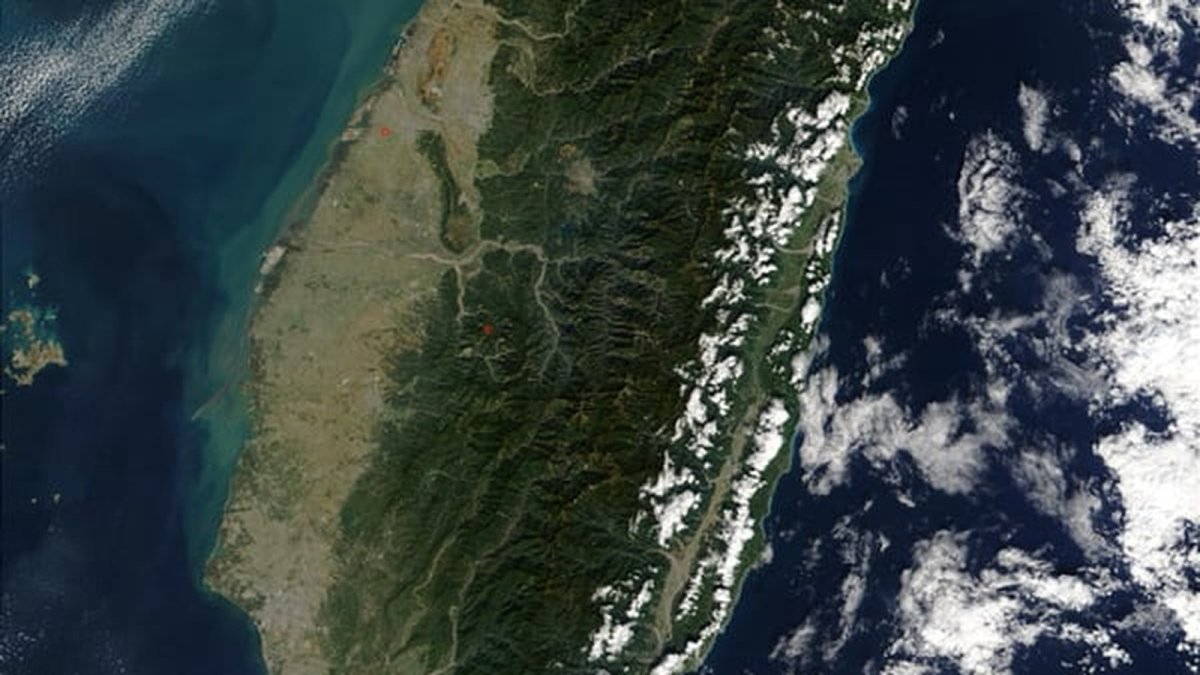
Taipei spent ten days in August rehearsing for war with Beijing. The 2026 iteration of Taiwan’s annual Han Kuang exercise simulated a naval blockade, coordinated attacks on critical infrastructure, the disruption of internet services, and the fraught transition from peacetime footing to full-scale conflict. Yet, in a notable departure from recent patterns of immediate rhetorical escalation, Beijing waited until the final day of the drills to issue its first official comment, dismissing the exercises as a “wasteful charade.” The muted response, following a year of declining military overflights, suggests that the People’s Republic of China is cultivating a new form of strategic ambiguity of its own—one that relies less on the dramatic spectacle of military encirclement and more on the quiet, persistent pressure of gray-zone operations.
The Shifting Profile of PLA Pressure
For years, the conventional wisdom held that Beijing was on a steady, linear path of military escalation designed to intimidate Taiwan and prepare for potential reunification by force. The large-scale encircling exercises, the massed fighter formations, and the publicized missile tests were all part of a coercive tableau intended to signal resolve. However, the observable data from the first half of 2026 complicates this narrative. According to tracking by Taipei and independent verification from regional sources, PLA fighter-jet activity around Taiwan fell to a three-year low during this period. Beijing appears to have halved its aerial missions compared to previous years, a significant reduction that sits uneasily with the assumption of relentless escalation. Whether this decline reflects a deliberate, top-down signaling strategy cannot be definitively established from open sources. It is possible that operational tempo, maintenance cycles, or even domestic political calendars played a role. However, the broader pattern is unmistakable: the balance of pressure is changing form. While the visible military footprint has been somewhat less conspicuous, other instruments of state power have become markedly more active. This suggests that Beijing is not necessarily reducing its pressure campaign; rather, it is recalibrating the methods by which that pressure is applied, moving toward activities that are less easily classified as military coercion and therefore harder to counter with a proportionate military response.The Rise of the Coast Guard and the "Routine" Patrol
The most striking evidence of this recalibration comes from the maritime domain. While fighter jet sorties declined, Taipei recorded 55 sightings of mainland Chinese government vessels around the island in June 2026. This figure includes both coast guard cutters and research ships, and it represents an 83 percent increase over the previous month and a staggering 120 percent increase compared to the same period a year earlier. These are not warships in the traditional sense, but they are unmistakably instruments of Chinese state authority. Their presence in the waters around Taiwan, particularly east of the island—a considerable distance from the mainland coast—represents a significant operational development. Beijing has framed these activities not as military maneuvers but as “routine law-enforcement patrols” in waters under Chinese jurisdiction. This linguistic framing is critical. By deploying civilian-flagged or paramilitary vessels under the aegis of maritime law enforcement, China is able to assert its sovereignty claims and project power without triggering the same diplomatic or military alarm bells that a carrier strike group or a massed fighter formation would. The coast guard patrols east of Taiwan are a classic example of gray-zone operations, activities that deliberately blur the line between military coercion and civilian enforcement. They create a reality on the water that is difficult for Taipei to contest without escalating, and difficult for Washington to respond to without risking a direct confrontation over what is, technically, a law-enforcement matter.The Historical Logic of American Strategic Ambiguity
To understand the significance of Beijing’s new approach, one must revisit the historical function of American strategic ambiguity. For decades, this policy was a cornerstone of stability in the Taiwan Strait. Its purpose was not simply to deter mainland China, but to restrain both sides of the strait simultaneously. Beijing was kept guessing about the extent of American intervention should it launch a war of reunification. Conversely, Taipei was left in the dark about how far American support would extend in the event of a unilateral declaration of independence. This dual restraint was the genius of the policy. The legal and political architecture underpinning this ambiguity was complex. Washington recognizes the People’s Republic of China as the sole legal government of China and maintains only unofficial relations with Taiwan. However, the American “One China policy” remains distinct from Beijing’s “One China principle.” Washington acknowledges Beijing’s position that Taiwan is part of China without fully endorsing the PRC’s sovereignty claim over the island. Simultaneously, the United States does not support Taiwan independence. This carefully calibrated position helped sustain a political middle ground, not just in the Taiwan Strait, but across the broader Asia-Pacific region. Neither Beijing nor Taipei could be certain where Washington would stand if the status quo were decisively challenged, and that uncertainty was the very thing that preserved the peace.The Washington Debate: The Lure of Strategic Clarity
In recent years, however, this long-standing framework has come under increasing pressure. An influential part of the Washington policy community, including senior policymakers and national security officials, now argues that the era of ambiguity is over. The core of their argument is that China’s military capabilities have expanded so sharply that the consequences of miscalculation have become too severe to risk. They contend that leaving Beijing guessing about American red lines is a dangerous game that could invite a catastrophic misstep. The solution, they argue, is “strategic clarity”—a public, unambiguous declaration of exactly what the United States would do in the event of a Chinese attack on Taiwan. While this argument has intuitive appeal, it does not necessarily produce a clearer strategic environment. By weakening the old system of dual restraint, strategic clarity may instead encourage both sides to test the limits of the new arrangement. If Washington explicitly states it will defend Taiwan, Taipei may feel emboldened to take more provocative steps toward formal independence, knowing it has a security guarantee. Conversely, if Washington signals that it will not defend certain outlying islands or will only respond to a full-scale invasion, Beijing may calculate that it has room to operate below that threshold. The result is a paradox: the pursuit of clarity in Washington may be directly contributing to the cultivation of ambiguity in Beijing.The Paradox of Relocated Ambiguity
This is the emerging paradox of the Taiwan Strait. As Washington seeks greater clarity in its commitments, Beijing is increasingly creating ambiguity through gray-zone activities that are harder to identify and even harder to answer with a proportionate response. The relocation of ambiguity is not merely a semantic shift; it is a fundamental change in the strategic dynamic. When the United States was ambiguous, the uncertainty was about a massive, potentially nuclear-armed response. When China is ambiguous, the uncertainty is about the nature of the threat itself. Is a coast guard vessel conducting a "routine patrol" a provocation? Is a research ship mapping the seabed a precursor to a submarine deployment? These questions are inherently difficult to answer, and they place the burden of escalation management on the defender. For Beijing, clearer American red lines create stronger incentives to operate below them. If Washington declares it will respond to a blockade, China may simply avoid a formal blockade and instead use a flotilla of coast guard ships and fishing vessels to harass shipping, creating a de facto blockade that is deniable and difficult to attribute. If Washington declares it will defend Taiwan’s main islands, China may focus its pressure on the outlying islands of Kinmen and Matsu, which are geographically closer to the mainland and historically more vulnerable. The strategic logic is inescapable: by drawing bright red lines, the United States may simply be telling Beijing exactly where it can operate with impunity.Implications for the Northeast Asian Security Architecture
This shift has profound implications for the broader Northeast Asian security architecture, particularly for key American allies such as Japan and South Korea. These allies have long relied on the stability of the Taiwan Strait as a cornerstone of regional peace. A conflict there would have immediate and severe consequences for sea lanes of communication, supply chains, and regional security. The new Chinese approach, however, complicates their calculus. Gray-zone activities are not just a problem for Taiwan; they are a template that could be applied elsewhere. Japan faces similar challenges in the Senkaku/Diaoyu Islands, where Chinese coast guard vessels are a near-constant presence. South Korea watches Chinese activities in the Yellow Sea and the East China Sea with similar concern. The challenge for the US-Japan-Korea trilateral alliance is that gray-zone operations do not trigger traditional collective defense mechanisms. A coast guard vessel ramming a Japanese patrol boat is not the same as a missile strike, but it is a form of aggression that demands a response. The alliance architecture, built for conventional deterrence, is ill-equipped to handle the ambiguous, incremental pressure of gray-zone warfare. This forces allies to develop new doctrines, new rules of engagement, and new forms of cooperation that can respond to coercion without triggering an unwanted escalation. The relocation of ambiguity, therefore, is not just a Taiwan issue; it is a systemic challenge to the entire regional order.Conclusion: A New Grammar of Coercion
The evidence from the first half of 2026 suggests that Beijing is learning to speak a new strategic language. The decline in fighter jet sorties and the rise of coast guard patrols represent a shift from the grammar of conventional military deterrence to the grammar of gray-zone coercion. This is not a reduction in pressure, but a transformation of it. As Washington debates the merits of strategic clarity, it must recognize that its own pursuit of certainty is creating the very ambiguity that Beijing now exploits. The old system of dual restraint, for all its flaws, had a stabilizing logic. The new system, characterized by relocated ambiguity, is inherently more volatile and more difficult to manage. The challenge for the United States and its allies is not just to decide what they will do in a crisis, but to develop the tools and doctrines to respond to a crisis that may not look like a crisis at all. This article was produced with AI-assisted research and editorial support. Sources: The Diplomat; SCMP. By Prof. David Park, Staff WriterWhat's Your Reaction?
 Like
0
Like
0
 Dislike
0
Dislike
0
 Love
0
Love
0
 Funny
0
Funny
0
 Wow
0
Wow
0
 Sad
0
Sad
0
 Angry
0
Angry
0

Prof. David Park
East Asia/Technology Correspondent at Global1.News. Seoul-based voice covering Korean politics, technology, business, and culture. Analyzes how technology and geopolitics intersect across East Asia.











Comments (0)