
Saskatoon rally for the unhoused calls for action on forced displacement
On Saturday, a crowd gathered outside Saskatoon City Hall to demand a shift in how municipal authorities and police handle the city’s growing homeless encampments.
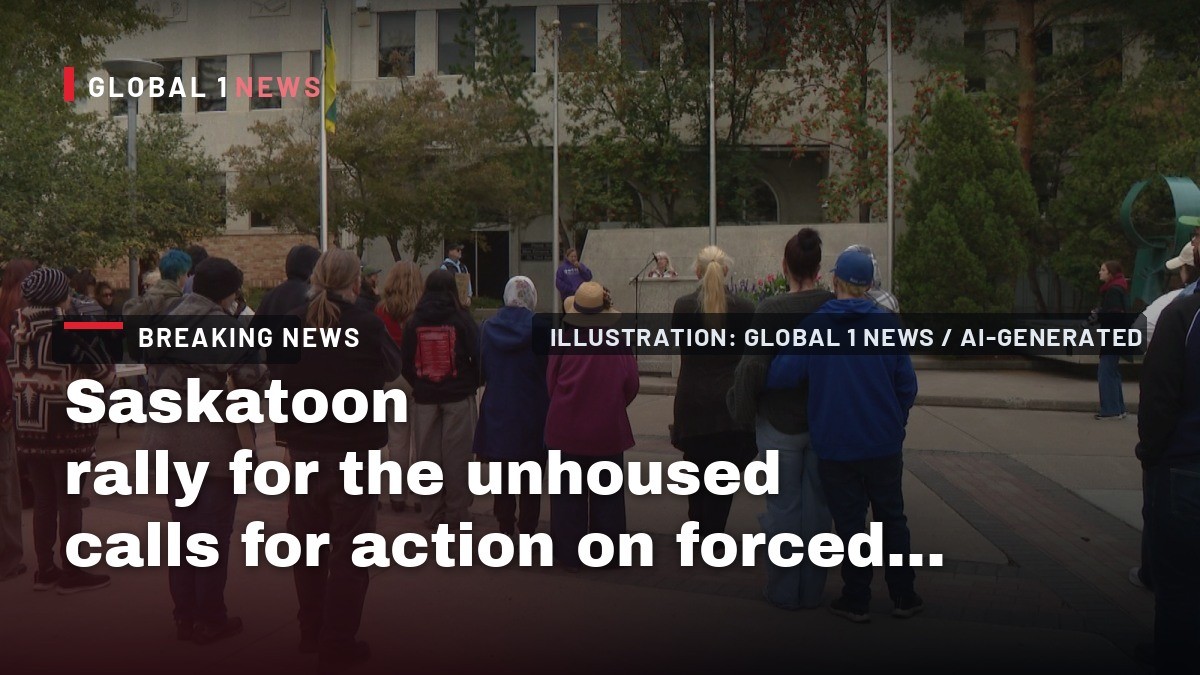
On Saturday, a crowd gathered outside Saskatoon City Hall to demand a shift in how municipal authorities and police handle the city’s growing homeless encampments. The rally, organised by community members and advocates, highlighted the stark choices faced by people living on the streets: move when ordered or risk receiving trespassing tickets that can carry fines of up to $10,000. The voices heard that afternoon underscored a broader crisis of affordable housing, limited shelter capacity and a policing approach that many say criminalises poverty rather than addressing its root causes.
Police‑ordered displacement and its impact
Police officers in Saskatoon have repeatedly ordered residents of encampments to vacate public spaces, warning that failure to comply could result in hefty trespassing tickets. One participant, David Fineday, a 70‑year‑old member of Sweetgrass First Nation, described the ultimatum as “move or you’re going to get trespassing tickets.” He recounted a recent incident in which a city‑mandated meeting turned into a confrontation: “While we all went to the meeting, they all rolled in there and tried to tear down our camp.” The incident illustrates how enforcement actions can quickly shift from administrative to confrontational, leaving residents with few alternatives.
Fineday’s experience is not isolated. He has lived in an encampment with roughly fifty other people for many years, a situation that reflects the broader lack of safe, permanent housing options. The threat of large fines adds a financial burden that many cannot meet, effectively forcing people into a cycle of displacement and legal jeopardy. The rally’s speakers argued that such punitive measures do not solve homelessness; instead, they exacerbate the vulnerability of those already on the margins.
Housing shortages and waiting lists
One of the rally’s central messages was the scarcity of affordable housing in Saskatoon. Participants pointed out that even when shelter spaces are technically available, the waiting periods are prohibitive. “There is things available in town and there’s many people that sign up, but there’s a waiting list… So, what do you do? You don’t get in there for six months,” said Fineday. This delay forces many to remain in encampments for extended periods, despite the existence of municipal programmes intended to assist them.
The high cost of rent also emerged as a key driver of homelessness. A rally attendee noted, “On one side, one whole side is people that work, but they have to live in a tent. Why? Because the rent’s too high.” This observation reflects a national trend where rising housing costs outpace wage growth, leaving low‑income workers with limited options beyond temporary or informal arrangements.
Hidden homelessness and its scale
Advocate Marissa Livedotte, a former Prairie Harm Reduction worker, warned that official counts likely underestimate the true magnitude of the problem. She cited an estimate of about 3,000 people currently unhoused in Saskatoon, but suggested the figure could double when accounting for “hidden homelessness” – individuals who couch‑surf or move between temporary stays. “Hidden homelessness is just, you know, people who were couch surfing, just going from place to place wherever they can,” she explained.
The concept of hidden homelessness is critical for policymakers because it points to a population that may not appear in street counts yet still lacks stable shelter. By acknowledging this hidden cohort, the city could better allocate resources to preventative measures, such as rapid‑response rental assistance and support for those on the brink of losing their homes.
Personal stories that illustrate systemic gaps
Fineday’s personal history underscores how systemic failures can lead to lifelong homelessness. He left the child welfare system at age 20 after experiencing the Sixties Scoop, a period when Indigenous children were taken from their families and placed in non‑Indigenous homes. The lack of a stable support network after leaving care contributed to his early entry into homelessness, a pattern seen across many Indigenous communities.
Livedotte’s own experience adds another dimension. Despite holding a full‑time, well‑paying job, she found herself unhoused for three months after a “quick change in circumstance.” Her story illustrates that homelessness can affect anyone, especially when a single crisis—such as a health emergency or sudden loss of income—disrupts financial stability. “You’re a paycheck away,” she said, highlighting the precariousness that many Canadians face.
Calls for a different municipal response
Rally participants urged city officials to adopt a more compassionate and evidence‑based approach. Livedotte appealed for “the proper ears… the proper eyes… that can see what’s happening, that can hear what’s happening.” The call was for decision‑makers to engage directly with those experiencing homelessness, rather than relying on enforcement actions that push people out of public spaces without offering viable alternatives.
Advocates suggested that the city could improve its response by expanding low‑threshold shelter options, increasing the supply of affordable rental units, and strengthening coordination between police, social services and Indigenous organisations. By integrating these services, the city could address both the immediate need for safe shelter and the longer‑term factors that keep people on the streets.
Implications for provincial and federal policy
The Saskatoon rally reflects a broader national conversation about homelessness, affordable housing and Indigenous reconciliation. Provincial governments have a role in funding social housing and supporting municipal initiatives, while the federal government oversees national housing strategies and Indigenous affairs. The rally’s emphasis on Indigenous experiences, such as Fineday’s background, underscores the need for culturally appropriate supports that respect treaty rights and address the legacy of the Sixties Scoop.
In recent years, the federal government has introduced measures to increase the supply of affordable housing, yet critics argue that funding has not kept pace with demand. The Saskatoon situation illustrates how gaps in federal‑provincial‑municipal coordination can leave cities without the resources needed to address rising homelessness, especially in regions where housing markets are tightening.
Looking ahead: potential pathways for change
While the rally did not produce immediate policy changes, it succeeded in drawing public attention to the human cost of current enforcement practices. The stories of Fineday, Livedote and the roughly fifty residents of their encampment serve as a reminder that behind every statistic is a person navigating a complex web of social, economic and historical factors.
Moving forward, Saskatoon’s municipal leaders may consider piloting a “housing first” model that prioritises rapid placement into permanent housing before addressing other issues such as mental health or substance use. Such an approach has shown success in other Canadian cities by reducing street homelessness and associated policing costs. Additionally, expanding partnerships with Indigenous organisations could ensure that supports are culturally safe and aligned with community needs.
Ultimately, the rally’s message was clear: without a shift from punitive displacement to compassionate, coordinated action, the city will continue to see its most vulnerable residents forced into precarious living conditions. As the debate unfolds on Parliament Hill and within provincial ministries, Saskatoon’s experience may serve as a case study for how Canadian municipalities can balance public order with the fundamental right to safe, affordable housing.
This article was produced with AI-assisted research and editorial support. Reporting is based on the source material cited below. Sources: Global News Canada; globalnews.ca; Global1.News (13 September 2026).
By Alex Thompson, Staff Writer
What's Your Reaction?
 Like
0
Like
0
 Dislike
0
Dislike
0
 Love
0
Love
0
 Funny
0
Funny
0
 Wow
0
Wow
0
 Sad
0
Sad
0
 Angry
0
Angry
0

Canada Correspondent at Global1.News. Based in Toronto, covering Canadian politics, energy, trade, and US-Canada relations. Provides the Canadian perspective on North American and global affairs.














Comments (0)