
Moscow Withdraws UK Ambassador as Tensions Between Britain and Russia Mount
Russia has withdrawn its ambassador to the UK with no replacement named, signalling a diplomatic downgrade as tensions over Ukraine mount. Andrey Kelin left London last month; the Kremlin blames Britain's ‘path of confrontation’ while Andy Burnham vows to keep supporting Ukraine 100 per cent.
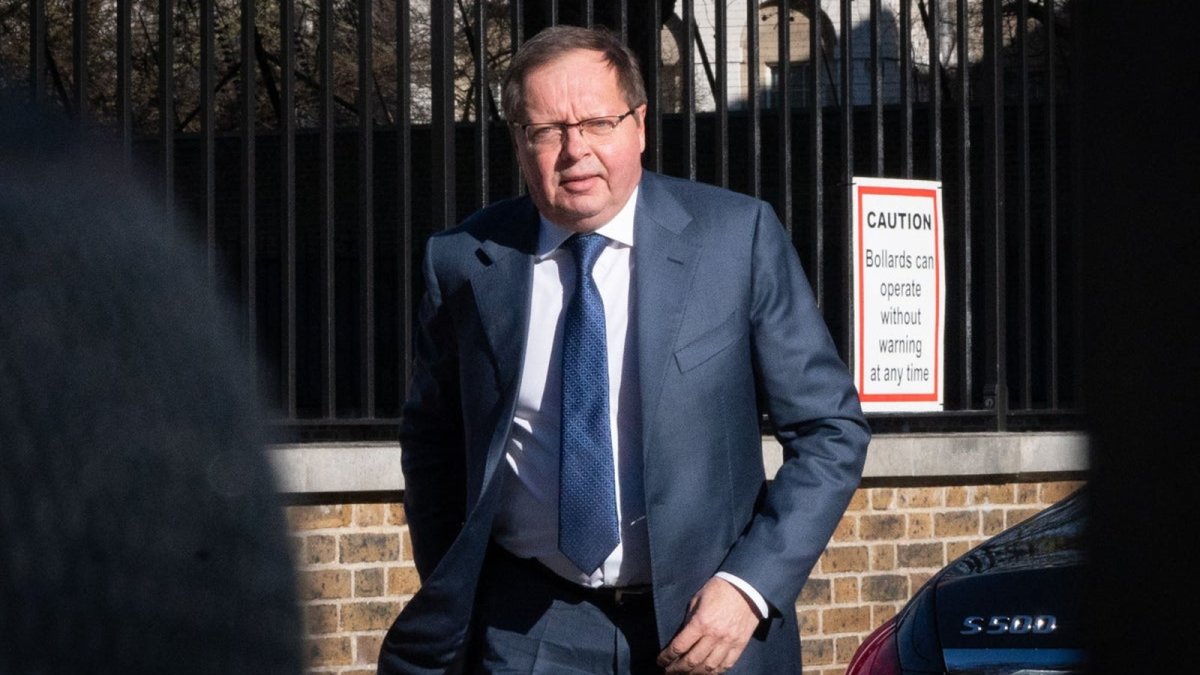
The departure of Russia’s ambassador to the United Kingdom has been confirmed, marking a new low in bilateral relations that have been in freefall since the full-scale invasion of Ukraine. Andrey Kelin, who served in the post for over seven years, left London on July 21. According to reports from The Times, Moscow has yet to submit a replacement candidate to the Foreign Office, and there is no indication of when—or if—a successor will be appointed.
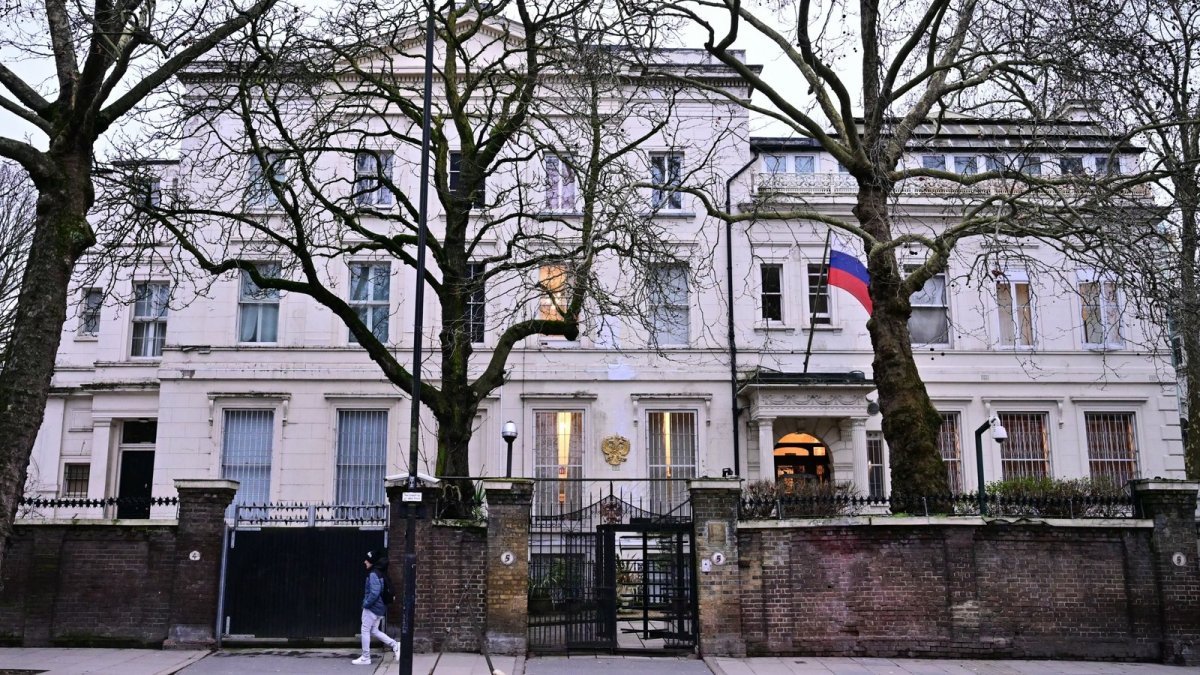
The news, which emerged this afternoon, has sent a clear signal through diplomatic circles in Whitehall. While the Russian embassy in London has formally denied any intention to downgrade the level of diplomatic relations, its own statement conceded that ties have "deteriorated to an unprecedentedly low level entirely on London's initiative." For now, the embassy is being run by a chargé d’affaires, a lower-ranking diplomat who will stand in as de facto ambassador indefinitely.
The timing is significant. Kelin’s exit was first announced on June 11, during an embassy party marking Russia Day—the same day that Britain’s ambassador to Moscow, Nigel Casey, alongside his French and German counterparts, met with Russia’s deputy foreign minister to protest the war in Ukraine. The juxtaposition was not lost on observers. It is unclear why Kelin left his post after such a lengthy tenure, but the delay in naming a replacement has sparked intense speculation that the Kremlin is deliberately seeking to downgrade the relationship.
What the Kremlin says
The Russian embassy in London has moved quickly to manage the narrative, insisting that Moscow is not seeking a formal rupture. A spokesman told The Times that Kelin had made "considerable efforts to preserve contacts and channels of communication" with the UK, but accused the British government of choosing a "path of confrontation" with Russia. "He left Britain in the hope that a more constructive and respectful dialogue could eventually be restored, should the UK reconsider its policies towards our country," the spokesman said. "In the meantime, the embassy is headed by the chargé d’affaires." That statement is carefully worded, but the subtext is unmistakable. The Kremlin is signalling displeasure, and the absence of a new ambassador is a pointed diplomatic snub. A national security source told the Sunday Times that the refusal to appoint a replacement could be a deliberate message from Moscow to express anger at the UK’s ties to Ukraine. "They are basically saying 'you guys don't matter' and that, frankly, London and the UK don't count for anything any more," the source said.Britain’s response: ‘Not fair weather friends’
The Foreign, Commonwealth and Development Office (FCDO) has responded with characteristic understatement, framing the matter as a Russian internal affair. "This is a matter for the Russian Ministry of Foreign Affairs," a spokesperson said. "We have an Ambassador and Embassy in Moscow to engage and raise concerns with the Russian government. We continue to stand shoulder to shoulder with Ukraine, which has the right to defend itself against Russia's illegal and unprovoked invasion." Prime Minister Andy Burnham was rather more direct. Asked what his message to Vladimir Putin was, Burnham said Britain would not be deterred by Russian threats. "This is the UK doing what it has long said it would do, which is to support Ukraine 100 per cent against this illegal war led by Vladimir Putin," he said. "We are providing support so that Ukraine can defend itself, and that's been the British position all the way through this conflict by previous prime ministers. It remains the case with me. We are not fair weather friends. We will be there in Ukraine's hour of need, and that won't change." The Prime Minister’s language is deliberate. By invoking the continuity of British policy across successive governments, he is seeking to reassure Kyiv—and, just as importantly, Britain’s other allies—that the UK’s position is immutable, regardless of Russian diplomatic manoeuvres.The drones row: A flashpoint in recent days
The immediate context for the heightened tensions is the escalating use of British-made equipment by Ukrainian forces. Last week, Russia’s embassy to the UK said reports that Ukrainian forces had used unmanned aircraft manufactured by two UK companies "confirm that London is deliberately opting for an escalation of the Ukraine crisis." The embassy accused Britain of "seeking to contain Russia and inflict maximum damage on it by proxy" and warned that the deeper its involvement becomes, "the higher the price it will pay." In a statement that carried the unmistakable tone of threat, it added: "London's actions will inevitably carry consequences for which it will have to answer." The warning followed reports that British-made drones had been used for the first time by Ukraine in strikes against targets inside Russian territory. For Moscow, this crosses a threshold. The UK has long been one of the most vocal and militarily supportive allies of Ukraine, but the direct use of British-manufactured weaponry on Russian soil represents a new phase in the conflict—one that the Kremlin is clearly determined to punish.
Kelin’s record: A controversial tenure
Andrey Kelin was never a conventional ambassador. Born on May 15, 1957, he served as Russia’s ambassador to the UK since November 2019, a period that encompassed some of the most fraught years in Anglo-Russian relations since the Cold War. His tenure was marked by a consistent and often strident repetition of pro-Kremlin propaganda, which made him a controversial figure in London. Last year, he denied any Russian involvement in the 2018 Salisbury poisonings, claiming they had been "staged" in a plot reminiscent of an Agatha Christie novel. The remark, which sought to cast doubt on the poisoning of former spy Sergei Skripal and his daughter Yulia with the novichok nerve agent, was met with disbelief and derision in British political circles. Kelin repeatedly rejected accusations that Putin was behind the attack, instead suggesting the British government and its secret services had orchestrated the entire episode. In March of this year, he went further, denying a report by the Foreign Office and other European allies that poison from a dart frog had been used to kill the Russian opposition leader Alexei Navalny. Navalny, who died in an Arctic penal colony in February 2024, was the subject of extensive international investigation, and Kelin’s denial flew in the face of forensic evidence and intelligence assessments. His departure, announced at a Russia Day celebration in June, was characteristically low-key. Embassy staff are understood to be in the dark about when a replacement might be appointed, and there is no clarity on whether the Kremlin intends to leave the top post vacant on a permanent basis.What it means: A deliberate downgrade?
The question now is whether Moscow is simply slow-walking the appointment process or actively seeking to downgrade the diplomatic relationship. John Foreman, the former British military attaché in Moscow, has voiced his concerns. "But the embassy's strident statement this week and the huge deterioration of bilateral relations since 2019 and since the start of the war in Ukraine make me wonder if they will permanently downgrade the relationship this time," he said. Foreman’s caution is well-founded. The UK and Russia have maintained diplomatic relations even through the darkest periods of the Cold War, and the presence of an ambassador in London has long been seen as a basic marker of functional state-to-state communication. The decision to leave the post vacant—if it is a decision, rather than bureaucratic inertia—would represent a significant break with that tradition. For Whitehall, the practical implications are manageable. The chargé d’affaires will continue to handle day-to-day diplomatic business, and Britain’s ambassador to Moscow, Nigel Casey, remains in post. But the symbolism is harder to ignore. Russia is signalling that it no longer considers the UK a priority, and that its support for Ukraine has consequences. There is also a domestic political dimension. Burnham’s robust response is designed to reassure the British public that the government is not rattled by Russian posturing. But the withdrawal of an ambassador is not a trivial matter. It is a deliberate act of diplomatic downgrading, and it will be read as such by allies and adversaries alike. The deeper question is what Moscow hopes to achieve. If the aim is to pressure Britain into softening its support for Ukraine, the early signs suggest it will fail. Burnham’s language—"not fair weather friends"—is a direct rebuke to the Kremlin’s assumption that British resolve can be shaken. If the aim is to signal displeasure and nothing more, then the Kremlin has succeeded, but at the cost of further isolating itself from European diplomacy. For now, the embassy in London will be run by a chargé d’affaires, and the UK will continue to press its case in Moscow through its own ambassador. The relationship, already at an unprecedentedly low level, has found a new floor. Whether it will sink further remains to be seen, but the trajectory is unmistakable. This article was produced with AI-assisted research and editorial support. Sources: The Independent, Metro, The Guardian, The Times (via reports). By Erica Thornton, Staff WriterWhat's Your Reaction?
 Like
0
Like
0
 Dislike
0
Dislike
0
 Love
0
Love
0
 Funny
0
Funny
0
 Wow
0
Wow
0
 Sad
0
Sad
0
 Angry
0
Angry
0

Erica Thornton
US Politics and Policy Correspondent at Global1.News. Based in Washington DC, covering American politics, policy, elections, and the courts. Knows how the system works and tells you what it actually means.












Comments (0)