
Kinmen: The Sleepy Fishing Island That Could Be East Asia's Biggest Flashpoint
The paradox of Kinmen is almost too neat for a political scientist to ignore. Here is an archipelago of roughly a dozen islands, administered by the Republic of China (Taiwan) as Kinmen County, whose total land area of about 134 square kilometers and population of approximately 140,000 make it a speck on the map of East Asia. Its main island sits barely two miles from the mainland Chinese coast at the closest point, and roughly 200 kilometers west of Taiwan proper. By day, it is a destination fo
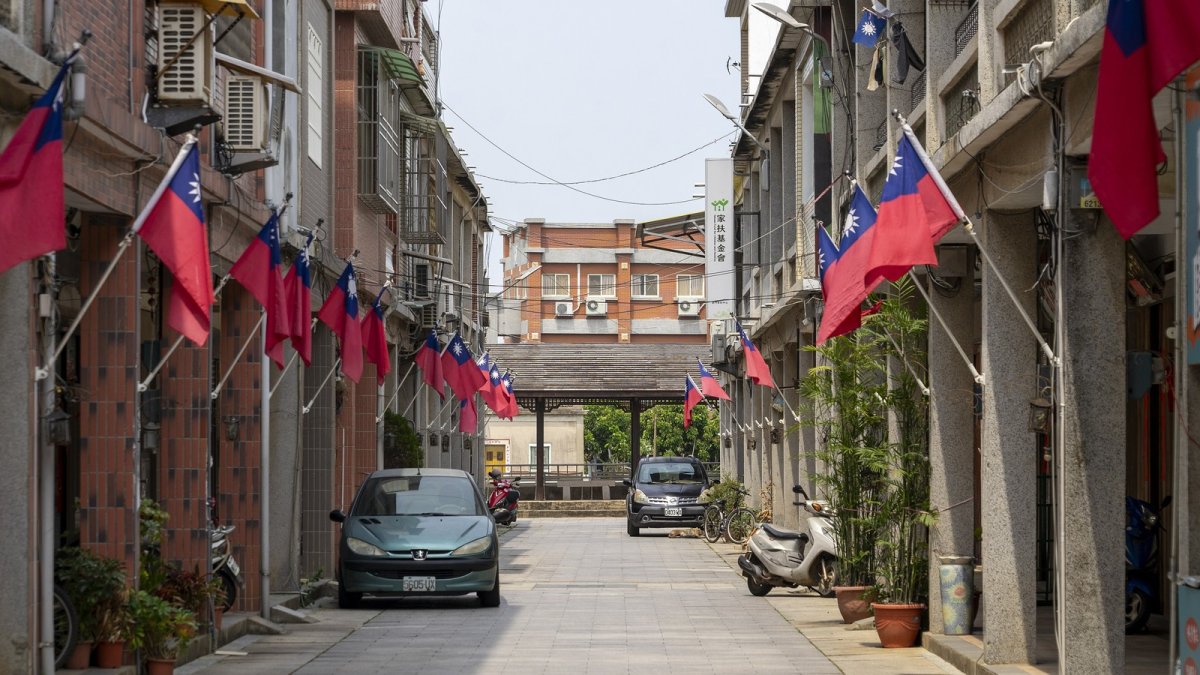
The paradox of Kinmen is almost too neat for a political scientist to ignore. Here is an archipelago of roughly a dozen islands, administered by the Republic of China (Taiwan) as Kinmen County, whose total land area of about 134 square kilometers and population of approximately 140,000 make it a speck on the map of East Asia. Its main island sits barely two miles from the mainland Chinese coast at the closest point, and roughly 200 kilometers west of Taiwan proper. By day, it is a destination for tourists seeking Qing dynasty relics, wind lion god statues, and a famously potent sorghum liquor known as kaoliang, which clocks in at around 58 percent alcohol. By strategic calculation, it is the most exposed piece of ROC-administered territory on the planet—a quiet fishing and tourism economy perched on the very front line of a potential great-power conflict. The tension between those two realities—the sleepy and the strategic—is the defining feature of Kinmen's existence, and it is why the island, rather than the Taiwan Strait's wider waters, may be where East Asia's next crisis begins.
The Island and Its Paradox: A Demilitarized Tourist Haven With a Military Geography
To understand Kinmen, one must first appreciate the peculiarity of its position. The islands lie in Xiamen Bay, off the southeastern coast of Fujian Province, roughly 10 kilometers (6 miles) east of the mainland city of Xiamen. That proximity is not an abstraction; on a clear day, residents can see the lights of Xiamen’s skyline across the water. The island’s culture reflects this in-between status. Its dialect, cuisine, and architecture bear the marks of southern Fujian, yet its political allegiance has been to Taipei since 1949. The result is a place that feels neither fully Taiwanese nor fully mainland Chinese—a hybrid identity forged by decades of conflict and, since 1992, by a deliberate turn toward peace. That peace dividend has been substantial. Following demilitarization in 1992, civilian government was restored, and the islands were opened to trade with Xiamen. Tourism has since become a major industry, drawing visitors to battlefield heritage sites—tunnels and fortifications carved into the island’s granite—as well as to its natural attractions, including rich bird life and oyster beds. The wind lion god statues, a local folk tradition believed to ward off evil spirits, have become a symbol of the island’s quirky, self-contained character. For most of the year, Kinmen feels less like a geopolitical flashpoint than a provincial backwater, a place where the rhythms of fishing and small-scale commerce dominate daily life. Yet geography is unforgiving. The island’s very proximity to the mainland, which makes it a convenient trading partner and tourist destination, is also what makes it strategically indispensable. In any cross-strait contingency, Kinmen would be the first piece of ROC-controlled territory to face pressure—whether from coast guard vessels, naval forces, or, in a worst-case scenario, amphibious assault. The island’s dual identity, as a demilitarized tourist destination and a potential flashpoint, encapsulates the paradox of cross-strait stability itself: the same conditions that make peace possible also make conflict thinkable.The Historical Crucible: Guningtou, the 823 Bombardment, and Two Decades of Shelling
Kinmen’s strategic significance is not a recent development; it is rooted in the bloodiest chapters of the Chinese Civil War’s aftermath. In October 1949, during the final stages of that conflict, the Battle of Guningtou—also known as the Battle of Kinmen—lasted roughly 56 hours and ended with Nationalist (Kuomintang) forces repelling a People’s Liberation Army (PLA) invasion. That victory was decisive, securing the island for the Republic of China at a moment when the Nationalist cause seemed all but lost. It also established a pattern: Kinmen would be held, at great cost, as a forward outpost for a planned reconquest of the mainland—a plan that, under Chiang Kai-shek, was never abandoned in principle. The most dramatic test came on August 23, 1958, when the PLA launched the "823" Artillery Bombardment, firing tens of thousands of shells at Kinmen in the opening hours of the Second Taiwan Strait Crisis. Over 44 days, more than 470,000 shells fell on the islands, and intermittent bombardment—including the famous practice of shelling on odd-numbered days—continued until 1979. Estimates suggest that close to one million shells landed on the islands before the shelling finally stopped. The bombardment was not merely a military operation; it was a political signal, a way for Beijing to assert its claim over Taiwan while testing the limits of American commitment to the Nationalist cause. Scholars of the 1958 crisis note that the shelling ended through a tacit understanding rather than a formal agreement. Neither side publicly conceded the other’s position, but both understood that a full-scale war over Kinmen was not in their interest. That tacit understanding held for decades, allowing the island to become a symbol of Cold War stalemate rather than a trigger for escalation. But the historical memory of those years remains embedded in the island’s landscape—in its tunnels, its fortifications, and its collective psyche. For older residents, the sound of artillery is not a distant abstraction; it is a lived memory.Demilitarization and the Peace Dividend: From Garrison to Tourist Destination
The 1992 demilitarization of Kinmen was a watershed. It marked the formal end of the island’s role as a garrison outpost and the beginning of its transformation into a civilian society. Trade with Xiamen opened up, and tourism became the economic mainstay. The island’s kaoliang liquor, produced from locally grown sorghum, developed a reputation that extended well beyond the Taiwan Strait. The wind lion statues, once a folk tradition, became a tourist draw. The battlefield heritage sites—tunnels and fortifications that had once been instruments of war—were repurposed as museums and memorials. This peace dividend was not merely economic; it was also psychological. For the first time in decades, Kinmen’s residents could imagine a future not defined by the threat of bombardment. The island’s proximity to Xiamen, once a source of vulnerability, became an asset. Cross-strait trade and tourism flourished, and Kinmen developed a distinctive identity as a bridge between the two sides—a place where mainland and Taiwanese influences mingled in ways that were impossible elsewhere. Yet the peace dividend was always conditional. It depended on a broader cross-strait stability that was never guaranteed. The tacit understanding that ended the 1958 shelling was not a formal treaty; it was a fragile accommodation that could be disrupted by shifts in Beijing’s strategy or Taipei’s policies. As the 2020s have shown, that fragility is not merely theoretical.The New Gray-Zone Confrontation: Coast Guard Incursions and the Han Kuang Exercise
The current tensions around Kinmen began in earnest in February 2024, when two Chinese fishermen died after a Taiwan Coast Guard chase near the island. Beijing responded by declaring that it did not recognize Taipei’s so-called "prohibited waters" and dispatched coast guard vessels into the area. Since then, Chinese coast guard vessels have repeatedly entered restricted and prohibited waters around Kinmen, testing the limits of Taiwan’s jurisdiction without triggering a military response. The pattern has intensified in 2026. Taiwan’s Coast Guard Administration reported Chinese vessels intruding into Kinmen waters on June 30. On August 6, Taiwan’s coast guard expelled four Chinese official vessels that entered restricted waters near Kinmen as Taiwan’s Han Kuang exercise began. On August 13, China Coast Guard vessels again entered Kinmen waters during the exercise. And on August 21, 2026, Reuters reported that Taiwan had warned off and shadowed a Chinese research ship sailing near Taiwan’s west coast, with a Taiwan Coast Guard patrol boat operating around the Kinmen islands. Taiwan officials describe these operations as Beijing’s gray-zone strategy—using coast guard activity to assert jurisdiction over Taiwan-controlled waters without triggering a military response. The approach is deliberate and calibrated. By sending civilian or paramilitary vessels rather than naval forces, Beijing can apply pressure while maintaining plausible deniability. The goal is not to seize Kinmen outright, at least not yet, but to erode Taiwan’s claim to exclusive jurisdiction over its surrounding waters and to test the resolve of Taipei and its allies.Why Kinmen Matters Strategically: The Exposed Flank and Escalation Dynamics
Kinmen’s strategic significance lies in its geography. As the ROC-administered territory closest to mainland China, it is the most exposed point in any cross-strait contingency. A clash here—whether between coast guard vessels, fishing boats, or military forces—would not remain localized for long. The island’s proximity to Xiamen means that any escalation would immediately involve major mainland population centers, raising the stakes for Beijing. At the same time, any loss of ROC control over Kinmen would be a profound political blow to Taipei, signaling that its claims to sovereignty are hollow. The regional implications extend beyond the Taiwan Strait. A conflict over Kinmen would draw in the United States, which has maintained a security commitment to Taiwan since the Korean War. Indeed, the Korean War played a pivotal role in shaping the current situation: in June 1950, the outbreak of hostilities on the Korean Peninsula led President Harry Truman to interpose the U.S. Seventh Fleet in the Taiwan Strait, effectively preventing a PLA invasion of Taiwan and freezing the status quo that persists to this day. That decision, driven by Cold War logic, created the conditions for Kinmen’s prolonged standoff. A similar logic would apply today: a crisis over Kinmen would not be contained to the island but would reverberate across the region, affecting Japan, South Korea, and the broader Indo-Pacific security architecture. For South Korea, the parallels are uncomfortable. The Demilitarized Zone (DMZ) on the Korean Peninsula is another frontline where deterrence and daily life intersect, where soldiers and civilians coexist in a state of perpetual alert. Kinmen, with its tourism economy and its military history, is a maritime analogue to the DMZ—a place where the abstract logic of deterrence is made concrete in the lives of ordinary people. A clash here would remind Seoul that the Cold War’s frozen conflicts have not thawed; they have merely changed form.The Paradox of the Sleepy Flashpoint: What Kinmen Means for Cross-Strait Stability
The central paradox of Kinmen is that it is both a symbol of peace and a potential trigger for war. Its demilitarization and economic integration with Xiamen have made it a model for what cross-strait cooperation might look like. Yet its geography makes it the most likely site for a confrontation that could spiral beyond anyone’s control. The gray-zone tactics Beijing has employed since 2024 are designed to exploit this paradox, applying pressure in a way that is difficult to counter without escalation. What would a clash over Kinmen mean for the region? At a minimum, it would shatter the tacit understanding that has governed cross-strait relations since 1979. It would force the United States, Japan, and South Korea to confront the possibility of a conflict they have long sought to avoid. And it would test whether the deterrence architecture built over seven decades—from the Seventh Fleet’s interposition in 1950 to the trilateral U.S.-Japan-ROK cooperation of recent years—can hold in the face of a determined gray-zone campaign. The scholarly lesson of Kinmen is that stability in East Asia is never permanent; it is a product of constant maintenance and recalibration. The island’s sleepy exterior belies its strategic weight. For now, the fishing boats still go out, the tourists still come, and the wind lions still stand guard. But the coast guard vessels are never far away, and the memory of a million shells is never entirely forgotten. Kinmen is a reminder that in Northeast Asia, the line between peace and conflict is often measured in miles—or, in this case, in the two miles that separate the island from the mainland at its closest point. That is a narrow margin, and it is getting narrower by the day. This article was produced with AI-assisted research and editorial support. Sources: The Diplomat, Reuters, Taiwan News, TaiwanPlus, Wikipedia, Kinmen Travel. By Prof. David Park, Staff WriterWhat's Your Reaction?
 Like
0
Like
0
 Dislike
0
Dislike
0
 Love
0
Love
0
 Funny
0
Funny
0
 Wow
0
Wow
0
 Sad
0
Sad
0
 Angry
0
Angry
0

East Asia/Technology Correspondent at Global1.News. Seoul-based voice covering Korean politics, technology, business, and culture. Analyzes how technology and geopolitics intersect across East Asia.












Comments (0)