
CIA Chief Ratcliffe's Moscow Visit Stirs Global Questions
BBC News report, the CIA director's unannounced arrival in Moscow on a US military transport aircraft drew international attention, marking the first known visit by a sitting American intelligence chief to Russia in nearly five years. The trip, which took place on Tuesday, has triggered intense speculation about the nature of the talks and whether they signal a shift in the frozen diplomatic landscape between Washington and Moscow.
In a recent BBC News report, the CIA director's unannounced arrival in Moscow on a US military transport aircraft drew international attention, marking the first known visit by a sitting American intelligence chief to Russia in nearly five years. The trip, which took place on Tuesday, has triggered intense speculation about the nature of the talks and whether they signal a shift in the frozen diplomatic landscape between Washington and Moscow. With neither capital offering official confirmation, the silence itself has become part of the story, raising questions about what urgent matter could justify such a high-risk, high-level encounter.
CIA Chief's Secret Moscow Visit Stirs Global Questions
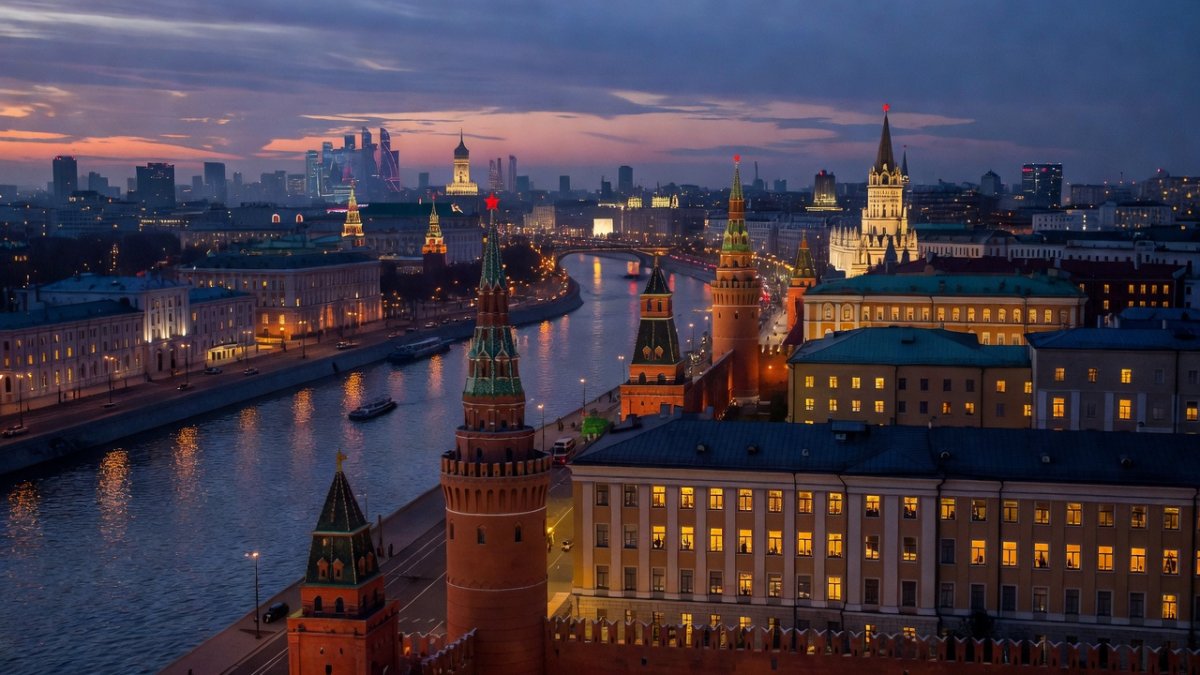
Moscow, Russia – 25 August 2026 — The head of the Central Intelligence Agency has arrived in the Russian capital for unannounced talks, a rare high-level encounter between Washington and Moscow that has sent ripples through diplomatic and intelligence circles. CIA Director John Ratcliffe landed at Vnukovo Airport aboard a US military C-17 transport aircraft on Tuesday morning, according to flight tracking data and social media footage. Neither the White House nor the Kremlin has confirmed the purpose of the visit, leaving analysts and foreign ministries across Europe to parse the limited available details.

A Rare Arrival in the Russian Capital
The circumstances of Ratcliffe's arrival were as unusual as the visit itself. Flight tracking data from FlightRadar24 showed a US Air Force C-17 Globemaster III departing Joint Base Andrews in Maryland, the home of Air Force One, and flying via Riga, Latvia, before landing at Moscow's Vnukovo Airport at approximately 07:04 GMT. The aircraft had departed Riga at 05:50 GMT, a tight turnaround that suggests a carefully choreographed operation. Social media footage circulating online showed the C-17 approaching Vnukovo, and separate clips purported to show a diplomatic motorcade moving through Moscow streets, though these could not be independently verified.
The aircraft returned to Riga shortly before 17:00 GMT the same day, completing a round trip that lasted less than twelve hours on the ground in Russia. The Kremlin, when asked by journalists about the landing, said it had no information about the C-17's arrival, a response that itself is notable given the usually meticulous nature of Russian state messaging. The choice of Vnukovo, a government and VIP airport, rather than the commercial hubs of Sheremetyevo or Domodedovo, underscores the official character of the visit, even as both sides maintain a public posture of ignorance.
Why the CIA Chief Travels Now
The timing of Ratcliffe's trip comes against a backdrop of stalled diplomacy and escalating military tensions. US-led efforts to broker a Russia-Ukraine peace deal have made little visible progress, and a much-publicized summit between President Donald Trump and Vladimir Putin in Alaska last year ended without a breakthrough. This summer, both sides have escalated airstrikes deep inside each other's territory, with Ukrainian drones striking targets in Russian cities and Russian missiles hitting Ukrainian infrastructure, creating a cycle of retaliation that has dimmed hopes for a negotiated settlement.
John Foreman, the British military attaché to Moscow from 2019 to 2022, told BBC Radio 4's PM programme that the visit could be about "escalation management," particularly given speculation that recent drone activity in Germany could be linked to Russia. "The Americans don't normally send such a high ranking official to Moscow unannounced at short notice unless something is up," Foreman said, adding that the trip could also concern the release of US detainees held in Russia. His assessment reflects a broader view among Western analysts that the visit is reactive rather than proactive, a response to a specific crisis or opportunity rather than a planned diplomatic initiative.
Moscow's Silence and a Deliberate Signal
The official silence from both Washington and Moscow is itself a form of communication in the world of intelligence diplomacy. When the Kremlin tells journalists it has no information about a US military aircraft landing at one of its most sensitive airports, it is a deliberate signal that Moscow does not wish to acknowledge the visit publicly. Similarly, the CIA and the White House have offered no comment, allowing the ambiguity to serve their purposes. This is standard practice for sensitive intelligence exchanges, where public acknowledgment can undermine the very channels being used.
Ratcliffe has maintained regular contact with his Russian counterpart, Sergei Naryshkin, the director of Russia's Foreign Intelligence Service, or SVR. This ongoing channel, established during Ratcliffe's tenure, provides a direct line between the two intelligence agencies even as broader diplomatic relations remain frozen. The fact that Ratcliffe chose to travel in person, rather than rely on secure communications or a third-party intermediary, suggests that the matters at hand required face-to-face discussion. Intelligence professionals note that such visits are reserved for issues of the highest importance, where nuance and trust cannot be conveyed through encrypted channels alone.
Detainees and the Prisoner Pipeline
One of the most plausible explanations for Ratcliffe's visit concerns the fate of US citizens held in Russian prisons. Ratcliffe played a role in negotiations for the release of Ksenia Karelina, a Russian-American citizen jailed in Russia for over a year after being accused of providing support to Ukraine. The CIA was also involved in the 2024 prisoner swap that freed Wall Street Journal reporter Evan Gershkovich, former US marine Paul Whelan, and Russian-American journalist Alsu Kurmasheva, a complex exchange that required months of quiet diplomacy.
Earlier this month, Moscow freed a former US marine who had been detained since 2022 amid health concerns, a move that was seen as a goodwill gesture but also as a signal that further exchanges might be possible. Foreman suggested that the release of US detainees could be a central topic of Ratcliffe's discussions, noting that such humanitarian issues often provide a face-saving framework for broader conversations. The prisoner pipeline between Washington and Moscow has been one of the few areas of cooperation that has survived the rupture in relations, and Ratcliffe's personal involvement in previous cases makes him a natural envoy for this issue.
A Channel Between Adversaries
Ratcliffe's visit follows a pattern of high-level US officials traveling to Moscow despite the broader diplomatic freeze. Special envoys Steve Witkoff and Jared Kushner met Putin in January for Ukraine peace negotiations, and in July, Politico reported that FBI Director Kash Patel was planning an October trip to Moscow and St Petersburg. These visits, while unannounced and often underreported, represent a parallel track of communication that exists alongside the more visible diplomatic efforts. The last CIA director to visit Russia was William Burns, who met Nikolai Patrushev, then the Security Council secretary, in November 2021, just months before the full-scale invasion of Ukraine.
The Financial Times reported that the Trump administration asked Kyiv to pause long-range strikes on major Russian cities during Ratcliffe's visit, a request that suggests Washington is seeking to de-escalate the conflict as part of the intelligence discussions. An anonymous source told The Kyiv Independent that the US asked Ukraine to halt strikes on Moscow and St Petersburg ahead of Ratcliffe's trip, and that Ukraine would be briefed on his meetings. If accurate, this would indicate that the visit is not merely about intelligence matters but is part of a broader US effort to manage the trajectory of the war, even as peace talks remain stalled.
Analysis and Implications
The significance of Ratcliffe's visit should not be underestimated, even if its immediate outcomes remain unclear. Analysts suggest this signals a recognition in Washington that the current trajectory of the conflict is unsustainable, and that direct communication with Moscow is necessary to prevent further escalation. The Iran dimension adds another layer of complexity, as Monday's announcement by US Treasury Secretary Scott Bessent of a new sanctions strategy to isolate Iran could create friction with Moscow, which has deepened its ties with Tehran in recent years. Ratcliffe's discussions may have touched on this issue, as the US seeks to prevent Russia from undermining its Iran policy.
Whether this visit represents genuine escalation management or the opening of a new diplomatic channel remains to be seen. The fact that Ratcliffe traveled in person, rather than relying on established communication lines, suggests that both sides see value in direct engagement. For ordinary Russians, the visit is a reminder that their country remains isolated and under international sanctions, even as its leadership engages in high-stakes diplomacy with its adversaries. For the region, the implications are profound: a de-escalation could ease tensions across Eastern Europe, while a failure could lead to further escalation. The coming weeks will reveal whether this secretive meeting was a turning point or merely a pause in a longer conflict.
By Irina Volkov, Staff Writer
This article was produced with AI-assisted research and editorial support. Reporting is based on sources cited in the article.
What's Your Reaction?
 Like
0
Like
0
 Dislike
0
Dislike
0
 Love
0
Love
0
 Funny
0
Funny
0
 Wow
0
Wow
0
 Sad
0
Sad
0
 Angry
0
Angry
0
Russia/Eastern Europe Correspondent at Global1.News. Covering Russian politics, energy, security, and the shifting dynamics of the post-Soviet space. Provides clear-eyed analysis on one of the world's most opaque regions.












Comments (0)