
Patti LaBelle's Six-Decade Reign: Still Singing, Still Unstoppable
At 82 years old, Patti LaBelle is doing what she has done for more than six decades: stepping onto a stage and refusing to slow down. The Philadelphia-born icon, whose voice carried "Lady Marmalade" around the world, has spent 2026 proving that legacy is not a finish line but a continuing conversation — one that African audiences, raised on the same soul and gospel currents she helped shape, have followed with devotion.
At 82 years old, Patti LaBelle is doing what she has done for more than six decades: stepping onto a stage and refusing to slow down. The Philadelphia-born icon, whose voice carried "Lady Marmalade" around the world, has spent 2026 proving that legacy is not a finish line but a continuing conversation — one that African audiences, raised on the same soul and gospel currents she helped shape, have followed with devotion.
Patti LaBelle's Six-Decade Reign: Still Singing, Still Unstoppable
Dakar, Senegal — When Patti LaBelle looks back on a career that began in the 1960s, when she entered the music business at just 14 years old, she measures her survival against the sisters she lost too young. "I think of my sisters who all passed before they turned 50," she has said, "and so I thought that I would be one who also would have a lifetime to leave at a certain age. So, when I turned 70, I said, 'I'm still doing it.'" That defiance — part gospel testimony, part Philadelphia grit — has made her one of the most beloved figures in Black music, and it is resonating again in a year full of new projects, milestone tours, and a long-awaited return to R&B recording.
A Legacy That Refuses to Fade
In September 2025, africanews released a video portrait of Patti LaBelle's legacy, tracing a career that has now spanned six decades and shows no signs of dimming. The portrait arrived at a moment when the global music industry is finally reckoning with the staying power of its Black female pioneers — and LaBelle stands at the front of that conversation, her voice as commanding as ever.
Her arc is remarkable by any measure: from the 1960s girl-group era, when she first stepped into recording studios as a teenager, through the funk and soul revolutions of the 1970s, the pop crossover moments of the 1980s, and into a 21st century where she has become something rarer than a star — a living institution. The africanews feature captured not just the hits but the philosophy that has kept her going while so many of her peers have retired or passed on.
That philosophy is rooted in loss. LaBelle has spoken openly about outliving her sisters, all of whom died before turning 50, and how that grief transformed into a determination to live fully. "You can't stop living," she has said, and those words have become something of a mantra for her fans — particularly in Africa, where elders are revered precisely because they carry the memory of those who came before.
Her endurance matters beyond the personal. For Black music worldwide, LaBelle represents a through-line from the church pews of the American South to the global stages of today. She is the connective tissue between gospel's raw emotional power and pop's polished sheen, and her refusal to fade has given younger artists permission to age publicly, to keep creating, to refuse the industry's cruel habit of discarding its women.
Today, she is known as the "Godmother of Soul" — a title that places her in a lineage that African listeners understand deeply. In Senegal, we have our own griots who sing for decades, whose voices carry the weight of history. LaBelle belongs to that same tradition, even if her geography is different. Her voice, still powerful at 82, is proof that the spirit does not have to retire.
From Philadelphia to 'Lady Marmalade'
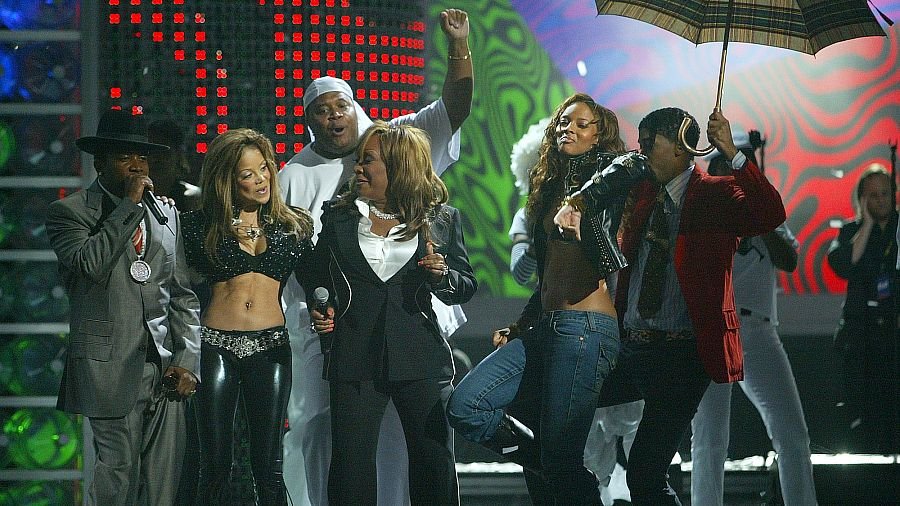
Patti LaBelle's story begins in the 1960s, when she entered the music business at just 14 years old, a teenager from Philadelphia with a voice that seemed to come from somewhere older and wiser. She fronted the namesake group Labelle, a trio that evolved from the girl-group sound of the early 1960s into something far more adventurous — a fusion of rock, funk, and theatrical performance that was decades ahead of its time.
The breakthrough came with "Lady Marmalade," a #1 hit from the iconic 1974 album "Night Birds." The song, with its French Creole chorus and its unapologetic swagger, became an anthem that has never really left the cultural bloodstream. It has been covered, sampled, and referenced countless times, but the original remains definitive — LaBelle's vocal performance is a masterclass in control and release, building from a whisper to a roar.
When Labelle disbanded, LaBelle launched a solo career that produced some of the most enduring R&B of the 1980s. "If Only You Knew" became a wedding staple and a slow-dance classic, while "New Attitude" captured the energy of a decade that was redefining Black pop. These songs were not just hits; they were soundtracks to lives, played at family gatherings and church picnics and school dances across the African diaspora.
She also moved into acting, appearing in films and television shows that extended her reach beyond music. But it was always the voice that mattered most — a voice that grew from gospel and church roots, from the call-and-response of the Black American church, from the polyrhythms and spirituals that were carried to the Americas from Africa centuries ago.
That African connection is not incidental. The genres LaBelle represents — gospel, soul, R&B — are all built on foundations that originated on this continent. The call-and-response patterns she uses on stage are the same ones heard in Senegalese mbalax and Nigerian highlife. The emotional directness of her delivery echoes the griot tradition. When she sings, she is completing a circle that began on the west coast of Africa.
The Queens Tour: Four Legends, One Stage
This year, LaBelle has been sharing stages with three other legends on The Queens: 4 Legends 1 Stage Tour, alongside Chaka Khan, Gladys Knight, and Stephanie Mills. Produced by The Black Promoters Collective, the tour is a celebration of Black female excellence that has drawn audiences across generations — grandmothers who grew up with these voices, daughters who inherited them, and granddaughters who are discovering them anew.
The second leg of the tour kicked off in Greensboro, North Carolina, with each artist performing a 45-minute set on a rotating stage — a design that keeps the energy flowing and gives each legend her moment to shine. The setlists read like a greatest-hits compilation of Black music history: Khan's "I'm Every Woman" and "Sweet Thing," Knight's "Midnight Train to Georgia" and "Neither One of Us," Mills' "Home" and "Never Knew Love Like This Before," and LaBelle's "The Right Kinda Lover" and "You Are My Friend."
What makes the tour special is the audience. Fans tell the artists "I was weaned on you" — and they mean it literally, across three generations. Mothers who played these records in the 1970s now bring their daughters and granddaughters, creating a living archive of Black musical memory. The concerts become family reunions, with strangers singing together as if they have known each other for decades.
Khan and Knight are both in the Rock & Roll Hall of Fame, and Mills and LaBelle have legacies that rival any inductee. The tour's second leg wrapped October 5 in Cleveland, a city that knows something about the history of Black music. For African fans who grew up on these voices — who heard them on radio stations in Dakar, Lagos, and Nairobi — the tour is a reminder that these artists belong to the entire diaspora, not just to America.
Legacy tours like this matter because they create spaces where Black women are honored for their longevity rather than dismissed for their age. In an industry that often values youth above all, The Queens Tour is a radical statement: these voices have only grown richer with time. For African audiences, who revere their own elders and consult them on matters of family and community, this is a familiar and welcome value.
Africa's Soul Connection
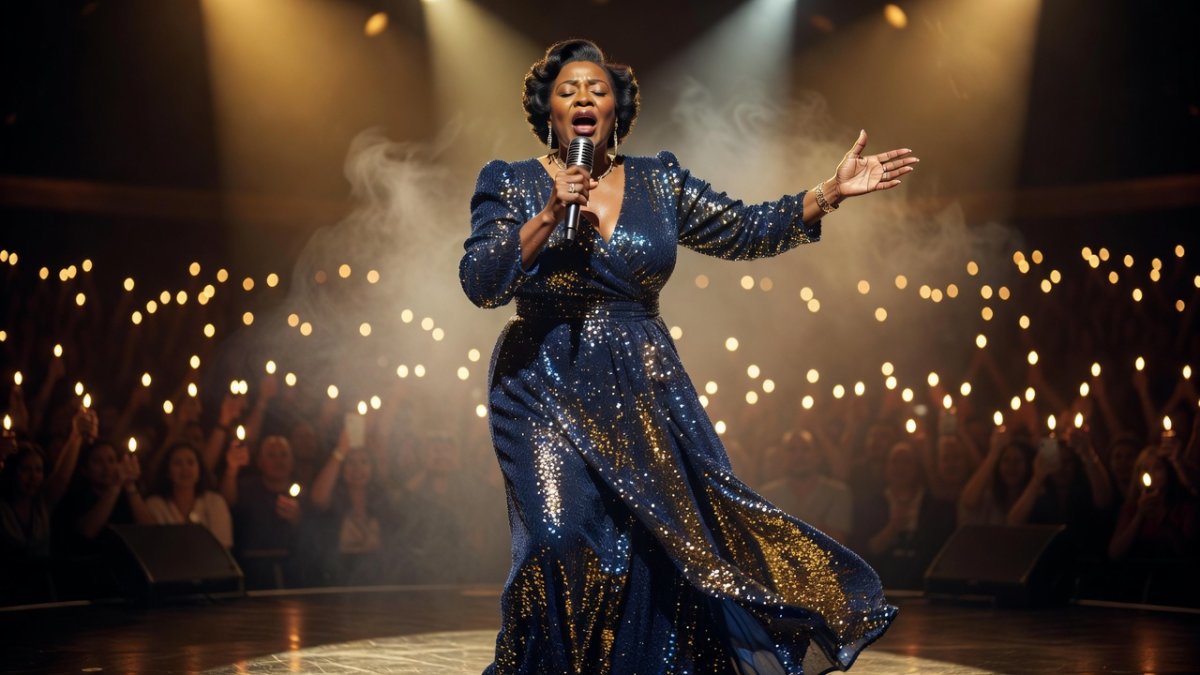
The music Patti LaBelle represents did not originate in America. R&B, soul, and gospel — the traditions she has spent six decades perfecting — were carried to the Americas from Africa, transported in the hearts and memories of enslaved people who refused to let their culture die. The rhythms, the call-and-response, the emotional openness, the sense that music is both personal and communal: all of this came from here.
Now that music is traveling home again. LaBelle's songs have resonated across the continent, from Dakar to Lagos to Johannesburg, played on radio stations and at weddings and in nightclubs where young people dance to sounds their grandparents would recognize as kin. The connection is not abstract; it is felt in the body, in the way a LaBelle ballad can bring a room to silence and then to tears.
Her endurance finds parallels in African legends who have also refused to slow down. Youssou N'Dour, Senegal's own global ambassador, has been performing for more than four decades and shows no signs of stopping. Baaba Maal, another Senegalese icon, continues to tour and record well into his sixties. Salif Keita, the golden voice of Mali, remains a force. And Angélique Kidjo, the Beninese-Belgian powerhouse, made history this year as the first African musician honored on the Hollywood Walk of Fame — a milestone that echoes LaBelle's own trailblazing path.
What African artists can learn from LaBelle is the art of reinvention. She has moved from girl group to funk band to solo R&B star to television personality to food entrepreneur, never allowing herself to be trapped in a single identity. That flexibility is a survival skill, and it is one that African musicians — who often face pressure to stay in one genre or one market — would do well to study.
She also models creative survival in a way that resonates with a continent that values its griots and elders. In many African cultures, the elder is not someone to be set aside but someone to be consulted, honored, and learned from. LaBelle embodies that principle on a global scale, showing that age is not a decline but an accumulation — of wisdom, of craft, of the authority that only comes from decades of doing something well.
A Year of New Beginnings
Patti LaBelle turned 82 in May 2026, and she marked the occasion with characteristic defiance. She said she is "living it down, not up" — a phrase that captures her refusal to treat age as a limitation — while acknowledging that she has "earned" her legend status. It is a rare combination of humility and confidence, and it has defined her approach to this milestone year.
The 80/65 Tour, celebrating eight decades of life and six decades of music, has been bringing her to audiences across America. The tour was brought to MGM Northfield in April 2026 and continued to Cleveland in May, giving fans in the Midwest a chance to see her in intimate settings that highlight her vocal power and her connection with audiences.
In June, she returned to New York for BRIC Celebrates Brooklyn! in Prospect Park on June 26, sharing the bill with Lady Wray and MORENBPLEASE. The outdoor concert was a homecoming of sorts, a chance for the East Coast audiences who have followed her since the beginning to celebrate her continued presence. The energy at Prospect Park was electric, with fans of all ages singing along to songs that have defined their lives.
The biggest news came in an exclusive interview in which she revealed she is recording her first R&B album in 20 years. "Before the year is up, hopefully you'll have a new Patti LaBelle project," she said, and the announcement sent ripples through the music world. At an age when most artists are compiling greatest-hits packages, LaBelle is creating new music — a statement about her belief that her best work may still be ahead.
The Essence Festival of Culture announced her among the first wave of performers for July 3-5 at the Caesars Superdome in New Orleans, alongside Brandy, Monica, Kehlani, Cardi B, and Latto. The lineup spans generations of Black music, and LaBelle's presence anchors it with six decades of authority. She will be the elder stateswoman on a bill full of younger stars, and her set will be a masterclass in how it is done.
And in a move that shows her entrepreneurial spirit remains sharp, she is launching a new syrup from her popular food line. Patti LaBelle's culinary empire — built on her famous sweet potato pie, which once caused a national frenzy when a Walmart shopper's video of her buying them went viral — continues to grow, proving that her brand extends far beyond music.
What to Watch For
The new R&B album, expected before the end of 2026, is the headline event. It will be her first full-length R&B project in two decades, and it promises to be a statement — a woman in her eighties returning to the genre that made her famous, with all the wisdom and vocal power she has accumulated. The anticipation is building, and early reports suggest she has been working with producers who understand both her legacy and the contemporary sound.
Her Essence Festival headline moment in New Orleans will be another milestone. The festival, which draws hundreds of thousands of attendees each year, is the largest celebration of Black culture in America, and LaBelle's set will be one of its most anticipated moments. For African fans who travel to New Orleans for the festival, it will be a chance to see a living legend in person.
Continued touring and legacy collaborations are also on the horizon. The Queens Tour demonstrated that there is enormous appetite for these legends sharing stages, and more such collaborations are likely. The symbolism of a woman in her eighties releasing the music of her youth is powerful — it says that creativity does not have an expiration date, that the voice does not have to fade, that the stories are not finished being told.
What her next chapter says about the staying power of Black music is profound. For decades, the industry has treated Black artists — especially Black women — as disposable, replacing them with younger models as soon as their commercial peak passes. LaBelle's continued relevance is a rebuke to that logic. She has outlasted trends, genres, and generations of executives, and she is still here, still singing, still creating.
For African audiences, who revere their own elders and who understand that wisdom comes with time, LaBelle is a model of how to age in public with grace and power. She is not hiding her age; she is celebrating it. She is not resting on her legacy; she is building on it. She is not looking back; she is looking forward, to the next song, the next tour, the next chapter.
Her words — "At this age, don't be afraid to do anything … you can't stop living" — are a gift to all of us. In a world that often tells us to slow down, to step aside, to make room for the young, Patti LaBelle says no. She says keep going. She says the best is yet to come. And when she sings it, you believe her.
By Amara Diop, Staff Writer
This article was produced with AI-assisted research and editorial support. Reporting is based on sources cited in the article.
What's Your Reaction?
 Like
0
Like
0
 Dislike
0
Dislike
0
 Love
0
Love
0
 Funny
0
Funny
0
 Wow
0
Wow
0
 Sad
0
Sad
0
 Angry
0
Angry
0

West Africa/Sahel Correspondent at Global1.News. Dakar-based journalist covering politics, security, climate, and development across Francophone and Anglophone West Africa. Tells the stories of a region undergoing profound transformation.













Comments (0)