
Child among 3 Palestinians killed in Gaza amid persistent Israeli attacks on civilians
Three Palestinians, including a 10-year-old child, were killed on Monday in Israeli attacks across the Gaza Strip, even as a ceasefire that ostensibly took effect last October continues to be violated on a daily basis, according to medical sources and witnesses who spoke to.
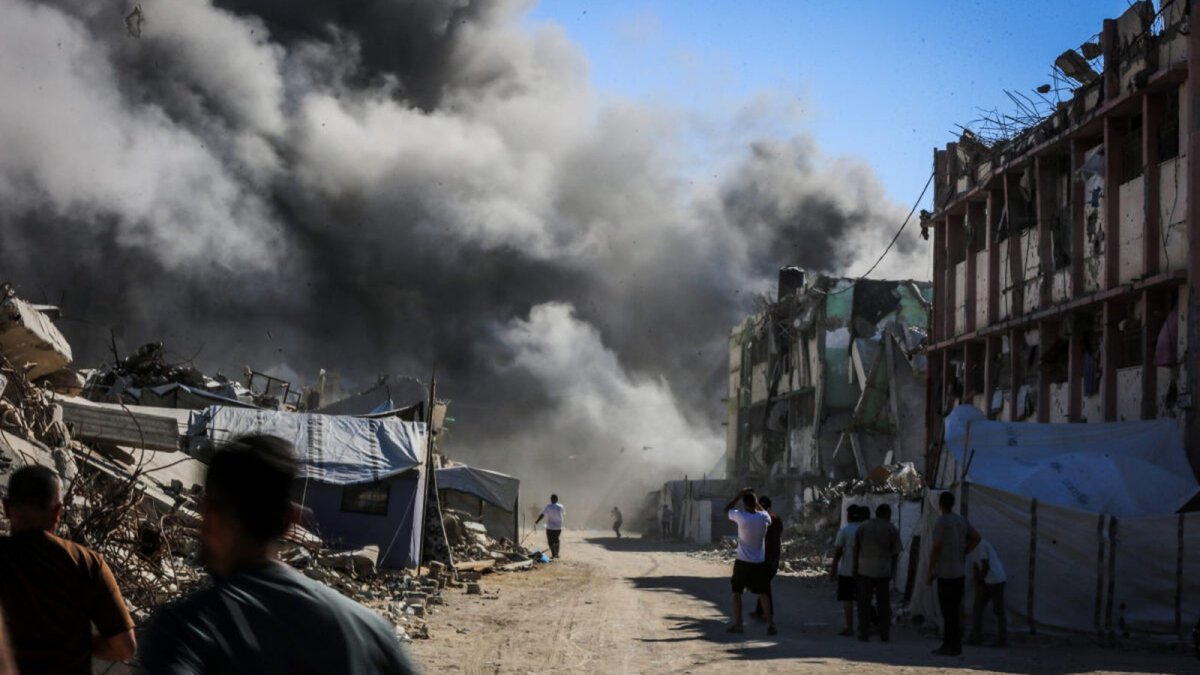
Three Palestinians, including a 10-year-old child, were killed on Monday in Israeli attacks across the Gaza Strip, even as a ceasefire that ostensibly took effect last October continues to be violated on a daily basis, according to medical sources and witnesses who spoke to Anadolu Agency.
The October 2025 ceasefire, brokered after months of intense regional diplomacy, was meant to usher in a phased withdrawal of forces and a surge of humanitarian relief. Instead, residents describe a grinding war of attrition that continues to claim lives, destroy homes, and prevent any meaningful return to normalcy. For the families of the latest victims, the ceasefire has become a legal abstraction with little bearing on the ground, where Israeli drones, artillery, and gunfire remain a constant presence.
Child Killed in Khan Younis as Gunfire Targets Homes and Tents
A medical source at Nasser Hospital in Khan Younis told Anadolu that the body of 10-year-old Amal Nashat Abu Khater, along with two injured Palestinians, had been brought to the hospital after Israeli forces targeted local homes and displacement tents with gunfire. Witnesses also reported that Israeli military vehicles had fired on the city's Satr area, injuring three Palestinians.
Eyewitnesses in the city also reported heavy Israeli gunfire directed at tents housing displaced people. Human-rights organizations have repeatedly documented strikes on such shelters, arguing that they constitute a violation of international humanitarian law, which requires distinguishing between military targets and civilian objects. The death of a child in a tent camp, far from any reported frontline, raises urgent questions about the rules of engagement that remain in force even under a declared truce.
Two Brothers Killed in Drone Strike on Displacement Tents in Deir al-Balah
In central Gaza, two Palestinian brothers were killed when an Israeli drone struck a tent sheltering displaced people near the Shuhadaa Al-Aqsa Hospital in Deir al-Balah. An Anadolu correspondent, citing a local medical source, identified the dead as Mohammed Abdul Nasser Abu Asad, 27, and Ibrahim Abdel Nasser Abu Asad, 24, who died from injuries sustained in the strike. Several others were injured in the attack.
The strike on the tented camp highlights the particular vulnerability of the estimated 2.15 million Palestinians who have been displaced by persistent Israeli attacks. Makeshift shelters, often clustered near medical facilities, have repeatedly been hit despite their civilian character. The Abu Asad brothers, who had likely sought safety in the shadow of the hospital, became the latest casualties of a war that has made no space safe.
Gaza City Casualties and a Deadly Cafe Strike
In Gaza City, two Palestinians, including a woman, were injured by Israeli army gunfire in the Zeitoun and Shujaiya neighborhoods, a medical source told Anadolu.
Separately, two Palestinians died at Nasser Hospital in Khan Younis from injuries sustained in two separate Israeli attacks on the city on Sunday and last Wednesday, a medical source said. Another man also died from injuries sustained in an Israeli strike on a Gaza City cafe on Wednesday. That attack killed eight Palestinians and injured 14 others, according to a medical source at Al-Shifa Hospital.
The strike on the cafe is particularly telling of the changing nature of the conflict. Cafes, which had begun to reopen as tentative signs of life returned to the streets during the ceasefire, have become gathering points for a population starved of normalcy. Targeting such a space not only kills and maims but also delivers a chilling message: that even the most mundane acts of civilian life — sharing a meal, meeting friends, seeking a moment of respite — are not safe.
Ceasefire Violations Mount Despite US Calls for Restraint
The Israeli aggression has continued on a daily basis despite an earlier call by US President Donald Trump for Israel to halt its attacks on the embattled Palestinian enclave. In an interview with Fox News last week, Trump said that Israel "should not be striking in Gaza." Hamas, he added, had "agreed to lay down their weapons" under a US-backed peace plan.
On Monday, Gaza's government media office said Israel had committed 4,379 ceasefire violations since the ceasefire deal ostensibly took effect. The figure, provided by the Hamas-run media office, was not independently verified, but it reflects the scale of the disconnect between the declared truce and the reality on the ground.
The president's remarks, while notable for their directness, have not translated into tangible pressure on Israel to alter its military posture. For Palestinians, the daily violations are not merely statistics; each drone strike, artillery barrage, or sniper shot that claims a life chips away at the already fragile trust in the international mechanisms designed to enforce the agreement.
Aid Deliveries Far Below Agreed Levels
On humanitarian aid, the media office said only 66,607 aid trucks had entered the Gaza Strip out of 189,000 that had been supposed to enter by Monday. Israel continues to block agreed-upon aid deliveries from entering Gaza, where around 2.4 million Palestinians live, roughly 2.15 million of whom have been displaced by persistent Israeli attacks.
The shortfall has deepened a humanitarian crisis in which the UN estimates that around 90 percent of civilian infrastructure has been destroyed. Humanitarian agencies have warned that the limited supplies that do enter are insufficient to meet even the most basic needs, with malnutrition rates among children reaching alarming levels. The blockade, critics argue, amounts to a collective punishment of the civilian population, a violation of international law that has been repeatedly condemned by UN officials but has yet to prompt meaningful action.
Freedom of Movement Restricted at Rafah Crossing
Regarding freedom of movement, the media office said Israel had only allowed 11,759 people to leave the strip out of 29,800 who had been supposed to depart the territory after the reopening of the Rafah border crossing with Egypt. The restricted movement has trapped thousands of Palestinians, including medical patients and students, inside the enclave.
The media office called on Egypt, Qatar and Türkiye — as well as guarantors of the ceasefire agreement — to pressure Israel to implement the terms of the deal and halt its continued violations. For thousands of Palestinians approved for medical treatment abroad, each day of delay can mean the difference between life and death, particularly for those suffering from chronic conditions or war-related injuries that local hospitals can no longer treat.
Post-Ceasefire Death Toll and the Broader Human Cost
In a report released Monday, Gaza's Health Ministry said hospitals had received two bodies and 32 injured people over the past 24 hours, without specifying the circumstances. The ministry added that the post-ceasefire death toll currently stands at 1,288, with another 4,290 injured, in addition to 813 bodies recovered from the rubble of destroyed buildings and infrastructure.
The overall death toll from Israel's ongoing war on the Gaza Strip since October 2023 currently stands at 73,422 killed and 174,401 injured, the ministry added. Numerous victims remain buried under the rubble, with ambulance and civil-defense teams unable to reach them, it said. Alongside the casualties, most of whom are women and children, Israel has destroyed around 90 percent of Gaza's civilian infrastructure, with the UN estimating total reconstruction costs at some $70 billion.
The figures point to a continuing pattern of daily deaths even in the period nominally covered by the ceasefire. For the families of those killed on Monday — including the parents of 10-year-old Amal Nashat Abu Khater — the distinction between war and truce has become increasingly academic.
What This Means
The post-ceasefire death toll of 1,288 is not merely a number; it represents a sustained pattern of violence that has made a mockery of diplomatic efforts to end the war. The 813 bodies recovered from the rubble serve as a grim reminder that the true cost of the war is still being counted. The UN's estimate of $70 billion for reconstruction, set against the backdrop of a blockade that prevents even basic building materials from entering, suggests that Gaza's recovery will take decades, if not generations. For the civilians who survive, the ceasefire has delivered neither peace nor justice, only a precarious existence in a landscape of ruins.
This article was produced with AI-assisted research and editorial support. Sources: Middle East Monitor (Anadolu Agency).
By Fatima Al-Rashid, Staff Writer
What's Your Reaction?
 Like
0
Like
0
 Dislike
0
Dislike
0
 Love
0
Love
0
 Funny
0
Funny
0
 Wow
0
Wow
0
 Sad
0
Sad
0
 Angry
0
Angry
0

Gulf/MENA Correspondent at Global1.News. Based in Doha, covering Gulf politics, energy markets, diplomacy, and development across the Middle East and North Africa. Tracks the economic transformation of the Gulf states.














Comments (0)