
Israel Admits Killing Hind Rajab as Family Demands International Justice
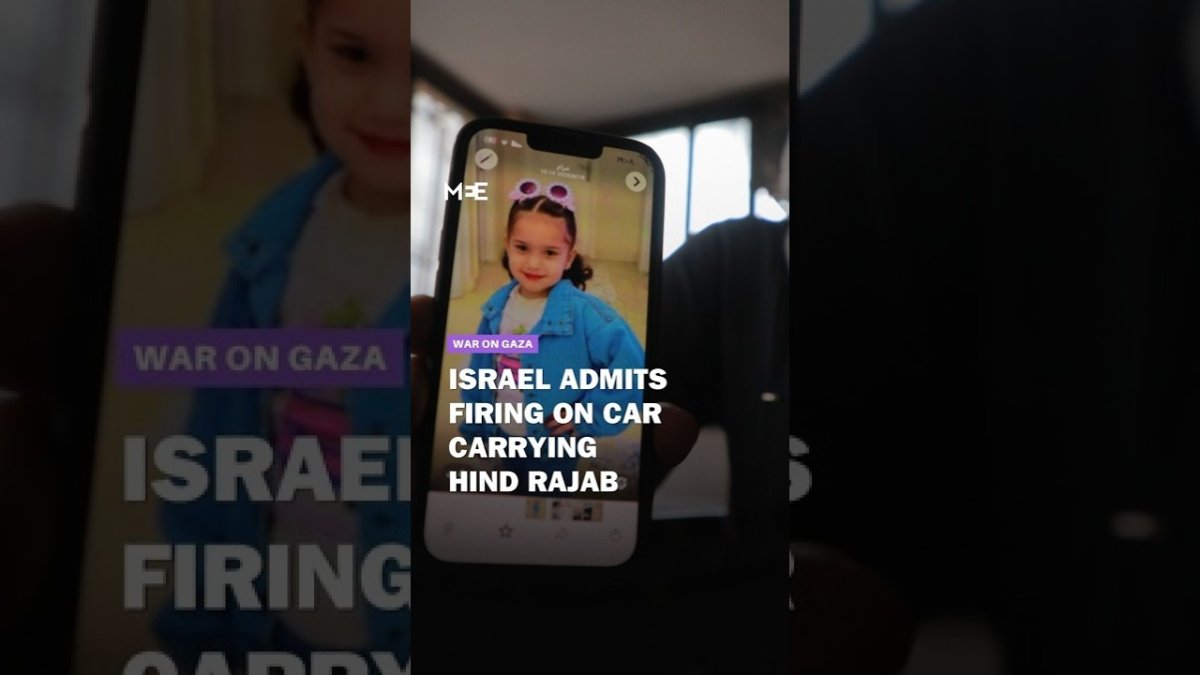
In a recent Middle East Eye video report, the family of five-year-old Hind Rajab reacted with grief and defiance to the Israeli military's first-ever admission that its troops opened fire on the vehicle carrying the child and her relatives in Gaza City two-and-a-half years ago. The admission, announced on 19 August 2026, marks a historic shift in Israel's official position, yet for the family it is not justice—it is a calculated attempt to "justify" an execution.
In a recent Middle East Eye video report, the family of five-year-old Hind Rajab reacted with grief and defiance to the Israeli military's first-ever admission that its troops opened fire on the vehicle carrying the child and her relatives in Gaza City two-and-a-half years ago. The admission, announced on 19 August 2026, marks a historic shift in Israel's official position, yet for the family it is not justice—it is a calculated attempt to "justify" an execution.
Israel Admits Killing Hind Rajab, Opens Flawed Probe
Gaza City, Palestine – August 2026 — The Israeli military has for the first time acknowledged that its forces fired on the car carrying five-year-old Hind Rajab and her family on 29 January 2024, a concession that has been met with deep skepticism from the child's relatives and human-rights organizations. The Military Advocate General, Israel's top legal body for the armed forces, announced a criminal investigation into the deaths of Hind, six of her family members, and two Palestine Red Crescent Society (PRCS) paramedics who died trying to rescue her. But for those who have tracked the case for two-and-a-half years, the probe is less a path to accountability than a public-relations exercise designed to shield the military from international scrutiny.
A Family's Grief Turns to Demands for International Justice
Hind's grandmother, also named Hind Rajab, told AFP and The Associated Press that the family was "surprised" by the Israeli statement, which she framed not as an admission of guilt but as an attempt to "justify to the world how it committed the crime and how they executed Hind." Speaking from her home, her voice heavy with two-and-a-half years of unanswered questions, she called for an independent international investigation. "An international investigation is required to uncover the truth and hold all those responsible accountable," she said. "We call for justice, not only for Hind, but for all Gaza children."
The family's demand reflects a broader erosion of trust in Israeli military justice, which has a documented record of exonerating soldiers in cases involving Palestinian civilians. The grandmother's words echo a sentiment shared across Gaza, where more than 73,300 Palestinians have been killed since October 2023, according to the territory's health ministry, whose figures are considered reliable by the United Nations. For the Rajab family, the Israeli probe is a closed-door process in which the military investigates itself—a system they believe is structurally incapable of delivering accountability.
What the Military Admitted—and What It Left Out
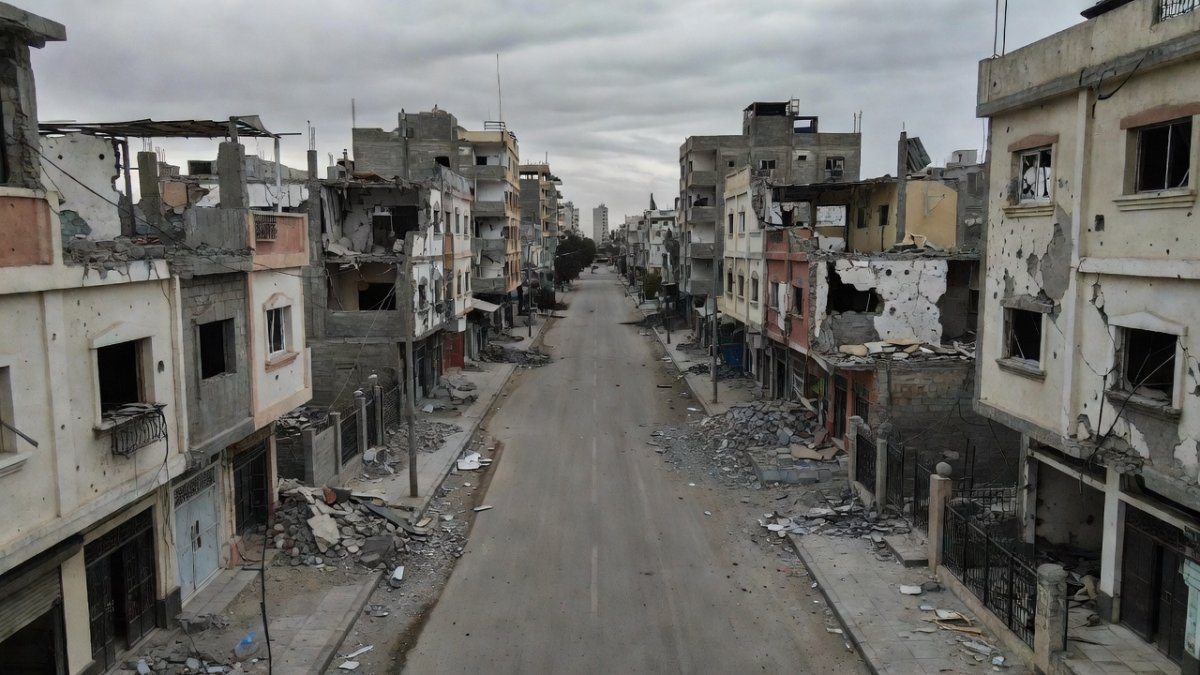
The Israeli military's statement, issued on 19 August 2026, acknowledged for the first time that its troops fired on the Hamada family's black Kia in the Tel al-Hawa neighborhood of Gaza City. The IDF claimed the vehicle had been moving towards Israeli soldiers "while travelling contrary to the advanced notice," a justification that human-rights lawyers say does not account for the presence of children in the car or the 300-plus bullets that were fired at it. The decision to open a criminal investigation was made by the Military Advocate General after the case was referred by the General Staff Fact-Finding Assessment Mechanism, a body that has been criticized for its lack of independence and its reliance on military testimony.
Notably, the military's admission stops short of acknowledging intent or wrongdoing. It frames the shooting as a tactical response to a perceived threat, a narrative that contradicts forensic evidence gathered by independent investigators. The Washington Post, Sky News, and Forensic Architecture all concluded that Israeli tanks were present at the scene and that one had likely fired on the car, with tank operators able to see civilians, including children. An Al Jazeera investigation went further, finding that the tank was likely just 13 to 23 metres away from the vehicle—close enough for the crew to have clearly identified its occupants.
The limits of the probe are also evident in what the military declined to investigate. On the same day it announced the Hind Rajab investigation, the IDF also opened a criminal probe into the killing of 15 Palestinian medics in March 2025, but it refused to open criminal investigations into attacks that killed aid workers from World Central Kitchen (WCK) and Doctors Without Borders. WCK responded sharply, stating that "the decision is inconsistent with the full truth and deeply offensive." This selective approach to accountability—investigating some deaths while ignoring others—undermines the credibility of the entire process.
The Day Hind Died: A Phone Call That Shook the World
On 29 January 2024, Hind Rami Iyad Rajab, just five years old, was fleeing the Tel al-Hawa neighborhood with her aunt, uncle, and three cousins in a black Kia. The family was trying to reach a safer area, following evacuation orders issued by the Israeli military. Instead, they drove into a kill zone. An Israeli tank opened fire, unleashing more than 300 bullets into the civilian vehicle. Hind's aunt, uncle, and three cousins were killed instantly. Her 15-year-old cousin, Layan Hamadeh, survived the initial barrage long enough to call the Palestine Red Crescent Society emergency line.
"They are shooting at us. The tank is right next to me," Layan cried to dispatcher Rana al-Faqih. The call was recorded, and the audio captures the terror in the teenager's voice as she realized what was happening. Moments later, she screamed as she was killed while still on the line. Then, a small voice came through the phone. Hind, who had been hiding in the back seat, answered. She told al-Faqih that everyone else was dead. For the next three hours, the five-year-old stayed on the line, her voice trembling with fear. "I'm so scared, please come. Come take me. Please, will you come?" she pleaded. The audio of that call was widely shared across the world, becoming a symbol of the human cost of the Gaza war.
Hind's final hours were spent alone in a car surrounded by the bodies of her family, waiting for a rescue that would never come in time. The PRCS dispatched an ambulance to retrieve her, but the crew—paramedics Yousef Zeino and Ahmed al-Madhoun—were also attacked by Israeli forces. Both were killed. Their bodies, along with Hind's, were not found until 10 February 2024, after Israeli forces withdrew from the area. The discovery of Hind's small body, still in the car, sparked global outrage and renewed calls for a ceasefire.
The Rescue That Became a Massacre
The attack on the PRCS ambulance is a separate war crime, according to international law, and it is now part of the Israeli military's investigation. But for the families of Yousef Zeino and Ahmed al-Madhoun, the probe offers little comfort. The two paramedics were killed while performing their humanitarian duty, a fact that the Israeli military has never adequately explained. The PRCS has documented dozens of attacks on its ambulances and personnel throughout the war, and it has repeatedly called for independent investigations into these incidents.
The rescue attempt was a race against time that was doomed from the start. Hind's three-hour phone call with dispatcher Rana al-Faqih was a lifeline, but it was also a countdown. Al-Faqih, who has since spoken publicly about the trauma of that call, described the helplessness of hearing a child beg for help while knowing that the ambulance sent to save her was also under fire. The PRCS has said that it coordinated with the Israeli military to send the ambulance, but the coordination did not protect the crew. The attack on the ambulance was not a mistake, the PRCS has argued; it was a deliberate targeting of medical personnel, a pattern that has been documented throughout the conflict.
Independent Investigations Contradict the Military's Narrative
The Israeli military's initial response to the Hind Rajab case was outright denial. For months, it insisted that no soldiers were present in the area at the time of the shooting. That position became untenable as independent investigations emerged. The Washington Post conducted a detailed reconstruction of the incident, using satellite imagery, shell casings, and witness testimony, and concluded that Israeli tanks were present and had likely fired on the car. Sky News and Forensic Architecture reached similar conclusions, with the latter using advanced 3D modeling to demonstrate that the tank crew could see the civilians in the vehicle. Al Jazeera's investigation placed the tank at a distance of 13 to 23 metres, close enough for the crew to have identified the occupants as women and children.
These findings were corroborated by the audio of Hind's phone call, which captured the sound of tank fire and the voices of soldiers in the vicinity. The evidence was overwhelming, and the Israeli military's eventual admission was less a confession than a capitulation to the facts. But the admission raises more questions than it answers. Why did it take two-and-a-half years? Why did the military continue to deny its involvement while independent investigators were documenting the truth? And why is the investigation being conducted by the same institution that authorized the attack?
Accountability and Impunity: The Broader Context in Gaza
The Hind Rajab case is not an isolated incident; it is part of a broader pattern of impunity that has characterized Israel's military campaign in Gaza. Since October 2023, the Israeli military has killed more than 73,300 Palestinians, according to Gaza's health ministry. A ceasefire has been in effect since October 2025, but the Israeli military controls more than 60 percent of the territory, and the threat of renewed violence remains ever-present. The 7 October 2023 attack by Hamas, which killed 1,221 people in Israel according to an AFP tally based on official Israeli figures, triggered the war, but the scale of the Israeli response has drawn widespread international condemnation.
The Hind Rajab Foundation, created in her wake, has been at the forefront of efforts to seek justice. In a statement, the foundation said it had "no confidence" in the Israeli investigation, arguing that Israel's investigations system is "fundamentally flawed and cannot be regarded as credible mechanisms of accountability." Foundation president Dyab Abou Jahjah told Al Jazeera: "We do not trust the Israeli justice system, not out of an ideological position, but because of the track record. And in this particular case, the Israeli justice system as a whole has always been complicit in Israeli crimes." The foundation has called for the International Criminal Court to take up the case, and it has been collecting evidence for potential war-crimes prosecutions.
What the Admission Means for the Pursuit of Justice
The Israeli military's admission is a significant development, but it is not a turning point. It is a tactical concession designed to preempt international action and to present the military as self-correcting. The criminal investigation, if it proceeds in good faith, could result in the prosecution of individual soldiers, but it is unlikely to address the systemic issues that allowed the killing to happen in the first place. The decision to open a probe into Hind's death while declining to investigate the killings of WCK and Doctors Without Borders aid workers reveals the selective nature of Israeli accountability.
For the Rajab family, the admission is a bitter pill. It confirms what they have known for two-and-a-half years, but it does not bring Hind back. It does not restore the lives of her aunt, uncle, and cousins, or the two paramedics who died trying to save her. It does not address the trauma of the phone call, the three hours of terror, or the 300 bullets that tore through a car carrying a five-year-old child. The family's demand for an international investigation is not a rejection of justice; it is a recognition that Israeli military justice is not designed to deliver it.
Hind's story has transcended the boundaries of the conflict. Her name has become a symbol of the human cost of war, inspiring the Oscar-nominated feature film "The Voice of Hind Rajab" (2025) and prompting Columbia University students to rename Hamilton Hall "Hind's Hall" in her honor in 2024. Her voice, captured on that phone call, continues to echo in the halls of power, a reminder that behind every statistic is a child who was scared, who begged for help, and who was failed by the world.
As the Israeli military opens its investigation, the world watches. Will it be a genuine attempt to uncover the truth, or will it be another exercise in whitewashing? The family's demand for international justice is a challenge to the international community to act, to move beyond statements of concern and toward concrete mechanisms of accountability. Hind Rajab was five years old. She deserved to grow up, to play, to laugh, to live. She was denied all of that. The least the world can do is ensure that her death is not buried under the weight of bureaucratic obfuscation. The pursuit of justice for Hind is not just about one child; it is about the principle that no life is expendable, and that no military is above the law.
By Fatima Al-Rashid, Staff Writer
This article was produced with AI-assisted research and editorial support. Reporting is based on sources cited in the article.
What's Your Reaction?
 Like
0
Like
0
 Dislike
0
Dislike
0
 Love
0
Love
0
 Funny
0
Funny
0
 Wow
0
Wow
0
 Sad
0
Sad
0
 Angry
0
Angry
0

Gulf/MENA Correspondent at Global1.News. Based in Doha, covering Gulf politics, energy markets, diplomacy, and development across the Middle East and North Africa. Tracks the economic transformation of the Gulf states.












Comments (0)