
Israel and the Kurds: The 'Natural Alliance' Under Fire
Israel and the Kurds have long seen each other as natural allies, from Ben-Gurion's peripheral doctrine to Gideon Sa'ar's 2024 declaration. Now the Iran war and Erbil's diplomatic tightrope are testing that bond in a region where public denial and quiet cooperation often coexist.
In a recent i24NEWS English report, the deep and often unspoken bond between Israel and the Kurdish people was placed under the spotlight, examining why two nations—one a sovereign state, the other the world’s largest stateless nation—view each other as natural allies. The analysis comes at a critical juncture, as the Middle East undergoes a seismic realignment following the fall of Bashar al-Assad, the ongoing war with Iran, and the shifting sands of Kurdish integration in both Iraq and Syria. The report underscores a relationship that has moved from the shadows of Cold War-era doctrine to the very center of contemporary regional strategy.
Israel and the Kurds: The 'Natural Alliance' Endures Under Fire
Jerusalem – The bond between Israel and the Kurds is one of the region’s most enduring, yet most carefully managed, relationships. Rooted in shared strategic interests and a mutual history of survival against hostile neighbors, this alliance is now being tested by the crucible of the 2026 Iran war, the diplomatic constraints of the Iraqi federal system, and the complex geopolitics of post-Assad Syria. While public declarations from Erbil remain cautious, the quiet cooperation and mutual sympathy between Jerusalem and Kurdish leaders have never been more consequential.
A Friendship Forged in Exile
The intellectual and operational foundations of the Israeli-Kurdish relationship were laid in the 1950s and 1960s under the visionary leadership of Prime Minister David Ben-Gurion. Facing a wall of hostile Arab states, Ben-Gurion devised the "peripheral alliance" doctrine—a strategy designed to encircle the Arab heartland by forging alliances with non-Arab minorities on the region's fringes. This included the Maronites of Lebanon, the Druze, and most significantly, the Kurdish movement in Iraq.
Israeli liaison officers established links with Mustafa Barzani, the legendary Kurdish leader, during his revolt against the Iraqi government. These early contacts, often conducted in secrecy through third countries, became part of regional lore, cementing an image of Israel as a supporter of Kurdish self-determination. For Israel, the Kurds represented a strategic asset to destabilize a hostile Iraq; for the Kurds, Israel was a powerful, technologically advanced ally that could provide military training and diplomatic support in their long struggle for autonomy. This historical memory remains a potent force in the collective consciousness of both peoples, even as the operational realities have evolved.
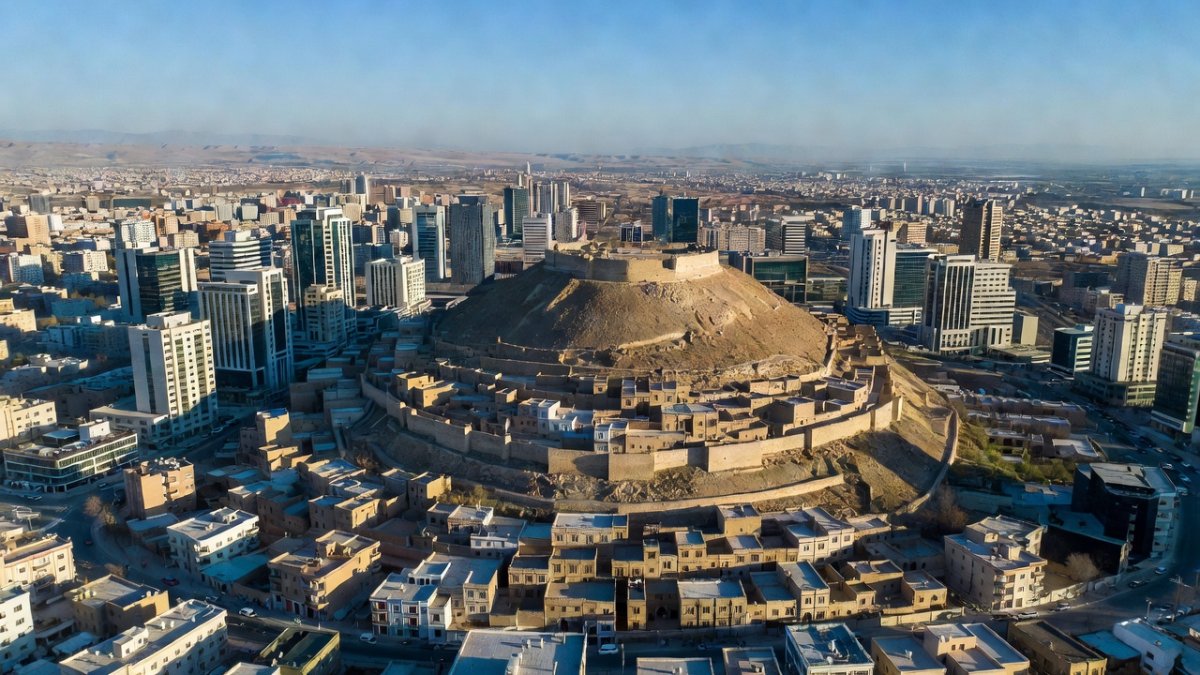
The 'Natural Ally' Declaration
The historical affinity was given a powerful public voice on November 10, 2024, when Israeli Foreign Minister Gideon Sa'ar made a landmark declaration. Sa'ar stated unequivocally that the Kurds are Israel's "natural ally" and that ties should be strengthened "politically, diplomatically, and security-wise." His remarks, delivered amid the regional realignment following the fall of Bashar al-Assad and the ongoing war with Iran's axis, signaled a shift from quiet cooperation to a more open embrace of the Kurdish cause.
This diplomatic overture has been mirrored by a grassroots movement in Europe. Since October 7, 2023, a visible Jewish-Kurdish alliance has grown, manifesting in joint congresses, demonstrations, and cultural events across the continent. This burgeoning solidarity movement is planning a landmark congress in Israel, scheduled for 2026, which would represent the most significant public gathering of Jewish and Kurdish leaders and activists to date. The movement reflects a shared sense of vulnerability—Jews and Kurds alike have faced existential threats—and a shared set of democratic values that distinguishes them from many of their regional neighbors.
Regional Context: The Iran War and the Kurdish Front
The theoretical alliance has been thrust into stark reality by the 2026 Iran war. Since February 28, 2026, the United States and Israel have been engaged in a direct military conflict with Iran, triggered by US-Israeli airstrikes that killed several Iranian officials, including Supreme Leader Ali Khamenei. The war has escalated to include missile exchanges, tensions in the Strait of Hormuz, and economic warfare, with the US launching "Operation Economic Outcast" sanctions this week as Iran's rial plunged to record lows.
In this volatile environment, the Kurdistan Region of Iraq (KRG) has found itself on the front lines. On August 9, 2026, KRG Prime Minister Masrour Barzani revealed that the region has been targeted by more than 1,000 attacks by Iran and Iranian-backed militias in Iraq since the US and Israel began airstrikes on Iran in February. These attacks have ranged from drone strikes to missile barrages, targeting both military and civilian infrastructure, and have placed the KRG in an extraordinarily precarious position.
The diplomatic tightrope walked by Erbil was on full display on August 8, 2026. In an interview with Al Jazeera, Prime Minister Barzani stated that the Kurdistan Region has NO relations with Israel, reiterating that foreign policy is the exclusive constitutional responsibility of Iraq's federal government in Baghdad. This public denial, made just one day before he detailed the scale of Iranian attacks, underscores the immense pressure on the KRG. While the region benefits from Israeli intelligence and diplomatic support, it cannot afford to acknowledge it publicly without risking a complete rupture with Baghdad and providing Iran with a casus belli for even more aggressive action.
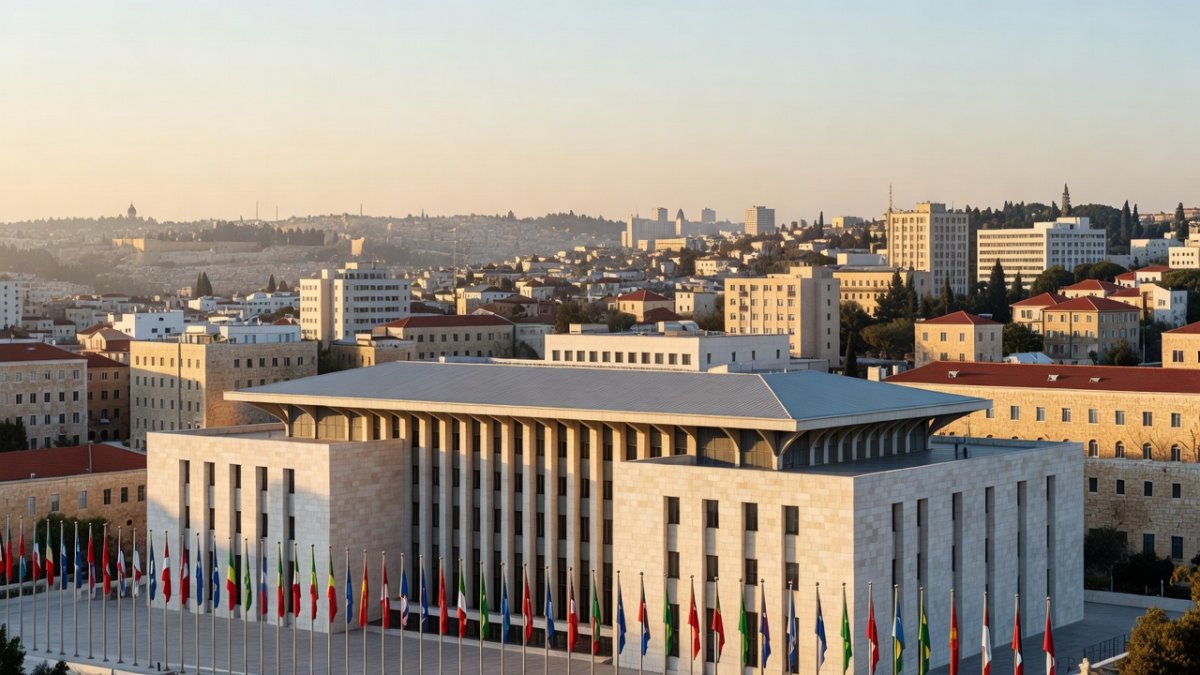
Diplomatic and International Reactions
The international community has been forced to respond to the escalating violence against the KRG. On August 18, 2026, a coalition of countries issued formal condemnations of an Iranian attack on the Kurdistan Region Prime Minister's office in Erbil. This attack, which struck at the very heart of the KRG's governance, was widely seen as a direct attempt to decapitate the regional leadership. The condemnation, while symbolic, highlights the growing international concern over Iran's willingness to strike at civilian government institutions in Iraq.
The situation is further complicated by the actions of Iran in March 2026, when it was accused of targeting the residence of Kurdistan Regional President Nechirvan Barzani, the prime minister's cousin. These high-profile attacks on the Barzani family leadership signal a deliberate Iranian strategy to destabilize the KRG and punish it for its perceived alignment with the US-Israel axis, even in the absence of formal diplomatic ties.
Meanwhile, the Kurdish situation in Syria is evolving in a different direction. On August 20, 2026, Syrian Kurdish leader Mazloum Abdi announced that the integration of the Kurdish-led administration into Syria's state institutions was complete. This move, months after a formal agreement, marks the end of the self-governing zone the Kurds had built during Syria's civil war with US backing. The integration is a significant concession, driven by the need for a united front against a resurgent Turkey and the changing priorities of the United States in the region.
Turkey, a NATO ally of the US and a major regional power, views the Kurdish-led Syrian Democratic Forces (SDF) as an extension of the PKK, a designated terror group. Ankara has long opposed any form of Kurdish autonomy near its border and has conducted repeated military incursions into Syria to push Kurdish forces away from its frontier. Turkey and Israel have significant differences over Syria, and the US has offered to mediate these disputes, adding another layer of complexity to Israel's relationship with the broader Kurdish movement.
Analysis and What This Means
The current moment presents a profound paradox for the Israeli-Kurdish alliance. On one hand, the strategic logic of the partnership has never been clearer. With Iran's axis weakened by the war, and with the Assad regime gone, the Kurds represent a stable, pro-Western, and non-Arab force in a volatile region. For Israel, supporting the Kurds is a means of containing Iranian influence in Iraq and Syria and creating a buffer against hostile forces.
On the other hand, the political constraints are immense. The KRG is constitutionally bound to Baghdad's foreign policy, and any overt move toward Israel would trigger a massive political crisis in Iraq and invite even more severe Iranian retaliation. The public denial by Prime Minister Barzani is a necessary fiction, a diplomatic shield that allows the KRG to survive while maintaining whatever quiet channels of communication exist with Jerusalem. This is a classic Middle Eastern balancing act, where public statements are often the opposite of private realities.
For Israel, the situation demands patience and strategic ambiguity. Jerusalem has historically been cautious in public about Kurdish independence because of its alliance with Turkey, a crucial NATO partner. However, the deepening quiet ties with the Kurdistan Region and the signals of sympathy for Kurdish self-determination indicate a long-term Israeli commitment to the Kurdish cause, even if it cannot be openly celebrated. The alliance is a strategic asset that must be managed with care, recognizing that the Kurds are a people divided across four countries, each with its own political dynamics.

What Comes Next
Looking ahead, the trajectory of the Israeli-Kurdish relationship will be defined by several key developments. The planned 2026 congress in Israel represents a significant opportunity to formalize and publicize the alliance, but it also carries risks. Such an event could be used by Iran and its proxies to further accuse the KRG of being an Israeli proxy, potentially escalating attacks. The organizers will need to navigate this carefully, balancing the desire for solidarity with the need for operational security.
The outcome of the Iran war will also be decisive. If the US and Israel succeed in degrading Iran's military capabilities and forcing a change in Tehran's behavior, the pressure on the KRG may ease, allowing for a more open relationship. Conversely, a prolonged conflict could lead to even more devastating attacks on Erbil and force the KRG to make impossible choices. The ongoing "Operation Economic Outcast" sanctions and the potential for ceasefire diplomacy in the Strait of Hormuz will be critical factors to watch.
Finally, the integration of Syrian Kurds into Damascus's state institutions will test the limits of the alliance. While this move may reduce the immediate threat from Turkey, it also means that the SDF will no longer be a semi-autonomous actor that Israel could potentially engage with. The future of the Kurds in Syria is now tied to the stability of the new government in Damascus, a government whose relationship with Israel remains uncertain. For Israel, the Kurdish question is no longer a single issue but a multifaceted challenge that spans Iraq, Syria, and the broader regional order.
The bond between Israel and the Kurds is a testament to the power of shared interests and mutual respect in a region often defined by conflict. It is an alliance that has survived decades of political upheaval, shifting alliances, and existential threats. As the Middle East enters a new and uncertain era, this "natural alliance" will continue to be a quiet but crucial factor in the region's strategic calculus, a relationship that endures under fire, even when it cannot be spoken aloud.
By Hannah Berg, Staff Writer
This article was produced with AI-assisted research and editorial support. Reporting is based on sources cited in the article.
What's Your Reaction?
 Like
0
Like
0
 Dislike
0
Dislike
0
 Love
0
Love
0
 Funny
0
Funny
0
 Wow
0
Wow
0
 Sad
0
Sad
0
 Angry
0
Angry
0

Israel Correspondent at Global1.News. Based in Tel Aviv, covering Israeli politics, security, technology, and society. Provides balanced, deeply-sourced reporting on one of the most closely-watched regions in the world.













Comments (0)