
O-Green plans data center campus in Zaragoza, Spain
O‑Green’s announced plan to drop a €7.4 billion data‑center campus into Zaragoza is the latest reminder that the hyperscale hype train is still chugging along, but the track is getting a lot more twisty.
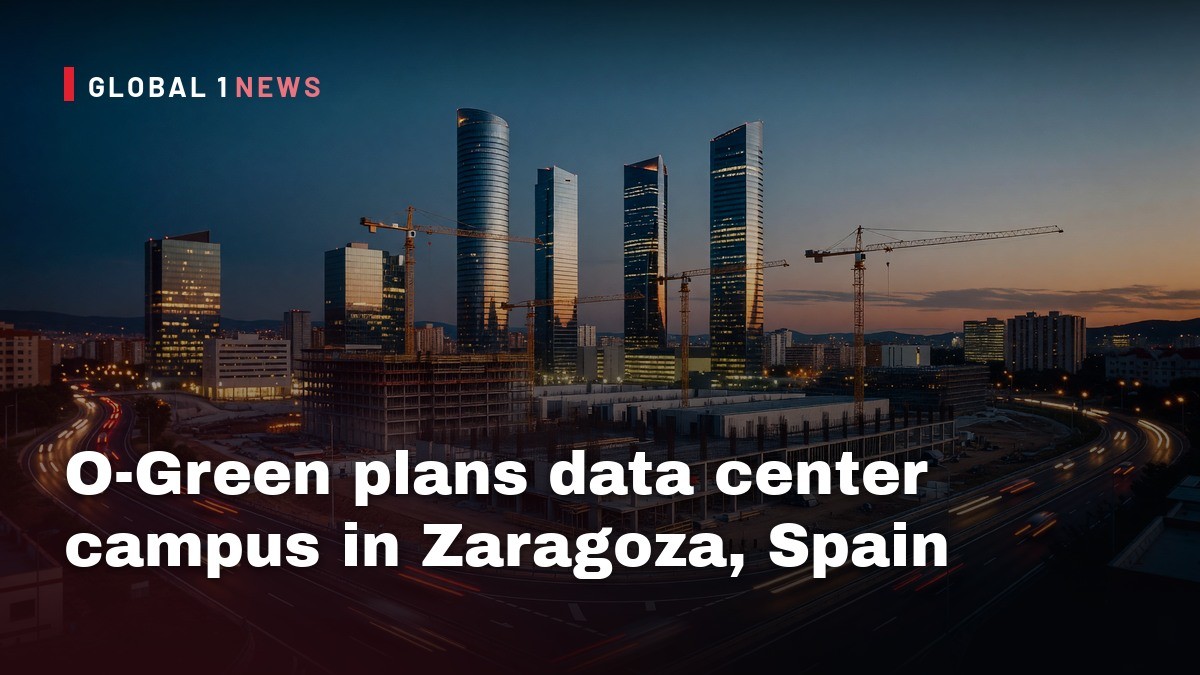
O‑Green’s announced plan to drop a €7.4 billion data‑center campus into Zaragoza is the latest reminder that the hyperscale hype train is still chugging along, but the track is getting a lot more twisty. The Omani‑linked fund is stepping in to replace Vantage’s earlier €3.2 billion proposal, shifting the site, the partners and the power story all at once. For independent hosting providers, the headline numbers look impressive, but the devil is in the details – power allocation, cooling choices and the timing of grid permits. Those are the real risk factors that can make or break a project, and they’re the same variables we wrestle with every day running our own racks.
Why the switch matters for the market
The switch from Vantage to O‑Green isn’t just a change of name on a press release. Vantage’s original €3.2 billion investment, announced in September 2025, was already positioned as a major hyperscale play in Aragon. A year later the partnership dissolved and the project migrated from Villanueva de Gállego to San Mateo de Gállego under a new financial backer. That tells us two things: first, the market is still hungry for large‑scale capacity, and second, the financing and partnership structures are fluid enough to be re‑shuffled when the economics shift.
For a founder who’s been in the trenches for a decade, the lesson is clear – the “best practice” of locking in a single anchor partner can evaporate faster than a cooling tower in a heatwave. If you’re relying on a single equity partner or a single hyperscale tenant, you need contingency plans. O‑Green’s involvement brings deep renewable‑energy capital, but it also adds a layer of geopolitical nuance that smaller players must factor into risk assessments.
The power puzzle: permits, phases and real‑world limits
The campus blueprint calls for a total capacity of 570 MW spread across four phases, with the first phase slated at 90 MW and a potential go‑live in 2029. The documentation shows permits for 80 MW at the Peñaflor substation and an additional 10 MW at Villanueva de Gállego. Even if the developers secure the extra capacity they’re requesting, the total still falls short of the 570 MW target.
This gap is a classic example of “paper capacity” versus “delivered power.” In our own operations we’ve seen projects promise megawatts on paper, only to be throttled by grid constraints once the first servers spin up. The implication for independents is simple: never assume the grid will magically deliver the full design load. Build your capacity forecasts with a safety margin, and keep an eye on substation upgrade timelines – they can add years to a rollout.
Cooling choices and water realities
The O‑Green plan lists dry, hybrid or evaporative cooling as options, depending on customer needs. It also mentions drawing water from the Gállego River, with a first‑phase consumption figure of 225 cubic metres per day. No total water draw is quantified for the full campus, which leaves a big unknown for both environmental compliance and operational cost.
From a founder’s perspective, the cooling strategy is a make‑or‑break factor. Dry cooling can be cheap on the electricity bill but may require massive heat‑sink infrastructure; evaporative cooling cuts electricity use but adds water risk, especially in drought‑prone regions. The fact that the developers are still weighing alternatives signals that the final cooling architecture isn’t locked in. For anyone eyeing a similar build‑out, start modelling both scenarios now – the cost differential can be millions over the lifespan of the facility.
Renewable energy pedigree and its limits
O‑Green isn’t a pure‑play data‑center developer; it’s a renewable‑energy fund with a portfolio spanning 12 countries and more than 11 GW of assets. Its secured portfolio includes over 3.3 GW of wind and solar and more than 2.3 GWh of battery storage in Oman and Botswana. The firm is targeting over 200 MW of renewable capacity to be ready for service by 2028 across Oman, Spain and Europe.
That renewable backing is a double‑edged sword. On one hand, it can provide a green‑energy narrative that attracts ESG‑focused tenants. On the other, the renewable generation schedule may not line up perfectly with the data‑center’s load profile, especially for high‑density AI workloads that spike power demand. Independent operators should therefore treat renewable “green power” promises as a supplement, not a substitute, for firm grid contracts.
Timeline pressures and regulatory hurdles
The campus is slated to start construction soon, with the first phase potentially live by 2029. Yet the developers are still awaiting the Government of Aragon’s declaration that the investment is of regional interest, and they are in the midst of a strategic environmental assessment that covers both the campus footprint and the associated electrical and fiber‑optic links across several municipalities.
Regulatory lag is a familiar pain point. In our own expansions, we’ve seen environmental reviews stretch out for years, dragging up cost and delaying revenue. The fact that O‑Green is still in the consultation phase means that any independent provider looking to partner or lease space should factor in a buffer for approvals. The sooner you engage local authorities and understand the permitting pipeline, the better you can align your go‑to‑market plan.
Risk calculus for independent hosting providers
Putting the numbers together – 570 MW target, 90 MW first phase, limited substation permits, water‑draw uncertainties and a regulatory process still in flux – the risk profile is high. For a boutique provider, the lure of a massive hyperscale campus can be tempting, but the reality is that the campus may not deliver the full capacity or the full suite of services on the schedule advertised.
Our advice is to treat such mega‑projects as a long‑term horizon play. Secure short‑term capacity from existing carriers or colocation sites, and keep a watchful eye on the O‑Green timeline. If the campus does deliver on its 90 MW phase by 2029, it could become a strategic location for AI‑heavy workloads, but you’ll need to have a migration plan ready to avoid being left in limbo.
Actionable steps for founders and operators
First, run a power‑gap analysis against the documented 80 MW + 10 MW substation permits. Identify alternative grid interconnect options or on‑site generation that could bridge the shortfall. Second, model both dry and evaporative cooling scenarios using the 225 cubic‑metre‑per‑day figure as a baseline, and factor in local climate data to estimate water availability. Third, engage early with Aragon’s regional authorities to understand the timeline for the “regional interest” declaration and the strategic environmental assessment – a delay there can cascade into construction hold‑ups.
Finally, diversify your tenant acquisition strategy. While the campus is being built to host hyperscale and high‑density AI workloads, there will also be a need for mid‑tier customers who can fill capacity gaps during the early phases. Position your service offering to be flexible – offer hybrid on‑prem/colocation packages that can slide into the campus once it’s operational. In short, treat O‑Green’s Zaragoza project as a potential future anchor, but build your business on assets you control today.
— Allan Ali, Founder
This article was produced with AI-assisted research and editorial support. Reporting is based on the source material cited below. Sources: Data Center Dynamics; datacenterdynamics.com; Global1.News (25 October 2026).
By Allan Ali, Global1.News
What's Your Reaction?
 Like
0
 Dislike
0
 Love
0
 Funny
0
 Wow
0
 Sad
0
 Angry
0

Publisher of Global1.News. Automation architect, systems builder, and the guy making sure the truth gets published.















Comments (0)