
Netanyahu’s vision for Israel’s future ahead of the elections
In the run‑up to Israel’s upcoming national elections, former Government Press Office director Danny Seaman has launched “Straight Up,” a weekly video analysis that places the country’s strategic choices under a clear, unvarnished lens.
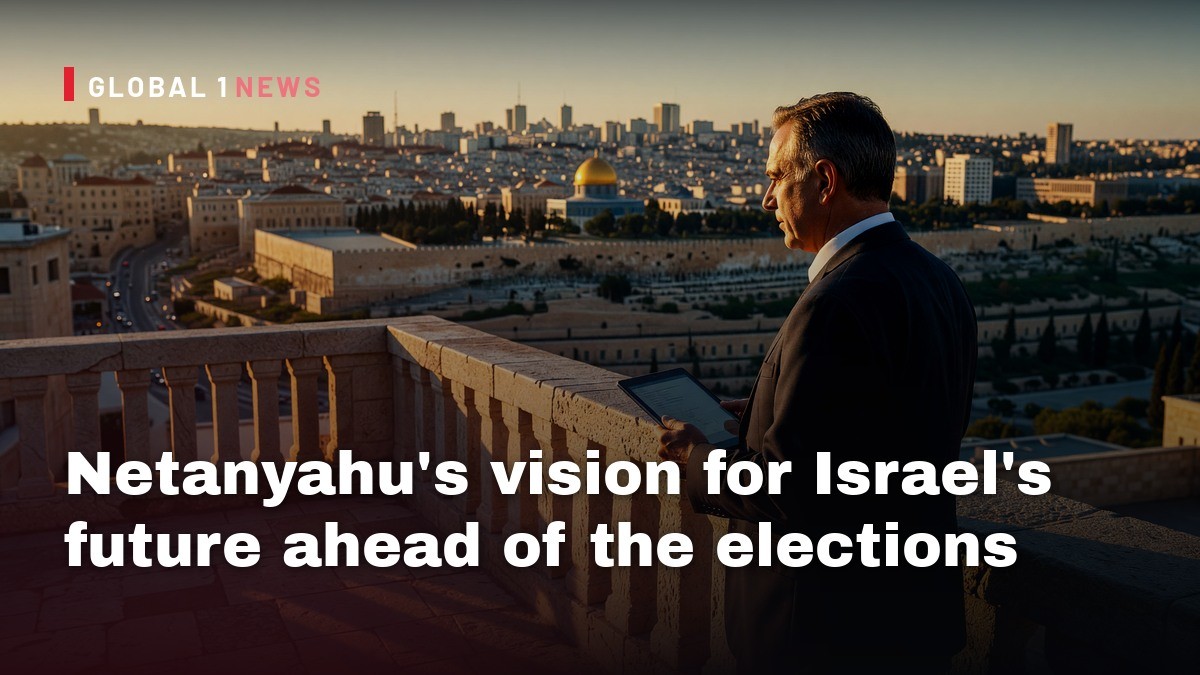
In the run‑up to Israel’s upcoming national elections, former Government Press Office director Danny Seaman has launched “Straight Up,” a weekly video analysis that places the country’s strategic choices under a clear, unvarnished lens. The programme, produced by the Jewish News Syndicate, is positioned as a direct conduit between Israel’s security‑policy architects, its thriving tech ecosystem and the broader regional dynamics that shape daily life for Israelis. By foregrounding first‑hand experience and a no‑spin editorial stance, Seaman seeks to cut through the layers of myth‑making that have long clouded public understanding of Israel’s past accords, present threats and future ambitions.
From Oslo to Abraham: Re‑examining Israel’s diplomatic milestones
Seaman’s opening episodes trace a through‑line from the Oslo Accords of the 1990s to the Abraham Accords of 2020, positioning each as a pivot point in Israel’s quest for security and legitimacy. He argues that the Oslo process, while initially heralded as a breakthrough, ultimately left Israel vulnerable to renewed violence, a reality he describes as a “myth” that has persisted in international discourse. By contrast, the Abraham Accords are framed as a pragmatic, technology‑driven partnership that has opened new markets for Israeli startups and fostered security cooperation with several Gulf states.
In his analysis, Seaman emphasizes that the shift from Oslo’s politically‑laden negotiations to the Abraham Accords’ economic and security focus reflects a broader strategic recalibration. He notes that Israeli ministries, including the Ministry of Economy and the Israel Innovation Authority, have leveraged these new diplomatic ties to export cutting‑edge cyber, agritech and clean‑energy solutions, thereby intertwining Israel’s tech boom with its foreign policy objectives.
The Iran‑Hezbollah‑Hamas axis: A persistent security challenge
Central to Seaman’s narrative is the “Iran‑Hezbollah‑Hamas alliance,” which he describes as a coordinated network that threatens Israel’s northern and southern borders. Drawing on his decades of experience in government press relations, Seaman asserts that this alliance represents a “strategic triangle” that fuels proxy warfare, missile development and cross‑border attacks. He underscores that Israel’s defense posture, from the Iron Dome to the David’s Sling system, is calibrated specifically to counter this multi‑front threat.
Seaman also highlights the importance of intelligence sharing with the United States and regional partners. He points out that joint operations and real‑time data exchange have been instrumental in thwarting several planned attacks, reinforcing the notion that Israel’s security apparatus operates within a tightly knit, multinational framework that blends military capability with diplomatic outreach.
Media bias and the battle for narrative control
“Straight Up” dedicates considerable airtime to dissecting what Seaman terms the “Western media’s bias against Israel.” He contends that prevailing narratives often overlook Israel’s defensive actions while amplifying the actions of hostile non‑state actors. By presenting raw footage, official statements and on‑the‑ground observations, Seaman aims to provide viewers with a counter‑balance to what he sees as a one‑sided portrayal in many international outlets.
The programme’s format—direct address, unedited interviews with security experts and policymakers—serves to reinforce its claim of “fear‑less, factual” reporting. Seaman argues that a transparent, fact‑based dialogue is essential for both domestic audiences and foreign observers to grasp the complexities of Israel’s security dilemmas and its broader strategic calculations.
Tech as a pillar of national resilience
Beyond security, Seaman repeatedly underscores the role of Israel’s innovation economy in bolstering national resilience. He cites the Israel Innovation Authority’s initiatives that channel government funding into high‑impact sectors such as cyber‑defence, autonomous systems and medical technology. According to Seaman, these investments not only drive export growth but also create a domestic ecosystem capable of rapid response to emergencies, from natural disasters to pandemic threats.
By linking the tech sector to diplomatic achievements, Seaman illustrates how Israel’s startup culture has become a diplomatic asset. He points to joint ventures with Gulf partners under the Abraham Accords, where Israeli firms supply water‑management solutions and AI‑driven security platforms, thereby weaving economic interdependence into the fabric of regional peace‑building.
Domestic politics and the upcoming elections
Seaman’s commentary does not shy away from the political arena. He frames the upcoming elections as a decisive moment for Israel’s strategic direction, emphasizing that voters will decide whether to double down on the security‑first, tech‑driven model he advocates. He notes that Prime Minister Benjamin Netanyahu’s platform continues to stress a strong deterrence posture, deepened ties with the United States, and expanded economic partnerships across the Middle East.
In Seaman’s view, the electoral outcome will have direct implications for budget allocations to the Ministry of Economy, the Israel Innovation Authority and defense procurement. He warns that any shift away from the current trajectory could jeopardize the momentum built by recent diplomatic breakthroughs and the sustained growth of the high‑tech sector.
Engaging the public: The format and reach of “Straight Up”
“Straight Up” is designed for a digitally savvy audience, with episodes posted on YouTube and promoted via the JNS Twitter handle @JNS_TV. Seaman’s background as a former director of the Government Press Office equips him with the skills to translate complex policy matters into accessible language, while his “no‑spin” ethos seeks to build trust among viewers fatigued by partisan commentary.
The programme’s structure—opening monologue, expert interview, and closing summary—mirrors traditional news formats but with a distinct emphasis on direct, unfiltered analysis. By inviting journalists, security experts and policymakers to speak candidly, Seaman creates a platform where the nuances of Israel’s security calculus and economic strategy can be explored without the filter of editorial spin.
Implications for Israel’s regional standing
Seaman concludes each episode by connecting the day’s discussion to Israel’s broader regional standing. He argues that Israel’s ability to combine a robust defence posture with a vibrant innovation economy positions it as a unique partner for Arab states seeking security guarantees and technological advancement. The Abraham Accords, he notes, have already yielded tangible cooperation in fields ranging from renewable energy to cyber‑security, setting a precedent for future collaborations.
Looking ahead, Seaman warns that the persistence of the Iran‑Hezbollah‑Hamas axis will continue to test Israel’s resolve. However, he maintains that the synergy between military readiness, diplomatic outreach and tech‑driven economic growth offers a resilient framework for navigating these challenges. As the election approaches, “Straight Up” aims to keep the public informed about how each policy choice will shape Israel’s future, both at home and across the volatile Middle East.
This article was produced with AI-assisted research and editorial support. Reporting is based on the source material cited below. Sources: JNS (Jewish News Syndicate); jns.org; Global1.News (25 October 2026).
By Hannah Berg, Staff Writer
What's Your Reaction?
 Like
0
 Dislike
0
 Love
0
 Funny
0
 Wow
0
 Sad
0
 Angry
0

Israel Correspondent at Global1.News. Based in Tel Aviv, covering Israeli politics, security, technology, and society. Provides balanced, deeply-sourced reporting on one of the most closely-watched regions in the world.











Comments (0)