
Mexican Americans are Mexico’s untapped opportunity: A perspective from our CEO
When I think about the power of a diaspora, I often recall my own family’s story: married to a woman born in India, I have watched the Indian American community keep its ties to the subcontinent alive with a vigor that feels almost inevitable.
When I think about the power of a diaspora, I often recall my own family’s story: married to a woman born in India, I have watched the Indian American community keep its ties to the subcontinent alive with a vigor that feels almost inevitable. That same vigor, I believe, could be awakened among Mexican Americans—a community that numbers roughly thirty‑eight million souls in the United States, almost a third of Mexico’s own population. Yet, unlike the Indian diaspora, many Mexican Americans today hold a view of Mexico that is filtered through old stereotypes, limited personal experience, and a media narrative that emphasizes violence over opportunity. The result is a missed chance for both sides to benefit from the deep cultural and economic bonds that already exist across the border.
Why the Indian model matters
India’s prime minister, Narendra Modi, has made a point of visiting the United States ten times since 2014, often speaking directly to Indian American audiences at venues like Madison Square Garden and a stadium in Houston that held more than fifty thousand listeners. Those trips were not merely diplomatic gestures; they were designed to remind the diaspora of their cultural pride and to channel that pride into concrete actions—investment, talent pipelines, and bilateral trade. The Indian government’s effort to keep its overseas citizens informed and engaged has turned a sense of heritage into a strategic asset for the nation’s future.
The Indian American community, estimated at 5.6 million people, represents less than four‑tenths of a percent of India’s total population, yet it is treated as a vital partner. This approach shows how a diaspora, even when numerically small, can be mobilized when its members feel a strong, pride‑filled connection to their homeland.
Mexico’s untapped diaspora
By contrast, Mexico’s presidents have spent very little time on U.S. soil in recent years. Andrés Manuel López Obrador visited the United States five times in six years, each trip tied to a global summit rather than a direct outreach to Mexican Americans. President Claudia Sheinbaum, in her two‑year tenure, has been to the United States only twice, both occasions linked to FIFA events. Even other cabinet members—economy minister Marcelo Ebrard and foreign minister Roberto Velasco—have traveled more frequently, but they lack the gravitas of a head of state.
This limited presidential presence stands out when we consider that Mexican Americans send more than sixty billion dollars in remittances each year, a flow that underscores their economic importance. Yet, without sustained political engagement, the diaspora’s potential to become a bridge for trade, investment, and cultural exchange remains largely dormant.
The reality of a “flat” migration pattern
Net migration from Mexico to the United States has been essentially flat for nearly two decades. That stability means that the majority of Mexican Americans today are second‑ or third‑generation residents, many of whom have never set foot in Mexico or have not visited in many years. Their understanding of the country is often shaped by family anecdotes and media reports that focus on drug‑related violence, rather than on the everyday vibrancy of Mexican life.
When asked about their ties to Mexico, many Mexican Americans can point to a hometown or a family lineage, but they also repeat the same generic, outdated soundbites about cartels and insecurity that a non‑Mexican observer might use. This perception creates a psychological barrier that discourages travel, business ventures, or even a casual curiosity about modern Mexican society.
Business opportunities that go unnoticed
Mexico and the United States already enjoy a robust trade relationship, and the Mexican American community includes tens of thousands of medium‑ and small‑size enterprises that could expand their markets north of the border. Yet, many entrepreneurs I have spoken with have never considered Mexico as a place to grow their customer base, source supplies, or tap into a skilled labor pool. The lack of awareness is not due to a shortage of opportunity; rather, it stems from a missing narrative that frames Mexico as a partner rather than a problem.
When Mexican American business owners learn about the practical advantages—lower production costs, a young and educated workforce, and proximity that eases logistics—some begin to see a clear path for bi‑national ventures. The challenge is to shift the conversation from fear to possibility, and to provide the concrete data and contacts that can turn curiosity into action.
Education as the first bridge
One of the most promising avenues for deeper engagement is education. Our own initiative, MND Kids, aims to introduce Mexican American children to the realities of life in Mexico through age‑appropriate content that goes beyond stereotypes. In conversations with school administrators from districts with large Mexican American populations, we discovered that many educators themselves have never visited Mexico, often citing safety concerns. This gap means that teachers may lack the lived experience to inspire students to explore their heritage in a nuanced way.
By creating resources that highlight Mexico’s cultural richness, economic dynamism, and everyday stories, we can help a new generation grow up with a more balanced view. When children see Mexico as a place of opportunity rather than solely a source of danger, they are more likely to consider future studies, internships, or entrepreneurship that involve both sides of the border.
Building a two‑way dialogue
To turn potential into reality, we are launching several projects aimed at fostering a continuous conversation between Mexican Americans and Mexico. A bi‑weekly business newsletter for the U.S. Chamber of Commerce in Mexico, a monthly newsletter for regional chambers in California, Houston, and Miami, and weekly intelligence reports that rely on data rather than opinion are already in the works. We are also preparing a Spanish‑language version of our platform, MND en Español, to reach those who prefer to read in their native tongue.
Beyond publications, we are partnering with organizations like the Latino Donor Collaborative and the newly formed American Mexican Leadership Council to coordinate outreach, share best practices, and amplify the voice of the diaspora. A forthcoming podcast will give Mexican Americans a space to hear stories of successful cross‑border ventures, learn about cultural events, and ask experts about the practical steps to engage with Mexico.
The path forward: pride, partnership, and progress
What the Indian American experience teaches us is that pride in one’s heritage can be a catalyst for economic and cultural partnership when it is nurtured by both government and community initiatives. Mexico has the same capacity for pride, but it needs a deliberate strategy to channel that feeling into concrete action. By acknowledging the size and economic weight of the Mexican American community—roughly thirty‑eight million people, a share that rivals the entire population of Mexico—we can begin to treat the diaspora not as a peripheral group but as a central pillar of national development.
When Mexican Americans see Mexico not just as a place of news headlines about violence, but as a land of opportunity, talent, and shared culture, they will be more inclined to invest, travel, and collaborate. In turn, Mexico will benefit from fresh ideas, capital, and a renewed sense of connection that can strengthen both economies and societies. The journey ahead will require sustained political attention, targeted educational tools, and business‑focused outreach, but the reward—a more vibrant, bi‑national community—will be worth every effort.
This article was produced with AI-assisted research and editorial support. Reporting is based on the source material cited below. Sources: Mexico News Daily; mexiconewsdaily.com; Global1.News (25 October 2026).
By Rosa Martinez, Staff Writer
What's Your Reaction?
 Like
0
 Dislike
0
 Love
0
 Funny
0
 Wow
0
 Sad
0
 Angry
0
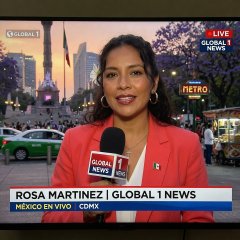
Latin America/Andes Correspondent at Global1.News. Based in Bogota, covering politics, environment, energy, and social movements across the Andean region. Passionate about environmental journalism and communities protecting their land.










Comments (0)