
Messi agrees to buy second Spanish club
Lionel Messi, the Argentine icon who has become a household name across the globe, is once again stepping beyond the pitch and into the boardroom. This development follows his earlier purchase of Catalan side Cornella in April, marking his second foray into club ownership in Spain.
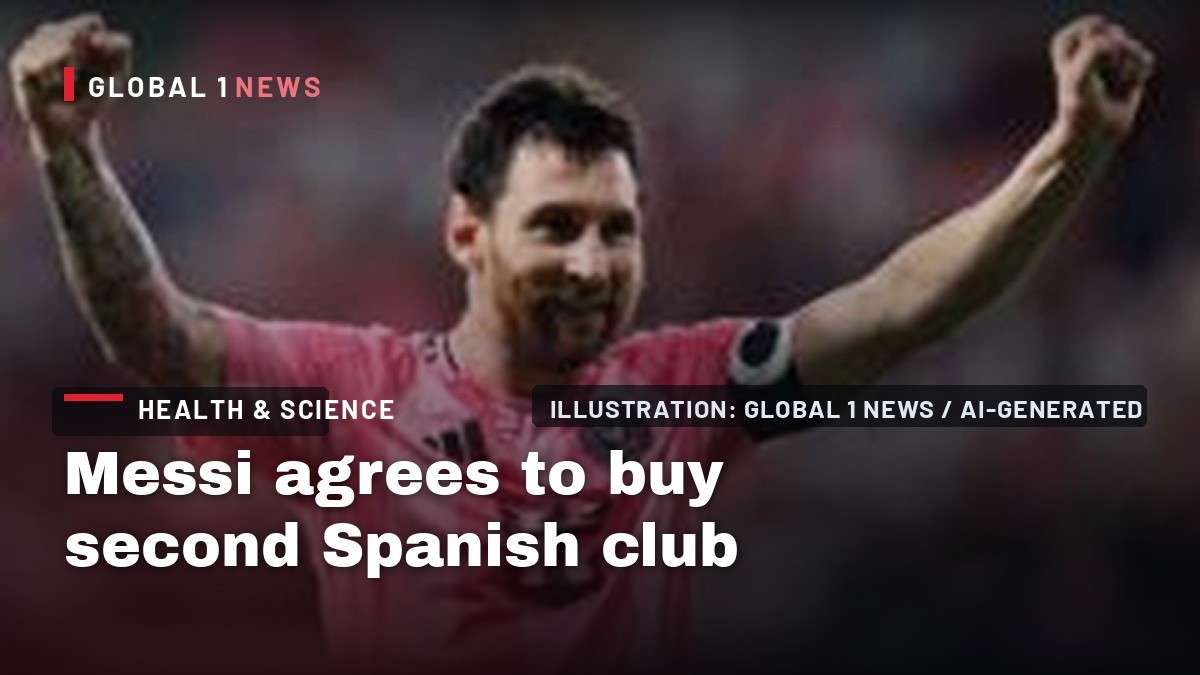
Lionel Messi, the Argentine icon who has become a household name across the globe, is once again stepping beyond the pitch and into the boardroom. According to a statement from Spanish second‑division side Eldense, the footballer has reached a “preliminary agreement” to acquire the shares currently owned by Grupo TH Soluciones, a move that would make him the club’s majority shareholder. This development follows his earlier purchase of Catalan side Cornella in April, marking his second foray into club ownership in Spain.
From the pitch to the boardroom: Messi’s emerging portfolio
The news of Messi’s potential stake in Eldense arrives at a time when the 39‑year‑old forward is already juggling multiple roles. He continues to play for Inter Miami in the United States while having recently retired from international duty after Argentina’s narrow 1‑0 loss to Spain in the 2026 World Cup final. His transition from player to investor reflects a broader trend among elite athletes who seek to shape the sport’s future from the sidelines.
Messi’s first investment, the purchase of Cornella, a club competing in Spain’s fifth tier, was framed by the club as a reinforcement of his “close ties to Barcelona and his commitment to the development of sport and local talent in Catalonia.” The acquisition underscored his personal connection to the region where he arrived at age 13 and launched his storied career with Barcelona, debuting for the first team at 17 in October 2004. By extending his interests to Eldense, based in Alicante, Messi is diversifying his involvement across different levels of Spanish football, from the grassroots to the professional ranks.
The Eldense deal: legal steps and regulatory hurdles
Eldense’s announcement makes clear that the agreement is still provisional. The club specified that the transaction remains subject to the completion of “the remaining legal and contractual procedures, including the due diligence process, as well as the required authorisation from the Spanish National Sports Council (CSD).” This language signals that while the intent is firm, the final signature will depend on thorough scrutiny by both the club’s legal advisers and the national sports regulator.
The need for CSD approval is standard for any significant change in club ownership in Spain, ensuring that new shareholders meet financial and ethical standards. For Messi, whose public image is closely guarded, the due‑diligence phase will likely examine not only his financial capacity but also any potential conflicts of interest, especially given his ongoing contract with Inter Miami and his recent retirement from the Argentine national team.
What Eldense’s current situation reveals about the challenge ahead
Eldense’s recent performance provides context for the stakes involved. The club sits 20th in La Liga 2 after four games, having collected just two points. This precarious position has already prompted a change in leadership, with head coach Claudio Barragán departing earlier this week. The combination of a struggling league campaign and a recent coaching turnover suggests that the club is in need of stability and strategic direction.
If Messi’s involvement materialises, his influence could extend beyond capital injection. The Argentine’s reputation for nurturing talent and his deep ties to Spanish football culture could help Eldense attract promising players, improve training facilities, and perhaps secure better commercial partnerships. However, the club’s immediate priority will remain avoiding relegation, a task that will test any new owner’s willingness to intervene swiftly in sporting decisions.
Comparative moves: Ronaldo’s stake in Almería
Messi’s venture into club ownership does not occur in isolation. His longtime rival, Cristiano Ronaldo, who now plies his trade with Saudi Pro League side Al‑Nassr, secured a 25 % stake in Spanish side Almería in February. Ronaldo’s investment illustrates a parallel path where global superstars leverage their brand power to gain footholds in European football markets.
While Ronaldo’s share in Almería is a minority position, Messi’s prospective majority stake in Eldense suggests a more hands‑on approach. The contrast highlights differing strategies: Ronaldo may be testing the waters of club ownership, whereas Messi appears ready to assume a controlling role, potentially shaping club policy from the top down.
Historical roots: Messi’s journey from Barcelona to global ambassador
Messi’s deep connection to Spain is rooted in his early life. He left Argentina for Spain at the age of 13, joining Barcelona’s famed La Masia academy. He broke into the first team at 17 and went on to score a club record 672 goals in 778 matches, a tally that cemented his status as one of the sport’s all‑time greats. After a storied tenure at Barcelona, he moved to Paris Saint‑Germain in 2021 before crossing the Atlantic to join Inter Miami in 2023.
These milestones are not merely biographical footnotes; they inform Messi’s current ambitions. His long‑standing bond with Catalonia, evidenced by his investment in Cornella, reflects a desire to give back to the communities that nurtured his talent. Extending that commitment to Alicante through Eldense suggests a broader vision of supporting Spanish football beyond the elite echelons, perhaps inspired by his own journey from a teenage prodigy to a global icon.
Potential impact on local talent development
Both Messi’s and Ronaldo’s investments carry implications for youth development in their respective regions. Cornella’s statement emphasized Messi’s “commitment to the development of sport and local talent in Catalonia.” If a similar ethos guides his involvement with Eldense, the club could become a conduit for nurturing young players in the Alicante province, an area that has historically produced fewer high‑profile footballers compared to Catalonia or Madrid.
By leveraging his global reputation, Messi could attract sponsorships, improve scouting networks, and enhance training infrastructure. Such investments would align with a growing trend of former players using their platforms to create pathways for the next generation, counterbalancing the commercialisation that often marginalises grassroots football.
Looking ahead: what Messi’s ownership could mean for Spanish football
The prospect of Messi becoming a majority shareholder in a La Liga 2 club adds a new dimension to the evolving landscape of Spanish football. It signals a willingness among former stars to intervene directly in club governance, potentially reshaping the balance of power between traditional owners, local municipalities, and emerging investor groups.
Should the deal conclude successfully, Eldense may experience a revitalisation that could lift it out of the relegation zone and set a precedent for other struggling clubs seeking fresh capital and strategic vision. Moreover, Messi’s involvement could inspire other former players to explore similar pathways, fostering a wave of athlete‑led ownership that prioritises community engagement and talent development over pure profit motives.
In the broader context, Messi’s transition from field legend to club proprietor underscores a shift in how football’s most celebrated figures view their legacy. By investing in clubs at different tiers, they are not only securing financial footholds but also embedding themselves within the fabric of the sport’s future, ensuring that the next generation of talent benefits from the very pathways that once propelled them to greatness.
This article was produced with AI-assisted research and editorial support. Reporting is based on the source material cited below. Sources: BBC News Latin America; bbc.co.uk; Global1.News (12 September 2026).
By Elena Vasquez, Staff Writer
What's Your Reaction?
 Like
0
Like
0
 Dislike
0
Dislike
0
 Love
0
Love
0
 Funny
0
Funny
0
 Wow
0
Wow
0
 Sad
0
Sad
0
 Angry
0
Angry
0

Latin America Correspondent at Global1.News. Based in Mexico City, covering politics, economics, energy, and culture across the region. Brings an on-the-ground perspective to stories spanning from the Rio Grande to Patagonia.














Comments (0)