
Magnitude 5.9 Earthquake Rattles Tokyo: 37 Injured as Ibaraki Quake Shakes Japan's Kanto Region
Folks, if you were asleep in your bed in Tokyo early Sunday morning, I can tell you exactly what happened: your phone screamed, your walls shook, and for a terrifying stretch of time that felt like forever, the ground didn't want to stop moving. A magnitude 5.9 earthquake — the U.S.
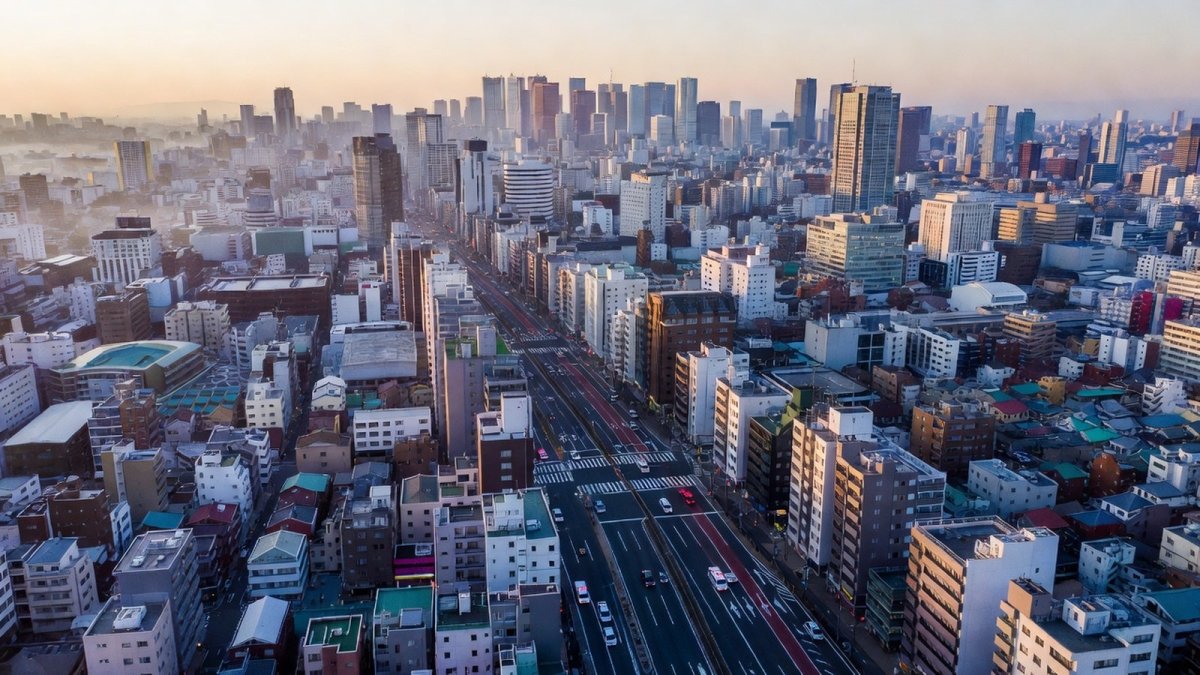
Folks, if you were asleep in your bed in Tokyo early Sunday morning, I can tell you exactly what happened: your phone screamed, your walls shook, and for a terrifying stretch of time that felt like forever, the ground didn't want to stop moving. A magnitude 5.9 earthquake — the U.S. Geological Survey clocked it at 5.8, but Japan's Meteorological Agency says 5.9 — slammed into southern Ibaraki Prefecture at roughly 2:00 a.m. Japan Standard Time on August 23, 2026. The shaking rolled through the entire Kanto region, rattled Tokyo's 23 wards, and left at least 37 people injured across multiple prefectures. Let me be real with you for a second: this wasn't "the big one," but it was a loud, ugly reminder that Japan lives on a knife's edge — and that the ground beneath our feet doesn't care what day it is or whether you're ready.
The Quake Itself: What Happened, When, and Where
Here's the breakdown, and I want you to pay attention to the specifics because they matter. The earthquake struck at approximately 2:00 a.m. Japan Standard Time on Sunday, August 23, 2026. The epicenter was in southern Ibaraki Prefecture, at a depth of about 70 kilometers — that's roughly 42 miles down. That depth is significant, folks. A deeper quake like this one spreads its energy over a wider area, which is exactly why people from Ibaraki all the way to Tokyo's dense urban core felt it. The Japan Meteorological Agency recorded a maximum seismic intensity of lower 5 on Japan's seven-point shindo scale, and that reading was logged in Tsukuba, Ibaraki — the science city, fittingly enough.
But don't let the "lower 5" label fool you. On the JMA scale, lower 5 means objects can fall from shelves, unsecured furniture can topple, and people need to steady themselves just to stay upright. And the shaking wasn't a quick jolt — in some areas, the ground rolled for up to a minute. A full minute, folks. That's an eternity when you're standing in a doorway wondering if your building is going to hold. The strong shaking was felt across northern and southern Ibaraki, southern Saitama, northwestern Chiba, and Tokyo's 23 wards. If you were anywhere in the Kanto region, you felt this one. No exceptions.
The Human Toll: 37 Injured and Counting
Now let's talk about the people, because that's what really matters here. At least 37 people were injured across multiple prefectures, according to Kyodo News, Jiji Press, and Xinhua reporting. Some outlets initially reported 20 to 30-plus injuries as the numbers climbed through the morning, but the consensus settled at 37 and counting. Here's the thing that gets me, though: most of these injuries weren't from collapsing buildings or falling debris. They were from people falling or hitting furniture while getting out of bed. Think about that for a second. The quake hit at 2 a.m. — the dead of night. People were asleep, disoriented, and when the shaking started, they jumped up in the dark and tripped, stumbled, or slammed into their nightstands.
That's not a knock on the victims, folks. That's a knock on all of us who don't secure our furniture or think about what we'd do in the dark at 2 a.m. when the world starts moving. The injuries are mostly minor, which is a relief, but every single one of those 37 people is a reminder that earthquakes don't just break buildings — they break routines, they break sleep, and they break bodies in the most mundane ways possible. Toride, Ibaraki, opened an emergency alert room to coordinate response efforts, and local authorities across the region were scrambling to assess damage as the sun came up.
The Early-Warning System: When Technology Actually Works
Here's where I want to give credit where credit is due, because Japan's earthquake early-warning system is genuinely one of the best things this country has ever built. The system triggered before the strongest shaking arrived, and alarms sounded on mobile phones across the entire Kanto region. That means people got a few precious seconds of warning — enough time to get out of bed, get under a table, or at least brace themselves. And you know what? That warning likely prevented a lot more injuries than the 37 we're counting.
Let me be real with you for a second: in a country where earthquakes are as common as rain, the early-warning system is the difference between panic and preparation. The JMA's network of seismometers detects the initial P-waves — the fast, less destructive waves — and calculates the epicenter and magnitude before the slower, more damaging S-waves arrive. Then it blasts alerts to every phone in the affected area. It's not perfect, and it doesn't always give you much time, but when it works, it works. And on Sunday morning, it worked. The alarms went off, people woke up, and the shaking followed. That's the system doing its job.
Transport and Infrastructure: The Ripple Effect
Now, let's talk about what happens after the shaking stops, because that's where the real disruption begins. Train services across the Kanto region were temporarily halted as a safety precaution — that's standard procedure, folks, and it's the right call. Express trains serving Tokyo and Narita Airport were delayed, which is a nightmare scenario for anyone trying to catch a flight on a Sunday morning. Local trains in northeastern regions also faced delays as crews inspected tracks for damage. But here's a bright spot: the Shinkansen bullet trains were running normally, according to East Japan Railway. That's a testament to the engineering and safety protocols that keep Japan's high-speed rail network resilient even after a significant tremor.
Infrastructure took a hit, too. Burst water pipes were reported in affected areas, which means some residents woke up to more than just a shaky start — they woke up to water damage and disrupted service. It's a reminder that earthquakes don't just shake the ground; they shake the systems we depend on every single day. Water, power, transport, communication — all of it is vulnerable when the earth moves. And while the damage here appears manageable, it's a preview of what a larger quake could do to a region that's home to tens of millions of people.
The Aftershock Warning: Don't Let Your Guard Down
Here's the part that should keep you on edge, folks. The Japan Meteorological Agency has issued a clear warning: aftershocks of similar intensity are possible over the next week, with the next 48 to 72 hours flagged as the highest-risk window. That's not fear-mongering — that's science. Aftershocks are a natural part of the seismic sequence, and they can strike when you least expect them, often when you're cleaning up from the main event. The JMA is telling residents to stay vigilant, secure loose objects, and be ready to drop, cover, and hold on at a moment's notice.
Let me put this in perspective for you. The quake that hit Sunday morning came weeks after another significant tremor shook the region — a separate quake near Tokyo that made headlines in the preceding weeks, per Times Now coverage. That's two notable shakes in a short window, and it's a stark reminder that the Kanto region is always in play. The ground doesn't take days off, folks. It doesn't care about your weekend plans or your Monday morning commute. The JMA's 48-to-72-hour window is your window to be extra careful — check your emergency supplies, secure your furniture, and make sure your family knows the drill.
Japan's Seismic Reality: Living on the Ring of Fire
Now let's zoom out, because context matters. Japan sits on the Pacific Ring of Fire — the most seismically active region on Earth. This is a country that experiences thousands of earthquakes every year, most of them too small to feel. But the big ones? They're not a matter of if, they're a matter of when. The 2011 Tohoku earthquake and tsunami killed nearly 20,000 people and triggered the Fukushima nuclear disaster. The 1995 Kobe earthquake killed more than 6,000. Japan has spent decades building earthquake-resistant infrastructure, refining its early-warning systems, and drilling its population on preparedness. And yet, every quake like this one is a gut-check reminder that nature doesn't negotiate.
Here's the thing, folks: Japan is among the world's most seismically active nations, and it's also one of the best-prepared. That's not a coincidence — it's a survival strategy. Buildings are designed to sway, not collapse. Trains stop automatically when seismic sensors detect shaking. Schools and offices run regular evacuation drills. But no amount of preparation can eliminate the risk entirely. What it can do is reduce the harm. And on Sunday morning, that preparation paid off — 37 injuries, mostly minor, no reports of deaths, no tsunami, no catastrophic infrastructure failure. That's the system working, but it's also a warning that the next one might not be so forgiving.
What This Means for Travelers and Residents: Preparedness Lessons
If you're a traveler in Japan, or if you're a resident who's been complacent, let this be your wake-up call — literally. The quake hit at 2 a.m., and it caught people in their beds. That's the most vulnerable moment, folks. You're disoriented, you're in the dark, and your first instinct is to run. But the right instinct is to drop, cover, and hold on. Get under a sturdy table, protect your head and neck, and wait for the shaking to stop. Don't run outside during the shaking — that's how you get hit by falling glass or debris. And after the shaking stops, check for gas leaks, water damage, and structural issues before you do anything else.
For travelers, here's your action plan: know where your hotel's emergency exits are, keep your passport and important documents in a grab-and-go bag, and download the Japan Meteorological Agency's earthquake app or sign up for emergency alerts on your phone. If you're near Narita Airport and trains are delayed, have a backup plan — know the bus routes, have a taxi app ready, and keep cash on hand because card systems can go down. And for residents, the message is simple: secure your furniture, stock emergency supplies, and have a family communication plan. The next 48 to 72 hours are the highest-risk window for aftershocks, so stay alert and stay ready.
What You Can Do Right Now
Here's what I want you to take away from this, folks. You can't stop earthquakes, but you can stop being a victim of them. Check your emergency kit today — water, non-perishable food, a flashlight, a first-aid kit, and a portable phone charger. Secure your bookshelves and heavy furniture to the walls. Talk to your family about where to meet if you get separated. And if you're in Japan, download the JMA's early-warning app and keep your phone's alerts on — that alarm that went off at 2 a.m. on Sunday saved people from worse injuries. The ground is going to keep moving, folks. The question is whether you're going to be ready when it does.
Sources: CNA, Kyodo News, Jiji Press, Xinhua, Japan Times, Mainichi, Yomiuri Shimbun, NHK, Japan Meteorological Agency, U.S. Geological Survey.
By Jessica Ali, Staff Writer
This article was produced with AI-assisted research and editorial support. Sources: CNA, Kyodo News, Jiji Press, Xinhua, Japan Times, Mainichi, Yomiuri Shimbun, NHK, Japan Meteorological Agency, U.S. Geological Survey.
What's Your Reaction?
 Like
0
Like
0
 Dislike
0
Dislike
0
 Love
0
Love
0
 Funny
0
Funny
0
 Wow
0
Wow
0
 Sad
0
Sad
0
 Angry
0
Angry
0

Editor-in-Chief at Global1.News. Atlanta-based journalist who cuts through the BS and tells it like it is. Lead anchor, host, and the voice you hear when the spin stops and the truth starts.















Comments (0)