
Lula Hails Oil Discovery Near Amazon River as 'Passport to the Future'
Brazil's Lula hails Petrobras' oil discovery near the mouth of the Amazon as 'a passport to the country's future', reigniting the battle between development and environmental protection ahead of the October 2026 election.
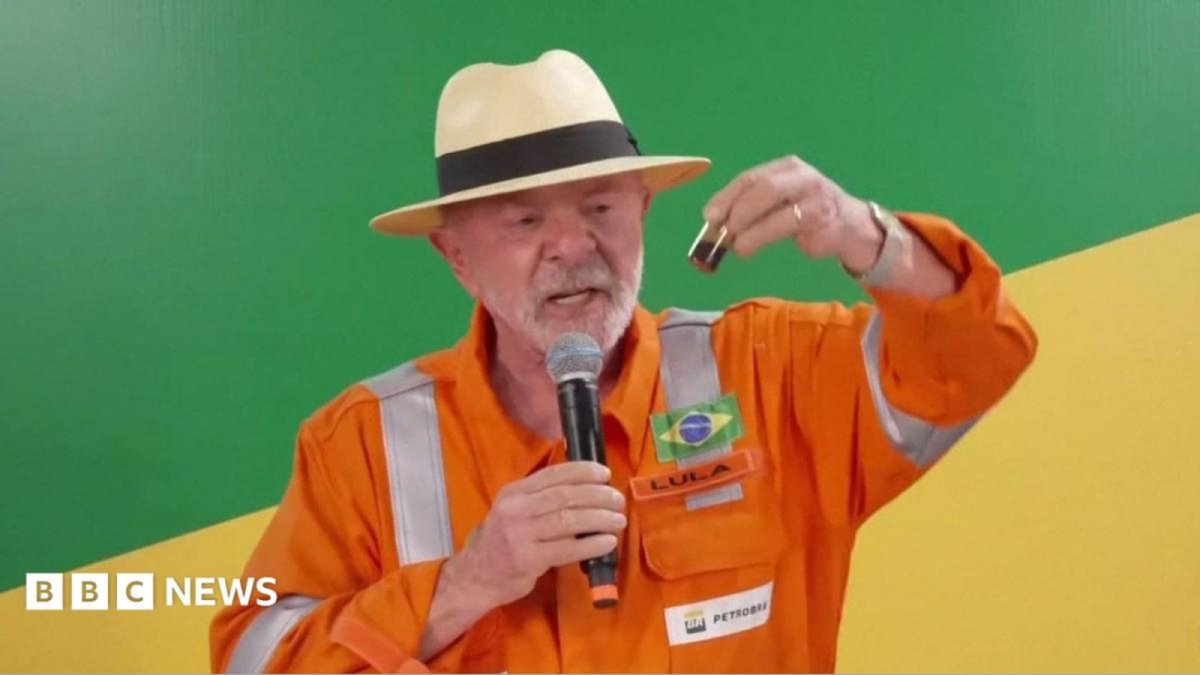
The discovery of oil in the deep waters off the coast of Amapá has reignited a fierce national debate, pitting President Luiz Inácio Lula da Silva’s promise of economic transformation against the stark warnings of environmental scientists. As the country barrels toward an October election, the find has become a symbol of Brazil’s struggle to balance its fossil fuel legacy with its climate leadership ambitions.
Rio de Janeiro, Brazil — President Luiz Inácio Lula da Silva has hailed the discovery of oil near the mouth of the Amazon River as "a passport to the country's future," a declaration that has immediately intensified the political and environmental battle lines ahead of next month's presidential election. The announcement, made on Friday by state-run oil giant Petrobras, confirms the presence of hydrocarbons in the Foz do Amazonas basin, a region long considered a frontier of immense potential and immense risk.
The find, located in the Morpho exploratory well in Block FZA-M-59, sits approximately 175 kilometers off the coast of Amapá state, at a staggering water depth of 2,886 meters. It marks Petrobras's first discovery in the Brazilian Equatorial Margin, a region that the company views as the natural successor to the pre-salt fields that transformed Brazil into a major oil exporter. Yet, the size of the reservoir remains unknown, and the commercial viability of extracting it is far from certain.
A 'Passport to the Future' or a Gamble with the Amazon?
For Lula, the discovery is a vindication of his controversial decision to authorize exploratory drilling in the region, a move that drew sharp rebuke from environmentalists who fear a catastrophic spill could devastate the biologically rich coral reefs and coastal wetlands that thrive near the river's mouth. Speaking with his characteristic defiance, Lula framed the issue in terms of national sovereignty and economic necessity, rejecting what he called "meddling" from foreign critics.
"This means national sovereignty," Lula said, addressing the international pressure he faced. "Any country which has oil of this quality won't allow anyone to butt in." He specifically referenced European opposition to the project, noting that he had chosen to announce the drilling license before the COP30 climate conference, which Brazil hosted in November 2025, to assert the country's right to develop its own resources. "The interests of our country and our company were at stake," he argued.
The president’s rhetoric is a direct appeal to voters in the remote north, where the promise of jobs and economic development is a powerful lure. In Oiapoque, a town in Amapá near the discovery site, local housing authorities have already reported an influx of people hoping to capitalize on the potential boom. For a region that has long been marginalized from Brazil's economic centers, the oil find represents a tangible, if distant, promise of prosperity.
The Equatorial Margin: A New Frontier with Old Risks
The Foz do Amazonas basin is part of the Equatorial Margin, a geological formation that stretches along Brazil's northern and northeastern coast. Unlike the pre-salt fields, which are located in the deep waters of the Santos Basin far to the south, the Equatorial Margin is characterized by its proximity to the Amazon River's immense discharge of fresh water and sediment. This creates a unique and highly sensitive ecosystem, where the nutrient-rich waters support a dazzling array of marine life, from manatees to sea turtles to vast fish populations.
Petrobras CEO Magda Chambriard defended the operation, stating that the discovery confirms the company's "optimism" about the region's potential. She emphasized that Petrobras is "committed to rebuilding the country's oil reserves and ensuring its energy security," and that drilling operations are continuing "in a safe manner and with respect for the environment and people." The company, which holds a 100% interest in Block FZA-M-59, acquired the concession in the 11th bidding round of Brazil's National Petroleum Agency (ANP) in 2013.
But the technical challenges are immense. Drilling at a depth of nearly 3,000 meters in a region with strong currents and unpredictable weather is a complex and risky endeavor. Environmental groups have pointed to the 2019 oil spill on the coast of northeastern Brazil, which affected thousands of kilometers of coastline, as a cautionary tale. They argue that a spill in the Foz do Amazonas, where the currents are powerful and the ecosystem is fragile, could be even more catastrophic.
The Pre-Salt Legacy and the Energy Transition Paradox
The discovery comes at a critical juncture for Brazil's energy sector. The pre-salt era, which began with major finds in the mid-2000s, gave Brazil energy independence and transformed Petrobras into a global leader in deep-water extraction. However, production from these mature fields is expected to decline in the coming decades. Petrobras sees the Equatorial Margin as a key to replenishing its reserves, ensuring that Brazil remains a major oil producer during the global energy transition.
This creates a profound paradox for Lula, who has positioned Brazil as a leader in renewable energy and climate diplomacy. The country is a global powerhouse in biofuels, and its electricity grid is already largely powered by hydroelectric dams. Lula has repeatedly argued that oil revenues are essential to fund the transition to a greener economy. "I'm not denying my commitment to the fight for a day when we no longer need fossil fuels," he said, "because Brazil will continue to be the king of biofuel innovation and will remain a major player in renewable energy."
Yet, critics see this as a contradiction. They argue that investing in new fossil fuel exploration, particularly in such a sensitive area, undermines Brazil's climate credibility and locks the country into a carbon-intensive future. The decision to allow drilling just weeks before COP30, which Brazil hosted in November, was seen by many as a slap in the face to the international community and to the environmental movement.
Election Stakes and the Politics of Oil
With less than two months to go before the October 2026 elections, Lula is walking a political tightrope. He is trying to attract voters in the north who are desperate for economic development, while not alienating the urban, environmentally conscious electorate that forms his base. The oil discovery gives him a powerful talking point on the campaign trail, allowing him to present himself as a leader who can deliver both jobs and environmental stewardship.
The influx of people to Oiapoque is a testament to the hope that the oil find has generated. For many in Amapá, one of Brazil's poorest states, the prospect of high-paying jobs in the oil industry is a life-changing opportunity. The state's economy has long been dependent on logging, mining, and small-scale agriculture, and the arrival of Petrobras could bring a wave of investment in infrastructure, healthcare, and education.
However, the political calculus is complicated. The environmental damage that could result from a major spill would not be confined to Brazil; it would have regional and global repercussions. The Amazon River plume carries its sediment and nutrients far into the Atlantic, affecting marine life across the Caribbean and West Africa. A disaster in the Foz do Amazonas would be a humanitarian and ecological catastrophe of international proportions.
A Regional Perspective: Latin America's Energy Dilemma
Brazil's situation is not unique in Latin America. Across the region, governments are grappling with the tension between exploiting natural resources for economic development and protecting the environment. In neighboring countries like Colombia and Ecuador, similar debates are playing out over oil exploration in the Amazon rainforest. The region is rich in fossil fuels, but it is also home to the world's largest tropical forest, a vital carbon sink that is essential for global climate stability.
Lula's stance reflects a broader sentiment in the Global South: that developed countries, which have already reaped the benefits of fossil fuel extraction, have no right to lecture developing nations on the need to transition away from oil. This argument resonates strongly in Brazil, where many feel that the country has been unfairly targeted by international environmental groups while wealthier nations continue to consume vast quantities of fossil fuels.
The discovery at the Morpho well is a reminder that the energy transition is not a linear process. Even as the world moves toward renewable energy, the demand for oil and gas remains high, and countries like Brazil are eager to capitalize on their resources. The question is whether they can do so in a way that is both economically viable and environmentally responsible.
For now, the size of the field and its commercial viability remain unknown. Petrobras will need to conduct further drilling and testing to determine whether the find can be developed profitably. This process could take years, and the outcome is far from certain. But the political and symbolic significance of the discovery is already clear. It has given Lula a powerful narrative of national pride and economic opportunity, and it has set the stage for a contentious debate about Brazil's energy future.
As the October election approaches, the oil find will undoubtedly be a central issue. Lula will continue to tout it as a "passport to the future," while his opponents will use it to question his commitment to the environment. The people of Amapá, meanwhile, will be watching closely, hoping that the promise of prosperity becomes a reality. The stakes could not be higher, for Brazil and for the planet.
This article was produced with AI-assisted research and editorial support. Sources: BBC News, Agência Brasil.
By Elena Vasquez, Staff Writer
What's Your Reaction?
 Like
0
Like
0
 Dislike
0
Dislike
0
 Love
0
Love
0
 Funny
0
Funny
0
 Wow
0
Wow
0
 Sad
0
Sad
0
 Angry
0
Angry
0

Latin America Correspondent at Global1.News. Based in Mexico City, covering politics, economics, energy, and culture across the region. Brings an on-the-ground perspective to stories spanning from the Rio Grande to Patagonia.













Comments (0)