
Jeju Cover-Up Scandal: Officer's Alleged Negligence Ends in Four Bodies Found in a Week
The discovery of a missing woman's body on Jeju Island on Monday has ignited a full-blown governance crisis for South Korea's National Police Agency, exposing an alleged pattern of systemic negligence and cover-up within the country's law enforcement apparatus.
The discovery of a missing woman's body on Jeju Island on Monday has ignited a full-blown governance crisis for South Korea's National Police Agency, exposing an alleged pattern of systemic negligence and cover-up within the country's law enforcement apparatus. At the center of the scandal is a single police officer accused of closing missing-person cases in mere hours without verification, a failure that has prompted a national review of hundreds of thousands of case files and drawn a formal apology from the acting national police chief.
Jeju Cover-Up Scandal: Officer's Alleged Negligence Ends in Four Bodies Found in a Week
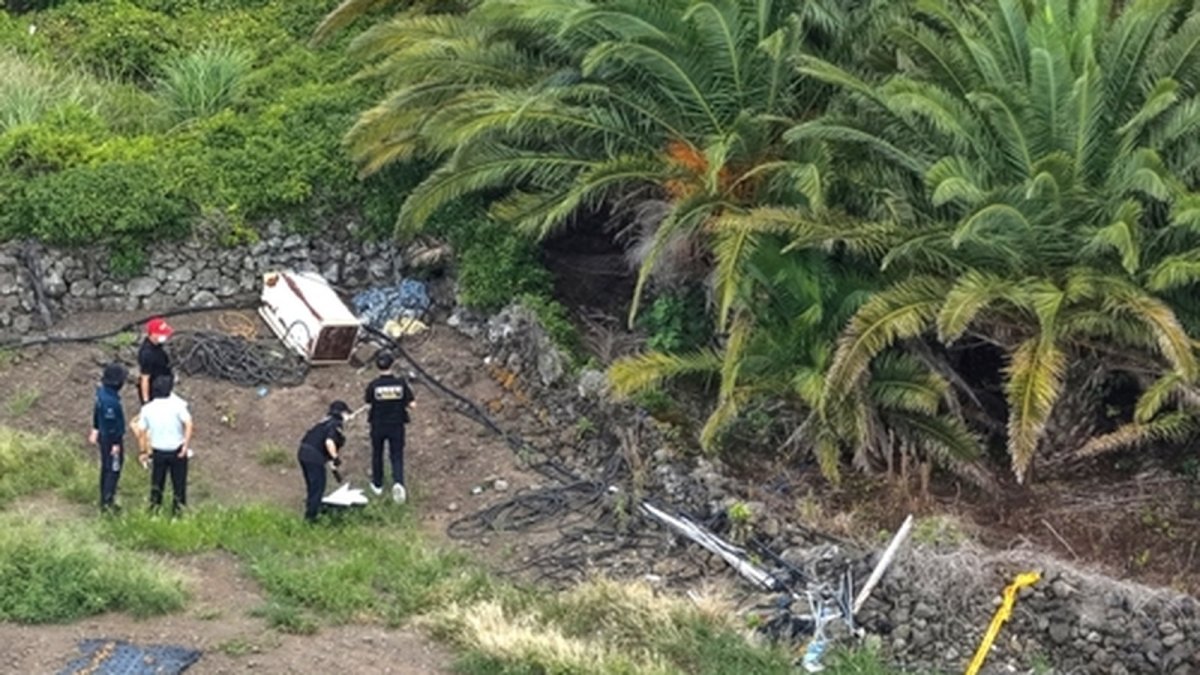
Seoul, South Korea – Aug. 25, 2026 — The body of Jang Mi-ran, a 37-year-old woman reported missing on May 15, was discovered at 10:46 a.m. Monday in a palm tree grove in Hallim-eup, Jeju City, approximately one kilometer from her residence. The discovery, which occurred 101 days after her initial disappearance, came on the first day of an intensive inter-agency search involving roughly 400 police officers, soldiers, and government personnel. The case has since unraveled into a national scandal, revealing that a local officer allegedly closed her file within two and a half hours of the report without ever confirming her whereabouts.

A Body Found 101 Days After the Report
The grim discovery on Monday marked the culmination of a prolonged and allegedly mishandled investigation. Jang's body was found in an advanced state of decomposition, with clothing, slippers, and a mobile phone at the scene matching her belongings, according to reports from Yonhap and the Korea Times. A gold bracelet was also reportedly found at the scene. While an autopsy by the National Forensic Service is pending to confirm identity and cause of death, a preliminary report to acting National Police Agency (NPA) Commissioner General Yoo Jae-sung indicated the presumed cause was hanging, with no immediate signs of foul play. No suicide note was found.
The timing of the discovery has intensified scrutiny of police conduct. Jang's remains were located a mere ten-minute walk from her last-known location, and the inter-agency search that found them should have been mounted months earlier if the initial report had been handled with due diligence. For 101 days, her family and friends were left without answers, reportedly told by police that Jang had been contacted and did not wish to speak with them.
The Alleged Cover-Up: A Case Closed in Two and a Half Hours
The core of the scandal lies in the actions of a police officer, identified only as "A" under Korean law, which bars naming suspects before conviction. Assigned to the Jeju Western Police Station, Officer A allegedly closed Jang's missing-person case within approximately two and a half hours of it being filed. According to investigators, he claimed to have made phone contact with Jang, recording that she stated she "did not wish to contact her family." He allegedly relayed this same false information to her friends and family, assuring them she was alive and well.
Further investigation revealed a more disturbing pattern. The officer allegedly entered Jang as dead in the police system and closed the case, a falsification of official electronic records. He is also accused of falsely closing another missing-person report filed in July by recording that he had contacted the missing man when he had not. The officer, who had been suspended from duty since Aug. 11 for separate allegations, was placed under emergency arrest on Saturday, Aug. 22. However, the Jeju District Court ordered his release on Monday, Aug. 24, ruling the emergency arrest unlawful because police knew his whereabouts and had time to obtain a warrant. Police and prosecutors subsequently applied for a formal detention warrant on suspicion of dereliction of duty, falsifying official records, and obstruction of official duty through deceptive means. On Aug. 25, police placed all four members of the officer's command line on standby duty over the false closure, signaling that accountability may extend up the chain of command.
Four Bodies in a Week: A Pattern of Systemic Failure
The Jang Mi-ran case is not an isolated incident but part of a deeply troubling pattern that has emerged over the past week on Jeju Island. The discovery of her body was the fourth time in seven days that the remains of a missing person were found on the island. On Saturday, Aug. 22, a man in his 60s was found dead in northeastern Jeju. He had been reported missing more than 50 days earlier, and his family had re-reported him missing last week after his case was allegedly closed in a similar manner by the same officer. Early Sunday morning, Aug. 23, the Jeju Coast Guard recovered the body of a man in his 70s from waters near eastern Jeju; he had been reported missing just the day before. Earlier on Monday, Aug. 24, another missing person was found dead near a valley on western Jeju.
This cluster of deaths has transformed a single case of alleged negligence into a systemic indictment of the Jeju Western Police Station's handling of missing-person reports. The fact that one officer could allegedly close multiple cases without verification—and that supervisors apparently failed to catch these errors—points to a broader cultural and procedural failure within the institution. The cases echo a long-standing critique of South Korean policing: that adult missing-person reports are often treated with less urgency than child cases, with officers frequently assuming the individual "simply left home." This assumption, as the Jeju cases tragically illustrate, can have fatal consequences.
Institutional Response and Political Accountability
The political and institutional fallout has been swift. Acting NPA Commissioner General Yoo Jae-sung issued a formal apology at a plenary meeting of the National Assembly's Public Administration and Security Committee on Monday, Aug. 24. "I am deeply sorry for causing concern to the public. The response after the second report was seriously flawed," Yoo stated. "We will thoroughly investigate the officer responsible, hold those involved accountable and improve the overall system." His apology came in response to pointed questioning from Rep. Chai Hyun-il of the Democratic Party of Korea, who asked whether there were signs of foul play in Jang's death; Yoo replied, "Not so far."
The political dimension escalated further when President Lee Jae-myung ordered a thorough review of the police investigation into Jang's disappearance and of missing-person case closures generally. Presidential spokesperson Kang Yu-jung said Lee expressed deep regret and instructed police to develop a fundamental reform plan to improve the handling of missing-person cases. This direct presidential intervention underscores the gravity of the situation, framing it not merely as a local police failure but as a national governance issue. The NPA has since announced a two-stage review system under which missing-person cases may only be closed with a supervisor's written approval—a procedural change that implicitly acknowledges the previous system's vulnerabilities.
Policy Implications: Police Reform and Public Trust
The Jeju scandal arrives at a critical juncture for South Korean policing, which has been under intense public scrutiny since the 2022 Itaewon crowd crush exposed major failures in police command, response, and accountability. That tragedy remains a reference point in debates over police reform, and the current crisis threatens to further erode public trust in the institution. The NPA operates under the Ministry of the Interior and Safety, and an autonomous municipal police system was launched in July 2021—a reform intended to increase local accountability. The Jeju case, however, suggests that structural reforms have not yet translated into consistent field-level diligence.
The response from the Seoul Metropolitan Police Agency (SMPA) offers a glimpse of the scale of the problem. Commissioner Park Jeong-bo has opened a review of approximately 92,800 child and adult missing-person reports filed since Jan. 1, 2024 and later closed. This review, which will run through the end of November, will focus on cases closed without meeting the missing person or an equivalent check, such as a video call or family confirmation. Park's comments were notably candid: "With adult missing persons reports, there is a tendency to assume the person simply left home, and we let our guard down. We will substantially strengthen our systems and field oversight so that no one is harmed by lax police work." The fact that Seoul police have required officers since November 2024 to physically confirm a missing person's safety before closing a case—a policy clearly not in place in Jeju—highlights the inconsistency in practices across the country.
Looking Ahead
The coming weeks will be decisive in determining whether this scandal leads to meaningful reform or becomes another chapter in a cycle of apology and inaction. The formal detention hearing for Officer A will be a critical test of judicial oversight, while the NPA's nationwide review of closed cases is likely to uncover hundreds of similar instances of negligence. The presidential mandate for a "fundamental reform plan" signals that the administration is treating this as a priority, though the mixed legacy of the 2021 autonomous police reform offers reason for cautious skepticism.
For scholars of Korean governance, this case lays bare the tension between institutional self-preservation and public accountability. The alleged actions of one officer have exposed vulnerabilities that likely extend throughout the system, raising fundamental questions about supervision, training, and the cultural biases that lead officers to dismiss adult missing-person reports. The fact that four bodies were found in a single week on one island is not a statistical anomaly; it is a damning indictment of a system that failed to take basic precautions. As the National Forensic Service works to confirm identities and causes of death, and as the courts weigh Officer A's fate, the broader question remains: can South Korea's police force restore the public trust it has so badly damaged?
The Jang Mi-ran case is a stark reminder that in a democracy, the legitimacy of state institutions rests on their ability to protect the most vulnerable. When that protection fails—not through unavoidable tragedy, but through alleged negligence and falsified records—the damage extends far beyond one family's grief. The investigation into Officer A and the systemic review now underway will determine whether this moment becomes a catalyst for genuine reform or a further symptom of a governance crisis that remains unresolved.
By Prof. David Park, Staff Writer
This article was produced with AI-assisted research and editorial support. Reporting is based on sources cited in the article.
What's Your Reaction?
 Like
0
Like
0
 Dislike
0
Dislike
0
 Love
0
Love
0
 Funny
0
Funny
0
 Wow
0
Wow
0
 Sad
0
Sad
0
 Angry
0
Angry
0

East Asia/Technology Correspondent at Global1.News. Seoul-based voice covering Korean politics, technology, business, and culture. Analyzes how technology and geopolitics intersect across East Asia.















Comments (0)