
Jamaica's Opposition Leader Revives Manley's Democratic Socialism as Answer to Economic Slump
In a move that is set to reignite one of the most enduring ideological debates in the English-speaking Caribbean, Jamaica’s Opposition Leader Mark Golding has placed democratic socialism firmly back at the centre of the People’s National Party’s (PNP) political identity.
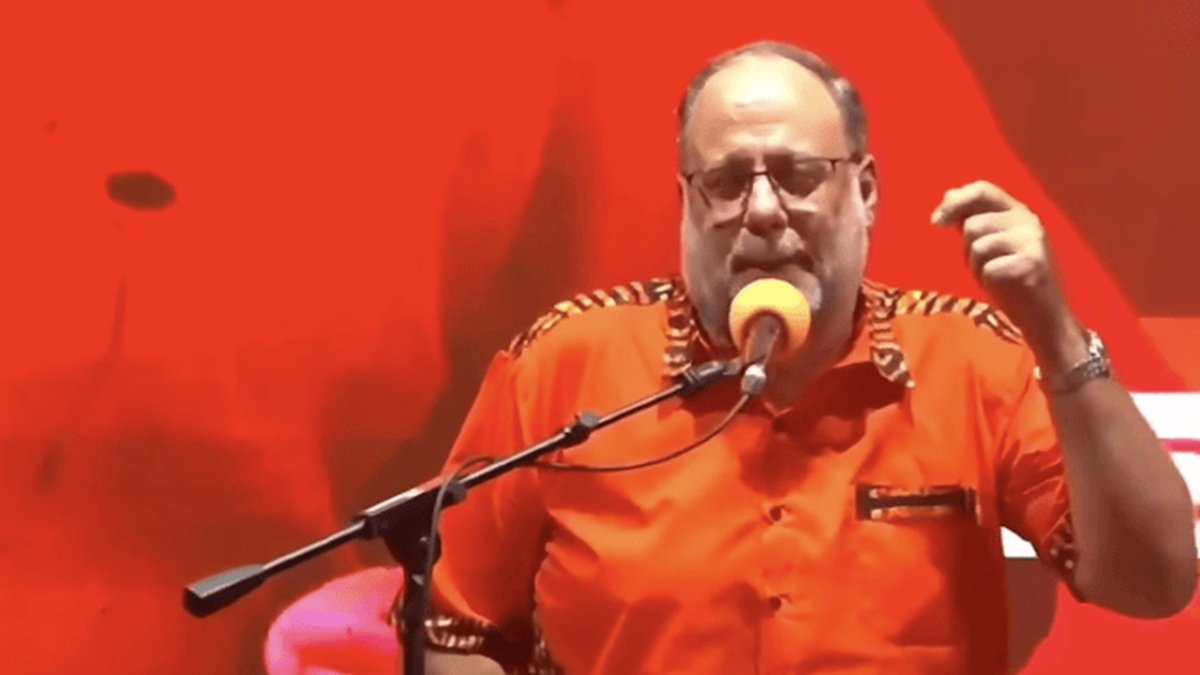
In a move that is set to reignite one of the most enduring ideological debates in the English-speaking Caribbean, Jamaica’s Opposition Leader Mark Golding has placed democratic socialism firmly back at the centre of the People’s National Party’s (PNP) political identity. Addressing the party’s Greendale Divisional Conference in St Catherine, Golding signalled that the modern PNP intends to draw heavily from the philosophy associated with the late former Prime Minister Michael Manley, crafting an economic approach that he argues is focused more directly on the welfare of ordinary Jamaicans.
The declaration marks a significant rhetorical shift for the party, which has spent decades navigating the legacy of the 1970s—a period that delivered profound social reforms but also economic turbulence, capital flight and deep political polarisation. For Golding, however, the time has come to reclaim that heritage, not as a relic of the past, but as a blueprint for addressing the contemporary challenges facing the island.
Speaking to party faithful, Golding argued that changing global circumstances have renewed interest in governments that prioritise the needs of citizens over powerful individuals and groups. He invoked Manley’s legacy directly, describing the former prime minister as a hero and praising his efforts to reshape Jamaica’s social landscape. The Opposition Leader said his leadership would build on that legacy while pursuing policies intended to expand economic opportunities and place people at the centre of national development.
A Philosophy Reborn for Modern Times
Democratic socialism was formally adopted by Manley’s government in 1974, during a period when the PNP sought to address deep-seated social inequality and expand the role of the State in areas affecting the welfare of Jamaicans. That era saw the introduction of land reform measures, adult literacy programmes, expanded welfare provisions and a greater state role in the economy, including the controversial bauxite levy that asserted national control over the island’s most valuable mineral resource.
Now, five decades later, Golding is seeking to reconnect the modern PNP with that philosophical foundation. He argued that the philosophy is gaining renewed attention internationally, including in the United States, where he said there is growing recognition that governments should respond more effectively to the needs of ordinary people. This framing allows the PNP to position democratic socialism not as a Cold War-era relic, but as a forward-looking response to global trends in which citizens are demanding greater accountability and social protection from their governments.
For the Caribbean region, where the cost of living continues to bite hard and inequality remains a persistent challenge, Golding’s message may resonate beyond Jamaica’s shores. From Trinidad and Tobago to Barbados and Guyana, the question of how to balance economic growth with social protection is a live one, and the PNP leader’s embrace of a people-centred economic model speaks to a broader regional anxiety about who truly benefits from development.
Criticism of the Holness Administration’s Economic Record
The Opposition leader used the conference platform to deliver a pointed critique of the economic performance of the Andrew Holness administration. Golding claimed that Jamaica had experienced three consecutive quarters of negative economic growth and argued that another contraction was being projected by the Planning Institute of Jamaica. These figures, if accurate, would represent a significant blow to a government that has consistently touted its macroeconomic management and its stewardship of the island’s tourism-led recovery.
Golding said a PNP government would pursue a “bottom-up” economic model designed to create greater opportunities for Jamaicans rather than relying solely on overall economic growth figures. This represents a deliberate departure from the trickle-down logic that has dominated economic policy discourse in the region for decades, where headline growth numbers are often celebrated even when the benefits fail to reach the poorest households.
The contrast between the two parties could not be starker. The governing Jamaica Labour Party (JLP) has positioned itself as the steward of fiscal discipline and investor confidence, while Golding’s PNP is now openly championing a more interventionist state. The question of whether these two visions can coexist in Jamaica’s political marketplace will likely define the island’s electoral landscape in the months and years ahead.
A People-Centred Policy Agenda
Beyond the philosophical framing, Golding outlined a series of concrete policy measures that would form the backbone of a PNP government’s approach. Chief among these is closer cooperation between the public and private sectors on workforce development. He proposed incentives for businesses to employ and train young people while also helping existing workers acquire new skills—a recognition that Jamaica’s high youth unemployment rate and skills mismatch are structural problems that require coordinated action.
Education would also feature prominently in the PNP’s approach. Golding said greater investment in early-childhood education is necessary to ensure children develop basic literacy skills at an early age. He also reiterated commitments to a first-in-family university scholarship programme and an expanded school-feeding initiative. These proposals echo the social investment priorities of the Manley era, which placed a premium on human capital development as the foundation for national progress.
On transportation, Golding again backed subsidised fares designed to assist commuters while providing support for taxi and bus operators. This is a politically sensitive issue in Jamaica, where public transportation costs consume a significant portion of household budgets for working-class families. The PNP leader’s willingness to embrace subsidies stands in contrast to the market-oriented approach favoured by the JLP, which has generally preferred targeted relief over broad-based price controls.
Housing, Land and the Legacy of Inequality
Housing and access to land also formed part of Golding’s broader argument about economic inclusion. He rejected an approach centred on removing people from informal settlements and instead linked the issue to Jamaica’s long history of unequal access to land. This framing is significant, as it recasts what is often portrayed as a law-and-order issue into a question of historical justice and economic rights.
Golding said a PNP administration would continue programmes such as Operation PRIDE and the land-titling process, while taking a different approach to people occupying captured or informal lands. This suggests a more conciliatory stance towards informal settlers, one that prioritises regularisation and security of tenure over eviction and displacement. For a country where land ownership has historically been concentrated in the hands of a few, this represents a potentially transformative policy direction.
The PNP has previously invoked Manley’s legacy on housing, including criticism of the Holness administration over the National Housing Trust. By linking the housing question to the broader theme of economic inclusion, Golding is attempting to build a coherent narrative that connects the dots between land, shelter, opportunity and dignity.
The JLP’s Response and the Battle Ahead
Unsurprisingly, Golding’s embrace of democratic socialism has already prompted criticism from the governing Jamaica Labour Party. Government Senator Abka Fitz-Henley argued that Jamaicans should be cautious about revisiting the economic policies associated with the 1970s, pointing to the period’s economic difficulties, shortages, capital flight and currency depreciation. The Senator’s remarks reflect a deep-seated anxiety within the JLP that the PNP’s ideological shift could reopen old wounds and undermine the investor confidence that the government has worked hard to cultivate.
The contrasting positions highlight an issue likely to feature prominently in Jamaica’s political debate: whether the social and economic principles associated with Manley’s democratic socialism can be adapted to the realities of the modern Jamaican economy without repeating the difficulties of the 1970s. It is a question that goes to the heart of Jamaica’s political identity, and one that resonates across the Caribbean region as small island states grapple with the pressures of globalisation, climate change and economic volatility.
For Golding and the PNP, the renewed emphasis is also an attempt to define the party’s political direction around social investment, economic inclusion and greater opportunities for working and lower-income Jamaicans. It is a calculated bet that the electorate, weary of economic stagnation and frustrated by persistent inequality, will respond to a vision that places their needs at the centre of national development.
A Regional Debate with Deep Roots
The echoes of this debate are not confined to Jamaica. Across the Caribbean, the legacy of democratic socialism and the broader question of the State’s role in the economy remain deeply contested. In Trinidad and Tobago, the nationalisation of key industries in the 1970s and the subsequent struggles of state enterprises like Petrotrin continue to inform policy discussions about energy sector management. In Guyana, the cooperative republic model championed by Forbes Burnham remains a touchstone for debates about national development and foreign investment.
Golding’s invocation of Manley also carries a personal and historical weight. Manley was not merely a political leader; he was a towering figure of Caribbean independence-era politics, a champion of the Non-Aligned Movement and a vocal advocate for a New International Economic Order. His democratic socialism was part of a broader vision of Third World solidarity and regional cooperation that helped shape the modern CARICOM. By reclaiming that mantle, Golding is positioning himself within a lineage of Caribbean leaders who saw politics as a moral project as much as a technical exercise.
With the Opposition now openly reclaiming democratic socialism as part of its governing philosophy, the debate is likely to extend beyond political labels and into questions about how Jamaica should balance economic growth, private enterprise, social protection and the role of government. It is a debate that will be watched closely not only in Kingston and Spanish Town, but throughout the Caribbean diaspora in the United States, Canada and the United Kingdom, where Jamaicans remain deeply engaged with the political fortunes of their homeland.
Whether Golding’s vision will translate into electoral success remains to be seen. The JLP will no doubt seek to paint the PNP’s embrace of democratic socialism as a return to the failed policies of the past, while Golding will counter that the failures of the present demand a new approach. What is clear is that the ideological battle lines have been drawn, and the coming political season in Jamaica promises to be one of the most consequential in a generation.
This article was produced with AI-assisted research and editorial support. Sources: Caribbean360, Jamaica Gleaner, Carib News.
By Sharon Sahatoo, Staff Writer
What's Your Reaction?
 Like
0
Like
0
 Dislike
0
Dislike
0
 Love
0
Love
0
 Funny
0
Funny
0
 Wow
0
Wow
0
 Sad
0
Sad
0
 Angry
0
Angry
0

Caribbean Correspondent at Global1.News. Based in Port of Spain, Trinidad, covering Caribbean politics, economy, energy, climate, and culture. Amplifying the voices and stories of the Caribbean region.










Comments (0)