
Israel's Africa Gambit: How a Red Sea Recognition Reshaped the Horn of Africa
In a recent i24NEWS English explainer video titled "Israel's Africa Gambit," the network's "Videos to understand the world" series unpacked one of the most consequential diplomatic moves of the past year: Israel's formal recognition of the Republic of Somaliland.
In a recent i24NEWS English explainer video titled "Israel's Africa Gambit," the network's "Videos to understand the world" series unpacked one of the most consequential diplomatic moves of the past year: Israel's formal recognition of the Republic of Somaliland. The video, published on August 20, 2026, traces how a declaration signed in Jerusalem on December 26, 2025, has reshaped the strategic map of the Red Sea basin, triggered a global diplomatic backlash, and positioned Israel at the center of a new contest for influence in the Horn of Africa. For Israeli readers, the story is not merely about a distant coastal territory — it is about the security of the Bab el-Mandeb Strait, the maritime lifeline that connects Eilat to the wider world, and the ongoing confrontation with Iranian-backed forces in Yemen.
Israel's Africa Gambit: How a Red Sea Recognition Reshaped the Horn of Africa
Jerusalem, Israel – August 2026 — When Prime Minister Benjamin Netanyahu and then-Foreign Minister Gideon Sa'ar signed the declaration recognizing Somaliland as a sovereign state on December 26, 2025, they broke with decades of international consensus and made Israel the first United Nations member state to formally acknowledge the breakaway republic's independence. Netanyahu framed the move as being "in the spirit of the Abraham Accords," the normalization agreements that reshaped Israel's ties with the Gulf states beginning in 2020. But the decision, as the i24NEWS explainer details, was driven by far more than diplomatic symbolism — it was a strategic gambit aimed at the heart of the Red Sea's most vulnerable chokepoint.
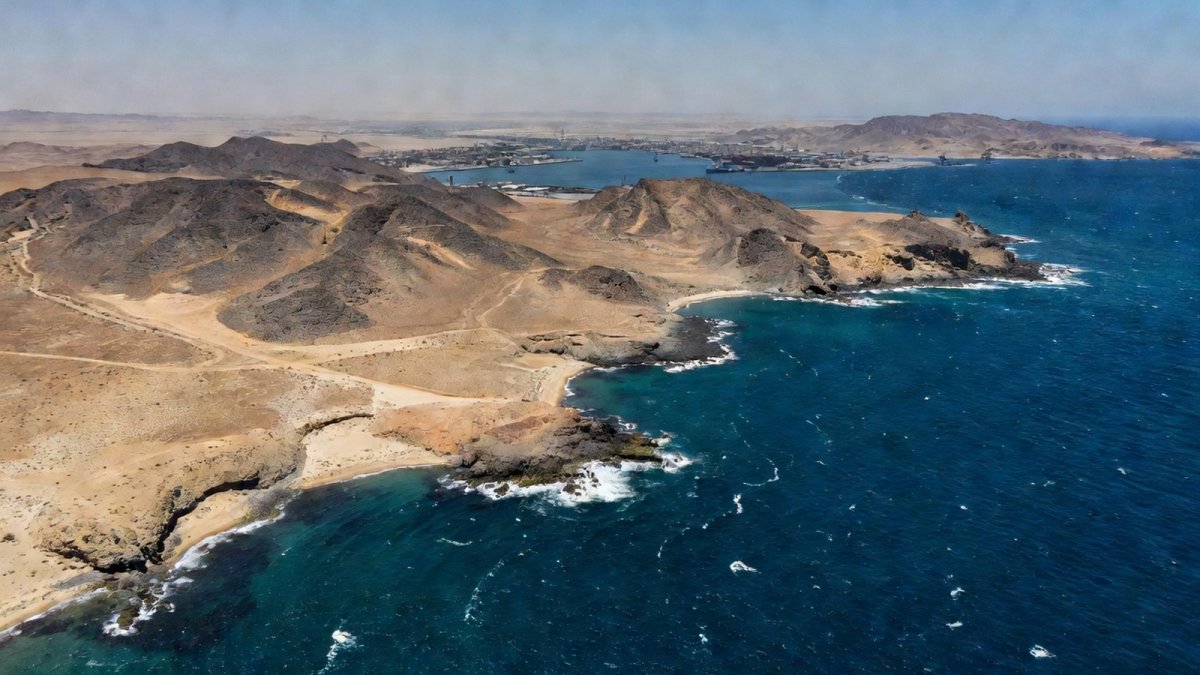
On the Ground: From Recognition to a Forward Base
The diplomatic formalities moved quickly after the December declaration. Ambassadors were exchanged in early 2026, and by March of that year, reports emerged that Israel was scouting sites along Somaliland's coast — including one location roughly 100 kilometers west of the port city of Berbera — for a possible military and intelligence outpost. The strategic logic is straightforward: a foothold in Somaliland allows Israel to monitor and strike at Houthi forces in Yemen from approximately 250-260 kilometers away, rather than mounting 2,000-kilometer refueled sorties from Israeli airspace. For the IDF and Israeli intelligence agencies, this represents a potential forward base against Iranian-backed missile and drone threats that have repeatedly targeted Israeli shipping and territory since the Houthis entered the fray in late 2023.
The June 15-16, 2026, state visit of Somaliland President Abdirahman Mohamed Abdullahi "Irro" to Jerusalem cemented the relationship. Irro met Netanyahu in Jerusalem and signed a Strategic Joint Declaration of Cooperation covering security, investment, technology, agriculture, water management, and infrastructure development. "Today, a new chapter in history has been written," Irro declared. He extended "deepest gratitude and sincere appreciation to the Prime Minister of Israel, Benjamin Netanyahu, the Government of Israel, and the people of Israel for becoming the first nation in thirty-five years to formally recognize the Republic of Somaliland as a sovereign and independent state, affirming its nationhood, independence, and inherent right to self-determination." Somaliland subsequently opened a Jerusalem "embassy" — officially a liaison office — cementing the bilateral relationship in the Israeli capital.
Regional Context: The Strategic Value of Berbera
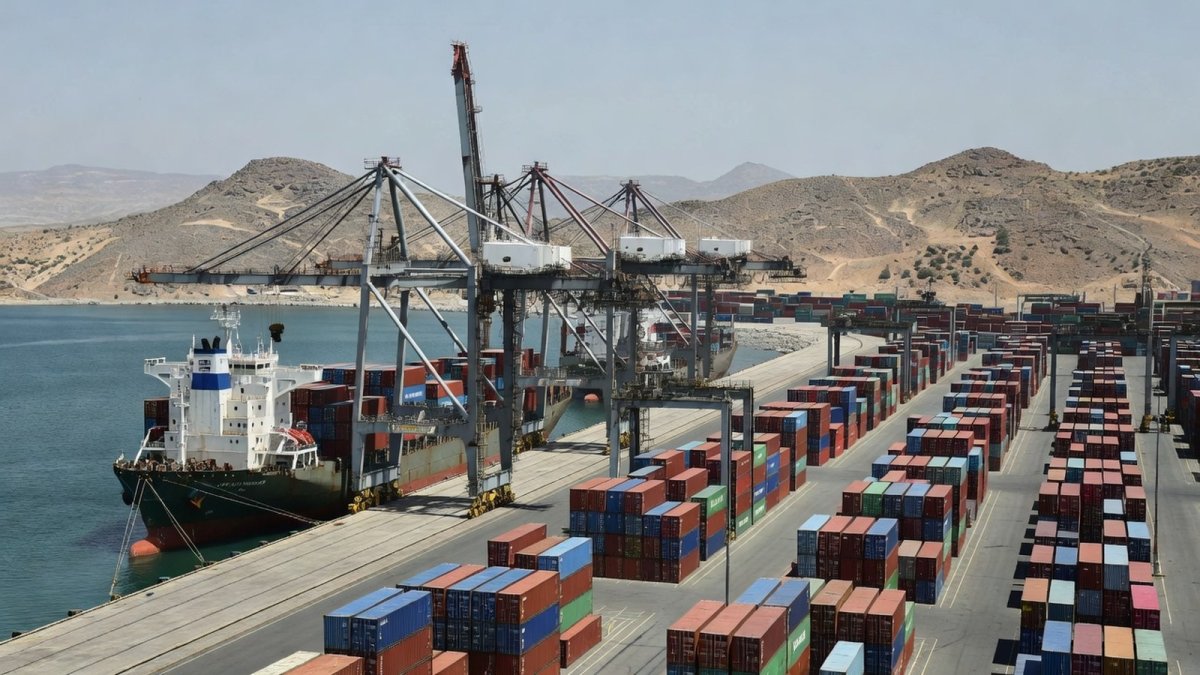
Somaliland's geography explains the intensity of Israeli interest. The territory spans roughly 176,000 square kilometers on the southern shore of the Gulf of Aden, with about 740 kilometers of coastline. Its deep-water port at Berbera sits approximately 250-260 kilometers across the Gulf of Aden from Yemen, on the southern approach to the Bab el-Mandeb Strait. In normal times, 10-14% of global maritime trade and about a quarter of global container traffic transit Bab el-Mandeb, along with substantial Gulf oil and LNG exports bound for Europe. Since 2023, Houthi attacks from Yemen have repeatedly disrupted this flow, pushing shipping toward the longer Cape of Good Hope route and making every port and airstrip on the Gulf of Aden's southern shore — Berbera included — newly valuable for surveillance, interdiction, and logistics.
The recognition also fits into Israel's broader Africa strategy. Former Deputy Foreign Minister Sharren Haskel, who worked extensively on Africa relations, noted in December 2025 that Israel "has relationships with almost every government on the continent." Israel's engagement with Africa dates to the early years after 1948 independence, when the young state sought ties with newly independent African nations during the 1950s and 1960s decolonization era. But Israeli influence has receded in places like Chad and South Africa, while Iran has dramatically expanded its footprint across the continent. The Somaliland recognition, analysts say, is part of Israel's effort to counter that Iranian expansion and secure its own strategic position in a region where Chinese, Turkish, and Gulf influence is also growing.
Diplomatic and International Reactions: A Global Backlash
The international response was swift and overwhelmingly hostile. At an emergency session of the UN Security Council, 14 of 15 member states voiced opposition to Israel's move. A joint statement from 20 countries — including Saudi Arabia, Egypt, Turkey, Iran, Qatar, and Somalia — condemned the recognition. The African Union, Arab League, European Union, and Organization of Islamic Cooperation all reaffirmed Somalia's territorial integrity. Somalia itself called the move a "flagrant assault" and a "threat to the security and stability of the world and the region," and canceled defense and port agreements with the United Arab Emirates in protest.
China was particularly vocal. Beijing described then-Foreign Minister Gideon Sa'ar's visit to Somaliland as "illegal and a blatant violation of Somalia's national sovereignty and territorial integrity," accusing Israel of involvement in dividing Somalia. Chinese Foreign Minister Wang Yi visited the Horn of Africa and East Africa — including Somalia, Tanzania, Lesotho, and Ethiopia — in early 2026 as a direct response, and in January 2026 made the first visit by a Chinese foreign minister to Somaliland in decades. The UAE, meanwhile, remains the most consequential external partner without formal recognition: DP World operates the Berbera port expansion, and the UAE has maintained a military base there since 2017 supporting operations in Yemen. Israeli officials have acknowledged the UAE's facilitating role, even as Abu Dhabi carefully avoids a formal declaration.
Saudi Arabia firmly backs Somalia's sovereignty, partly due to its rivalry with the UAE over Red Sea influence, and deepened its defense cooperation with Mogadishu in 2026. Turkey, which has competing interests in Somalia through defense deals and a naval presence, also condemned the move. Iran aligned with the Arab and Islamic consensus, consistent with its broader antagonism toward Israel and any Israeli reach into the Red Sea basin. The United States has not followed Israel's lead: President Donald Trump said the matter was "under study," and while the FY2026 defense authorization act contains congressional provisions and a proposed Somaliland independence bill, Washington has reaffirmed its support for Somalia's territorial integrity. The US mission to the UN has remained studiously neutral. Taiwan maintains an unofficial, ambiguous relationship with Somaliland, partly to needle China. Ethiopia, landlocked and eager for guaranteed Red Sea access through Berbera, is seen as the most likely next state to move toward recognition, though a 2024 Ethiopia-Somaliland memorandum of understanding was undercut by Ethiopia's reaffirmation of Somali unity under Turkish mediation. As of mid-2026, European, Latin American, Russian, Indian, and Japanese governments have all stayed within the traditional consensus favoring Somalia's territorial integrity.
Analysis and What This Means: The 2026 War Context
The recognition of Somaliland cannot be separated from the broader security environment of 2026. The US-Israel-Iran war erupted on February 28, 2026, and the Islamabad Memorandum of Understanding — a 14-point framework ending the war — was signed on June 17, 2026, with a comprehensive peace to be negotiated within 60 days. African governments reacted to the war with caution; oil prices rose, and shipping routes faced disruption and delays. The UAE announced a total embargo on Iran after missiles were fired in August 2026, and the African Union engaged in crisis diplomacy on the war. In this volatile context, Israel's foothold in Somaliland takes on added significance: it provides a monitoring and potential interdiction capability along the southern approach to Bab el-Mandeb, precisely the corridor through which Iranian-backed threats have historically flowed.
For Israel, the Somaliland gambit represents a calculated bet that strategic depth in the Horn of Africa outweighs the diplomatic costs of breaking with international consensus. The relationship offers port access, control of approaches to the Red Sea, and diplomatic positioning between America and China — all while countering Iran's expanding footprint on the continent. But the costs are real: Israel has alienated key partners in the Arab and Islamic worlds, complicated its relationship with the United States, and given China and Turkey additional leverage in their own African engagements. The coming months will test whether the strategic benefits materialize as the IDF and intelligence community hoped, or whether the diplomatic isolation undermines the very gains the recognition was meant to secure.
For Israeli readers, the implications are immediate and personal. Every container ship that transits Bab el-Mandeb en route to Eilat or Ashdod, every tanker carrying Gulf oil to European markets, and every Israeli vessel navigating the Red Sea now passes through a corridor where Israel has both a new presence and a new set of adversaries. The Abraham Accords framework that Netanyahu invoked in December 2025 was built on the premise that shared security interests could overcome ideological differences; the Somaliland recognition extends that logic to a territory that most of the world still considers part of Somalia. Whether that bet pays off will depend on the peace negotiations now underway, the behavior of the Houthis and their Iranian patrons, and the willingness of African states to engage with Israel despite the diplomatic pressure. The i24NEWS explainer makes clear that Israel has chosen to play a long game in the Horn of Africa — and the region, and the world, are watching to see how it unfolds.
By Hannah Berg, Staff Writer
This article was produced with AI-assisted research and editorial support. Reporting is based on sources cited in the article.
What's Your Reaction?
 Like
0
Like
0
 Dislike
0
Dislike
0
 Love
0
Love
0
 Funny
0
Funny
0
 Wow
0
Wow
0
 Sad
0
Sad
0
 Angry
0
Angry
0

Israel Correspondent at Global1.News. Based in Tel Aviv, covering Israeli politics, security, technology, and society. Provides balanced, deeply-sourced reporting on one of the most closely-watched regions in the world.










Comments (0)