
Israeli Settler Lawyer: One Jewish Life Worth 10 Million Palestinians
In a recent Middle East Eye report on a BBC interview, Israeli settler and lawyer Yehuda Shimon of the Havat Gilad outpost stated that one Jewish life equals 10 million Palestinian lives and outlined three options for Palestinians in the West Bank.
In a recent Middle East Eye report on a BBC interview, Israeli settler and lawyer Yehuda Shimon of the Havat Gilad outpost stated that one Jewish life equals 10 million Palestinian lives and outlined three options for Palestinians in the West Bank. The remarks followed deadly violence last Friday near the outpost and have intensified fears among residents of nearby villages. Palestinian voices in the area describe the comments as a direct threat amid ongoing raids and attacks.
Israeli Settler Lawyer: One Jewish Life Worth 10 Million Palestinians
Ramallah, Occupied West Bank – 1 August 2026 — The interview conducted by BBC Middle East correspondent Lucy Williamson captured Shimon speaking from Havat Gilad, an outpost deep in the occupied West Bank where he works with an organisation representing Israelis arrested for violence against Palestinians.
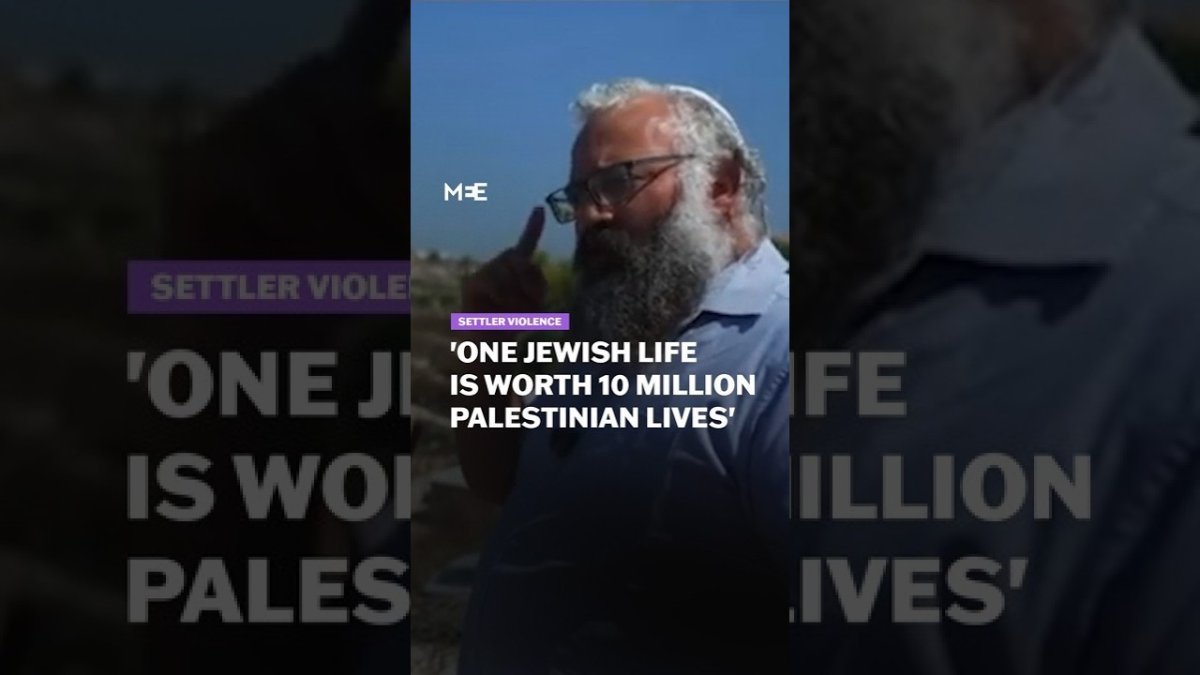
The statement that shocked the West Bank
Shimon told Williamson that after the killing of one Israeli, forces should kill all people in Tal, Sarra, Jit and Farata. When challenged on equating one Jewish life with hundreds or thousands of Palestinian lives, he replied: "No, millions. One Jewish life, it's 10 million [Palestinians]."
Pressed on the racism of the statement, Shimon did not deny it. "Yes, I know. But this is the truth, because God chose us [and] because of this you are jealous," he said. He added that the only law that counted for him was the Bible, rendering international law irrelevant because it granted Jews rights to West Bank land.
Shimon criticised the Israeli army for separating sides during clashes rather than killing Palestinians. He accused global media of buying the Palestinian narrative and claimed every Palestinian in the area owned two guns and planned to repeat the 7 October 2023 attacks. He gave Palestinians three options: live quietly under Israeli rule, emigrate voluntarily to Arab or Muslim nations, or face death if they refused both.
What happened in Tal
Last Friday a confrontation in the village of Tal, southwest of Nablus and near Havat Gilad, left four Palestinians and two Israelis dead. One of the Israelis killed was Benayahu Mellet, an army reservist serving as security coordinator for the outpost. Israeli authorities said a Palestinian seized a weapon from a Havat Gilad security team member and opened fire.
Palestinian accounts said armed settlers entered the village and attacked homes. The Israeli military described the event as a violent confrontation with shots fired on both sides. Reuters could not independently verify social media video showing settlers carrying rifles and pushing residents.
Israeli authorities initially described the 24 July confrontation near Tal as an attack by Palestinians on hikers, despite the village lying in Area A, a zone under Palestinian control where Israelis are generally prohibited from entering. The disputed narratives have shaped the immediate response, as the military moved in with raids, road closures and checkpoints that have restricted movement for residents of Tal and neighbouring communities.
The wave of settler attacks
The killings triggered settler attacks on Palestinian villages in the area over the following days, including Tal, Sarra, Jit and Farata. Residents reported that settlers cut down olive and fig trees at the edge of Tal. Roadways were blocked and checkpoints created long lines after the Israeli military began daily raids.
Between 60 and 80 people from Tal were detained, with about 30 still held, according to Munther Shtayya, deputy head of the village council.
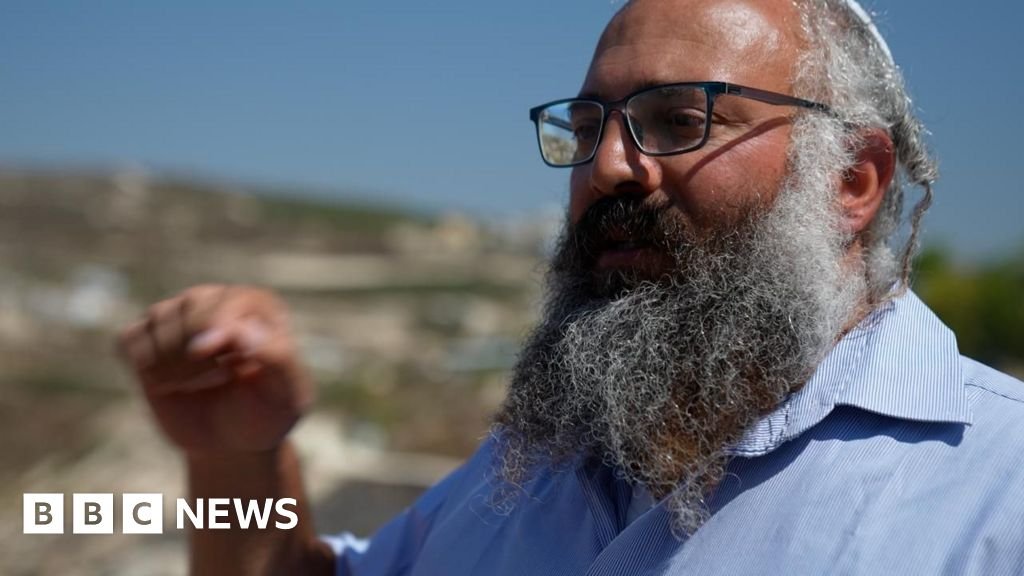
After the Tal incident, settlers cut down olive and fig trees at the edge of the village, striking at the economic foundation of local farming families who depend on these crops. A burned-out home near Tal, attacked by settlers a week earlier according to the vice head of the village council, stands as further evidence of the pattern of destruction that has followed the violence.
Residents describe the atmosphere of fear that now pervades daily life. Kamal Shtayya noted that all of the military is present in the streets, while Ahmed Shtayya, a 72-year-old farmer growing tomatoes, figs and eggplants, said patience runs out and warned that continued pressure must lead to an explosion.
Havat Gilad: an outpost built on memory
Havat Gilad was established in 2002 in memory of Gilad Zar, a security coordinator for the nearby settlement of Kedumim who was murdered by Palestinians in 2001. The outpost was dismantled by Israeli forces and rebuilt by settlers several times before receiving legal status from the Israeli government in February 2018.
Peace Now says the government has been unable to fully legalise the outpost because much of its land is recognised by Israel as privately owned by Palestinians. Instead, authorities designated a patch of land to the south as state land so settlers can build. The outpost spreads across several hilltops with sheds and simple block houses visible from neighbouring Palestinian villages.
Disputes over recent burned buildings near the entrance illustrate the wider contest. Yehuda Shimon attributes the fires to Palestinian arson, yet Israeli media reported that police treated the incident as accidental, citing cigarette butts. These claims rest on biblical assertions that the land belongs to Jews, a position that directly conflicts with the international legal view that settlements and outposts are unlawful.
The numbers behind the violence
The UN Office for the Coordination of Humanitarian Affairs recorded 64 Palestinians killed in the West Bank from the beginning of 2026 until 20 July, with 18 of them during settler attacks. At least 12 were killed by settlers, three by Israeli forces and three in unclear circumstances. One Israeli was killed over the same period.
Settler-inflicted injuries exceeded three per day this year. UN figures cited by Reuters show 18 Palestinians killed in incidents linked to settler attacks so far in 2026, compared with 17 in all of 2025. The Palestinian Authority says at least 20 Palestinians have been killed by settlers since the start of the year.
These numbers point to a pattern of impunity that human-rights organisations link to displacement. Palestinian officials report at least 20 killed by settlers since January, underscoring how repeated violence, combined with restricted access and military operations, steadily erodes the ability of communities to remain on their land.
From one lawyer to state policy
Shimon's three options for Palestinians closely resemble a 2017 blueprint published by Bezalel Smotrich, now Israel's finance minister. That plan stated Palestinians would give up their struggle for a state and live quietly under Israeli rule, those with difficulty letting go of national ambitions could leave, and those who stayed and continued armed struggle would be killed.
In government Smotrich has pushed voluntary migration of Palestinians from Gaza and re-settlement of Israelis there while calling Palestinian identity an invention. With elections due in October 2026, the Netanyahu government has stepped up authorisation of new settlement building to tighten Israeli control over the West Bank.
Settlements and outposts remain illegal under international law according to the United Nations and most countries, a position Israel disputes by invoking biblical ties. The political environment has allowed such arguments greater prominence, even as Palestinian residents continue to face the daily consequences of occupation, road closures and armed presence.
Analysis and Implications
Israel occupied the West Bank in the 1967 war and has built hundreds of settlements and outposts housing more than half a million Jews. Settlers are protected by the Israeli army and armed local security units staffed by settlers, while Palestinians live under military occupation, military courts, road closures and checkpoints. Some prominent human rights groups describe the system as apartheid; Israel rejects the label as absurd and distorted.
Ahmed Ramadan, 71, whose son was killed in Tal, recalled that Mellet had previously come to his home and yelled at him to leave for Syria or Jordan. "Even if we die, we'll die here on our land. We're not prepared to leave this country," Ramadan said. Tal farmer Ahmed Shtayya, 72, stated: "I'm patient, we'll be patient and patient and patient, but at the end of the day, patience runs out. It just flies away, it doesn't work. If they want to continue like this, there must be an explosion, what else?"
Resident Kamal Shtayya, 55, noted that all of the military is now in the streets. A Palestinian woman who lives within sight of Havat Gilad told the BBC she watches the outpost from her window constantly for signs of an imminent settler attack. Another Palestinian told the BBC that Europe is busy, America is occupied with Iran, China does not care, Russia is fighting Ukraine, the UN are finished and the Arabs have internal problems, leaving residents unsure what they can do.
These statements and the violence that preceded them point to a deepening cycle where individual rhetoric aligns with state-backed expansion, leaving Palestinian communities in the northern West Bank facing daily raids, restricted movement and the threat of further attacks with little external recourse.
By Fatima Al-Rashid, Staff Writer
This article was produced with AI-assisted research and editorial support. Reporting is based on sources cited in the article.
What's Your Reaction?
 Like
0
Like
0
 Dislike
0
Dislike
0
 Love
0
Love
0
 Funny
0
Funny
0
 Wow
0
Wow
0
 Sad
0
Sad
0
 Angry
0
Angry
0
Gulf/MENA Correspondent at Global1.News. Based in Doha, covering Gulf politics, energy markets, diplomacy, and development across the Middle East and North Africa. Tracks the economic transformation of the Gulf states.














Comments (0)