
Sheikh Hasina's December Return Vow Tests South Asia's Fragile Equilibrium
Sheikh Hasina's December Return Vow Tests South Asia's Fragile Equilibrium Former Bangladeshi prime minister Sheikh Hasina has pledged a December return to Dhaka despite a death sentence for crimes against humanity, a move that threatens to destabilise Bangladesh's fragile post-uprising order and intensify competition between India and China across South Asia. Hasina Return Vow Tests Bangladesh-India Ties Dhaka, Bangladesh — Article continues...
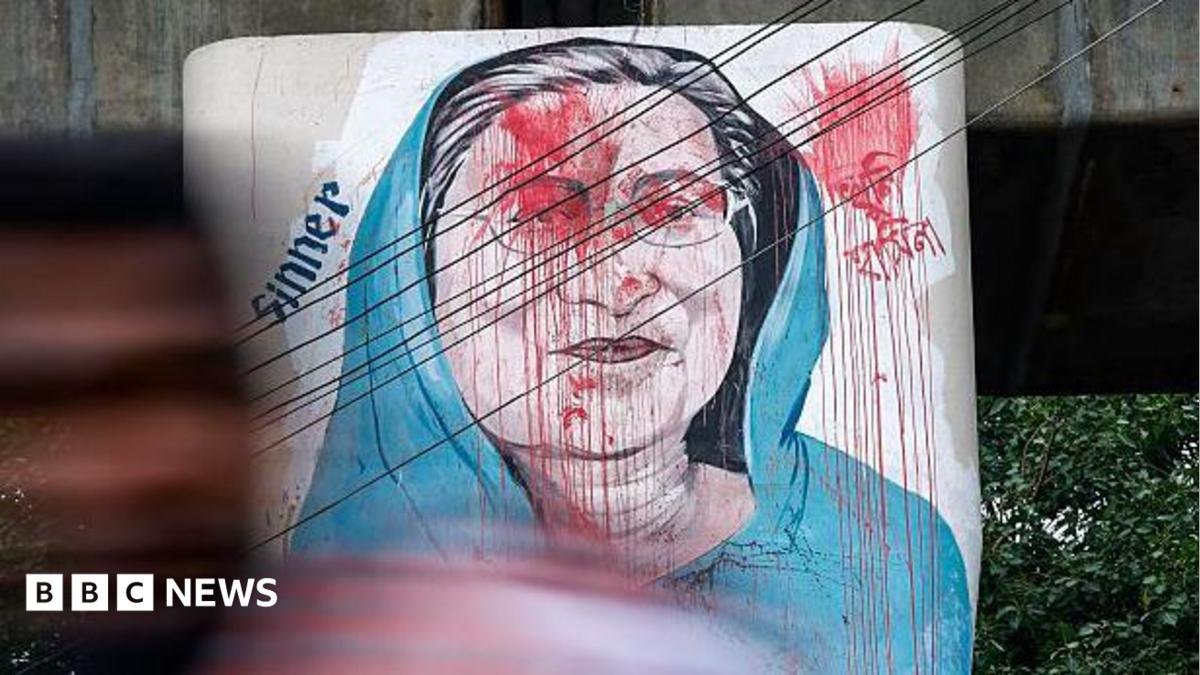
Former Bangladeshi prime minister Sheikh Hasina has pledged a December return to Dhaka despite a death sentence for crimes against humanity, a move that threatens to destabilise Bangladesh's fragile post-uprising order and intensify competition between India and China across South Asia.
Hasina Return Vow Tests Bangladesh-India Ties
Dhaka, Bangladesh — Article continues...
Hasina's Defiant Vow
Former Bangladeshi prime minister Sheikh Hasina has vowed to return to her country in December despite facing the death penalty for crimes against humanity. The 78-year-old delivered the pledge in an audio broadcast to a crowded press club in Delhi on the second anniversary of her ouster, stating she "had to go back" without revealing exact dates or plans.
This marks her first media interaction since fleeing to India after 15 years in power during the 2024 uprising. Hasina, who denies the charges, acknowledged the personal risks, saying she knows they may put her in jail or kill her, yet she must return.
The Charges and the Verdict
A special tribunal in Dhaka sentenced Hasina to death last year for ordering lethal force on protesters. Tried in absentia after her flight, she faces conviction based on evidence including a verified BBC Eye phone call recording in which she authorised the crackdown.
UN investigators documented systematic deadly violence by her government, with estimates of up to 1,400 people killed, most by security forces gunfire. The protests began as a student movement against government job quotas before evolving into a mass uprising that stormed official buildings.
A Nation Still Recovering From the 2024 Uprising
Bangladesh, home to more than 170 million people, plunged into crisis after Hasina fled Dhaka amid tens of thousands of demonstrators. An interim government took charge, followed by February elections that brought the Bangladesh Nationalist Party to power under Prime Minister Tarique Rahman.
The country continues to grapple with the aftermath of the violence that toppled the long-ruling Awami League. Hasina alleged in her address that several organisations turned the student protests into a violent movement, though she provided no evidence.
Dhaka's Response and the Extradition Standoff
The standoff over Sheikh Hasina's presence in Delhi underscores deepening friction between India and Bangladesh, with Dhaka viewing New Delhi's decision to host her audio broadcast as tacit interference. Bangladesh's foreign ministry statement rejecting any return to "client state" status signals a nationalist assertion that prioritises sovereignty after the 2024 uprising, framing Hasina's shelter as an affront to the interim government's legitimacy. This rhetoric resonates domestically amid the February elections that installed Prime Minister Tarique Rahman's Bangladesh Nationalist Party, yet it risks escalating tensions over longstanding bilateral issues such as trade corridors, shared river waters, and border management protocols that have historically required careful coordination.
India faces a delicate balancing act, having provided Hasina refuge while examining Dhaka's extradition request, mindful that any perceived favouritism could destabilise its eastern frontier. New Delhi's neighbourhood-first policy emphasises regional stability to prevent spillover effects from Bangladesh's 170 million population, including potential refugee movements or renewed unrest. Analysts note that prolonged strain could disrupt economic linkages and security cooperation, particularly as both nations navigate the aftermath of the student-led protests that evolved into a mass challenge to Hasina's 15-year rule.
China's strategic interests add another layer, as Beijing monitors how Indian-Bangladeshi friction might affect its own connectivity ambitions in South Asia. A hardened Bangladeshi stance against perceived external influence could indirectly bolster Beijing's positioning by highlighting alternatives to Indian leverage, though any escalation in bilateral acrimony threatens the broader equilibrium Hasina's return vow now tests.
The Awami League's Precarious Position
The Awami League's exclusion from the February elections and subsequent activity restrictions have created a leadership vacuum, exacerbated by the flight of senior figures while mid-level members faced exposure during post-uprising violence. Allegations of hundreds of supporters killed in mob actions or dying in custody persist, though Dhaka officials reject these as unfounded, leaving the party to navigate internal discontent over those who escaped while others remained vulnerable. Former minister Mohammad Ali Arafat's warning that the organisation risks extermination without Hasina's return highlights the existential stakes tied to her December vow.
Hasina's audio broadcast from Delhi, her first media engagement since the 2024 ouster, underscores the party's reliance on her symbolic authority to counter marginalisation after 15 years in power. Yet the absence of concrete plans risks accelerating fractures, as supporters weigh personal safety against loyalty amid ongoing restrictions and the death penalty verdict delivered in absentia. This dynamic intersects with China's interest in stable Bangladeshi partners for Belt and Road continuity, where a weakened Awami League could cede ground to forces less aligned with Beijing's regional objectives.
Survival as a viable political force hinges on whether Hasina's presence can mobilise enough to challenge the BNP's consolidation or merely provoke further targeted measures. The coming period will determine if internal rifts deepen or if strategic calculations allow the party to retain relevance amid South Asia's shifting alignments.
South Asia's Great-Power Chessboard
Bangladesh occupies a pivotal position in the strategic competition between China and India, serving as a linchpin for maritime access and overland corridors that shape Indo-Pacific dynamics. During Sheikh Hasina's tenure, ties with Beijing deepened through established Belt and Road Initiative projects focused on connectivity infrastructure, port development, and power generation, aligning with China's doctrine of securing economic footholds to counterbalance regional rivals. These investments positioned Dhaka as a node in broader South Asian networks, yet the post-2024 political transition has prompted a visible rebalancing toward India and Western partners under the BNP-led government.
Beijing's response to the ouster has been measured, emphasising stable relations with whichever authority holds power in Dhaka to safeguard its corridor ambitions amid the leadership vacuum left by the Awami League's restrictions. This approach reflects China's foreign policy calculus of hedging against Indian dominance while avoiding direct entanglement in domestic upheavals that claimed up to 1,400 lives. In contrast, New Delhi's neighbourhood-first emphasis seeks to consolidate influence through security and economic partnerships, viewing a stable Bangladesh as essential to preventing external powers from gaining undue leverage near its borders.
Second-order effects of this great-power interplay could reshape trade routes and investment flows if Hasina's December return materialises, potentially disrupting BRI timelines or prompting India to accelerate alternative connectivity initiatives. For China, sustained access remains tied to Bangladesh's internal cohesion, making the exiled leader's gamble a variable in wider calculations over South Asian influence.
What a Return Would Mean for the Region
Should Sheikh Hasina attempt her pledged December return, immediate arrest upon arrival appears probable, as analysts such as David Bergman have indicated, triggering rallies from BNP supporters, the National Citizens Party, and Islamist groups demanding enforcement of the death penalty. Such scenes would echo precedents of exiled Asian leaders facing justice upon repatriation, amplifying domestic polarisation in a country still recovering from the 2024 mass uprising that began as student quota protests. The Awami League's banned status from February elections already limits its formal avenues, rendering any physical presence a high-stakes catalyst for unrest rather than routine political revival.
The BNP-led government under Prime Minister Tarique Rahman would confront direct challenges to its authority, with potential mob violence or custody deaths further straining relations with India, which has hosted Hasina since her flight. Regional security implications extend to the Bay of Bengal, where instability could affect maritime trade lanes and refugee dynamics, drawing scrutiny from both Indian and Chinese strategic planners. Islamist parties and other opposition forces might exploit the moment to consolidate gains, altering the balance that emerged after the interim government's installation.
Broader Indo-Pacific consequences include shifts in how external powers calibrate engagement, with any renewed violence testing China's preference for predictable corridors against India's stability priorities. Hasina's calculated risk thus carries ripple effects that could redefine alliances and economic linkages across South Asia.
Outlook and Risks
Hasina's gamble hinges on whether her return can revive the Awami League or merely accelerate its marginalisation. Without concrete movement, party fractures and targeted violence against its remaining base may intensify.
The coming months will test whether her December vow materialises and how regional powers respond to renewed instability in a country central to South Asian geopolitics.
By Prof. Marcus Chen, Staff Writer
This article was produced with AI-assisted research and editorial support. Reporting is based on sources cited in the article.
What's Your Reaction?
 Like
0
Like
0
 Dislike
0
Dislike
0
 Love
0
Love
0
 Funny
0
Funny
0
 Wow
0
Wow
0
 Sad
0
Sad
0
 Angry
0
Angry
0

World Politics Analyst at Global1.News. Based in Beijing, covering US-China relations, global trade, and geopolitical strategy. Brings deep analytical perspective to the power dynamics shaping international affairs.













Comments (0)