
Gulf of Paria widens as Trinidad pours oil on troubled Venezuelan waters
The Gulf of Paria, that shared inland sea that has bound Trinidad and Tobago and Venezuela for centuries through tides, trade and family ties, is now the site of a deepening diplomatic rift. What Port of Spain describes as a minor, quickly contained spill of ten barrels of oil has, in.
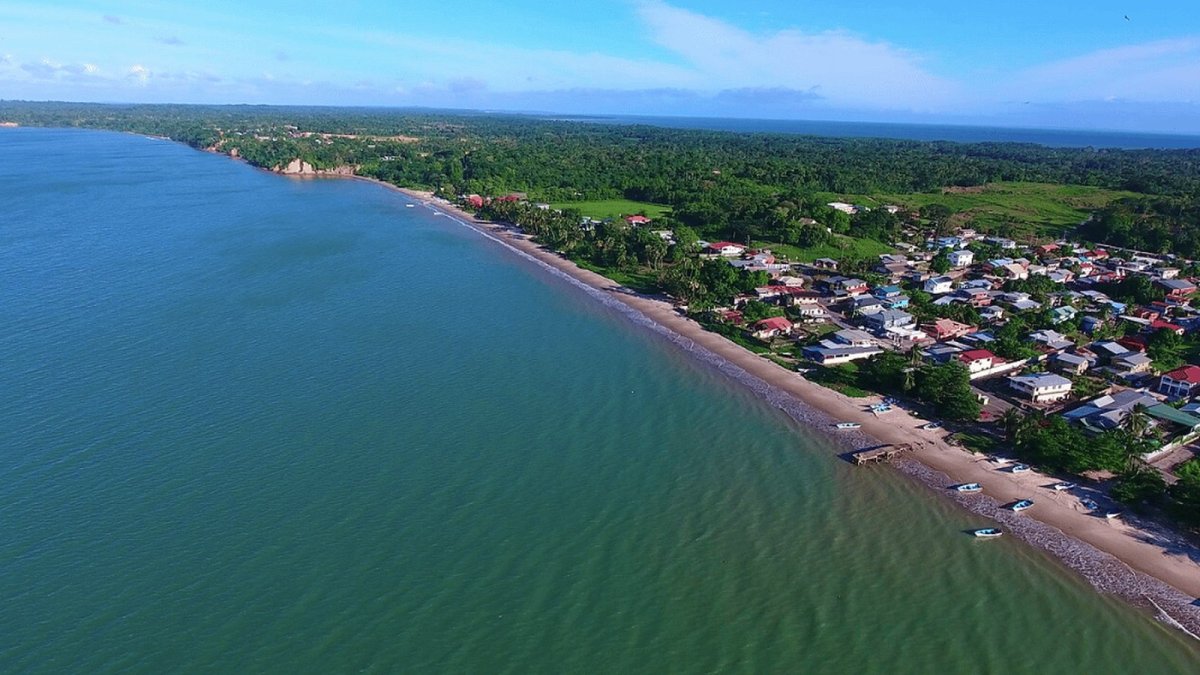
The Gulf of Paria, that shared inland sea that has bound Trinidad and Tobago and Venezuela for centuries through tides, trade and family ties, is now the site of a deepening diplomatic rift. What Port of Spain describes as a minor, quickly contained spill of ten barrels of oil has, in Caracas, been elevated into a formal demand for information and compensation, with warnings of ecological catastrophe stretching across 1,625 square kilometres of sensitive wetland and the livelihoods of more than five hundred fishermen.
The dispute, which has simmered since the first week of May, has now entered a more confrontational phase. In early August, Venezuela renewed its formal demand, reviving friction that many in the region had hoped would dissipate with the rainy season. Instead, the political temperature has risen, and the Opposition in Trinidad and Tobago has joined the chorus calling for a full probe into the handling of the incident by state-owned Heritage Petroleum.
A spill of ten barrels or a regional disaster?
The facts, as they stand, are fiercely contested. The spill occurred on 1 May 2026 and has been linked to operations by Heritage Petroleum, Trinidad and Tobago's state-owned oil company, working in the Gulf of Paria. Venezuela first reported the spill publicly on Saturday 9 May, with Trinidad and Tobago confirming it the following day, Sunday 10 May.
From the outset, the two governments have painted radically different pictures. In Port of Spain, Energy Minister Dr Roodal Moonilal has been unequivocal, describing the event as "a minor event in Trinidad and Tobago waters that was dealt with in 48 hours." The Government has stated that visual observations confirmed dispersant effectively broke up the hydrocarbon, and that follow-up inspections using drones and vessels showed no visible hydrocarbons remaining in the water.
Caracas tells another story entirely. Venezuelan Foreign Minister Yvan Gil, at a press conference on 19 May, formally demanded information and compensation, warning that the spill risked serious environmental damage along the coastlines of at least two Venezuelan states. He spoke of the potential impact on twelve strategic wetland systems and the direct threat to the fishing communities that depend on these waters for their daily bread.
Diplomatic silence and growing frustration
Perhaps the most damaging accusation from Caracas is not about the oil itself, but about the response. Foreign Minister Gil claimed that the Trinidad and Tobago Government had not been responding to Venezuela's communications relating to the spill. This charge of diplomatic silence, whether accurate or not, has fuelled the narrative that Port of Spain is seeking to downplay the affair.
Around 25 May, Venezuela went further, stating publicly that Trinidad and Tobago was downplaying the extent of the damage. Then, in June, the situation escalated again when Venezuela decried a further spill allegedly originating in Trinidad and Tobago waters, an incident which authorities in Port of Spain said they were investigating. By early August, the formal demand for information and compensation was renewed, making it clear that this issue will not simply fade into the Caribbean sunset.
For a country that prides itself on its diplomatic dexterity and its ability to maintain working relationships across the political spectrum, this friction with its nearest neighbour is uncomfortable. The two nations share more than a maritime border; they share family names, calypso rhythms and a complicated history of cooperation and suspicion.
The Gulf of Paria: a shared inheritance under strain
The Gulf of Paria is not just a body of water; it is the economic and ecological heart of the region. Lying west of Trinidad and east of Venezuela, it supports fisheries, mangrove ecosystems and coastal communities on both sides of the border. For Trinidad and Tobago, it is also central to the energy sector, hosting infrastructure and operations that have powered the national economy for generations.
The legal framework governing this shared space dates back to the 1990s, when the two countries signed a delimitation treaty establishing terms for exploiting hydrocarbon deposits on both sides of the border strip. That treaty was hailed at the time as a model of regional cooperation, a pragmatic agreement between neighbours to share the bounty beneath the seabed while respecting each other's sovereignty.
Now, that treaty is being tested in ways its architects may not have anticipated. The dispute is not about the boundary line itself, but about responsibility, transparency and the handling of incidents that, while small in volume, carry outsized political and environmental weight.
Environmental stakes for small island developing states
For those who study the Caribbean's vulnerability to climate change and environmental degradation, this dispute carries a familiar resonance. The Gulf of Paria's mangrove systems are not just scenic backdrops; they are natural buffers against storm surge, nurseries for fish stocks and vital carbon sinks. The twelve wetland systems identified by Venezuela are part of a delicate ecological web that sustains both countries.
The threat to the five hundred fishermen cited by Foreign Minister Gil is not merely an economic statistic. In communities along the Venezuelan coast, and indeed on the Trinidadian side of the Gulf, fishing is a way of life passed down through generations. A spill that damages mangroves or contaminates fishing grounds can unravel the social fabric of these communities in ways that are difficult to quantify and even harder to repair.
Trinidad and Tobago, as a small island developing state, understands these vulnerabilities intimately. The country has been a vocal advocate for climate action on the international stage, and its own coastline faces threats from rising seas and extreme weather. This makes the current dispute particularly awkward: a nation that champions environmental stewardship is now accused by its neighbour of environmental negligence.
Domestic politics enter the fray
At home, the Opposition has seized on the incident to press the Government. Joining Venezuela in calling for a probe into the handling of the Heritage Petroleum incident, the Opposition has questioned whether the response was swift enough, whether the public was kept fully informed, and whether the state-owned company's safety protocols are adequate for the complex operations in the Gulf.
This is familiar political terrain in Trinidad and Tobago, where energy sector governance has long been a subject of intense public scrutiny. Heritage Petroleum, as a state-owned entity, carries a particular burden of accountability. When incidents occur, the public expects not just a technical response but a demonstration of responsible stewardship of national assets.
Prime Minister Kamla Persad-Bissessar's administration now faces the delicate task of defending its record while not inflaming tensions with Caracas. The Government's position has been consistent: the spill was minor, it was contained, and the environmental impact was negligible. But consistency in messaging does not necessarily translate into diplomatic success, particularly when the other party is determined to keep the issue alive.
What happens next in the Gulf?
The immediate outlook is uncertain. Venezuela's renewed demand in August suggests that Caracas is not prepared to let the matter rest. The claim that Trinidad and Tobago has been unresponsive to communications is a serious charge in diplomatic circles, where the protocol of reply is considered almost sacrosanct.
For Port of Spain, the challenge is to demonstrate good faith without accepting liability for damage it believes did not occur. There may be room for a joint technical assessment, a mechanism for sharing monitoring data, or a framework for future incident response that could satisfy both sides. Such measures would not only address the current dispute but could strengthen the bilateral relationship for the long term.
The Gulf of Paria has always been a place of connection, not division. Its waters have carried trade, migration and cultural exchange for centuries. It would be a tragedy of considerable proportions if a ten-barrel spill were to poison that relationship for years to come. Yet, as the weeks pass and the demands grow louder, the risk of that outcome becomes ever more real.
What is needed now is statesmanship on both sides: a willingness to listen, a commitment to transparency, and a recognition that the health of the Gulf matters more than the politics of blame. The fishermen, the mangrove forests and the communities on both shores deserve no less.
By Sharon Sahatoo, Staff Writer
This article was produced with AI-assisted research and editorial support. Reporting is based on sources cited in the article.
What's Your Reaction?
 Like
0
Like
0
 Dislike
0
Dislike
0
 Love
0
Love
0
 Funny
0
Funny
0
 Wow
0
Wow
0
 Sad
0
Sad
0
 Angry
0
Angry
0

Caribbean Correspondent at Global1.News. Based in Port of Spain, Trinidad, covering Caribbean politics, economy, energy, climate, and culture. Amplifying the voices and stories of the Caribbean region.











Comments (0)