
Google Just Won the AI Race: PaLM 2, Gemini, and the Great Bard Resurrection
Google fired back at OpenAI with PaLM 2 in four sizes, teased the multimodal Gemini model, and resurrected Bard at I/O 2023. The AI race just got a new leader, and it's not even close.
Folks, let’s cut the suspense right now. Google didn’t just show up to its own developer conference on May 10, 2023—it showed up with a flamethrower aimed directly at OpenAI’s ChatGPT. For months, the tech world whispered that Google was asleep at the wheel, caught flat-footed by a chatbot that went viral faster than a cat video. Well, Sundar Pichai and company just answered every single doubt with a two-hour keynote that was less of a product demo and more of a declaration of war.
GOOGLE JUST WON THE AI RACE: PaLM 2, Gemini, and the Great Bard Resurrection
Mountain View, California - May 10, 2023 - Let’s get one thing straight from the jump: this wasn’t a keynote. This was a coronation. Google CEO Sundar Pichai stood on that stage in Mountain View and uttered the phrase, “Seven years into our journey as an AI-first company, we’re at an exciting inflection point.” And folks, that’s corporate speak for “we’re taking our crown back.”
The context here is everything. OpenAI launched ChatGPT in November 2022, and it sent shockwaves through Google’s headquarters so violent that co-founders Larry Page and Sergey Brin were reportedly pulled back in for emergency AI meetings. That’s right—the billionaires who checked out years ago had to come back to babysit. The word “AI” was mentioned more than 140 times during this keynote. Let that sink in. One hundred and forty times. This wasn’t a company dipping its toes in the water; this was a company cannonballing into the deep end.
The PaLM 2 Power Play
Let’s talk about the main event: PaLM 2. This is Google’s next-generation language model, and it’s not just an incremental upgrade—it’s a complete overhaul. The first thing that jumps out is the multilingual muscle. PaLM 2 was trained on more than 100 languages and passes advanced language proficiency exams at a mastery level. That’s not just “speaks a few phrases” level. That’s “corrects your grammar in Finnish” level.
But it doesn’t stop there. The reasoning capabilities have been supercharged by training on scientific papers and math. And the coding? PaLM 2 handles Python and JavaScript like a seasoned developer, but it also flexes with Prolog, Fortran, and Verilog. Yes, Fortran. The language your grandfather programmed in. Google is covering every base, and they’re not apologizing for it.
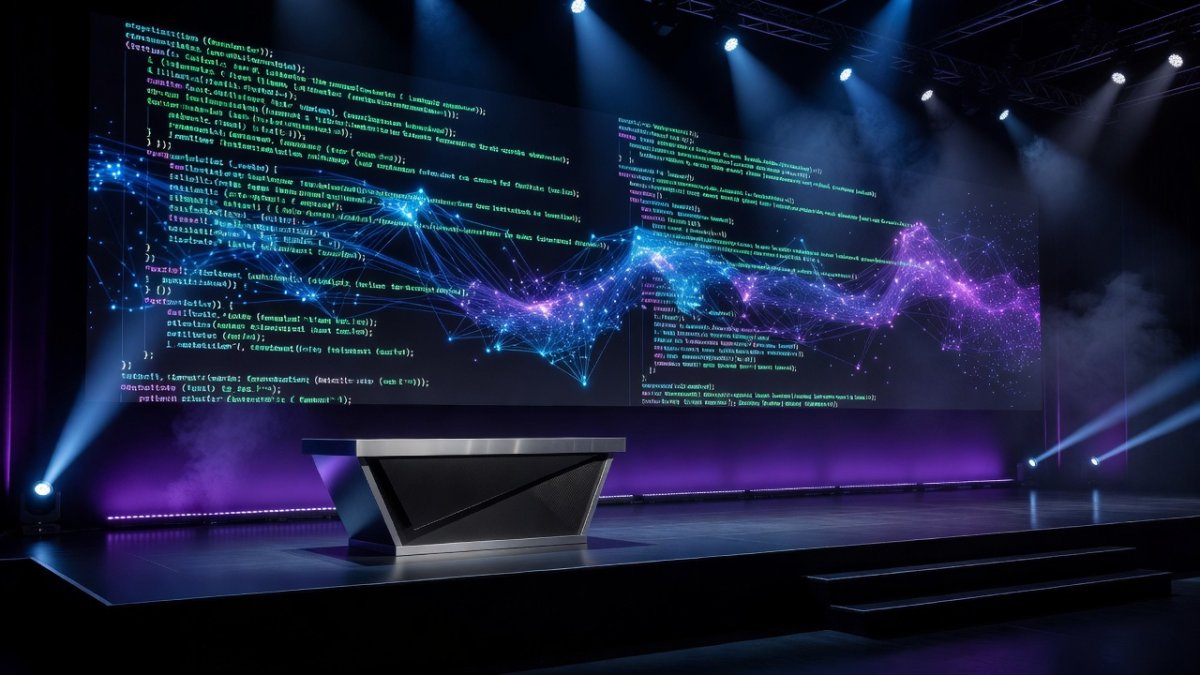
Four Sizes, One Mission
Here’s where Google’s strategy gets interesting. PaLM 2 comes in four distinct sizes: Gecko, Otter, Bison, and Unicorn. Now, I know what you’re thinking—those sound like animals from a children’s book. But hear me out. Gecko is the lightweight champion, small enough to run on mobile devices, even offline. That’s a direct shot at the cloud-dependent ChatGPT. While OpenAI is begging for server space, Google is putting AI in your pocket, no internet required.
Otter and Bison handle the mid-tier workloads, and Unicorn is the heavyweight beast for the most complex tasks. This isn’t a one-size-fits-all approach; it’s a strategic deployment of AI across every device and platform imaginable. And it’s already powering more than 25 Google products and features announced at I/O. Twenty-five. That’s not a pilot program; that’s a full-scale invasion.
Med-PaLM 2 and Sec-PaLM: The Specialists
Now, let’s get into the fine-tuned variants, because this is where Google shows its maturity. Med-PaLM 2 is the first language model to perform at an expert level on medical licensing exam-style questions. That’s not a parlor trick; that’s a potential lifesaver. And get this—it shows a 9X reduction in inaccurate reasoning compared to the base model. Nine times fewer mistakes. In medicine, that’s the difference between a correct diagnosis and a malpractice suit.
Then there’s Sec-PaLM, the security specialist. This model is designed to detect malicious scripts and identify vulnerabilities before the bad guys exploit them. In a world where cyberattacks are becoming more sophisticated by the day, Google is deploying AI as a digital bodyguard. And the best part? PaLM 2 is available in preview via the PaLM API, so developers can start building with it right now.

Gemini: The Coming Storm
But folks, PaLM 2 is just the appetizer. The main course is Gemini, Google DeepMind’s next-generation foundation model. And here’s the kicker—it’s still in training. They teased it, they hyped it, but they didn’t release it. Why? Because Google just merged the Brain Team and DeepMind into a single unit called Google DeepMind, and they’re building something that makes PaLM 2 look like a calculator.
Gemini is being built from the ground up to be multimodal. That means it doesn’t just process text; it handles code, images, audio, and video simultaneously. It’s designed to be highly efficient at tool and API integrations, and it’s built to enable future innovations like memory and planning. This isn’t a chatbot; this is a digital brain. And just like PaLM 2, it will ship at various sizes to fit every use case. Google isn’t just winning the AI race; they’re building the racetrack.
Bard Gets a Second Chance
Let’s talk about Bard, because that launch was a disaster. When Google rushed Bard out in March on LaMDA, it stumbled, it hallucinated, and it got mocked. But at I/O, Google did something rare: they admitted the mistake and fixed it. Bard is now fully powered by PaLM 2, the waitlist is gone, and it’s expanded to more regions and languages.
Bard now has coding capabilities with source citations, so you can actually verify where the code came from. It exports directly to Google Colab and Replit. It shows images in responses. And yes, it has dark mode. The old Bard is dead; long live the new Bard. This is Google saying, “We heard you, we saw the memes, and we’re back.”
The Full Arsenal: Search, Photos, Maps, and More
But the AI assault wasn’t confined to the models. Google rolled out the Search Generative Experience (SGE) via Google Labs, which fundamentally changes how you search. Instead of a list of links, you get AI-generated answers. Magic Editor in Google Photos lets you manipulate images like a professional. Immersive View for routes in Maps gives you a 3D preview of your journey. “Help me write” in Gmail drafts your emails. And Duet AI in Workspace is embedded across Docs, Sheets, and Slides.
Here’s the scale: Google says 15 products serve more than half a billion people, and six serve over 2 billion. That’s not a niche audience; that’s the entire planet. When Google flips the AI switch, billions of users feel it instantly. OpenAI has a few hundred million users; Google has the world.
What This Means
Folks, let’s be real about what happened here. Google was caught with its pants down by ChatGPT, and they spent six months scrambling. But this keynote wasn’t a defense; it was a counterattack. By putting PaLM 2 in 25 products, teasing Gemini, and resurrecting Bard, Google has signaled that the AI race isn’t a sprint—it’s a marathon, and they own the track.
The corporate spin here is that this is all about “helping users.” But let’s call it what it is: this is about market dominance. Google saw its search empire threatened, and they responded with overwhelming force. The fact that they’re shipping models at four sizes, from on-device Gecko to cloud-based Unicorn, means they’re targeting every segment of the market simultaneously. OpenAI is playing checkers; Google is playing 4D chess.
The Bottom Line
So what do you do with this information? You stop betting against Google, that’s what. If you’re a developer, get on the PaLM API now and start building. If you’re a business owner, start exploring how PaLM 2 can integrate into your workflows. And if you’re just a user, get ready for a world where AI is everywhere—in your search, your photos, your maps, and your email.
This is your moment to get ahead of the curve. Don’t wait for the next keynote to figure out what’s coming. The tools are here now. The race is on, and Google just lapped the field. Stay sharp, stay informed, and don’t let anyone tell you that AI is a passing fad. It’s the new reality, and it’s moving fast.
-- Jessica Ali, Global 1 News -- cutting through the BS, one story at a time.
This article was produced with AI-assisted research and editorial support. Reporting is based on sources cited in the article.
What's Your Reaction?
 Like
0
Like
0
 Dislike
0
Dislike
0
 Love
0
Love
0
 Funny
0
Funny
0
 Wow
0
Wow
0
 Sad
0
Sad
0
 Angry
0
Angry
0

Editor-in-Chief at Global1.News. Atlanta-based journalist who cuts through the BS and tells it like it is. Lead anchor, host, and the voice you hear when the spin stops and the truth starts.












Comments (0)