
Exodus in reverse: Haiti's people forced back home. Will Caricom step up?
The first major United States deportation flight to Haiti since the end of Temporary Protected Status touched down in Cap-Haïtien on 21 August 2026, carrying more than 160 souls back to a homeland many have not seen in years.
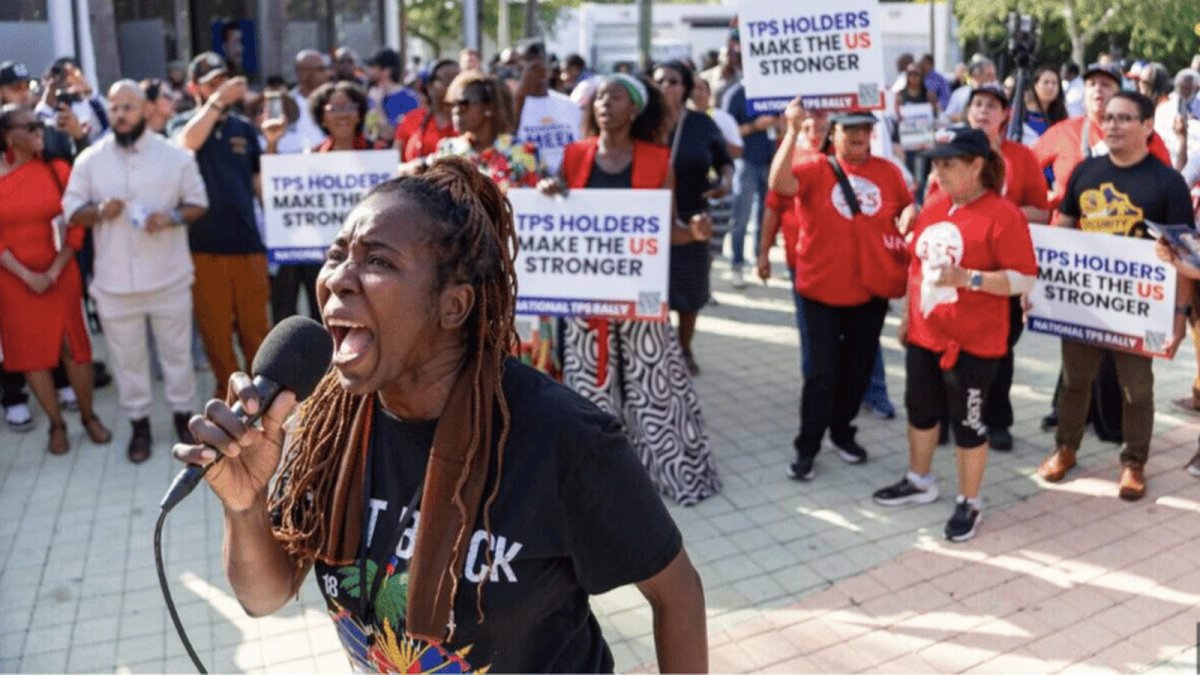
The first major United States deportation flight to Haiti since the end of Temporary Protected Status touched down in Cap-Haïtien on 21 August 2026, carrying more than 160 souls back to a homeland many have not seen in years. The ICE charter flight, with 161 deportees on board, marks a profound and painful reversal of the great Haitian exodus that reshaped the Caribbean and North America over the past decade. As the plane taxied on the tarmac of the northern city's airport, it symbolised not just the return of individuals, but the arrival of a regional question that Caricom can no longer sideline: what do we do when the diaspora is forced back into the eye of the storm?
A legal door closes: The Supreme Court and the end of TPS
The flight that landed in Cap-Haïtien was no routine repatriation. It was the direct consequence of a United States Supreme Court ruling that upheld the Trump administration's power to strip Temporary Protected Status from approximately 350,000 Haitians. That decision cleared the legal runway for removal operations to begin in earnest, and the 21 August charter was the first major test of the new enforcement reality. For the Haitian community in the United States, the ruling was a hammer blow — a termination of the fragile legal status that had allowed hundreds of thousands to live, work, and send remittances home without the constant fear of deportation.
The numbers are staggering. The Supreme Court's decision affects roughly 350,000 Haitians currently residing in the United States under TPS. While not all will be deported immediately — many may have other legal avenues, and logistical constraints will slow the process — the ruling has fundamentally altered the landscape. Smaller removal operations have already been reported, including one on 16 July 2026 involving about 111 Haitian migrants, as US enforcement stepped up under the new migration policy. The 21 August flight, however, was the first major charter, and it sent a clear signal: the era of temporary protection is over, and the era of forced return has begun.
An official welcome for an unwanted homecoming
On the ground in Cap-Haïtien, the reception was carefully choreographed, if not exactly warm. Haiti's Director General of Immigration, identified in reports as Delva, was at the airport to receive the deportees personally. His message was measured, even defiant. "It is not the Haitian state that asks for them to be sent back," Delva told reporters. "Our mission is to welcome migrants of forced return." He added that those who cannot reach their homes immediately would be hosted in secure spaces, with the process continuing "until all migrants return home as they should."
Each deportee was offered up to US$65, along with food and drink upon arrival — a modest lifeline for people stepping off a plane into a country still gripped by gang violence, political uncertainty, and economic collapse. The gesture was practical, but it underscored the uncomfortable reality: the Haitian state is being asked to absorb a mass return it never requested, with resources it barely has. The "secure spaces" Delva referenced are likely temporary shelters, but the long-term question of housing, employment, and safety for these returnees remains unanswered.
Cap-Haïtien at breaking point
The arrival of 161 deportees might seem manageable on paper, but Cap-Haïtien is already straining under the weight of internal displacement. Demonstène Reynold, a mechanic living in the city, put it plainly: "Cap-Haitian alone can't receive more people... We're not just receiving deportees from outside of Haiti... due to the political crisis, we have people from Hinche and Port-au-Prince, from the interior of the country."
Reynold's words capture a crisis within a crisis. Haiti's capital, Port-au-Prince, remains largely under the sway of armed gangs, forcing tens of thousands to flee to safer northern cities like Cap-Haïtien. Now, those same cities are being asked to absorb an additional influx of deportees — people who may have spent years abroad, who may no longer have family networks or homes to return to, and who arrive with little more than the clothes on their backs and the US$65 in their pockets.
The scale of the forced-return phenomenon is regional, not just American. According to an International Organization for Migration (IOM) situation report for May 2026, more than 25,000 Haitian migrants were forcibly returned from neighbouring countries, many arriving with urgent humanitarian needs. These are not just US deportations; they include returns from the Bahamas, Turks and Caicos, and other Caribbean nations that have long struggled with how to handle Haitian migration. The cumulative effect is a humanitarian pressure cooker, and the IOM's figures suggest the situation is only intensifying.
The diaspora upended: Little Haiti and the radio lifeline
In the United States, the loss of TPS has sent shockwaves through the Haitian diaspora. Media reports from Miami's Little Haiti neighbourhood describe a community upended by the loss of temporary deportation protection. Families that had built lives over a decade or more — sending children to school, opening small businesses, buying homes — now face the prospect of being torn apart. The fear is not abstract; it is visible in the faces of parents at school pickups and in the hushed conversations at corner stores.
In New York, Caribbean community radio in Queens has become an information lifeline for Haitians and other Caribbean nationals affected by the policy shift. These stations are doing more than playing kompa and soca; they are providing critical guidance on legal options, sharing stories of those who have been detained, and offering a sense of solidarity in a moment of profound uncertainty. For many listeners, the radio is the only trusted source of information in a sea of confusing legal jargon and conflicting reports.
The human cost is immeasurable. Families are being asked to choose between uprooting their American lives or leaving loved ones behind. Remittances — the lifeblood of Haiti's economy — are at risk as breadwinners are either deported or forced into the shadows. And for those who do return, the reintegration into a country they left years ago is fraught with difficulty. They return to a Haiti that is more dangerous, more impoverished, and more unstable than the one they left.
The Caricom question: Will the region step up?
This is where the question turns to the region. Caricom has long debated how to respond to Haiti's instability, from the Kenyan-led Multinational Security Support (MSS) mission to humanitarian corridors and, now, the return of deportees to a country many have not lived in for years. The 50th Caricom summit in February 2026, attended by Haiti's Prime Minister Alix Didier Fils-Aimé, placed Haiti's crisis and unsettled US policies at the centre of regional leaders' concerns. Finland pledged more than US$2 million in humanitarian aid to Haiti following those meetings — a welcome but modest contribution to a crisis of this magnitude.
For Trinidad and Tobago, the question is particularly acute. As a Caricom member state with its own complex relationship to migration, Port of Spain has historically been cautious about taking on additional responsibilities for Haiti. But the region's credibility is on the line. If Caricom cannot mount a coordinated response to the forced return of hundreds of thousands of Haitians — whether through humanitarian assistance, diplomatic pressure on Washington, or practical support for reintegration — then the organisation's stated commitment to Haiti will ring hollow.
The December 13, 2026 elections loom as a potential turning point. If Haiti can hold credible elections, it may begin to stabilise, making the absorption of deportees more feasible. But if the elections are delayed or marred by violence, the country will sink deeper into chaos, and the deportees will become yet another casualty of a failed state. Caricom's role in supporting the electoral process, and in pressing for a humane and orderly approach to returns, will be critical.
A regional reckoning
The "exodus in reverse" is not just a Haitian problem; it is a Caribbean problem. When the United States decides to strip protection from 350,000 people, the ripple effects are felt across the region — in the remittance-dependent economies of the Caribbean, in the crowded cities of northern Haiti, and in the diaspora communities that have long served as a bridge between the islands and the mainland.
For Trinidad and Tobago, the practical implications are clear. We must be prepared for increased pressure on our own borders as deportees and their families seek alternatives. We must also be ready to contribute to a regional response that is humane, coordinated, and effective. The IOM's 25,000-plus figure for forced returns from neighbouring countries is a warning: this is not a one-off flight, but a sustained policy that will continue to push people back into a country that cannot absorb them.
The question posed by the Caribbean360 headline — "Will Caricom step up?" — is not rhetorical. It is a test of the region's values and its capacity for collective action. Haiti's Director General of Immigration said the Haitian state's mission is to "welcome migrants of forced return." But the welcome cannot be Haiti's alone. The region that has long benefited from Haiti's diaspora, that has shared in its culture and its labour, must now share in the burden of its return. The alternative is a humanitarian catastrophe that will not respect borders, and a moral failure that will define the region for a generation.
By Sharon Sahatoo, Staff Writer
This article was produced with AI-assisted research and editorial support. Sources: Caribbean360, The Guardian, UPI, India Today, New Indian Express, International Organization for Migration (IOM).
What's Your Reaction?
 Like
0
Like
0
 Dislike
0
Dislike
0
 Love
0
Love
0
 Funny
0
Funny
0
 Wow
0
Wow
0
 Sad
0
Sad
0
 Angry
0
Angry
0

Caribbean Correspondent at Global1.News. Based in Port of Spain, Trinidad, covering Caribbean politics, economy, energy, climate, and culture. Amplifying the voices and stories of the Caribbean region.












Comments (0)