
Genesis GV90 Neolun: Korea's Luxury EV Gambit in the Global Trade War
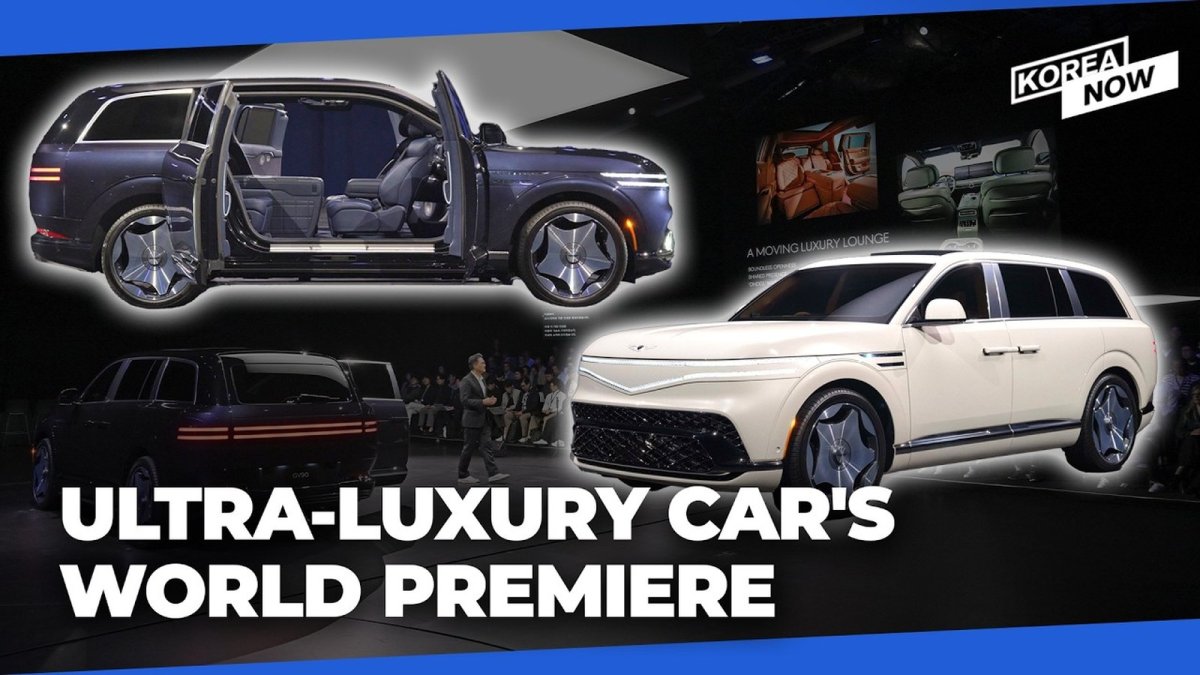
The global automotive landscape shifted perceptibly on Wednesday, Aug. 19, 2026, when Genesis, Hyundai Motor Group's independent luxury brand, held its "GV90 World Premiere" at the Palace of Fine Arts in San Francisco. The event, reported in Korea on Aug. 20 KST, unveiled not merely a new vehicle but a strategic declaration: the GV90 and its ultra-luxury GV90 Neolun variant represent Korea's most ambitious attempt yet to claim the summit of the global luxury EV market.
The global automotive landscape shifted perceptibly on Wednesday, Aug. 19, 2026, when Genesis, Hyundai Motor Group's independent luxury brand, held its "GV90 World Premiere" at the Palace of Fine Arts in San Francisco. The event, reported in Korea on Aug. 20 KST, unveiled not merely a new vehicle but a strategic declaration: the GV90 and its ultra-luxury GV90 Neolun variant represent Korea's most ambitious attempt yet to claim the summit of the global luxury EV market. As the United States and China wage an escalating tariff war, and as Chinese EV makers flood the mid-market with aggressive pricing, Hyundai Motor Group is executing a calculated pivot upmarket—staking its industrial future on the proposition that Korean engineering, design, and vertical integration can outmaneuver both Western incumbents and Chinese disruptors.
A World-First Flagship for the Luxury EV Market
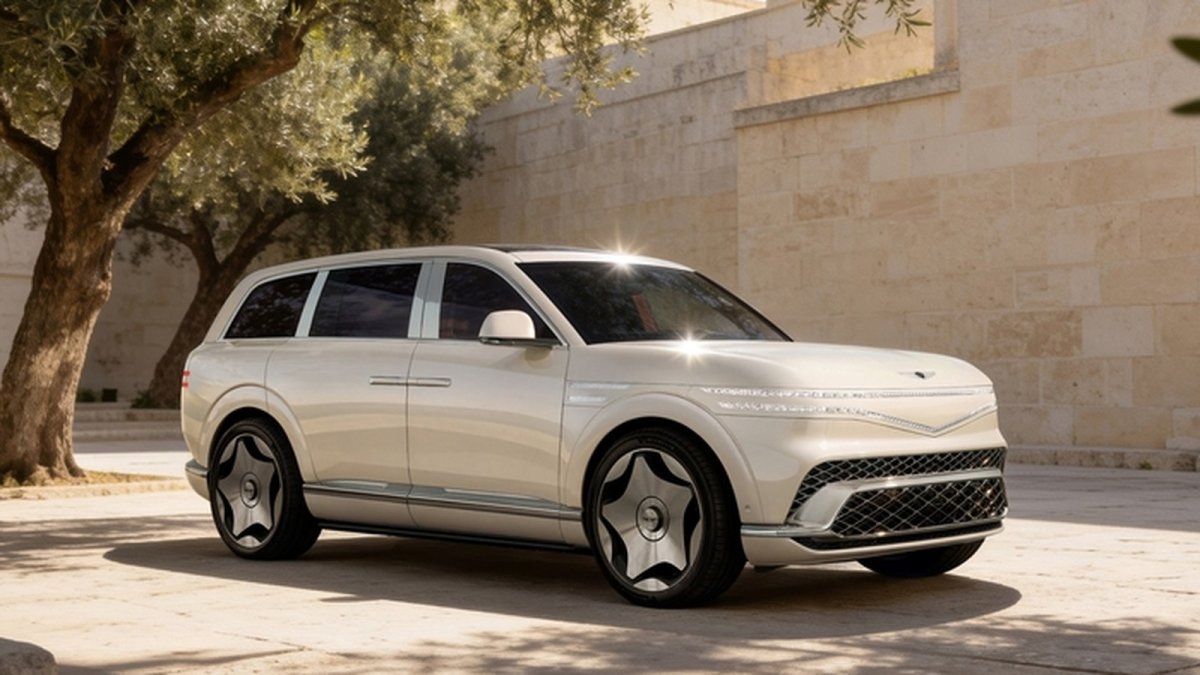
The GV90 is Genesis's first full-size flagship electric SUV, developed from the Neolun concept first shown in 2024. The name "Neolun" translates to "new moon" in Korean, and the design language draws inspiration from the country's traditional moon jar, or baekja porcelain—a minimalist, luminous aesthetic that Genesis chief creative officer Luc Donckerwolke has championed as a distinctly Korean counterpoint to European luxury conventions. The vehicle is built on the eMP platform, a dedicated EV architecture exclusive to Genesis flagship models, signaling that this is not a derivative product but a ground-up engineering statement.
The strategic timing is deliberate. Genesis cumulative global sales surpassed 1.5 million vehicles in November 2025, roughly a decade after the brand's 2015 launch. Having established a credible foothold in the premium segment, the GV90 represents the brand's assault on the upper echelons—the territory traditionally dominated by Mercedes-Benz's EQS, BMW's i7, and increasingly, Tesla's Model S and X. Hyundai Motor Group Executive Chair Chung Euisun framed the launch in expansive terms at the San Francisco event: "The GV90 is not simply a new vehicle, but a new vision for luxury mobility that brings together inspiring design, AI-powered software, connectivity and industry-leading safety." He added, "True luxury is human freedom, and true luxury is beauty, expressed through craftsmanship."
The Neolun Arch Gate and the Engineering of Safety
The GV90 Neolun's signature innovation is the "Neolun Arch Gate"—the world's first independently opening and closing hidden B-pillar coach doors. By removing the B-pillar entirely, Genesis engineers faced a fundamental structural challenge: how to maintain crash safety without the traditional central pillar. Their solution involves a newly developed dual-motion hinge that allows the rear door to slide outward before rotating, enabling it to open independently of the front door. Crash safety is preserved through ultra-high-strength dual steel beams integrated inside the doors themselves—an engineering compromise that maintains rigidity while creating an unprecedented sense of openness when the doors swing wide.
The safety story extends beyond the doors. The GV90 features 12 airbags, including the world's first roof airbag that deploys across the entire roof glass in a rollover scenario to protect occupants. Battery safety is addressed through thermal propagation suppression technology that limits heat spread between cells, complemented by a cloud-based battery management system with pre-diagnostic functions. The powertrain delivers a combined peak output of 490 kW (657 horsepower) and maximum torque of 800 Nm from front and rear motors, powered by a 123.5 kWh battery—the largest capacity ever used in a Hyundai Motor Group EV. The seven-seat configuration achieves a driving range of 500 kilometers (310 miles) on a single charge, based on the company's in-house testing, and can charge from 10% to 80% in 22 minutes using a 350-kW fast charger.
Ulsan and the Industrial Logic of the Launch
Beneath the glamour of the San Francisco premiere lies a story of Korean industrial statecraft. The GV90 will be the first vehicle produced at Hyundai Motor Group's new EV-dedicated plant in Ulsan, South Korea—the country's industrial heartland and the epicenter of its shipbuilding, petrochemical, and automotive sectors. This is not coincidental. The Ulsan investment represents a deliberate policy choice by both the company and the Korean government to anchor high-value manufacturing within the domestic economy, even as global supply chains fragment.
Ulsan has been the backbone of Korea's export-led growth model for decades, and the transition to EVs poses an existential question for the region's workforce. By dedicating a new plant to flagship EV production, Hyundai Motor Group is signaling that Korea will not cede the high end of the automotive value chain to competitors. The plant's output will be critical not only for domestic employment but for Korea's broader economic diplomacy—autos, chips, and batteries remain the three pillars of the country's export economy, and the GV90 integrates all three in a single product. The vertical integration is striking: Hyundai Motor Group has invested heavily in battery production, semiconductor design, and software development, positioning itself as a self-sufficient EV powerhouse in an era of supply chain weaponization.
The Global EV Trade War and Korea's Upmarket Pivot
The GV90's launch must be understood against the backdrop of the intensifying global EV trade war. The US Inflation Reduction Act has reshaped market access by tying EV tax credits to North American assembly and battery sourcing, while the United States has imposed 100% tariffs on Chinese EVs—a measure designed to keep Chinese manufacturers out of the American market. Hyundai Motor Group has responded with a classic hedging strategy: its Metaplant in Georgia, now operational, provides a US manufacturing footprint that qualifies for IRA incentives, while the Ulsan plant serves the domestic and Asian markets.
This dual-track strategy reflects Korea's precarious position in the US-China rivalry. Korea cannot afford to alienate either market, yet the tariff environment forces difficult choices. The upmarket pivot is, in part, an escape hatch: by moving into the luxury segment, Genesis aims to compete on design, technology, and brand prestige rather than price—a domain where Chinese EV makers, despite their scale, have yet to establish comparable credibility. The GV90 Neolun First Edition, an ultra-exclusive limited release featuring 24-inch forged wheels, wool cashmere interior garnishes, a two-tone exterior, and engraved logos, is explicitly designed for the marque's elite customers—a direct challenge to the bespoke offerings of Bentley, Rolls-Royce, and Mercedes-Maybach.
Implications for Korean Industrial Policy
The GV90 launch carries profound implications for Korean industrial policy. For decades, Korea's chaebol conglomerates have driven economic growth through scale and efficiency, competing on cost in global markets. The luxury EV gambit represents a strategic departure: an attempt to capture the premium margins that have historically accrued to German and British marques. This is a high-risk, high-reward strategy. Success would reposition Korea as a leader in the most profitable segment of the automotive industry; failure would expose the limits of Korean branding in a market where heritage and tradition carry significant weight.
The Korean government has a direct stake in this outcome. The country's export-led growth model is under pressure from multiple directions: China's technological ascent, Japan's renewed industrial competitiveness, and the fragmentation of global trade rules. The GV90, with its Korean-inspired design, Korean-built platform, and Korean-engineered safety innovations, is a tangible expression of the country's ambition to move up the value chain. It also serves as a diplomatic asset: a successful Korean luxury EV brand enhances the country's soft power and provides tangible evidence of the US-ROK economic alliance's mutual benefits, particularly as Washington seeks to reduce its dependence on Chinese supply chains.
Expert Perspectives
Industry analysts have noted the significance of the GV90's timing and positioning. The presence of Hyundai Motor CEO Jose Munoz and global head of design Lee Sang-yup at the San Francisco event underscores the corporate priority placed on this launch. The choice of San Francisco—rather than Seoul, Geneva, or Shanghai—is itself a statement: Genesis is targeting the American luxury market, the world's largest, and signaling its intent to compete directly with Tesla in the technology-forward coastal elite demographic.
The engineering community has focused on the Neolun Arch Gate as a potential inflection point. The removal of the B-pillar has been attempted before, most notably by Lincoln and BMW in concept vehicles, but never in a production model with the safety certifications required for global markets. If the dual-motion hinge and integrated steel beam system perform as claimed, it could redefine expectations for pillarless vehicle design. Similarly, the roof airbag represents a novel approach to rollover protection that competitors may be forced to emulate.
Looking Ahead
The GV90's market performance will be closely watched as a barometer of Korea's industrial trajectory. The vehicle is being phased into production at the Ulsan plant, with deliveries expected to begin in the coming months. The standard GV90 will be offered in 5, 6, or 7-seat configurations, while the Neolun variant is limited to a 4-seat Executive Suite layout—a deliberate segmentation that positions the Neolun as the halo product and the standard GV90 as the volume seller.
For Korea, the stakes extend beyond automotive sales. The GV90 represents a test of whether the country can successfully transition from a fast-follower economy to an innovation leader. The vehicle's AI-powered software, cloud-based battery management, and Pleos Connect infotainment system—Hyundai Motor Group's in-house platform—demonstrate the company's ambition to compete not just on hardware but on the software-defined vehicle experience. As the global EV trade war intensifies and the competitive landscape continues to shift, the GV90 Neolun stands as Korea's most visible declaration that it intends to shape the future of luxury mobility, not merely respond to it.
By Prof. David Park, Staff Writer
This article was produced with AI-assisted research and editorial support. Reporting is based on sources cited in the article.
What's Your Reaction?
 Like
0
Like
0
 Dislike
0
Dislike
0
 Love
0
Love
0
 Funny
0
Funny
0
 Wow
0
Wow
0
 Sad
0
Sad
0
 Angry
0
Angry
0

East Asia/Technology Correspondent at Global1.News. Seoul-based voice covering Korean politics, technology, business, and culture. Analyzes how technology and geopolitics intersect across East Asia.












Comments (0)