
Gaza Skate Team Keeps Rolling Through Rubble, and South Africa Is Watching
Gaza's Skate Team keeps rolling through the rubble, turning destruction into defiance as Al Jazeera English shows young Palestinian skaters at work. For South African sports fans, it is a lesson in sport as survival.
The Al Jazeera English short that dropped this week shows young Palestinian skaters carving lines through Gaza's rubble, kicking their boards over shattered concrete where homes once stood. It is a defiant sight, and for South African sports fans who have watched sport drag a nation through its darkest hours, it hits close to home.
Gaza's Skate Team Keeps Rolling Through the Rubble, and South Africa Is Watching
Gaza City, Palestine – August 2026 — Young Palestinian skaters from the Gaza Skate Team are still practising on collapsed building sites, sharing a handful of boards dug out from under the debris, even as the enclave's humanitarian crisis grinds on amid a stalled ceasefire. The Al Jazeera English video released on August 2 captures their determination in full motion, and it lands at a moment when Gaza's Government Media Office has recorded at least 3,795 ceasefire violations since October 2025, with NPR reporting that Israel now controls nearly 70 percent of the Strip despite the truce.
Skateboarding Through the Rubble: Gaza's Skaters Refuse to Stop
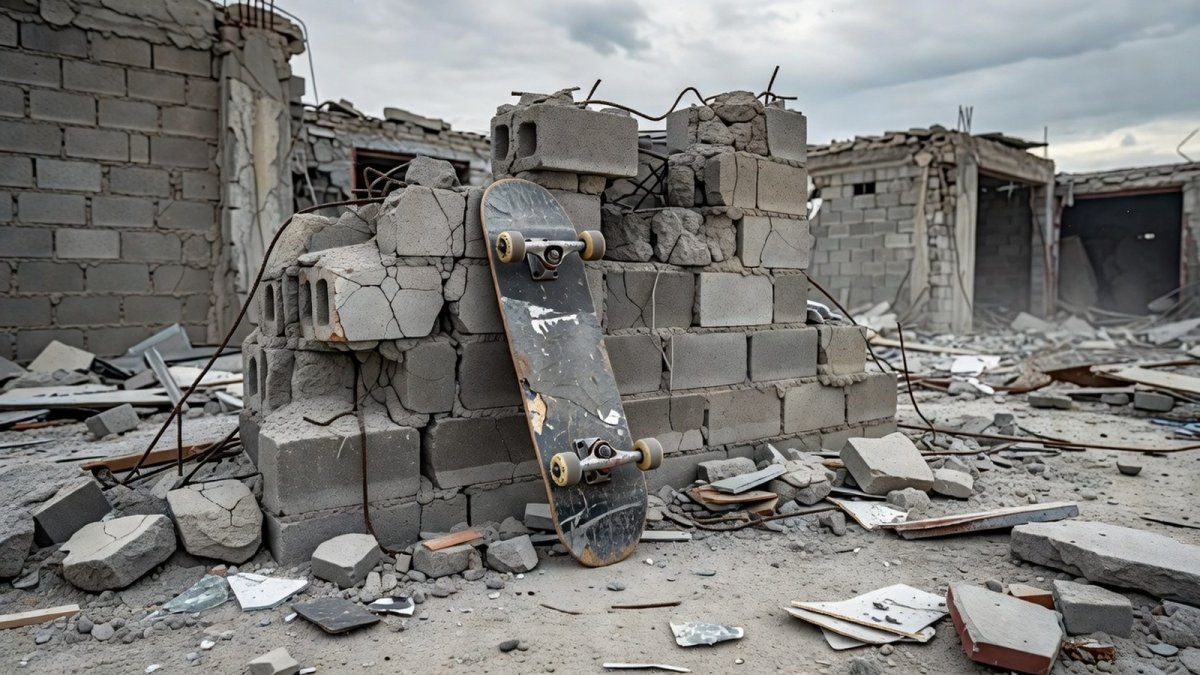
The Gaza Skate Team, founded in 2017 by Rajab Al-Reefi, runs sessions where skaters perform tricks beside destroyed structures in northern Gaza, using boards recovered from debris after multiple displacements — including Al-Reefi's own home loss in Shuja'iyya, Gaza's Old City, during November 2023. The Al Jazeera clip captures young skaters carving turns right beside shattered concrete walls and twisted rebar, their boards clattering over uneven ground where homes once stood. "Today we went to play skateboard between rubble and destruction," Al-Reefi tells the camera, "to get the message across."
That same spirit drove last summer's one-week camp, which brought 65 displaced children together and gave them space to move and laugh when everything else felt heavy. In a September post, the team wrote that they had stepped up their work because the children carry heavier psychological burdens than ever before, insisting: "We stand with them and will never abandon them." The team's Instagram account has grown to nearly 150,000 followers, with Al-Reefi emphasising that the point of skating in these places is to get the message across. These daily sessions turn destruction into something active — movement itself becomes a form of staying present. SkatePal's Charlie Davis, who has coordinated with Al-Reefi for years without ever meeting him in person, puts it plainly: "He gets the kids active to an amazing degree, despite everything."
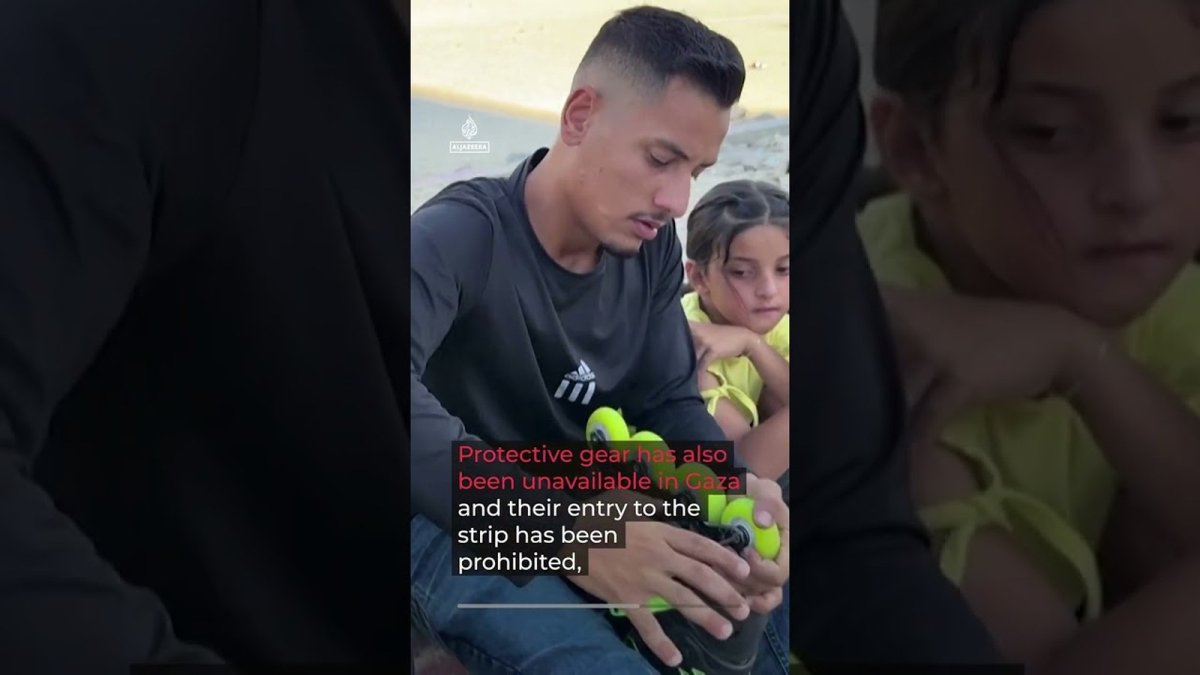
The Man Behind the Movement: Rajab Al-Reefi
Al-Reefi first learned to skate around 2015, after the Italian organisation Gaza Freestyle built a ramp in Gaza City. He founded the Gaza Skate Team two years later to support youth across the Strip, and through repeated displacements in northern Gaza he has even transported his belongings on his skateboard. Interviewed by Thrasher magazine in recent months, he has made the same point he makes to the camera in the Al Jazeera short: the sport delivers a message of endurance, and the team refuses to stop even as boards break and supplies cannot easily enter the enclave.
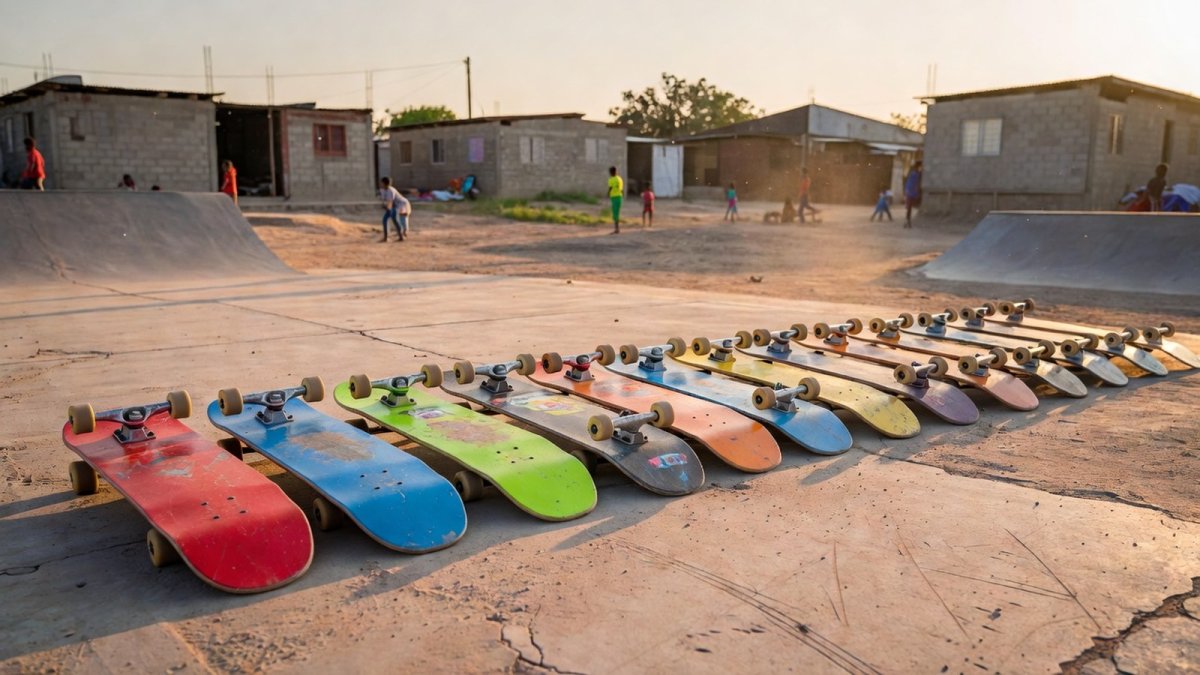
His father remains very ill, SkatePal founder Charlie Davis has said, and contact is kept over WhatsApp through unreliable phone lines and rolling power outages. The team still shares just a few boards between hundreds of kids, with replacement decks stockpiled in Ramallah awaiting the first possible moment they can be delivered into Gaza.
SkatePal: Building a Scene From Ramallah to Gaza
UK-based SkatePal, founded in 2013, has spent more than a decade building a self-sustaining skate scene in Palestine, and it is the financial lifeline behind both the Gaza Skate Team and the West Bank's Skateboarding.ps. Founder and executive director Charlie Davis first picked up the sport in Jenin in 2005, at the end of the Second Intifada, and watched local kids light up around his board; Arabic studies at the University of Edinburgh and the example of Skateistan in Afghanistan pushed him to turn that spark into an organisation. His first project was small wooden ramps at a summer camp, built with his brother and two mates, and it grew into the Asira skatepark in 2015 — still the busiest spot in the West Bank.
Over 11 years SkatePal has built four skateparks, run summer camps and developed programmes to encourage girls' participation. This year it has moved more than $50,000 into Gaza through monthly donations, Al-Reefi's GoFundMe and fundraising events around the world — money that also covers medicine, clothing and housing. Davis, who has never met Al-Reefi in person because he cannot enter the Strip, says the main issue remains simple: "At some point, the boards are going to break, and we can't get boards in." In the West Bank, Mahmoud Kilani runs Skateboarding.ps sessions, including at a girls' orphanage park in Ramallah. As Davis puts it, "there are a lot of roadblocks to skateboarding in Palestine — physically and metaphorically."
From Rubble to the Olympic Stage
Skateboarding made its Olympic debut at Tokyo 2020, stayed on the programme in Paris 2024 — where Yuto Horigome became the first athlete to defend an Olympic title in the sport — and becomes a mandatory sport at Los Angeles 2028, which opens on July 14 under World Skate governance. That global pathway already produced a milestone for Palestine when Aram Sabbah, shaped by SkatePal's early Ramallah projects, became the first skateboarder to represent Palestine at an Olympic qualifier in Dubai in 2024, riding in a keffiyeh and a Palestine shirt on a national stage.
The same grassroots energy is emerging across conflict-affected communities. In Mukono, Uganda, the Uganda Skateboard Society and co-founder Gerald Gose are building a national Olympic team from a DIY park in a low-income neighbourhood. A volunteer involved in these projects summed it up simply: "Skateboarding is not for a specific type of person. Skateboarding is for everyone, no matter what religion, color, or place." Scenes born in the hardest conditions, these milestones show, can still reach the global stage.
The South African Perspective: Sport as a Lifeline
Tony Hawk's The Skatepark Project — the organisation behind nearly 700 public skateparks across the United States and $13 million in grants since 2002 — has extended support to skate programmes in Afghanistan, Cambodia and South Africa. That work lines up with the transformation agenda pursued by SASCOC and Cricket South Africa's and SA Rugby's own grassroots efforts, which treat sport as a tool for social development and wider access. South African supporters know how the Springboks turned rugby into a force for national unity, and skateboarding carries similar potential in communities where open space is scarce.
Charlie Davis makes the mental-health case bluntly: every surviving Gazan, he says, carries severe trauma "to a degree we can't relate to," yet focused activity like skating gives people something exciting to hold onto. "If you're alive, you need to have something fun. You need to enjoy life. Otherwise, what's the point of living if it's just miserable all the time?" It is a lesson South African township programmes have long understood — that sport is never just recreation, it is survival infrastructure.
What to Watch For
Attention now turns to whether SkatePal can push fresh boards and cameras through the blockade before existing equipment fails completely. Worldwide fundraising events and Al-Reefi's GoFundMe will need to keep pace with demand from hundreds of young skaters sharing limited decks, and any sign of board deliveries reaching Gaza will be a major signal. On the Olympic side, World Skate qualifiers leading to Los Angeles 2028 offer a concrete target for Palestinian skaters who can keep training, building on Sabbah's Dubai breakthrough.
South African skate communities supported by Tony Hawk's project will recognise the same challenges of limited facilities and funding — and they can watch how Gaza's sessions maintain momentum under pressure. Sport, as South African fans know better than most, is often the clearest signal that life continues. Following board deliveries, camp numbers and qualifier progress gives a direct line on whether that signal stays strong.
By Dante Williams, Staff Writer
This article was produced with AI-assisted research and editorial support. Reporting is based on sources cited in the article.
What's Your Reaction?
 Like
0
Like
0
 Dislike
0
Dislike
0
 Love
0
Love
0
 Funny
0
Funny
0
 Wow
0
Wow
0
 Sad
0
Sad
0
 Angry
0
Angry
0

Breaking News and Investigations Correspondent at Global1.News. Based in London, covering global breaking news, security, and investigative stories. Known for digging deeper and connecting the dots across continents.










Comments (0)