
Gaza Mass Funeral Honors 112 Killed in 2023 Strike
In a recent Middle East Eye report published on 4 August 2026, the video documents one of the largest mass funerals in Gaza City since October 2023. Thousands gathered to bury the recovered remains of 112 people from the Abu Sharia and al-Hassayna families. The report highlights the prolonged wait for closure after an Israeli airstrike nearly three years earlier.
In a recent Middle East Eye report published on 4 August 2026, the video documents one of the largest mass funerals in Gaza City since October 2023. Thousands gathered to bury the recovered remains of 112 people from the Abu Sharia and al-Hassayna families. The report highlights the prolonged wait for closure after an Israeli airstrike nearly three years earlier.
Gaza Mass Funeral Honors 112 Killed in 2023 Strike
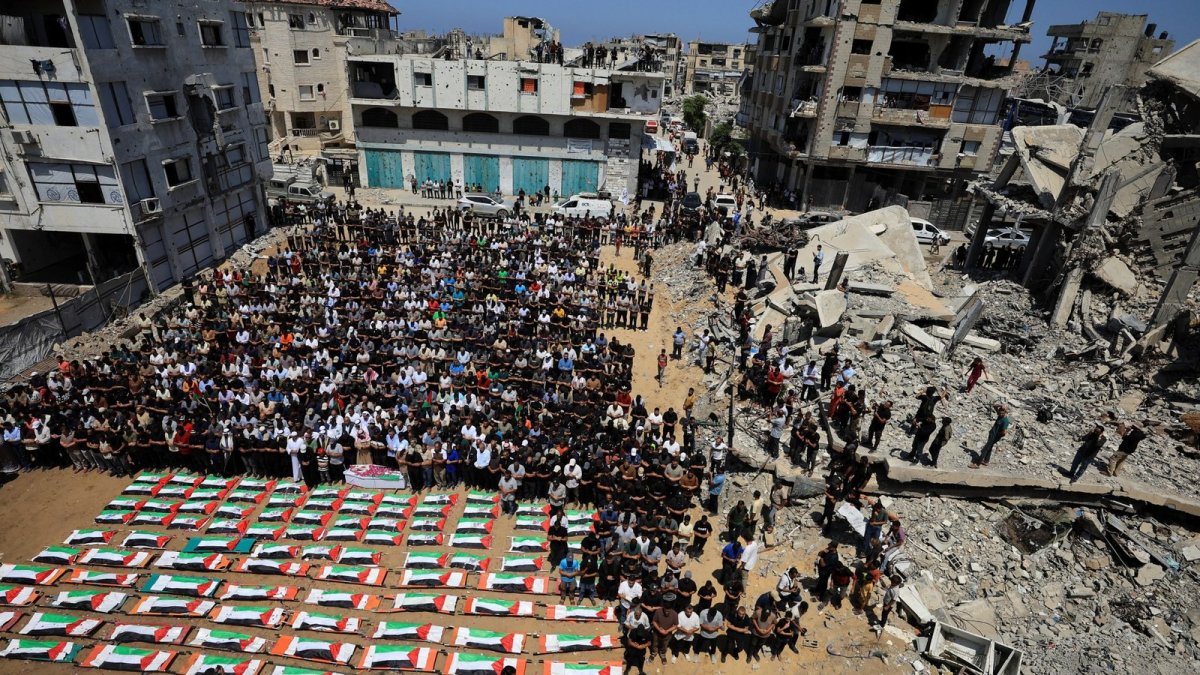
Gaza City, Gaza - August 4, 2026 - Thousands of Palestinians filled the streets of Gaza City on Tuesday to bury 112 members of two extended families in one of the largest mass funerals since the war began in October 2023. The ceremony marked the end of a long recovery effort for victims of a single airstrike that struck a residential block in the Sabra neighbourhood on 22 November 2023.
A Day of Burial After Three Years
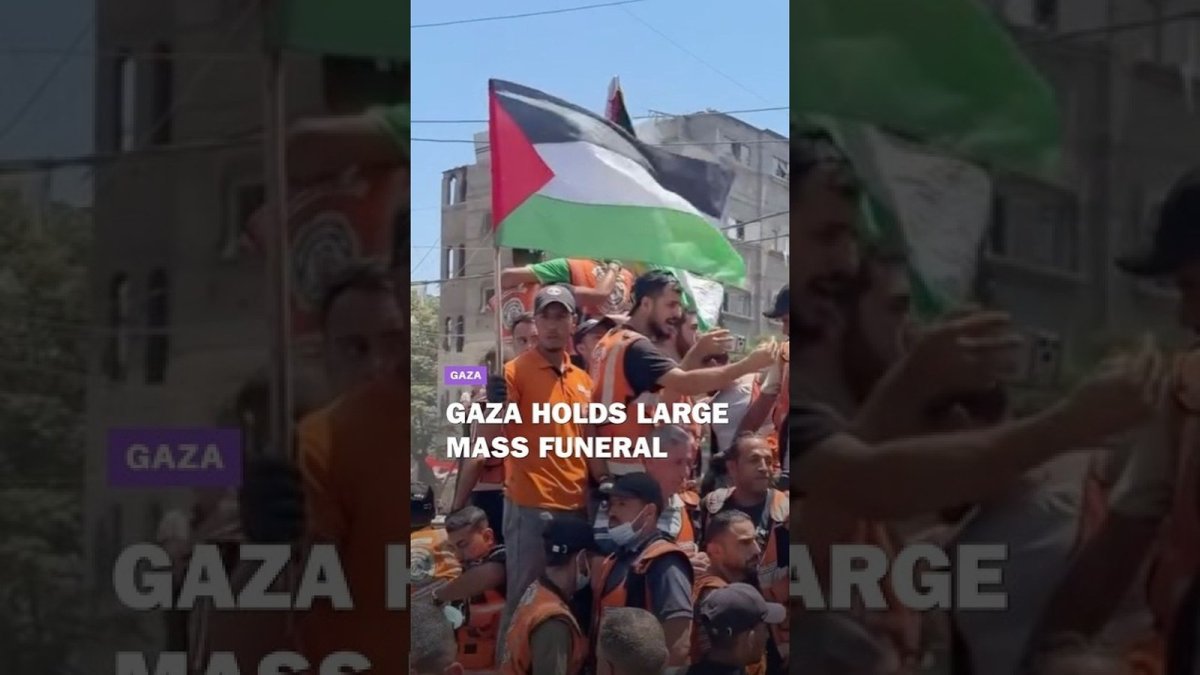
Rows of coffins draped in Palestinian flags moved through Gaza City. Banners displayed photographs of the victims while mourners called for an end to the war. Gaza Civil Defence spokesman Mahmoud Basal posted on X that Gaza was set for an exceptional and painful scene. He noted the funeral reflected the scale of human losses suffered by families who waited years to bury relatives.
The ceasefire established in October allowed first responders to dig through rubble where thousands of remains are still buried. Families say some searched with bare hands because of shortages of heavy equipment. Activist Ali Abo Rezeq noted that these efforts persisted despite the immense challenges of accessing sites amid ongoing dangers.
Most of Gaza's roughly 2 million people remain displaced, living in overcrowded tent cities amid a humanitarian crisis. The funeral comes as US media report America and Israel are planning an intense round of strikes against Iran.
Activist Mohammed Haniyah added that dozens of other bodies have decomposed or are still missing under the rubble, underscoring how the ceremony highlighted the incomplete nature of recovery even as some families found partial resolution.
The November 2023 Attack and Its Toll
Palestinian officials reported that the November 2023 attack killed 308 members of the Abu Sharia and al-Hassayna families. This included 40 children, 30 women and seven people with disabilities. Only about 40 bodies could be recovered at the time by people who dug through smouldering rubble with bare hands and basic tools. Palestinian authorities say about 157 people remain missing after the attack.
The war began after a Hamas-led attack on southern Israel on 7 October 2023 in which about 1,200 people were killed and 251 taken hostage. At least 73,375 Palestinians killed and 174,220 wounded in Gaza since 7 October 2023, most of them women and children, per Gaza health ministry, figures the UN considers reliable. About 90 percent of Gaza's infrastructure damaged or destroyed.
Civil Defence spokesman Mahmoud Basal said at the start of the operation the multi-storey building had been levelled, with maybe more than 180 civilians inside, most of them around 90 percent killed. Crews could not reach the site on the day of the strikes because it needed coordination with Israel via a third party such as the ICRC and there was great danger in reaching the area.
Since the October ceasefire agreement, continued Israeli strikes have killed at least 1,250 Palestinians and injured 4,110 others as of Monday 3 August 2026. This ongoing toll connects the 2023 strike's devastation to the broader pattern of destruction that has left families navigating repeated losses.
Families Who Waited
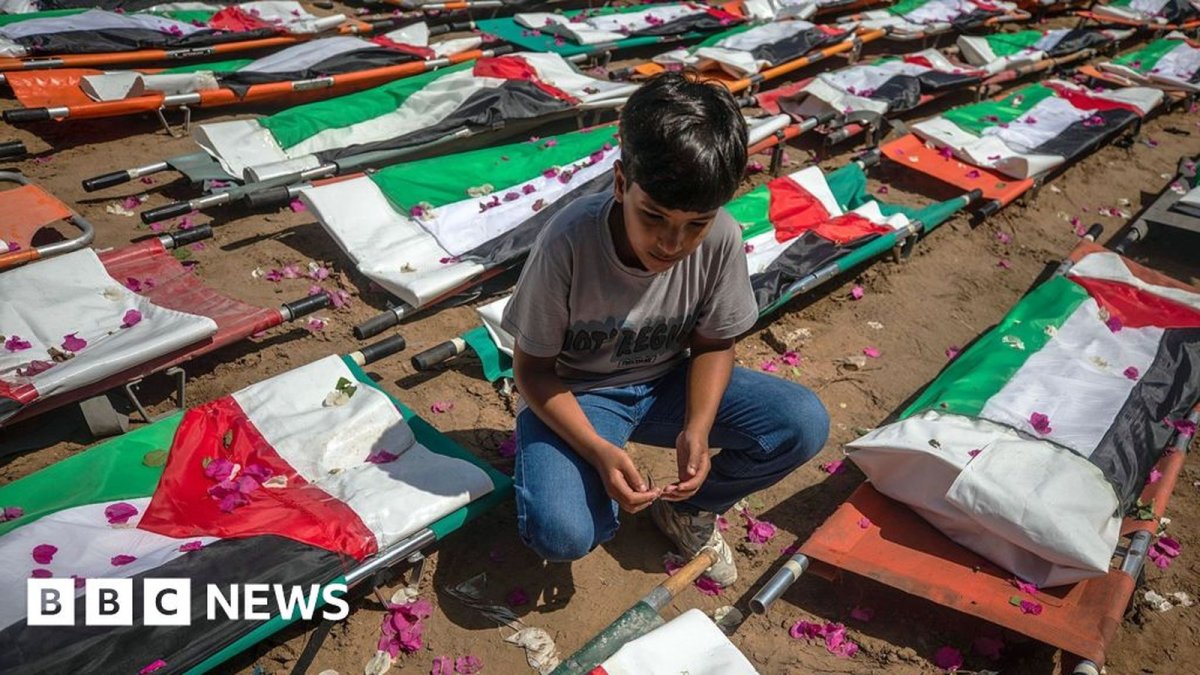
Mourner Ali Abu Sharia said after retrieving and burying the remains perhaps partial relief could come despite the pain of loss. Nahed al-Hassayna stood amid the rubble of his family's living room and asked what the children had done. He pointed to a school backpack that belonged to Omar and a shoe that belonged to Ibrahim. Yousef Abu Sharia described himself as the sole survivor of his family after losing his mother, father, uncle, cousins and all his relatives under the rubble.
BBC reported relatives guided recovery crews and said they had retrieved as many bodies as they could immediately after the attack and were relieved to give others a proper burial. The Assembly of Palestinian Clans and Families said the burial of 112 may have marked the end of the long wait for some families, but it did not end the search for thousands of others still missing.
Palestinian blogger Malik Al-Shanbari and Khaled Safi viewed the funeral as a renewed testament to the scale of the tragedy left behind by the war. ICRC's Griffiths noted that confirmation of a loved one's death is not an answer any family wants to receive, but it is essential towards them receiving closure and being able to mourn their loss in their own way.
The Two-Week Recovery Operation
Gaza's Civil Defence carried out the two-week recovery with support from the International Committee of the Red Cross. ICRC spokesperson Patrick Griffiths said the organisation provided gloves, shovels, protective equipment and body bags. It also supported the operation by renting two of the only excavators available in Gaza for hundreds of hours.
ICRC's Griffiths emphasized that while confirmation of death brings no comfort, it remains essential for families to receive closure and mourn in their own way. Civil Defence spokesman Mahmoud Basal described the leveled multi-storey building and the coordination challenges that delayed access, noting the great danger involved in reaching the area.
The recovery operation highlighted the severe constraints on equipment and personnel in Gaza. With heavy machinery scarce, crews relied on a single bulldozer for initial clearing before shifting to manual excavation. Families often assisted by digging with bare hands amid the debris of the leveled multi-storey building. The International Committee of the Red Cross supplied essential materials including gloves, shovels, protective gear and body bags while renting two excavators for hundreds of hours to support the effort. ICRC spokesperson Patrick Griffiths stated that confirmation of death is not the answer any family wants yet remains essential for closure and the ability to mourn in their own way. BBC footage captured the early stages of the work last month, showing the transition from mechanical to delicate hand recovery.
Such methodical retrieval underscores the meaning of dignified recovery for Palestinian families who have waited years. The process required coordination through third parties like the ICRC before access could be granted to the site. This support allowed crews to locate and prepare remains for proper burial despite ongoing shortages that force reliance on limited tools and community labor.
A Grief Shared Across Gaza
Mustafa Barghouti, secretary-general of the Palestinian National Initiative, called the event potentially the largest funeral in Palestinian history. Ramy Abdu, chairman of the Euro-Med Human Rights Monitor, said around 200 members of the Abu Sharia family are still believed to be beneath the rubble and their remains may have decomposed. The Assembly of Palestinian Clans and Families called on the Western-backed Board of Peace to accelerate efforts to recover bodies still trapped beneath the rubble.
Palestinian researcher Mahmoud Hamed al-Aila described Gaza as extracting the bodies of its children from under the rubble after years of genocide, asking what heart could bear such pain. Activist Mohammed Haniyah noted that dozens of other bodies have decomposed or remain missing beneath the rubble. These voices position the mass burial as both personal mourning and public documentation of losses that extend across entire communities.
In Palestinian society collective testimony transforms individual grief into shared record. Researchers and activists use such events to highlight the human cost that official counts often understate. Bloggers and witnesses contribute to an ongoing archive that preserves details of each family's experience for future accountability efforts.
The Missing Beneath the Rubble
Zaher al-Waheidi, head of the Gaza health ministry's records department, told the Associated Press that at least 7,400 people have been reported by relatives as still buried under the rubble across Gaza. The true number is probably thousands higher because some strikes killed entire families, leaving no one to report them missing.
Middle East Eye reporting estimates that about 8,000 bodies are still buried under rubble across Gaza. Families confront impossible choices when heavy equipment remains scarce forcing some to search with bare hands. The Assembly of Palestinian Clans and Families stated that the burial of 112 may have ended the long wait for certain relatives yet left the search ongoing for thousands of others still missing. This scale means many households live without confirmed closure continuing daily uncertainty about the fate of loved ones.
The absence of full recovery operations creates prolonged psychological strain on survivors. International assistance for debris clearance and systematic body retrieval has become a central demand from Palestinian organizations seeking to address the backlog of unidentified remains. Without such support the number of unaccounted individuals continues to grow.
Analysis: What the Funeral Says About the War's Toll
A UN commission, Human Rights Watch and Amnesty International have found that Israel committed genocide in Gaza. In June a UN commission found Israel was continuing to commit genocide and that its security forces deliberately targeted and killed Palestinian children.
The funeral underscores the enduring human cost of the conflict and the urgent need for full recovery of remains, clearance of debris and support for reconstruction. Palestinian families continue to seek accountability and an end to the cycle of loss that has defined daily life in Gaza for years.
The mass funeral reveals the limits of ceasefire agreements that have not halted Israeli bombing with at least 1,250 Palestinians killed and 4,110 injured since the October ceasefire as of 3 August 2026. A UN commission found in June that Israel continues to commit genocide and deliberately targets Palestinian children. Ceasefire talks intended to advance the agreement into a second phase have largely stalled while US media report plans for intensified strikes against Iran. These developments show how temporary pauses fail to address the structural conditions sustaining loss.
Body recovery remains a humanitarian imperative that exposes gaps in post-conflict provisions. The political stakes widen as regional tensions rise leaving Palestinian families to navigate both immediate mourning and the uncertainty of renewed escalation. The event illustrates how unresolved recovery needs intersect with broader failures to secure lasting protection for civilians.
By Fatima Al-Rashid, Staff WriterThis article was produced with AI-assisted research and editorial support. Reporting is based on sources cited in the article.
What's Your Reaction?
 Like
0
Like
0
 Dislike
0
Dislike
0
 Love
0
Love
0
 Funny
0
Funny
0
 Wow
0
Wow
0
 Sad
0
Sad
0
 Angry
0
Angry
0

Gulf/MENA Correspondent at Global1.News. Based in Doha, covering Gulf politics, energy markets, diplomacy, and development across the Middle East and North Africa. Tracks the economic transformation of the Gulf states.












Comments (0)