
Gaza Hospitals Run Out of Oxygen as Health System Collapses
Gaza's health ministry warns of a catastrophic oxygen collapse as 22 of 34 oxygen stations shut down under Israel's blockade, leaving hospitals and critically ill patients without life-saving supplies.
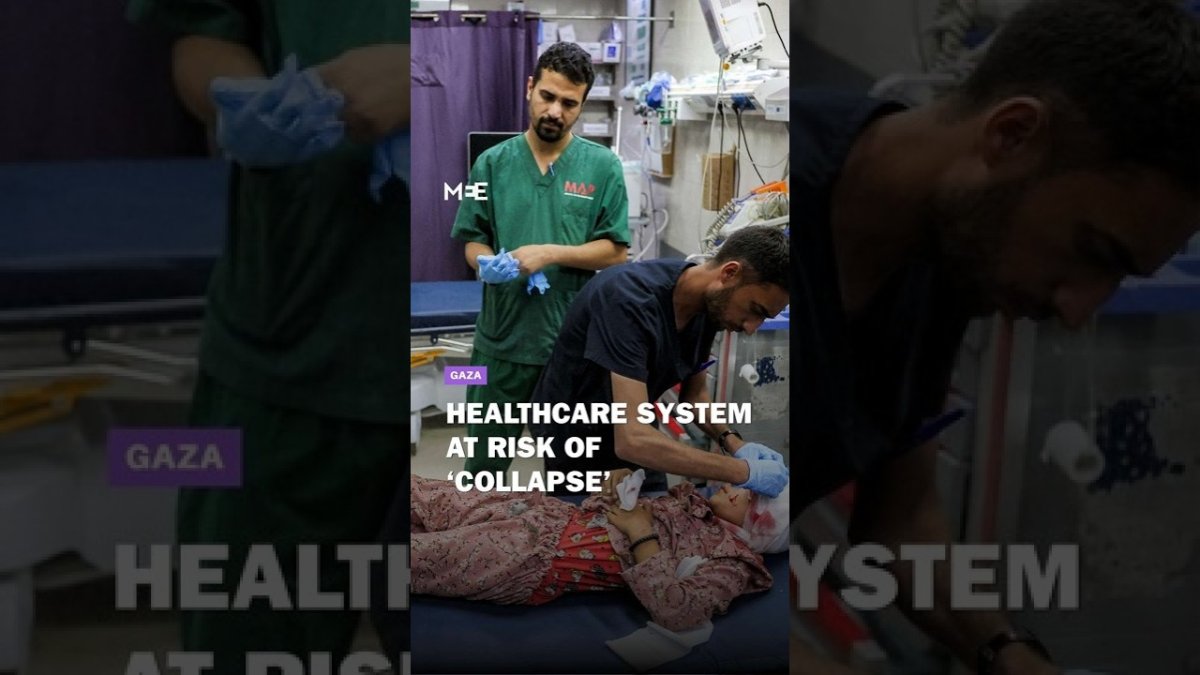
In a recent Middle East Eye report, the camera captures what has become an unbearable daily reality inside Gaza's hospitals: medical staff moving between beds in dimly lit corridors, their hands checking monitors that flicker with failing power, patients connected to ventilators that may stop at any moment. The video, published August 23, 2026, documents the desperate struggle as oxygen supplies run out, showing doctors working under immense pressure as the equipment that keeps people alive begins to fail, one machine at a time.
The scenes are not abstract. They are the direct consequence of a healthcare system pushed past its breaking point, where the most basic medical lifeline — oxygen — has become a scarce and precious commodity. What the video shows in real time, the Palestinian Health Ministry has been warning about for weeks: Gaza's hospitals are running out of air.
Gaza's Oxygen Supply Nears Total Collapse as Health System Buckles Under Siege
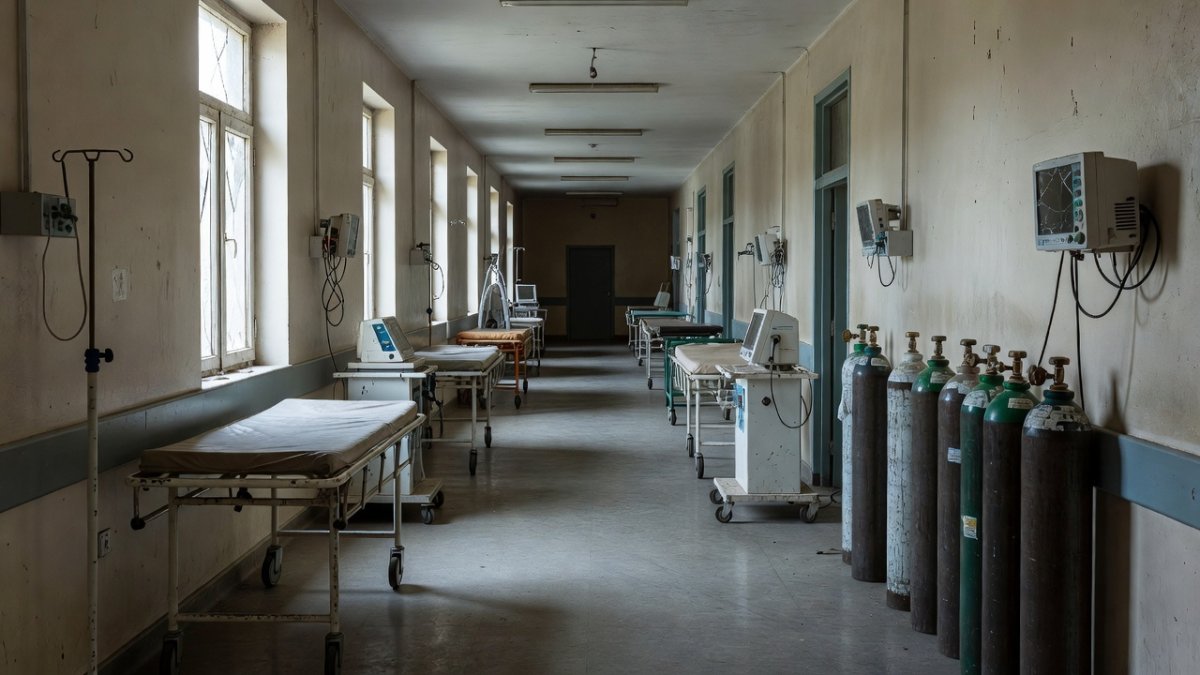
Gaza City, Palestine – August 23, 2026 — The Palestinian Health Ministry issued its most urgent warning yet on August 15, 2026, alerting that Gaza's oxygen supply system faces a complete breakdown. At least 22 of the territory's 34 oxygen-generation stations have been forced out of service, leaving only 12 operational units working under what the ministry described as "extremely complex technical and mechanical conditions." Those remaining stations are running beyond maximum capacity, with mechanical failures becoming increasingly frequent.
A System Failing at Every Link
The oxygen crisis is not a single point of failure but a cascading collapse across the entire supply chain. Of the 30 oxygen cylinder-filling machines in Gaza, only four remain operational. The Health Ministry warned that even these four could stop at any time because emergency maintenance cannot be performed — spare parts are simply unavailable. Every link in the chain, from generation to filling to delivery, is now compromised.
Oxygen is not a luxury medical supply. It is the critical lifeline for intensive-care units, emergency departments, operating rooms, and the growing number of patients on home oxygen therapy. For the wounded, the chronically ill, and the premature infants born into this war, oxygen is the difference between life and death. When the supply falters, doctors are forced to make impossible triage decisions: who gets the last available cylinder, who is moved to a corridor where monitoring is less intensive, who is told there is nothing more that can be done.
The Health Ministry's statement placed the blame squarely on Israel's restrictions on the entry of equipment, spare parts, and essential supplies. The ministry called for the immediate opening of Gaza's crossings to allow technical equipment and spare parts in, and for the urgent delivery of new oxygen-generation stations. Without this, the ministry warned, the remaining operational capacity will fail entirely.
This is not the first time Gaza's medical infrastructure has been pushed to the edge. Since the imposition of the blockade in 2007, the territory's health system has operated under chronic shortages of fuel, medicine, and replacement parts. Hospitals have long relied on a fragile network of generators and imported supplies that could never fully meet the needs of a densely populated coastal enclave. What is different now is the scale of the collapse. Previous crises were managed with stopgap measures and emergency shipments; today, the entire system is simultaneously failing, and there is no reserve capacity left to absorb the shock.
The human consequences of this systemic failure are unfolding in real time, often away from the cameras. Families across Gaza describe the anguish of watching a loved one struggle for breath while hospital staff explain that no oxygen is available. Patients with chronic respiratory conditions, heart disease, and cancer — those who once relied on regular treatment — are now being turned away or told to return when supplies arrive. For many, that return never comes. The quiet deaths that occur in homes, away from the attention of international media, are no less a part of this crisis than the dramatic scenes inside emergency rooms.
Beyond Oxygen: A Health System in Freefall
The oxygen crisis is the most visible symptom of a broader medical catastrophe. According to the Palestinian Health Ministry, 47% of essential medicines and 87% of laboratory-testing supplies have reached zero stock. Fifty-nine percent of medical consumables are completely depleted. These are not abstract percentages — they represent the difference between a doctor being able to run a diagnostic test or not, between being able to treat an infection or watching it spread unchecked.
Hospitals across Gaza are operating at more than 130% occupancy, a figure that defies the physical limits of the facilities themselves. Patients are treated in corridors, in storage rooms, in any space where a stretcher can fit. Of Gaza's 38 hospitals, 26 are now completely out of service. The remaining 12 are attempting to absorb the medical needs of an entire population under bombardment, displacement, and siege.
The collapse of laboratory services carries particularly grave implications. Without the ability to run blood tests, cultures, and diagnostic imaging, doctors are forced to treat patients blindly, relying on clinical judgment alone. A child with a fever could have a viral infection or bacterial meningitis; without a lumbar puncture and laboratory confirmation, the treatment is a guess. A wounded patient with internal bleeding may not receive the right blood type in time. The absence of diagnostic capacity transforms treatable conditions into fatal ones, and it does so silently, without the drama of a ventilator alarm.
The World Health Organization has repeatedly warned that Gaza's health system is on the brink of total collapse, describing conditions that are "beyond catastrophic." Medical evacuations, which once offered a lifeline for the most critical patients, have become increasingly rare and difficult to arrange. The systematic destruction of hospitals documented by UN bodies has further reduced the territory's capacity to care for its population. Each facility that goes out of service places an even greater burden on those that remain, creating a vicious cycle of overcrowding, staff exhaustion, and deteriorating standards of care.
The Human Toll Behind the Numbers
The cumulative death toll since October 7, 2023, has risen to 73,420 Palestinians killed and 174,369 injured, according to the Gaza health ministry's August 23 statement. Behind each of those numbers is a family, a neighborhood, a story interrupted. But the living are also dying — slowly, quietly, in hospital beds where the oxygen runs out, in homes where chronic conditions go untreated because medications are no longer available, in operating rooms where surgeons must proceed without the supplies they need.
The Middle East Eye video captures this reality in its most raw form: a doctor's hands adjusting a ventilator, the sound of an alarm that signals dropping oxygen saturation, the faces of patients who understand what is happening around them. The video does not need narration to convey the gravity of the situation. The images speak for themselves.
The psychological weight of this crisis falls heavily on medical staff, who have been working without respite for nearly three years. Many have lost their own homes and family members; some have been displaced multiple times. Yet they continue to report to work, often sleeping in hospital corridors between shifts, surviving on minimal food and water. The exhaustion is visible in their eyes, the trauma etched into their faces. They are not just caregivers — they are survivors themselves, trying to hold together a system that is crumbling around them.
For the broader population, the health crisis compounds an already unbearable existence. Most of Gaza's more than two million residents have been displaced from their homes, many living in tents or overcrowded shelters with minimal sanitation. Disease outbreaks, including hepatitis and other waterborne illnesses, have been documented by international health organizations. Children are particularly vulnerable: malnutrition weakens their immune systems, and the lack of routine vaccinations leaves them exposed to preventable diseases. The health system's collapse means that even basic primary care is out of reach for most families, who must choose between going without treatment or making a dangerous journey to one of the few functioning hospitals.
The Crossings: A Matter of Life and Death
At the center of this crisis is the question of access. The Rafah crossing, Gaza's primary gateway to the outside world, has been subject to periodic closures throughout the conflict. Even when open, the flow of humanitarian and medical supplies has been nowhere near sufficient to meet the needs of a population of over two million people. The international community, including the United Nations, has repeatedly called for a ceasefire and unimpeded humanitarian access. Those calls have gone largely unheeded.
The Health Ministry's demand is specific and actionable: open the crossings immediately, allow technical equipment and spare parts to enter, and deliver new oxygen-generation stations. These are not complex requests. Oxygen-generation stations are standard medical infrastructure. Spare parts for filling machines are commercially available. The only barrier is political will.
The blockade of Gaza, in place since 2007, has long been criticized by international humanitarian organizations as collective punishment. The current conflict has transformed that chronic restriction into an acute emergency. The International Court of Justice, in its January 2024 provisional measures in the genocide case brought by South Africa, ordered Israel to take all measures within its power to prevent acts of genocide and to enable the provision of urgently needed humanitarian assistance. The court's July 2024 advisory opinion further declared Israel's occupation of Palestinian territories unlawful. These legal rulings, however, have not translated into tangible change on the ground.
UN Security Council resolutions calling for ceasefires have been passed, only to be ignored. Humanitarian pauses have been announced and broken. The gap between international law and the reality in Gaza grows wider with each passing week. For the patients in Gaza's hospitals, the deliberations in New York and The Hague are abstract and distant. What matters to them is whether a truck carrying oxygen cylinders will be allowed through the crossing today, tomorrow, or ever.
Analysis and Implications
The oxygen crisis in Gaza is not a natural disaster or an unfortunate accident. It is the predictable outcome of a deliberate policy of restriction that has systematically dismantled the territory's healthcare infrastructure. When spare parts cannot enter, machines break down. When machines break down, patients die. The causal chain is clear, and it leads directly to the policy decisions made in Tel Aviv and the international community's failure to enforce its own humanitarian standards.
The implications extend far beyond the immediate medical emergency. A health system in collapse does not recover quickly. Even if the crossings were opened tomorrow, it would take months to repair the damage, to replace the equipment, to rebuild the supply chains. The doctors and nurses who have worked through this nightmare are exhausted, traumatized, and in many cases displaced themselves. The physical infrastructure can be rebuilt; the human cost cannot be undone.
There is also a deeper concern. When a healthcare system fails, the effects ripple outward into every aspect of society. Children miss vaccinations. Chronic diseases go untreated. Mental health support is nonexistent. The social fabric, already torn by displacement and loss, frays further. The oxygen crisis is not an isolated incident — it is a window into the broader collapse of Palestinian life under siege.
The international community faces a choice. It can continue to issue statements and pass resolutions that have no binding effect, or it can take concrete action to ensure that hospitals in Gaza have the oxygen they need to keep patients alive. The UN has called for a ceasefire and unimpeded humanitarian access. The Health Ministry has called for the crossings to be opened. The doctors in the Middle East Eye video are calling, with their actions, for the world to pay attention.
The oxygen will run out. That is a mathematical certainty unless something changes. The only question is how many more patients will die before the world responds. The machines are failing, the spare parts are unavailable, and the crossings remain closed. In Gaza, every breath is now a political act, and every empty oxygen cylinder is a verdict on the international community's failure to act.
By Fatima Al-Rashid, Staff Writer
This article was produced with AI-assisted research and editorial support. Reporting is based on sources cited in the article.
What's Your Reaction?
 Like
0
Like
0
 Dislike
0
Dislike
0
 Love
0
Love
0
 Funny
0
Funny
0
 Wow
0
Wow
0
 Sad
0
Sad
0
 Angry
0
Angry
0

Gulf/MENA Correspondent at Global1.News. Based in Doha, covering Gulf politics, energy markets, diplomacy, and development across the Middle East and North Africa. Tracks the economic transformation of the Gulf states.











Comments (0)