
Gabon says access to social media restored after eight-month ban
Gabon’s decision to lift the eight‑month social‑media blackout marks a significant shift in the country’s digital landscape, a move that arrives as the nation grapples with lingering unrest and a fragile political transition.
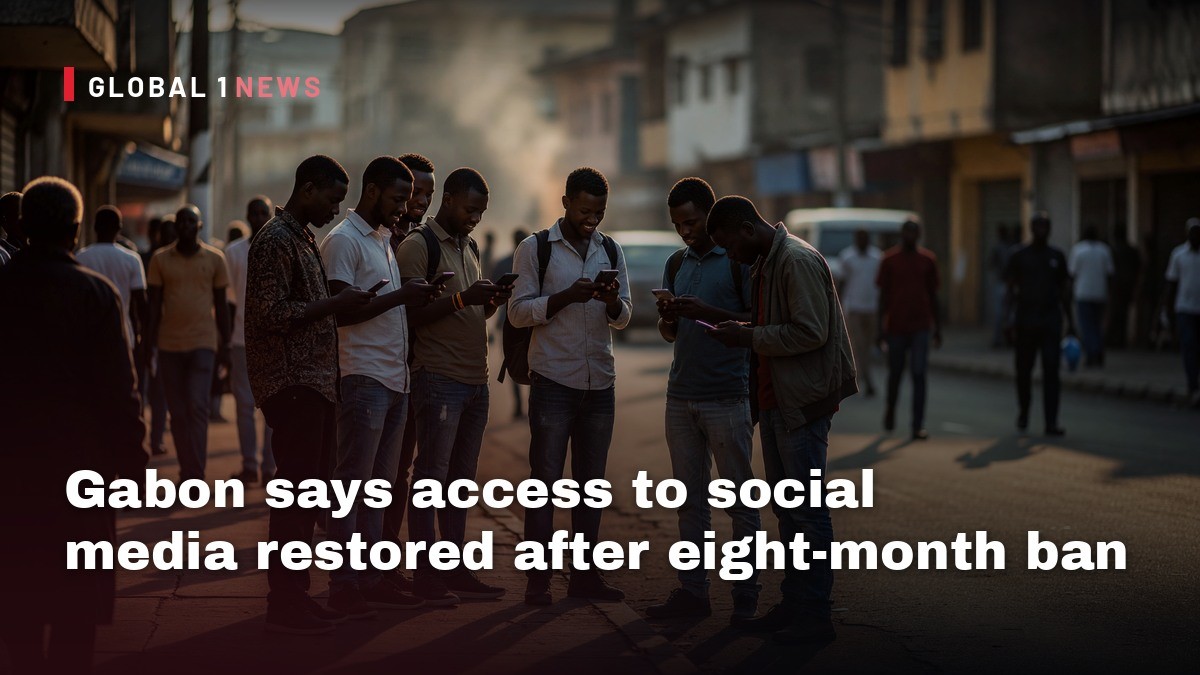
Gabon’s decision to lift the eight‑month social‑media blackout marks a significant shift in the country’s digital landscape, a move that arrives as the nation grapples with lingering unrest and a fragile political transition. The High Communication Authority (HAC) announced the reversal on Saturday, signalling the end of a policy that had been justified by officials as a necessary step to curb “online content fuelling conflict.” While the ban’s removal has been welcomed by many users, the episode leaves lingering questions about the balance between state security and freedom of expression in a nation still finding its footing after a historic coup.
Origins of the ban and its official rationale
On 17 February 2026, the HAC imposed a sweeping prohibition on major social‑media platforms, including Facebook, TikTok, YouTube and Instagram. The regulator framed the decision as a response to the spread of online material that, in its view, was deepening divisions and stoking conflict across the country. This language echoed earlier government statements that linked digital content to broader societal tensions, suggesting a belief that unchecked information could destabilise an already volatile environment.
The timing of the ban coincided with a period of heightened unrest. President Brice Oligui Nguema, who had assumed office after a coup that ended more than five decades of Bongo family rule, was confronting a wave of protests. Teachers and civil servants had taken to the streets demanding higher wages and better working conditions, underscoring a broader dissatisfaction that the administration feared could be amplified through social media.
Public reaction and the workarounds that emerged
For a nation of roughly 2.5 million people, the ban struck at a popular outlet for both personal expression and economic activity. Young Gabonese, who had embraced platforms for everything from entrepreneurship to entertainment, found themselves cut off from a vital communication channel. In response, many turned to virtual private networks (VPNs) to bypass the restrictions, a testament to the resilience of digital communities when faced with state-imposed barriers.
The opposition condemned the suspension as an abuse of power, arguing that the measure represented an overreach by a government still solidifying its authority. Their criticism resonated with civil‑society groups that saw the blackout as a continuation of the digital repression employed by previous regimes, which had historically used information blackouts to control narratives.
Political backdrop: From coup to contested legitimacy
President Nguema’s ascent to power followed a decisive coup that ended the long‑standing Bongo dynasty. In the subsequent election, he secured more than 90 percent of the vote, a result that, while legally recognised, raised eyebrows among observers who noted the unusually high margin. The victory, achieved less than a year after the coup, placed Nguema in a position of both opportunity and scrutiny as he pledged reforms for a country rich in oil and timber but still wrestling with governance challenges.
The social‑media ban unfolded against this backdrop of political consolidation. By restricting online discourse, the administration appeared to be testing the limits of its authority, echoing tactics of former governments that had employed digital blackouts to manage dissent. The decision therefore carried symbolic weight, reflecting how the new leadership navigated the delicate balance between maintaining order and respecting the freedoms that many citizens expected after years of authoritarian rule.
Economic implications of the digital shutdown
Beyond the political dimension, the ban had tangible economic repercussions. Social media platforms serve as low‑cost marketing tools for small businesses and informal traders, especially in a country where formal employment opportunities are limited. The inability to reach customers online forced many entrepreneurs to revert to traditional, and often more expensive, channels, potentially curbing income and stifling the digital economy’s growth.
Moreover, the reliance on VPNs highlighted a hidden market for circumvention tools, suggesting that a segment of the tech sector adapted quickly to the new constraints. While these workarounds kept some communication alive, they also underscored the fragility of a digital ecosystem that can be easily disrupted by top‑down policy shifts.
Human rights concerns and the role of civil society
Human‑rights advocates have long warned that blanket internet restrictions can erode fundamental freedoms. In Gabon’s case, the ban was criticised for silencing voices at a time when citizens were already voicing grievances over wages and working conditions. The opposition’s framing of the suspension as an abuse of power resonated with broader regional concerns about the use of digital control as a tool of repression.
Nevertheless, the eventual lifting of the ban suggests that sustained pressure—both domestic and international—may have influenced the government’s decision. While the HAC did not provide a detailed explanation for the reversal, the public outcry and the practical challenges of enforcing a total blackout likely contributed to the policy’s reconsideration.
What the lifting of the ban means for Gabon’s digital future
The restoration of access to Facebook, TikTok, YouTube and Instagram offers a moment of optimism for Gabonese netizens eager to reconnect with global conversations and local networks. It also opens a space for the government to demonstrate a commitment to more open communication, an essential component of the reforms President Nguema pledged after his election.
However, the episode serves as a reminder that digital freedoms remain contingent on political will. The experience of eight months without social media has left an imprint on the collective memory, and future administrations will be judged on how they balance security concerns with the right to information. The episode may also prompt civil‑society groups to push for clearer legal frameworks that protect online expression while addressing legitimate concerns about misinformation.
Looking ahead: Lessons for the region
Gabon’s brief but stark experiment with a social‑media blackout adds to a growing catalogue of African states grappling with the digital age. The country’s experience highlights how quickly online platforms can become flashpoints in broader political struggles, especially in nations transitioning from long‑standing autocracies to more contested democratic spaces.
Regional observers will likely watch Gabon’s next steps closely, noting how the government navigates the tension between maintaining order and fostering an open digital public sphere. The episode underscores the importance of resilient digital infrastructure and the need for transparent policies that safeguard both national security and the fundamental rights of citizens to communicate, organise, and innovate online.
This article was produced with AI-assisted research and editorial support. Reporting is based on the source material cited below. Sources: BBC News Africa; bbc.co.uk; Global1.News (26 October 2026).
By Amara Diop, Staff Writer
What's Your Reaction?
 Like
0
 Dislike
0
 Love
0
 Funny
0
 Wow
0
 Sad
0
 Angry
0

West Africa/Sahel Correspondent at Global1.News. Dakar-based journalist covering politics, security, climate, and development across Francophone and Anglophone West Africa. Tells the stories of a region undergoing profound transformation.











Comments (0)