
Fatah, Hamas Set for Cairo Talks to Revive Palestinian Unity Push
Fatah and Hamas are set to meet in Cairo on Monday for renewed unity talks, testing whether Gaza war pressures can bridge their 2007 split ahead of November 28 legislative elections, the first since 2006.
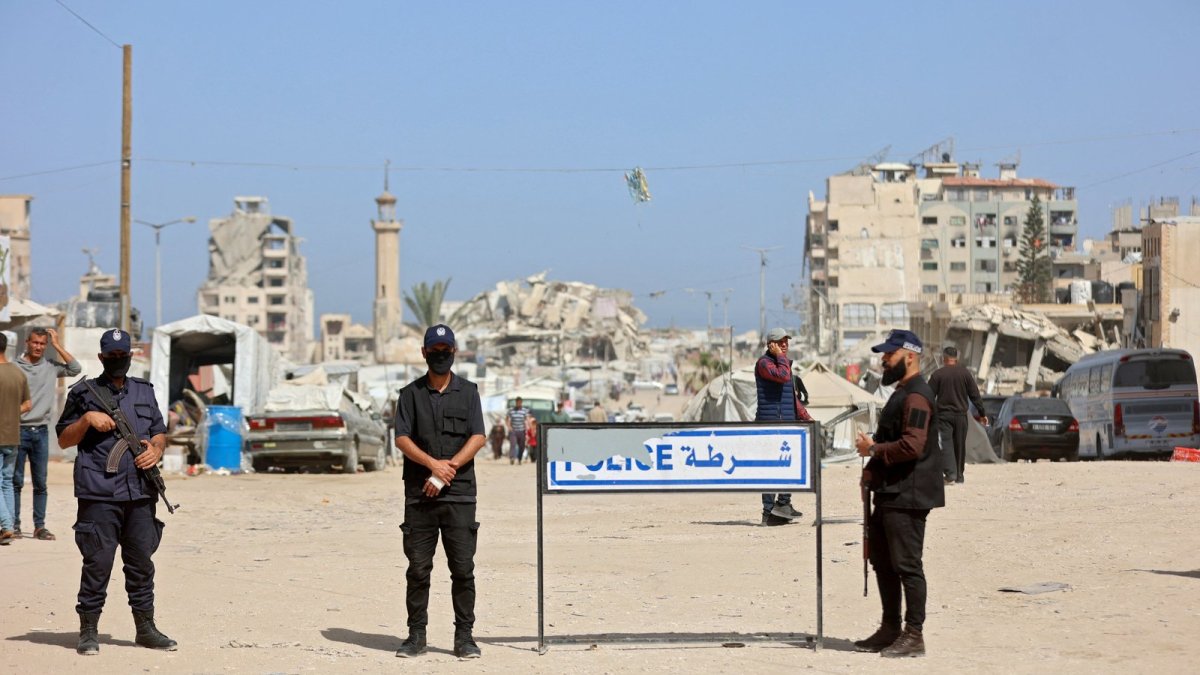
Palestinian factions Fatah and Hamas are preparing to sit down together in Cairo next week in a renewed attempt to bridge a political divide that has crippled Palestinian national institutions for nearly two decades. The meeting, expected Monday under Egyptian auspices, comes at a moment of acute pressure: a devastating war in Gaza, a rapidly shifting regional diplomatic landscape, and the first Palestinian legislative elections in two decades scheduled for November. Sources familiar with the talks said Friday that delegations from both groups are preparing for the session, which follows months of behind-the-scenes contacts aimed at reviving a national dialogue that has repeatedly collapsed since the 2007 split.
Cairo Meeting: A Test of Political Will
The planned Cairo session is expected to take place Monday, according to sources, following a period of intensified communication between the two rival factions. The meeting comes days after Hamas Political Bureau Chairman Khalil al-Hayya led a delegation to Cairo for talks with Egyptian officials and meetings with representatives of other Palestinian factions on developments concerning the Palestinian cause. The sources framed the upcoming gathering as an attempt to "test the possibility of turning the pressures imposed by Israel's genocide on Gaza into a new internal Palestinian process" that could reshape relations between the main political factions, particularly ahead of the November elections.
This is not the first attempt to bring the factions together since the war began in October 2023. Hamas had invited Fatah to two separate meetings since the conflict started, seeking to discuss a political and national way out of the crisis. Neither invitation resulted in a meeting, and sources did not provide a reason for the failure. Contacts between the leaderships of the two groups continued afterward, with an open-ended dialogue session discussed but never held. The two factions had also initially considered meeting in July, but that gathering was postponed indefinitely without explanation. The recent agreement to meet in Cairo next week under Egyptian auspices marks the most concrete step toward direct dialogue in months.
Elections on the Horizon: November 28 and the First Vote Since 2006
The backdrop to these talks is a landmark political development: Palestinian President Mahmoud Abbas issued a decree on July 9 setting November 28 as the date for legislative elections in East Jerusalem, the West Bank, and Gaza Strip. The vote would be the first since 2006, when Hamas won a surprise victory that ultimately led to the 2007 split and the establishment of rival governments in Gaza and the West Bank. The Central Elections Commission began voter registration and data updates on August 15, signaling that preparations are moving forward despite the deep political divisions and the ongoing war.
Hamas has indicated it intends to participate in the elections as part of a broad national coalition, a significant statement given the group's previous electoral success and its continued control over Gaza. The question of how elections could be conducted in Gaza amid the destruction of the war remains unresolved, and the practical mechanics of holding a vote across all three territories—East Jerusalem, the West Bank, and Gaza—present enormous logistical and political challenges. The Cairo meeting is widely seen as a critical precursor to determining whether a unified electoral framework can be established in time for the November date.
A History of Failed Reconciliation: From 2007 to Algiers and Beijing
The Fatah-Hamas division has proven remarkably resilient despite numerous attempts to end it. Since the 2007 split, which followed Hamas's electoral victory and subsequent violent clashes with Fatah forces, the two groups have engaged in countless rounds of dialogue and signed multiple reconciliation agreements brokered by Arab and international parties—none of which have produced a lasting settlement. The pattern has been consistent: agreements are signed with great ceremony, implementation stalls, and the underlying distrust remains.
Two recent high-profile attempts stand out. In July 2022, Abbas met with the late Hamas Political Bureau Chairman Ismail Haniyeh in Algiers, under the mediation of Algerian President Abdelmadjid Tebboune. That meeting led to the October 2022 Algiers reconciliation agreement, in which Palestinian groups, including Fatah and Hamas, committed to holding legislative and presidential elections within a year. Those elections were never held. Then, in July 2024, Palestinian factions signed the Beijing Declaration, a document that outlined steps to end the political division and strengthen national unity. That declaration, notable for China's growing diplomatic role in the region, also failed to end the split. The pattern of ambitious agreements followed by inaction has bred deep skepticism about the prospects for the Cairo talks.
Egypt's Enduring Mediation Role
Cairo has for years played a central role in mediating Palestinian internal dialogue, particularly between Fatah and Hamas. Egypt's involvement is driven by both strategic interest and geographic proximity: the Gaza Strip shares a border with Egypt, and Cairo views stability in Gaza as directly linked to its own national security. Egypt's General Intelligence Service has historically served as the primary channel for negotiations between the factions, and Egyptian officials have repeatedly hosted delegations from both sides in an effort to broker unity.
The Egyptian role extends beyond mere mediation. Cairo has been a key player in ceasefire negotiations during the Gaza war, and it maintains significant leverage over Hamas through its control of the Rafah crossing, the main gateway for goods and people moving in and out of Gaza. For Egypt, a unified Palestinian political front is not just a diplomatic goal but a security imperative. The sources noted that the significance of the planned meeting lies in whether it can test the possibility of converting the pressures of the Gaza war into a new internal Palestinian process—a formulation that suggests Cairo sees the current crisis as both a threat and an opportunity.
The Strategic Calculus: What Each Side Wants
Both Fatah and Hamas approach the Cairo talks with distinct strategic objectives, and understanding these calculations is essential to assessing the meeting's prospects. For Hamas, participation in the elections and the broader national dialogue offers a path to political legitimacy and a seat at the table in any post-war arrangement for Gaza. The group has suffered enormous losses during the war, and its leadership is likely seeking to consolidate its political position while retaining its role as a major force in Palestinian politics. Hamas's stated intention to participate in the elections "as part of a broad national coalition" suggests a willingness to work within a unified framework—provided that framework accommodates its interests.
For Fatah and the Palestinian Authority, the calculus is more complex. Abbas and his leadership have long sought to reassert control over Gaza and to present themselves as the legitimate representatives of the Palestinian people. Elections offer an opportunity to legitimize the Palestinian Authority's rule, but they also carry risks: a strong Hamas showing could further erode Fatah's dominance. The Palestinian National Council Chairman Rawhi Fattouh contacted Hamas after the legislative election date was announced, according to sources, indicating that the Palestinian leadership is actively engaging with Hamas despite the history of failed negotiations. The postponement of the July meeting without explanation suggests that significant obstacles remain, and the Cairo talks will test whether both sides are genuinely prepared to make the compromises necessary for a unified electoral process.
Regional Implications: Gaza, Normalization, and Great Power Competition
The Cairo talks take place against a backdrop of profound regional transformation. The Gaza war has reshaped the strategic environment, intensifying pressure on all parties to find a political solution. Arab states, particularly Egypt and Qatar, have been deeply involved in mediation efforts, while Turkey has maintained its support for the Palestinian cause and its ties to Hamas. The war has also complicated the Arab-Israeli normalization dynamics that were gaining momentum before October 2023, with several Arab governments facing domestic pressure to distance themselves from Israel amid the humanitarian catastrophe in Gaza.
The Beijing Declaration of July 2024 signaled China's growing diplomatic ambitions in the region, and the upcoming Cairo talks will be watched closely by external powers with interests in Palestinian affairs. The United States, which has historically been the dominant external actor in Israeli-Palestinian diplomacy, faces competition from China and Russia, both of which have sought to expand their influence in the Middle East. For the Palestinian factions, this multipolar environment offers new options but also new complications. The ability of Fatah and Hamas to reach a genuine agreement in Cairo would have implications far beyond the Palestinian territories, affecting regional stability, the future of Gaza, and the broader Arab-Israeli conflict. The core question, as the sources framed it, is whether the immense pressures of the war can be transformed into a new internal Palestinian process—or whether the divisions that have persisted since 2007 will once again prove insurmountable.
By Malik Hassan, Staff Writer
This article was produced with AI-assisted research and editorial support. Sources: Daily Sabah
What's Your Reaction?
 Like
0
Like
0
 Dislike
0
Dislike
0
 Love
0
Love
0
 Funny
0
Funny
0
 Wow
0
Wow
0
 Sad
0
Sad
0
 Angry
0
Angry
0

Middle East Correspondent at Global1.News. Based in Beirut, covering politics, conflict, energy, and society across the Middle East. Brings context and depth to a region often reduced to headlines.











Comments (0)