
FAA Orders Precautionary Inspections of Boeing 737 MAX Jets
Folks, the FAA has ordered precautionary inspections on hundreds of Boeing 737 MAX jets after cracks appeared in parts of older 737 models that share similar design and build processes. No cracks have been found on any MAX aircraft to date.
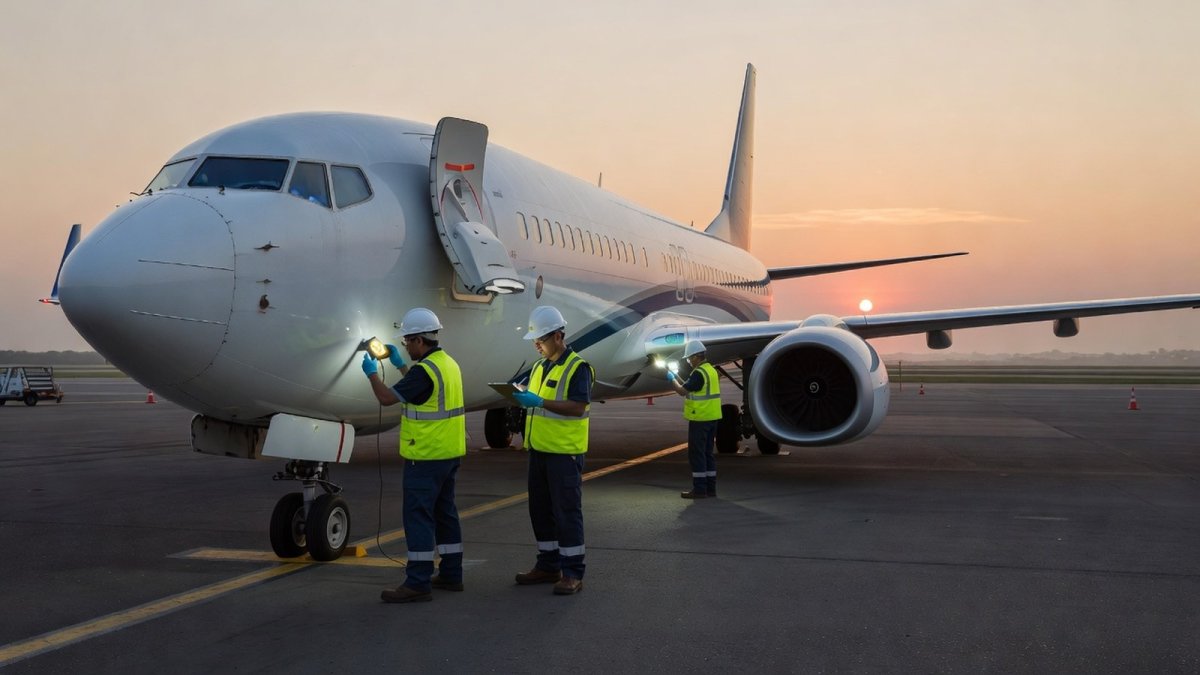
Folks, the FAA has ordered precautionary inspections on hundreds of Boeing 737 MAX jets after cracks appeared in parts of older 737 models that share similar design and build processes. No cracks have been found on any MAX aircraft to date. The move follows the agency's certification of the MAX 7 just days earlier and reflects regulators' determination to apply lessons from prior generations rather than any active structural problem on the current fleet.
The directive arrives at a moment when airlines continue to manage schedules after years of disruptions. Regulators note that the MAX family remains Boeing's bestselling narrowbody, so any added inspection steps will factor into fleet planning without signaling an immediate safety shortfall on these jets. Passengers on major carriers can expect operators to fold the checks into routine maintenance rather than face sudden groundings.
What the FAA ordered
The final airworthiness directive, AD 2026-15-11, appeared in the Federal Register on Aug 6, 2026. It covers 471 U.S.-registered Boeing 737 MAX jets and 1,429 planes worldwide. The models included are the 737-8, 737-9, and 737-8200. Inspections must start once the rule takes effect on September 10, 2026.
Airlines operating these planes include Southwest, the largest MAX operator, along with United, American, Alaska, and Ryanair with its 737-8200 fleet. The directive does not ground the jets. It requires targeted checks on specific fuselage areas to confirm the absence of issues before any potential spread.
Airworthiness directives follow a structured sequence that begins with a proposed rule, moves through a public comment period where operators and manufacturers can submit data, and concludes with a final rule that sets compliance windows. The September 10 effective date was selected to give carriers time to integrate the work into existing hangar visits rather than forcing unplanned downtime. This approach distinguishes the directive from a grounding order, which would halt operations outright instead of requiring scheduled verification of structural integrity.
The 471 U.S. jets represent a notable share of the active MAX fleet in the country, while the 1,429 worldwide total shows the rule's reach across operators from Europe to Asia. Because the inspections focus on the 737-8, 737-9, and 737-8200, carriers will prioritize those airframes once September 10, 2026 arrives. Regulators opted for a phased timeline that airlines can align with existing maintenance cycles rather than an immediate grounding.
Southwest will handle the largest share of the work as the top MAX operator, followed by United, American, Alaska, and Ryanair. The global scope across 1,429 aircraft explains why fleet planners at every affected airline are already building extra downtime into upcoming schedules.
The technical problem explained
Cracks have appeared in the bear strap, a structural reinforcement around fuselage cutouts such as doors or emergency exits. The specific location is the fuselage skin at the forward upper corner of the forward galley door cutout, near the forward service door on the right side. The FAA states that cracks in this area may leave the principal structural element unable to sustain limit loads and could affect overall airplane integrity.
The same design and build process connects the NG and MAX generations, which is why the agency extended scrutiny even though no cracks have been reported on MAX jets. Boeing has stated that the issue has not appeared on the MAX fleet, yet the shared construction details justify the same regulatory attention applied to the earlier models.
Right-side forward galley door cutouts experience repeated pressurization cycles because cabin pressure expands the fuselage skin on every flight, concentrating stress at the reinforced edges where the door frame interrupts the continuous structure. Inspectors rely on a combination of visual examinations and eddy-current or ultrasonic scans to detect subsurface flaws that might not yet be visible on the surface, allowing early intervention before any propagation occurs.
How we got here
The issue first appeared on the older 737NG generation, covering 737-600 through 737-900ER models. Boeing issued an Alert Requirements Bulletin on December 20, 2022, and the FAA issued its directive effective May 22, 2024. On November 25, 2025, the agency proposed extending the same checks to the MAX family because the design and build processes are similar enough to warrant caution.
No cracks have been found on 737 MAX jets, but the FAA cited the shared construction as the reason for the extension. Boeing has confirmed the issue has not been observed on the MAX fleet. On August 3, 2026, the FAA certified the 737 MAX 7 after nearly a decade of delays. Southwest is the launch customer, and the MAX 10 certification remains pending for configurations up to 230 seats. That pending MAX 10 path now includes the added context of the bear-strap checks, requiring Boeing and regulators to confirm the design meets standards before the larger variant enters service.
The progression from the 2022 bulletin through the 2024 NG directive, the 2025 proposal, and the 2026 final rule illustrates the FAA's methodical accumulation of service data before broadening requirements, ensuring each step rests on documented findings rather than speculation.
The MAX's troubled history
The 737 MAX was grounded worldwide for 20 months in 2019-2020 after two fatal crashes killed 346 people. Lion Air in 2018 and Ethiopian Airlines in 2019 prompted the extended review. In January 2024 an Alaska Airlines 737 MAX 9 experienced a cabin panel blowout at about 14,830 feet shortly after takeoff from Portland, Oregon, after a door plug was found without bolts. Alaska grounded its 65 MAX 9s and United grounded its 79.
Those earlier events explain why regulators now treat any structural finding on related models with extra care. The current directive on bear straps and fuselage skin follows the same pattern of applying lessons from prior inspections rather than indicating new problems on the MAX fleet.
The 2019-2020 grounding created widespread effects across the aviation sector, with airlines absorbing revenue losses and Boeing addressing compensation and delivery delays that affected suppliers and airports.
Following the Alaska incident, the FAA capped MAX production rates and expanded on-site oversight at Boeing facilities, measures that remain in place as the company works through the current inspection mandate and prepares the MAX 10 for certification review.
What it means for airlines and passengers
Carriers flying the affected MAX models now face added inspection schedules starting September 10, 2026. Passengers on Southwest, United, American, Alaska, and Ryanair routes should expect possible schedule adjustments while crews complete the checks on those specific door areas. The rule applies only to the listed models and reflects a precautionary step based on design similarities.
With the MAX family serving as Boeing's bestselling narrowbody, the inspection mandate will influence route planning and capacity forecasts. Airlines must balance the September 10, 2026 start date against peak travel periods, potentially moving some aircraft into maintenance earlier than planned.
Passengers can verify whether their flight uses an affected airframe through airline apps or websites that list registration numbers, and most carriers will absorb the checks during overnight or scheduled maintenance turns rather than triggering widespread cancellations. Travel insurance with trip-interruption coverage and flexible booking options provide additional buffers during the summer-to-fall transition when demand remains elevated.
Southwest's role as launch customer for the newly certified MAX 7 adds pressure on its maintenance teams, while Ryanair's reliance on the 737-8200 means its European network could see the largest share of the work in the coming months. Travelers may notice the added checks as part of ongoing fleet oversight.
Boeing's response
Boeing has confirmed that cracks have not been seen on the MAX fleet and notes differences in service history between the NG and MAX generations. The company has not disputed the need for the inspections and maintains that the design remains sound under the FAA's directive, emphasizing that the current mandate reflects a precautionary approach rather than evidence of an active problem on the newer fleet.
The recent MAX 7 certification represents a milestone after prolonged delays, yet the company must still demonstrate to regulators that the MAX 10 configuration satisfies all structural and systems requirements before it can enter service with up to 230 seats.
What happens next
Operators must complete the required checks once the September 10, 2026 deadline arrives. Regulators will monitor findings closely, especially given the MAX 7 certification just days earlier. The FAA's language underscores that structural integrity remains a priority.
Regulators in Europe and elsewhere often align with FAA directives on the MAX family, so the inspection steps could extend to additional carriers and add coordination for airlines already managing MAX 10 certification timelines.
Discovery of actual cracks during these checks would likely prompt expanded inspection intervals or repairs, while the MAX 10 timeline hinges on Boeing supplying additional substantiation data to both the FAA and EASA before any certification decision.
Here's what you can do right now. Check your upcoming flights on the affected airlines and ask carriers directly how they plan to handle the inspections. Push your representatives for clear oversight timelines. Ask that Boeing and the FAA release inspection results publicly so passengers stay informed. Stay engaged and hold the system accountable—your safety depends on it.
By Jessica Ali, Staff Writer
This article was produced with AI-assisted research and editorial support. Sources: AP, CNN, The Guardian, QZ, Fox Business, Xinhua, ABC News.
What's Your Reaction?
 Like
0
Like
0
 Dislike
0
Dislike
0
 Love
0
Love
0
 Funny
0
Funny
0
 Wow
0
Wow
0
 Sad
0
Sad
0
 Angry
0
Angry
0

Editor-in-Chief at Global1.News. Atlanta-based journalist who cuts through the BS and tells it like it is. Lead anchor, host, and the voice you hear when the spin stops and the truth starts.















Comments (0)