
DPWH boosts Oplan Kontra Baha initiatives
Recent storms and the intensified southwest monsoon have left swaths of the archipelago under water, reminding us how vulnerable our barangays are to the whims of nature.
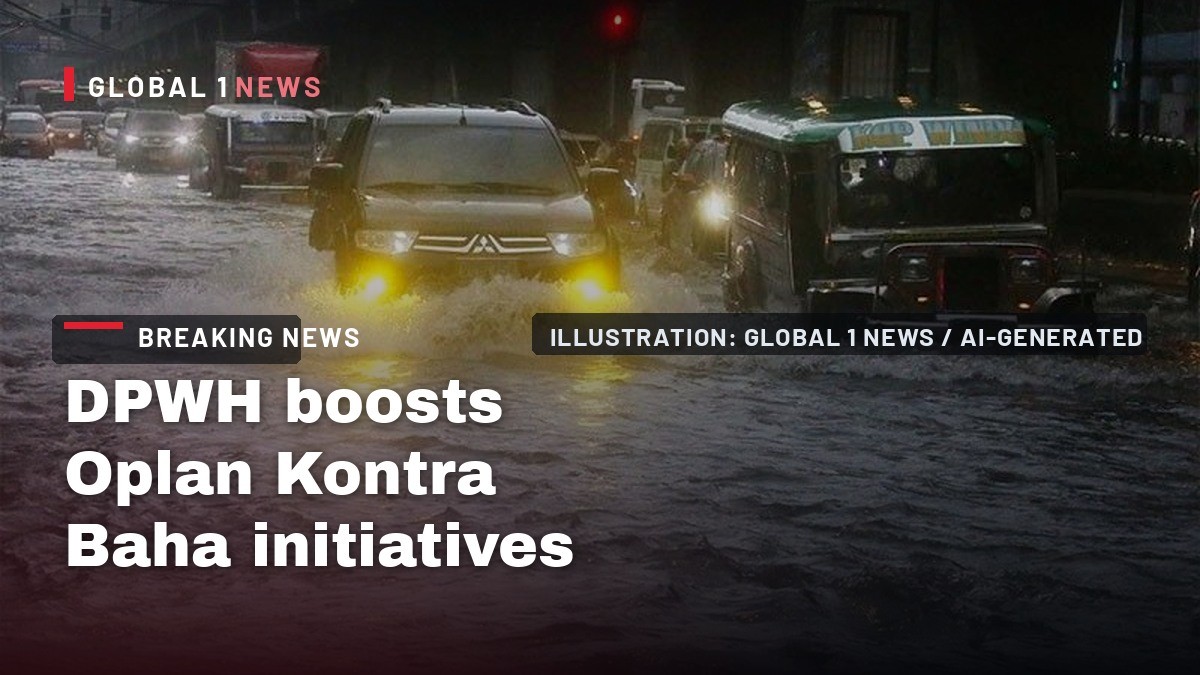
Recent storms and the intensified southwest monsoon have left swaths of the archipelago under water, reminding us how vulnerable our barangays are to the whims of nature. In response, the Department of Public Works and Highways (DPWH) has stepped up its Oplan Kontra Baha program, a flood‑mitigation drive that President Ferdinand Marcos Jr. has ordered to be expanded beyond Metro Manila. The initiative now reaches provinces from Ilocos to Mindanao, aiming to protect commuters, motorists and the everyday lives of ordinary Filipinos.
President’s directive fuels a broader flood‑control agenda
Secretary of Public Works and Highways Vince Dizon told reporters that the recent deluge underscored the need for “long‑term programs” to curb flooding not only in the capital but also in other flood‑prone regions. The president’s directive signals a shift from reactive emergency measures to proactive infrastructure planning, a move that could reshape how local governments and communities prepare for future storms.
By anchoring Oplan Kontra Baha in a national framework, the administration hopes to align the efforts of the DPWH with the broader goals of the Department of the Interior and Local Government, which oversees barangay disaster risk reduction councils. This coordination is crucial, as many of the affected areas rely on local volunteers and barangay officials for immediate rescue and relief.
Targeted provinces and cities receive new focus
The expanded scope of Oplan Kontra Baha includes the Ilocos region, Cagayan Valley, Tarlac, Naga City in Camarines Sur, and selected parts of the Visayas and Mindanao. These areas have historically suffered from seasonal river overflow and low‑lying terrain that turn roads into rivers during heavy rains.
While the source material does not enumerate specific projects in each locality, the mention of these provinces signals a strategic pivot toward regions that have repeatedly borne the brunt of monsoon flooding. For residents of a typical barangay in Ilocos Norte, for example, the promise of dredging and improved drainage could mean fewer days of disrupted school sessions and market stalls.
Cleaning and dredging: the first line of defense
Among the core components of the plan are the cleaning and dredging of waterways in flood‑prone and low‑lying areas. Overgrown vegetation, silt and debris often choke river channels, reducing their capacity to convey water during storm surges. By removing these blockages, the DPWH aims to restore natural flow and lower water levels that threaten homes and farms.
This work, while technical, has a direct human impact. In many barangays, the community’s sari‑sari store depends on reliable road access for deliveries. When a river overflows, delivery trucks cannot reach the store, forcing families to travel farther for basic goods. Dredging, therefore, is not just an engineering task but a lifeline for daily commerce.
Pumping stations: boosting water evacuation capacity
Construction and maintenance of pumping stations form another pillar of Oplan Kontra Baha. These facilities can actively move water from inundated lowlands to larger water bodies, especially during periods when gravity alone cannot drain flooded streets.
For commuters in Metro Manila, the presence of functional pumps can mean the difference between a smooth ride on the LRT and being stranded on a flooded EDSA. In provincial towns, well‑maintained pumps can protect rice paddies from waterlogging, safeguarding the harvest that feeds families and supports local economies.
Case study: drainage rehabilitation in Baliwag, Bulacan
One concrete example of the program’s rollout is the ongoing rehabilitation of the drainage system along Doña Remedios Trinidad Road in Baliwag, Bulacan. The DPWH has placed the project “in full swing,” indicating that crews are actively working to upgrade the road’s water‑drainage capacity.
Bulacan, a province that frequently experiences flash floods, sees its residents—students, jeepney drivers, and sari‑sari store owners—regularly disrupted by water‑logged streets. By improving drainage along a major thoroughfare, the DPWH hopes to ease the daily grind for these commuters, allowing them to reach schools and workplaces without the hindrance of standing water.
Community impact: easing the burden on motorists and commuters
The DPWH’s spokesperson emphasized that the rehabilitation works aim to reduce flooding “during heavy rains, which have affected motorists, commuters and residents of Bulacan.” This acknowledgment reflects an understanding that flood mitigation is not only about protecting property but also about preserving the flow of daily life.
When roads are submerged, public transport—jeepneys, tricycles, and buses—are forced to reroute or halt, extending travel times and increasing fuel costs. For OFWs sending remittances home, longer travel times can mean delayed access to banks or money changers. By keeping arteries like Doña Remedios Trinidad Road passable, the DPWH indirectly supports the economic well‑being of families dependent on these transport links.
Looking ahead: sustaining Oplan Kontra Baha’s momentum
While the current initiatives focus on physical infrastructure, sustaining flood resilience will require continuous maintenance and community engagement. The DPWH’s plan to clean and dredge waterways must be paired with regular monitoring to prevent re‑accumulation of debris. Likewise, pumping stations need periodic checks to ensure they remain operational during the peak monsoon months.
Local barangay disaster risk reduction committees can play a vital role by reporting clogged drains and coordinating clean‑up drives, embodying the spirit of bayanihan that has long defined Filipino communities. As the nation braces for future storms, the success of Oplan Kontra Baha will hinge on the partnership between national agencies, provincial officials, and the ordinary Filipinos who navigate flooded streets every rainy season.
This article was produced with AI-assisted research and editorial support. Reporting is based on the source material cited below. Sources: Philstar.com; Global1.News (13 September 2026).
By Bella Reyes, Staff Writer
What's Your Reaction?
 Like
0
Like
0
 Dislike
0
Dislike
0
 Love
0
Love
0
 Funny
0
Funny
0
 Wow
0
Wow
0
 Sad
0
Sad
0
 Angry
0
Angry
0

Philippines/Southeast Asia Correspondent at Global1.News. Manila-based journalist covering Philippine politics, environment, maritime security, and social issues. Passionate about marine conservation and the communities protecting the Philippines' natural heritage.














Comments (0)