
Lula and Trump Seek to Ease Tariff Crisis in Longest Call
Lula and Trump held their longest call yet to ease the US-Brazil tariff crisis, agreeing to resume negotiations over Section 301 tariffs as Amazon deforestation and the Pix system become flashpoints in the trade dispute.
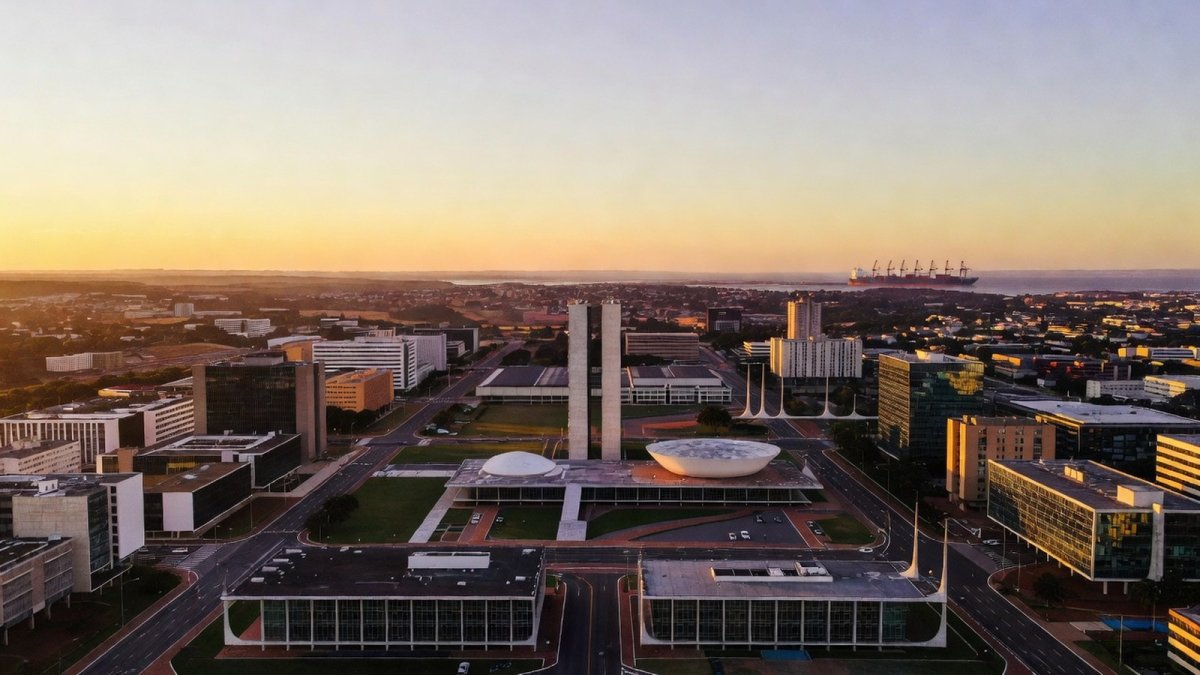
In a phone call that lasted one hour and twenty minutes on Friday, Brazilian President Luiz Inácio Lula da Silva and US President Donald Trump sought to ease a deepening trade crisis between the two nations, agreeing to resume high-level negotiations over Washington’s proposed Section 301 tariffs on Brazilian exports. The conversation, the third between the leaders since October 2025 and the longest to date, covered trade, organized crime, and global conflicts, according to a note released by Brazil’s Planalto Palace. Lula described the allegations underpinning the new US tariffs as “unfounded,” while Trump agreed on the need to preserve strong trade links and proposed that teams from both countries meet again as soon as possible.
Brasilia, Brazil — The diplomatic thaw comes at a critical juncture for Brazil, with Lula seeking a fourth term in the October 2026 election and facing a trade dispute that threatens the backbone of its agribusiness economy. The call, requested by Lula days earlier and approved by Trump on Thursday, was described by the Planalto Palace as having taken place in a “friendly and cordial” tone. According to Bloomberg, Lula urged Trump to resume negotiations, seeking to soothe relations with Washington ahead of the vote. The White House did not immediately respond to a request for comment, per Reuters and ABC News reports.
A Trade Dispute Rooted in Deforestation and Digital Payments
The tariffs in question stem from a yearlong Section 301 investigation concluded on June 2, 2026, in which the US Trade Representative (USTR) determined that Brazil’s commercial and environmental practices unfairly restrict US commerce. The investigation identified six focus areas, ranging from Brazil’s Pix instant payment system — which US officials argue excludes foreign competitors like Visa and Mastercard — to preferential trade agreements with Mexico and India, anti-corruption enforcement, intellectual property protection, and Brazil’s steep 18% tariff on American ethanol imports.
But it is the sixth focus area that transforms this from a conventional trade dispute into a climate-and-trade story: illegal deforestation. US officials claim that irregular agricultural expansion into protected rainforest areas lowers operating costs for Brazilian soy and beef producers, giving them an unfair competitive advantage on the global market. This grievance directly ties the tariff dispute to environmental policy, placing the Amazon rainforest at the center of the conflict. Lula’s government has championed falling Amazon deforestation — record low alerts in recent years — as a climate achievement, even as the trade dispute threatens the very agribusiness exports that have driven Brazil’s economic growth.
The proposed 25% duties, which were imposed on certain Brazilian goods in July 2026, exempt beef, coffee, aircraft parts, and strategic raw materials like rare earth elements. A separate 12.5% tariff was also announced. The Section 301 action partially replaces a 50% tariff Trump imposed in July 2025 under the International Emergency Economic Powers Act (IEEPA) to protest the prosecution of former President Jair Bolsonaro. In February 2026, the US Supreme Court ruled that Trump overstepped his authority by using emergency powers for permanent trade duties, prompting the administration to pivot to the Section 301 mechanism.
Lula’s Strategy: Bypass the “Second Tier”
According to reports from RT World News citing CNN, Lula complained for weeks about Secretary of State Marco Rubio before calling Trump, seeking to weaken Rubio’s influence over bilateral relations. During Friday’s call, Lula reportedly told Trump that contact should proceed “without intermediaries.” After the call, Lula said the talks were “very civilized and very respectful,” lamenting that the “second tier” of the US government was taking “unthinkable” actions. “I sometimes get the impression that Trump is much better at political relations than his advisers,” Lula said.
The tension with Rubio is palpable. In June, Rubio excluded Brazil from a list of friendly countries, noting Brazil is “in the middle of an election cycle” — a reference to the October vote in which Lula seeks reelection and Senator Flavio Bolsonaro, son of the imprisoned former president, has emerged as his main right-wing challenger. Rubio has accused Lula of failing to negotiate in good faith and putting “his own ego” ahead of securing a trade deal, adding that the tariffs were “the price for that.” Lula, for his part, has called Rubio “anti-Latin America” and “a mortal enemy of Cuba and several Latin American countries.”
The personal stakes are high. Trump fiercely backed Jair Bolsonaro during his trial over a plot to overturn the 2022 election, and in September 2025, Bolsonaro was sentenced to more than 27 years in prison. Trump described the prosecution as a “witch hunt.” Now, with Flavio Bolsonaro challenging Lula in the October election, the US-Brazil relationship is inextricably linked to the electoral contest.
Organized Crime and Global Conflicts on the Agenda
Beyond trade, Lula reiterated Brazil’s interest in cooperating with the US against organized crime, arguing that criminal groups exercise daily terror over the poorest populations but should not be equated with terrorist organizations. This distinction matters: in recent months, the US government included Brazil’s two biggest criminal groups, the PCC (First Capital Command) and Comando Vermelho (Red Command), on its list of foreign terrorist organizations. The designation, reported by g1 in June and confirmed in ABC/Reuters roundups, marked a significant deterioration in relations that began in May.
Lula enumerated the laws, actions, and measures Brazil has adopted to fight crime, while Trump offered to reinforce bilateral cooperation and indicated he would mobilize high-level officials to follow up. The exchange signals a potential area of collaboration even as trade tensions simmer.
On global conflicts, both presidents agreed on the urgency of finding a negotiated solution to the Russia-Ukraine conflict, which has lasted nearly five years. Trump shared considerations on prospects for resolving the conflict with Iran, while Lula lamented the inoperability of the UN Security Council — a longstanding frustration for Brazil, which has sought a permanent seat on the body.
Follow-Up and the Road Ahead
At the end of the day Friday, Brazil’s Minister of Development, Industry, Commerce and Services, Marcio Elias Rosa, said he received a phone call from US Trade Representative Jamieson Greer, who said the contact had been ordered by Trump. They agreed on a meeting next week, a concrete step toward resuming negotiations.
The Planalto assessment is cautious: the call reopens presidential-level contact, which is good, but it is unknown whether it will have effect on the second tier of the Trump government, which has been acting in another direction. This skepticism is well-founded. The USTR set a formal responsive action deadline of July 15, 2026, and the tariffs were imposed on certain Brazilian goods in July. Brazil has vowed to retaliate if the US imposed the 25% tariffs, a position reported on August 5, 2026.
The economic context complicates Trump’s narrative. Official data shows that in 2024, the US trade surplus with Brazil reached $7.4 billion, a 33% increase year-on-year. Trump’s claims of a “trade deficit” with Brazil contradict these figures, which show the US actually sells more to Brazil than it buys. This discrepancy has not gone unnoticed in Brasilia, where officials argue that the Section 301 measures violate WTO guidelines.
Brazil maintains it does not recognize the legitimacy of unilateral Section 301 measures, arguing they violate international trade rules. Yet the country has little choice but to engage. On May 7, 2026, Trump and Lula met at the White House for a three-hour meeting and lunch, instructing ministers to resolve the dispute within 30 days. Lula proposed a specialized working group, but the deadline passed without a breakthrough.
A Precedent for Latin America's Rainforests
For Latin America, this dispute carries broader significance. The US Section 301 probe's deforestation grievance sets a precedent: environmental practices are now explicitly linked to trade competitiveness. If the US succeeds in penalizing Brazil for illegal deforestation, other countries with rainforest territories — including Colombia, Peru, and Venezuela — could face similar actions. The Amazon, long treated as a regional patrimony, has become a flashpoint in global trade policy.
As Brazil heads into the October election, Lula must navigate a delicate balance: defending national sovereignty against what he calls “unfounded” allegations while keeping the US as one of Brazil’s main trade partners. Trump, for his part, has shown willingness to engage directly with Lula, even as his subordinates take a harder line. Whether Friday’s call marks a genuine turning point or merely a temporary truce remains to be seen. The meeting between Marcio Elias Rosa and Jamieson Greer next week will offer the first test of whether the presidential rapprochement can translate into tangible progress.
This article was produced with AI-assisted research and editorial support. Sources: Reuters, BBC, g1 Globo, ABC News, RT World News.
By Elena Vasquez, Staff Writer
What's Your Reaction?
 Like
0
Like
0
 Dislike
0
Dislike
0
 Love
0
Love
0
 Funny
0
Funny
0
 Wow
0
Wow
0
 Sad
0
Sad
0
 Angry
0
Angry
0

Latin America Correspondent at Global1.News. Based in Mexico City, covering politics, economics, energy, and culture across the region. Brings an on-the-ground perspective to stories spanning from the Rio Grande to Patagonia.










Comments (0)