
Colombia's Incoming President to Reverse Petro's Israel Policy
Colombia's president-elect Abelardo de la Espriella is preparing a sweeping reversal of Gustavo Petro's hostile Israel policy, with full diplomatic restoration and expanded security cooperation set to resume after he takes office next week. The shift ends more than two years of severed ties that included broken relations, restricted defense exports, and a total ban on Colombian coal shipments to Israel.
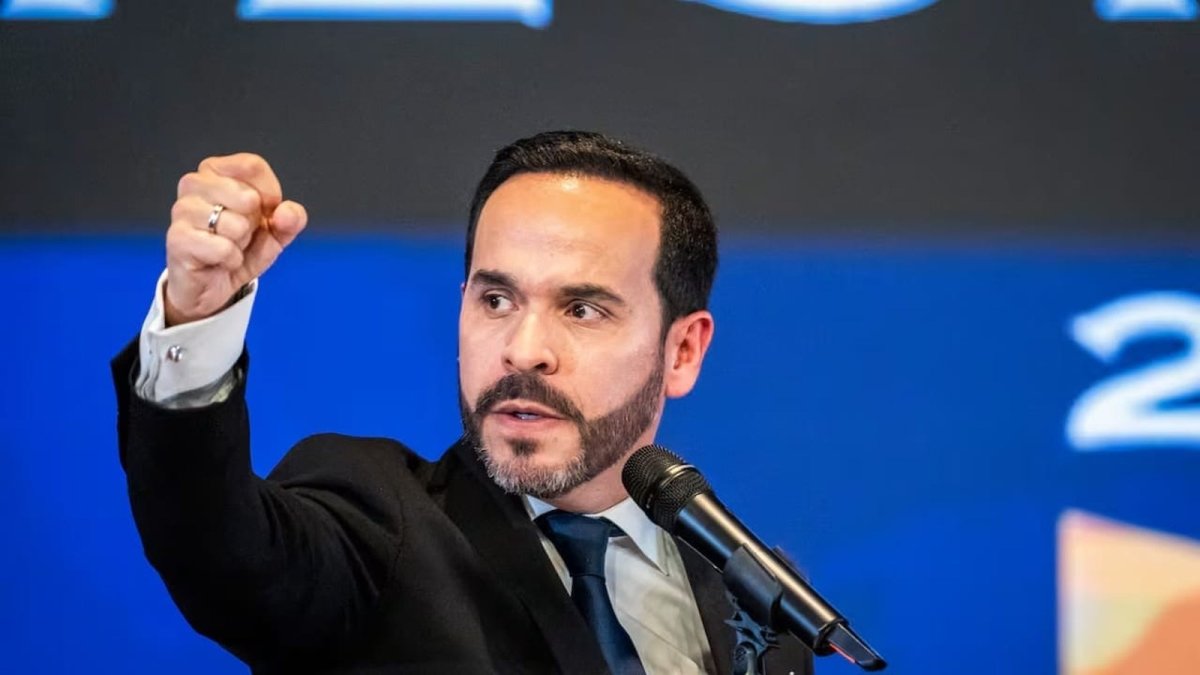
Colombia's president-elect Abelardo de la Espriella is preparing a sweeping reversal of Gustavo Petro's hostile Israel policy, with full diplomatic restoration and expanded security cooperation set to resume after he takes office next week. The shift ends more than two years of severed ties that included broken relations, restricted defense exports, and a total ban on Colombian coal shipments to Israel. Israeli officials and analysts view the move as a strategic opening in Latin America.
Colombia to Restore Full Diplomatic Ties with Israel
Jerusalem, Israel — this week — Colombia's incoming president Abelardo de la Espriella will restore full diplomatic and economic relations with Israel upon taking office on August 7, including ambassador exchanges, visa lifts, and withdrawal from South Africa's genocide case at the International Court of Justice. The reset follows a mid-July Washington meeting between Israeli Foreign Minister Gideon Sa'ar and Colombia's incoming foreign minister, Omar Bula Escobar, and would end more than two years of diplomatic rupture. De la Espriella's government frames the change as the recovery of a longstanding alliance after Petro severed ties in May 2024.
Diplomatic Channels Reopen Quickly
Israel has already moved on diplomatic representation, with government approval for the appointment of veteran diplomat Vivian Aisen as ambassador to Colombia. Aisen previously served as ambassador to North Macedonia and has held posts in Chile, London, and Brussels. The Israeli mission in Bogotá has operated as a consulate since relations were severed, which means restoring it to full embassy status can be accomplished far more quickly than establishing an entirely new mission. Colombia has not yet publicly named the ambassador it will send to Israel.
Marcos Peckel, executive director of the Confederation of Jewish Communities of Colombia and commissioner to combat antisemitism at the Latin American Jewish Congress, expects the formal restoration of relations to be announced during, or immediately after, the August 7 inauguration. The next steps, he said, will likely include naming Colombia's ambassador, restoring military and police attachés, and expanding security cooperation that deteriorated under Petro but never disappeared entirely. The precise scope of the proposed visa changes has not yet been published.
Security Cooperation Takes Center Stage
Security could provide the most substantial area of renewed cooperation. Before the diplomatic break, Israel supplied Colombia with military equipment and security technology, and De la Espriella has said he wants access to new weapons, drones, and artificial intelligence from both Israel and the United States. Israeli technology could assist Colombia in addressing narcotics trafficking, organized crime, and armed groups operating in parts of the country.
Alberto Spektorowski, a lecturer in political science at Tel Aviv University, predicted close cooperation while stopping short of describing it as a formal strategic alliance. "Everything connected to state security will involve extensive collaboration with Israel," he said. "Colombia will request it, Israel will provide it, and that relationship will become stronger." Spektorowski noted that a deeper alliance may follow, particularly in security and in efforts to limit Iranian influence in Latin America, but that outcome is not yet assured.
Jerusalem Embassy Commitment Stands
De la Espriella is proposing more than a return to the relationship that existed before the rupture. Rather than reopen Colombia's former embassy in Tel Aviv, he has promised to establish it in Jerusalem, fulfilling a campaign commitment. "It was a campaign promise by the president, and he is going to fulfill it," Peckel said. "Is it going to generate polarization? Yes. Is it going to generate debate? Yes." The embassy announcement remains a political commitment rather than a completed transfer; the location, budget, and opening date have not been disclosed.
The plan has drawn sharp international criticism. Petro called the Jerusalem proposal a grave offense to Muslim countries, and the Organization of Islamic Cooperation condemned it, warning that the move could harm Colombia's relations with its 57 member states and describing it as contrary to United Nations resolutions governing Jerusalem's status. The organization urged the incoming administration to reverse course and maintain support for a two-state solution. The incoming government has not announced that it will reverse Colombia's 2018 recognition of a Palestinian state.
Withdrawal from ICJ Case Planned
The planned break with Petro's policy also extends to The Hague. Colombia filed a declaration in April 2024 to intervene under Article 63 in South Africa's case against Israel under the Genocide Convention. Colombia did not file the original lawsuit and is not a plaintiff in the case, but De la Espriella's government has said it intends to withdraw the intervention after taking office.
The incoming administration has also announced that it will halt the opening of a Colombian diplomatic mission in Palestine, arguing that the planned representation never became operational. The decision is part of a broader reorganization of Colombia's foreign service that also calls for the closure of 14 embassies and about 15 consulates. In addition, the new government has promised a change in Colombia's conduct at the United Nations, adopting what it describes as a more neutral and consultative position, though it has not identified specific resolutions it would oppose, support, or abstain from.
Coal Export Ban Faces Repeal
Petro's government initially restricted coal exports under Decree 1047, issued in August 2024, and a later decree — Decree 0949 of August 28, 2025 — removed the remaining exceptions and prohibited all thermal-coal exports to Israel. Janiel Melamed, director of Barranquilla's Citizen Security Observatory and a professor at Universidad del Norte's Department of Political Science and International Relations, argued that the prohibition did little to constrain Israel, which could seek other suppliers, while reducing royalty income in Colombia's coal-producing areas. Those revenues help finance infrastructure, education, and sanitation. "It was a kind of shot in the foot," Melamed said. "The measure ended up being counterproductive to Colombia's own national interests."
Although the incoming government has emphasized commercial restoration, it has not yet issued a decree to repeal the coal ban. Peckel said he expects its removal to be among the first concrete measures after August 7. Colombia and Israel's free-trade agreement, in effect since 2020, was not automatically terminated when diplomatic relations were broken, but the rupture and related restrictions impeded the institutions that support trade.
Jewish Community Navigates Political Shifts
For Colombia's Jewish community, the diplomatic rupture created practical and emotional strain without stopping communal life. Synagogues, schools, and other institutions continued to operate normally, and no wave of serious attacks followed the government's policy. The community nonetheless faced what Peckel called "antisemitism from the state," citing Petro's comparisons between Gaza and Auschwitz, references to Nazism, and repeated statements about Jews. "We did not have to interrupt any activities, prayers or schools," Peckel said. "But it generated concern and discomfort."
Peckel also warned that an intensely pro-Israel government could expose the community to a different form of political pressure, with Colombian Jews treated as stand-ins for a foreign government by opponents of De la Espriella. "An excessively pro-Israel president can generate antisemitism and hostile declarations against us," he said. "That is something we are watching very closely."
Strategic Implications for Israel
Spektorowski said the first phase should be understood as a diplomatic reversal. "The first step is the diplomatic question," he told The Media Line. "It is to completely change the attitude toward Israel that existed under Petro." He sees Israel and Palestine as symbols in a larger political contest: parts of the Latin American left have embraced the Palestinian cause, while rising conservative movements have responded by making support for Israel part of their political identity.
That symbolism should not be confused with the reasons most Colombians vote, he added — economic performance, corruption, and domestic security remain far more consequential than Middle Eastern affairs for the electorate. "The challenges for Colombia's president will be how to rebuild Colombia and how to establish the basis of its economy," Spektorowski said. "That is what will define him." Melamed made a similar distinction, noting that foreign policy becomes politically relevant only when its consequences reach local industries or public budgets.
The next test comes on August 7. De la Espriella can restore diplomatic relations as soon as he assumes office, and Aisen is expected to arrive in Bogotá later this month. Reopening diplomatic channels may prove to be the easiest part of the reset: withdrawing Colombia's intervention at the International Court of Justice, repealing the coal decree, and establishing an embassy in Jerusalem will each require separate legal or administrative action. Whether the two countries can build a relationship that survives Colombia's next political shift will take much longer to determine.
By Hannah Berg, Staff Writer
This article was produced with AI-assisted research and editorial support. Reporting is based on sources cited in the article.
What's Your Reaction?
 Like
0
Like
0
 Dislike
0
Dislike
0
 Love
0
Love
0
 Funny
0
Funny
0
 Wow
0
Wow
0
 Sad
0
Sad
0
 Angry
0
Angry
0

Israel Correspondent at Global1.News. Based in Tel Aviv, covering Israeli politics, security, technology, and society. Provides balanced, deeply-sourced reporting on one of the most closely-watched regions in the world.












Comments (0)