
China tightens travel restrictions for citizens
China’s latest wave of travel restrictions marks a decisive escalation in the Party’s effort to bind its citizens to the state’s strategic imperatives.
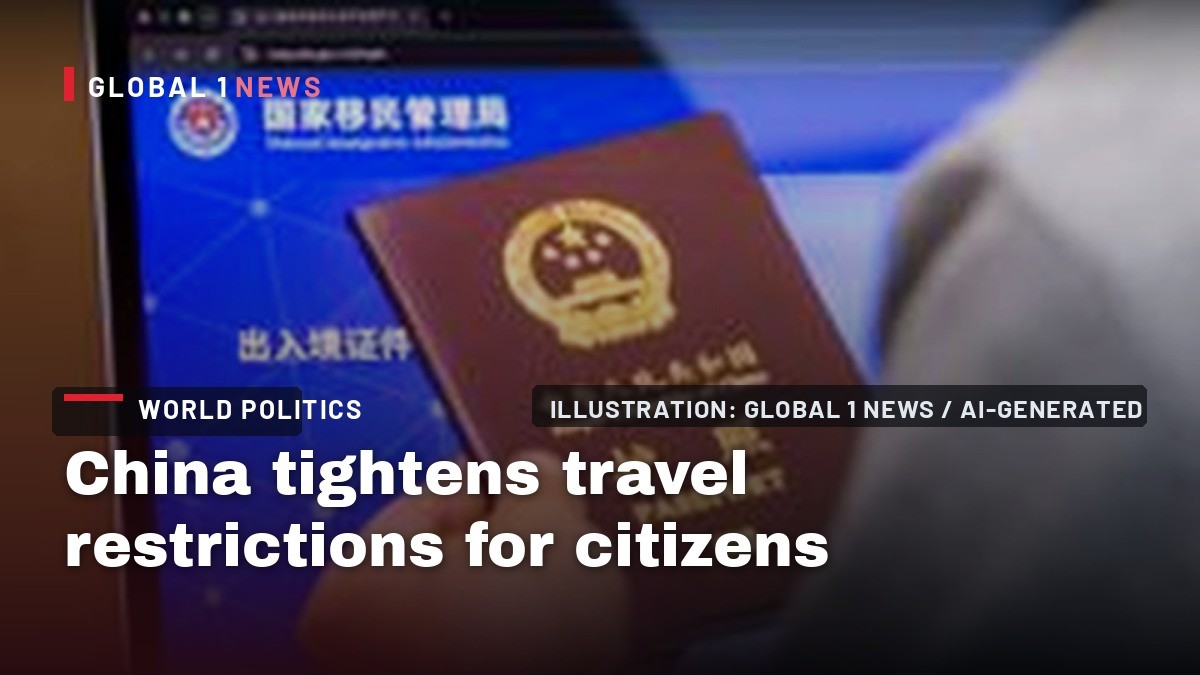
China’s latest wave of travel restrictions marks a decisive escalation in the Party’s effort to bind its citizens to the state’s strategic imperatives. By extending exit bans to individuals deemed a threat to national security, industrial or technological interests, Beijing is tightening the leash on mobility at a moment when the rivalry with the United States over advanced technologies such as semiconductors and artificial intelligence is reaching a fever pitch. The measures, announced in September 2026, build on a decade‑long trend of expanding control over passports and overseas travel, and they carry profound implications for China’s domestic governance, its high‑tech sector, and the broader geopolitics of the Indo‑Pacific.
Historical roots of exit controls
The practice of restricting citizens’ ability to leave the country has deep roots in modern Chinese history. Under Mao Zedong’s regime, the state largely sealed its population from the world, with international travel becoming a rarity until the reforms of the 1990s opened China to global flows. The new regulations echo that era, as Professor Tom Kellogg of Georgetown University observes, recalling a “painful era” when travel was heavily curtailed. The resurgence of such controls signals a re‑assertion of ideological discipline reminiscent of Maoist governance, now repurposed to serve contemporary security and economic objectives.
Since the early 2000s, the Chinese government has gradually expanded its grip on passports. Civil servants were among the first to face mandatory surrender of travel documents, a practice that later spread to employees of state‑owned enterprises and, increasingly, to ordinary citizens. The anecdote of a retired grassroots civil servant in Anhui, who was forced to keep his passport in his former employer’s custody after retirement, illustrates how the policy has become institutionalized across multiple layers of society.
Scope and mechanisms of the 2026 rules
The September 2026 decree broadens the legal basis for exit bans. It authorises authorities to bar citizens who have “harmed” China’s national security or interests abroad from leaving for up to three years. Moreover, the law explicitly includes individuals deemed a threat to the country’s industrial or technological security, extending the reach to sectors such as semiconductors and artificial intelligence that are at the heart of the Sino‑U.S. strategic competition.
Operationally, border officials are now required to advise nationals against travelling to “high‑risk” destinations, and they must enforce passport surrender and travel‑approval procedures. The rules also codify the practice of denying passports to those with “unusual travel patterns” or connections to sensitive regions, a rationale offered by the government’s rumour‑refuting platform Piyao as a preventative measure against illegal gambling, scams, and deception abroad.
Impact on the high‑tech sector
The tightening of travel controls is closely linked to Beijing’s obsession with safeguarding its high‑technology supply chains. The article notes that executives in the semiconductor and AI fields have already faced travel bans, and the co‑founders of Manus—a Chinese AI firm acquired by Meta—were barred from leaving in March 2026. By restricting the movement of personnel with access to cutting‑edge knowledge, the state aims to prevent talent loss, intellectual leakage, and the potential transfer of sensitive technologies to rival nations.
This strategy reflects a broader pattern of using “exit bans” as a tool for industrial security. The expansion of restrictions to anyone considered a threat to industrial or technological interests suggests that the Party is treating talent retention as a matter of national security, on par with traditional military considerations. Such a stance may deter overseas collaboration and could exacerbate the talent gap that Chinese firms already face in competing with Western counterparts.
Civil servants and state‑owned enterprise employees
Beyond the high‑tech elite, the new rules reinforce a regime of passport control over the civil service and state‑owned enterprises. According to a former civil servant, employees have long been required to apply for overseas travel permits, with family visits more likely to be approved than leisure trips. The underlying rationale, as he explains, is to prevent corrupt officials from fleeing with illicit assets and to stop senior cadres from disclosing state secrets.
Similarly, a state‑owned financial institution employee, identified only as Xiao Wang, reports that managers remind staff that “sensitive countries such as Japan are definitely off‑limits.” This language underscores the politicisation of travel decisions, where destinations are evaluated through a security lens rather than purely logistical or personal considerations. The cumulative effect is a chilling environment that curtails personal freedom while reinforcing loyalty to Party directives.
Human rights implications and dissent suppression
The expansion of exit bans carries significant implications for civil liberties and dissent. Analysts cited in the BBC report warn that the measures could be deployed against human‑rights advocates and critics of the regime. Professor Kellogg notes that the tools are “designed to control what Chinese citizens do and say overseas,” and that state security authorities may refuse passport issuance to punish rights‑advocacy activities.
Evidence of this practice emerges from the testimony of a 26‑year‑old citizen, Pipi, whose passport application was rejected after his involvement in the 2019 Hong Kong pro‑democracy protests. He recounts being questioned by security police upon his return and being told he could not obtain a passport “because of the Hong Kong issue.” While not confirmed in writing, such cases illustrate how travel restrictions can serve as a punitive instrument against political dissent, extending the Party’s reach beyond its borders.
Statistical surge in exit bans
Data from the rights group Safeguard Defenders reveal a dramatic rise in the use of exit bans. The Supreme Court database recorded just 89 exit‑ban cases in 2016, compared with 188,760 in the most recent year. The proportion of civil verdicts involving exit bans jumped from roughly 0.23 % in 2019 to 7.3 % in 2025, a more than thirty‑fold increase. These figures likely understate the true scale, given that many judgments remain withheld.
The quantitative surge underscores how exit bans have become a routine instrument of state control, moving from an occasional punitive measure to a systematic policy tool embedded within the legal system. The sheer volume of cases signals a bureaucratic apparatus dedicated to monitoring and restricting citizen mobility, reinforcing the Party’s capacity to enforce compliance across a broad swath of the population.
Strategic implications for China and the international system
China’s intensified travel restrictions serve multiple strategic objectives. Domestically, they tighten the Party’s grip on the population, reinforcing ideological conformity and preventing the outflow of talent and information deemed sensitive. In the high‑tech arena, the controls aim to shield critical sectors from foreign influence and espionage, aligning with Beijing’s broader “dual circulation” strategy that seeks self‑reliance while managing external dependencies.
Internationally, the measures risk deepening mistrust between China and the United States, as they signal a willingness to weaponise mobility for security purposes. The targeting of executives in semiconductor and AI firms may be perceived as an escalation in the technology rivalry, potentially prompting reciprocal actions from Washington and its allies. Moreover, the curtailment of travel for civil‑rights activists and dissenters adds a human‑rights dimension that could fuel diplomatic criticism and affect China’s soft‑power outreach.
In sum, the 2026 travel‑restriction regime reflects a convergence of political, security, and economic imperatives under Xi Jinping’s leadership. By binding citizens’ movements to the state’s strategic calculations, Beijing is reshaping the social contract and signaling to the world that control over human mobility is now a central pillar of its national security architecture.
This article was produced with AI-assisted research and editorial support. Reporting is based on the source material cited below. Sources: BBC News China; bbc.co.uk; Global1.News (15 September 2026).
By Prof. Marcus Chen, Staff Writer
What's Your Reaction?
 Like
0
Like
0
 Dislike
0
Dislike
0
 Love
0
Love
0
 Funny
0
Funny
0
 Wow
0
Wow
0
 Sad
0
Sad
0
 Angry
0
Angry
0

World Politics Analyst at Global1.News. Based in Beijing, covering US-China relations, global trade, and geopolitical strategy. Brings deep analytical perspective to the power dynamics shaping international affairs.















Comments (0)