
China criticises idea it is in 'malicious competition' over AI
Artificial intelligence has become the newest flashpoint in the strategic rivalry between the United States and China, framing the broader contest for technological supremacy that underpins the two powers’ geopolitical competition.
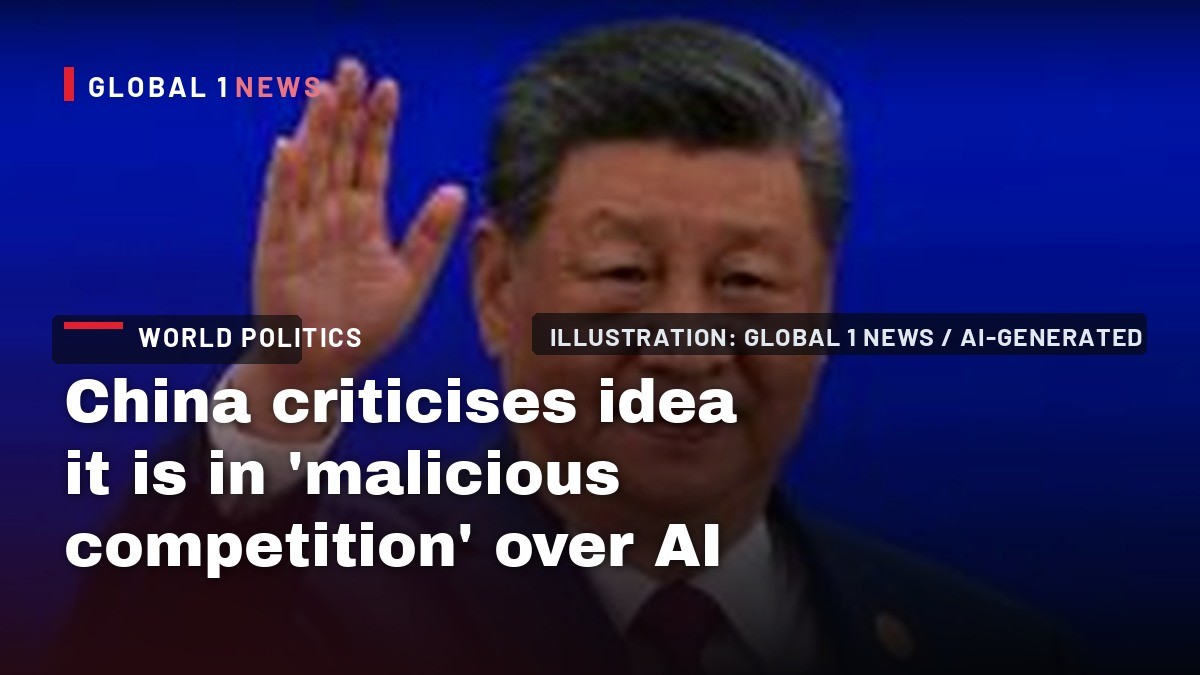
Artificial intelligence has become the newest flashpoint in the strategic rivalry between the United States and China, framing the broader contest for technological supremacy that underpins the two powers’ geopolitical competition. As Washington pushes for a faster pace of development while Beijing warns against “malicious competition,” the discourse surrounding AI governance has sharpened, reflecting deeper anxieties about security, economic advantage, and the future of global order. The latest statements from Chinese officials, juxtaposed with calls for a slowdown from leading U.S. AI firms, illustrate how the AI race has moved from a purely commercial contest to a central arena of great‑power rivalry.
Chinese diplomatic framing of AI risk narratives
On Monday, spokesperson Guo Jiakun of China’s foreign ministry warned that “narratives of threat, confrontation, and malicious competition” undermine the global governance of artificial intelligence. He urged all parties to pursue AI development in a manner that is “open, inclusive, beneficial to all, and oriented toward the good.” The language mirrors Beijing’s broader diplomatic strategy of presenting itself as a responsible stakeholder in emerging technologies, while casting U.S.‑led alarmism as counter‑productive.
Guo’s remarks come amid heightened scrutiny of AI safety in the United States, where industry insiders have warned of existential threats. By positioning China as a proponent of cooperative governance, the Chinese side seeks to deflect criticism of its rapid AI expansion and to portray itself as a partner rather than a rival in the formulation of international norms.
U.S. industry calls for a slowdown and the political response
Within the United States, senior executives from leading AI labs have issued stark warnings about the pace of development. An Anthropic researcher suggested there is “more than a 10% chance AI could kill all humans,” while former Anthropic employee Jacob Coxon warned of a “strong chance that we could all die in the immediate future” if the current trajectory continues. These warnings have spurred calls for a coordinated slowdown, echoed by OpenAI chief Sam Altman, who emphasized the need for alignment and safety techniques to stay ahead of model capabilities, and by Microsoft chief Satya Nadella, who warned that AI development “cannot be controlled by a handful of entities.”
President Donald Trump, however, has downplayed the risks, stating his priority is to keep the United States ahead of China, insisting that “whoever wins AI, wins.” This stance underscores the perception among U.S. policymakers that technological leadership in AI is directly linked to national security and economic dominance.
Academic assessment of the prospects for U.S.–China AI cooperation
Chang Jun Yan, an assistant professor at Singapore’s S. Rajaratnam School of International Studies, described an agreement between the United States and China on AI regulation as “next to impossible.” He argued that cooperation on slowing AI development is unlikely because each state views advanced AI as a core national security interest. This assessment reflects a broader scholarly consensus that the strategic value attached to AI by both capitals makes mutual restraint difficult, especially when each side fears that the other could gain a decisive advantage.
The academic perspective aligns with observations from think‑tank analysts such as Kenton Thibaut of the Atlantic Council, who noted “strong signals that Washington and Beijing share an understanding of frontier risks.” Yet, despite this shared awareness, the divergent security calculations and domestic political pressures in both capitals limit the feasibility of joint governance frameworks.
China’s domestic policy trajectory on AI safety and security
Within Beijing, the leadership has articulated a dual‑track approach that couples rapid AI development with heightened security oversight. State security minister Chen Yixin emphasized the need to “balance development and security,” calling for stronger laws, ethical guidelines, and risk‑prevention mechanisms to protect “the interests of the people and national security.” This rhetoric signals an internal consensus that AI must be harnessed for economic growth while being tightly controlled to mitigate potential threats, including espionage or hostile use by foreign intelligence services.
Chen’s warning about “hostile forces” using AI reflects a broader concern within Chinese security circles that advanced models could be weaponized against Chinese interests. Consequently, Beijing is likely to intensify regulatory oversight and invest in domestic AI capabilities that can operate independently of foreign technology supplies, especially given ongoing U.S. export restrictions on critical chips.
Institutional initiatives: the World AI Cooperation Organisation and BRICS proposals
In July, China launched the World AI Cooperation Organisation (WACO), a multilateral platform intended to shape global AI governance. By positioning itself at the helm of an international body, Beijing aims to influence standards and norms in a way that aligns with its own development model and strategic interests. The initiative also serves to counterbalance U.S.-led efforts to impose restrictive export controls and technology bans.
At the recent BRICS summit in India, President Xi Jinping advocated for a “community for open‑source AI,” signaling a push for a more decentralized, collaborative model of AI development that could dilute the dominance of U.S. firms. This proposal dovetails with China’s broader diplomatic outreach to emerging economies, offering an alternative technological partnership that sidesteps Western supply chains.
Strategic implications for the upcoming U.S.–China summit
The AI debate is set to feature prominently in the forthcoming meeting between President Trump and President Xi at the White House, as well as in parallel talks between U.S. Treasury Secretary Scott Bessent and Chinese Vice‑Premier He Lifeng, who oversees economic planning including AI development. The inclusion of AI on the agenda reflects its elevation to a core strategic issue, comparable to trade, climate, and security matters.
Analysts such as Chasen Nevett of Forani Investments warn that if China secures a durable lead in frontier AI, Washington will perceive it as a loss of “strategic infrastructure of the next industrial era.” This framing suggests that the outcome of the summit could influence whether the two powers move toward managed competition, with mechanisms for risk mitigation, or intensify a zero‑sum race for AI supremacy.
Long‑term geopolitical stakes of the AI race
Artificial intelligence now sits at the heart of the U.S.–China rivalry, intertwining economic, security, and normative dimensions. The United States continues to pour massive private capital into AI research, while China leverages open‑source ecosystems and state support to accelerate its own capabilities. The divergent narratives—U.S. emphasis on speed and market dominance versus China’s call for inclusive, risk‑aware development—highlight a fundamental clash over how emerging technology should be governed.
In the longer term, the trajectory of AI governance will shape broader patterns of great‑power interaction. A coordinated slowdown, as some industry leaders propose, could reduce the risk of destabilizing breakthroughs, but it would require a level of trust and verification that current diplomatic relations lack. Absent such cooperation, the AI race is likely to intensify, reinforcing existing strategic competition and potentially prompting each side to embed AI more deeply into military and security architectures. The stakes, therefore, extend beyond commercial market share to the very architecture of future international order.
This article was produced with AI-assisted research and editorial support. Reporting is based on the source material cited below. Sources: BBC News China; bbc.co.uk; Global1.News (16 September 2026).
By Prof. Marcus Chen, Staff Writer
What's Your Reaction?
 Like
0
Like
0
 Dislike
0
Dislike
0
 Love
0
Love
0
 Funny
0
Funny
0
 Wow
0
Wow
0
 Sad
0
Sad
0
 Angry
0
Angry
0
World Politics Analyst at Global1.News. Based in Beijing, covering US-China relations, global trade, and geopolitical strategy. Brings deep analytical perspective to the power dynamics shaping international affairs.













Comments (0)