
Palestinian-American Returns to Besieged Qusra Home as Settler Siege Enters Second Week
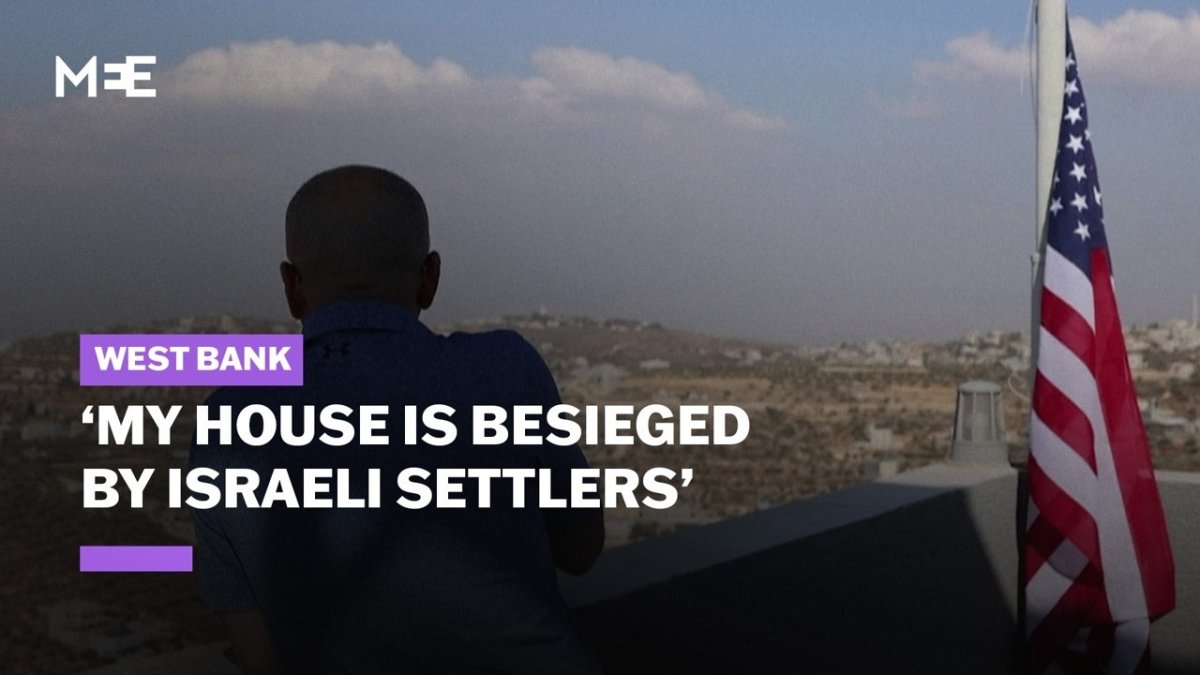
In a recent Middle East Eye video report published on 24 August 2026, the world gets a rare, unflinching look at the siege of Qusra, a Palestinian village south of Nablus in the occupied West Bank, where Palestinian-American Louai Abu Ridi has returned to find his family's home surrounded by armed Israeli settlers for a second consecutive week.
In a recent Middle East Eye video report published on 24 August 2026, the world gets a rare, unflinching look at the siege of Qusra, a Palestinian village south of Nablus in the occupied West Bank, where Palestinian-American Louai Abu Ridi has returned to find his family's home surrounded by armed Israeli settlers for a second consecutive week. The footage captures a community under collective punishment, where the simple act of stepping outside to buy bread has become a negotiation with armed men and the Israeli military. As the siege grinds on, the Abu Ridi family has become a symbol of a broader, accelerating crisis: the systematic erosion of Palestinian presence in the West Bank through settler violence that operates with impunity.
Palestinian-American Returns to Besieged Qusra Home as Settler Siege Enters Second Week
Qusra, Occupied West Bank – 24 August 2026 — Louai Abu Ridi, 46, stood on the roof of his family home in the Ras al-Ain area of Qusra on Monday morning, looking out at the hills that have been his family's land for generations. Below him, a cluster of Israeli settlers had established a makeshift encampment, their presence a constant reminder that this village, like so many others in the occupied West Bank, is being squeezed by a relentless campaign of intimidation and forced displacement. Abu Ridi, who immigrated to Ohio in 2003 and built a life in the American gas-station business, never imagined he would have to return under these circumstances — not as a visitor, but as a protector.
A Village Under Lockdown: The Siege of Ras al-Ain
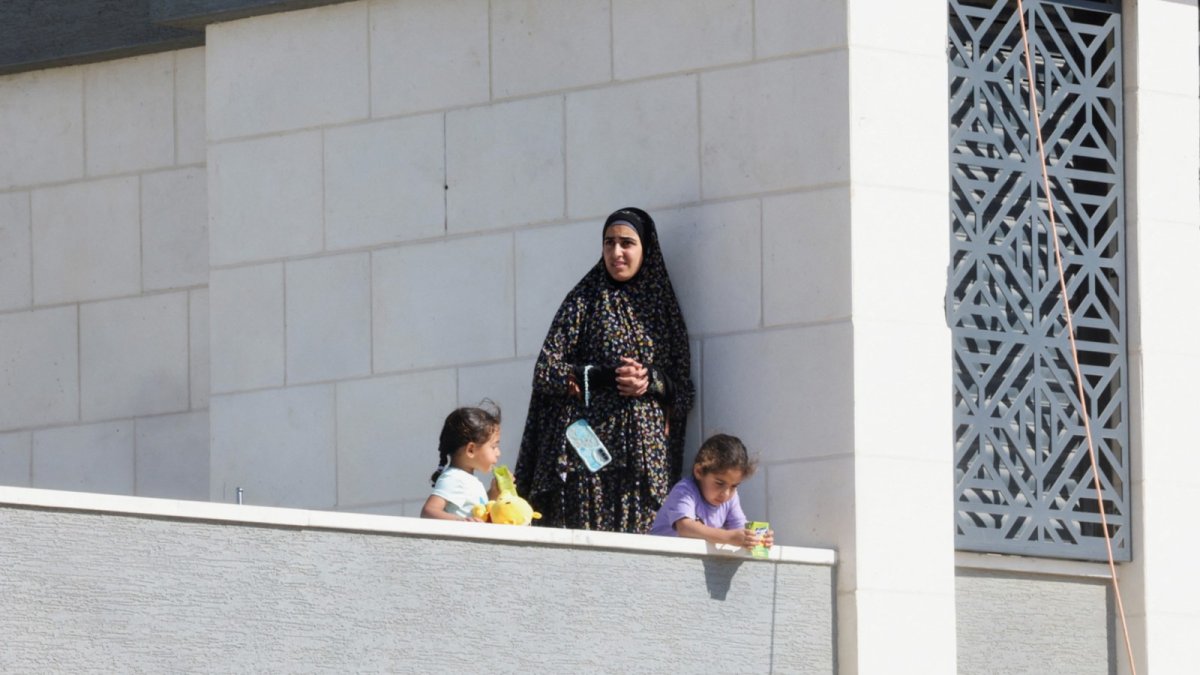
The siege of Qusra began in earnest in early August, but its roots stretch back months. According to Al Jazeera reporting from 16 August, fifteen Palestinians, including two children, remained besieged inside three homes in the Ras al-Ain area, surrounded by armed settlers and Israeli military units. The Abu Ridi home is one of those three houses, and inside it, Louai's elderly mother, his brother, and a neighbouring family with two young children have been sheltering together, their lives reduced to the space between four walls.
The physical reality of the siege is stark. Residents say they cannot leave their homes without coordination with the Israeli army, and even then, movement is fraught with danger. Water and electricity have been cut off in some cases, and food deliveries have been blocked by soldiers who arrived in the village after days of settler violence. The families inside are running low on supplies, and the psychological toll is mounting. Residents told reporters they are effectively prisoners in their own homes, unable to move without army coordination and afraid of reprisal. The children, trapped inside for over a week, have not been able to play outside or attend school. Their world has shrunk to the dimensions of a single room.
The siege has drawn comparisons to other recent incidents in the northern West Bank, where settler violence has escalated dramatically. But the situation in Qusra is distinct in its duration and intensity. Arab News reported on Sunday 23 August that the siege was continuing on its 15th consecutive day, making it one of the longest sustained settler blockades of a Palestinian community in recent memory. The village, known for its olive groves and agricultural land, has become a flashpoint in a broader campaign to push Palestinians off their land.
From Ohio to Qusra: Louai Abu Ridi's Fight for His Birthplace
Louai Abu Ridi's story is one of transnational displacement and return. He left Qusra in 2003, seeking economic opportunity in the United States, where he eventually established himself in the gas-station business in Ohio. Over the years, he poured approximately $1 million into building a house in his birthplace — a modern structure that was meant to be a family home, a place of return, a testament to his success. But beginning in January 2026, settler attacks started to damage his investment. Windows were smashed, walls were defaced, and the property became a target for harassment.
By August, the situation had deteriorated to the point where Abu Ridi felt he had no choice but to return. He arrived last week to support his family, reuniting with his elderly mother, his brother, and his neighbours who had been trapped inside. His first act upon arrival was to raise a giant American flag over his home on 17 August, a desperate gambit to deter militant settlers by invoking the power of the United States. For a few days, the flag seemed to work. But on 18 August, a settler walked onto his land during a tense confrontation, a moment captured by Reuters and Al Monitor, underscoring the limits of symbolic protection.
Abu Ridi's situation is a microcosm of a larger tragedy. He is a US citizen, a man who has paid taxes in America, who has contributed to its economy, and who believed that his citizenship would afford him a measure of protection. Instead, he finds himself in a standoff with settlers who are emboldened by the Israeli state's tacit support. "These are thieves. They want to take my 3 million shekel house and live in it for free," Abu Ridi told NPR in an interview, referring to the settlers besieging his property. His neighbours and their two young children are sheltering in his home after Israeli soldiers occupied their house, reportedly saying the move was intended to protect them from settlers. The soldiers have yet to leave.
The Israeli Army's Role: Protectors or Participants?
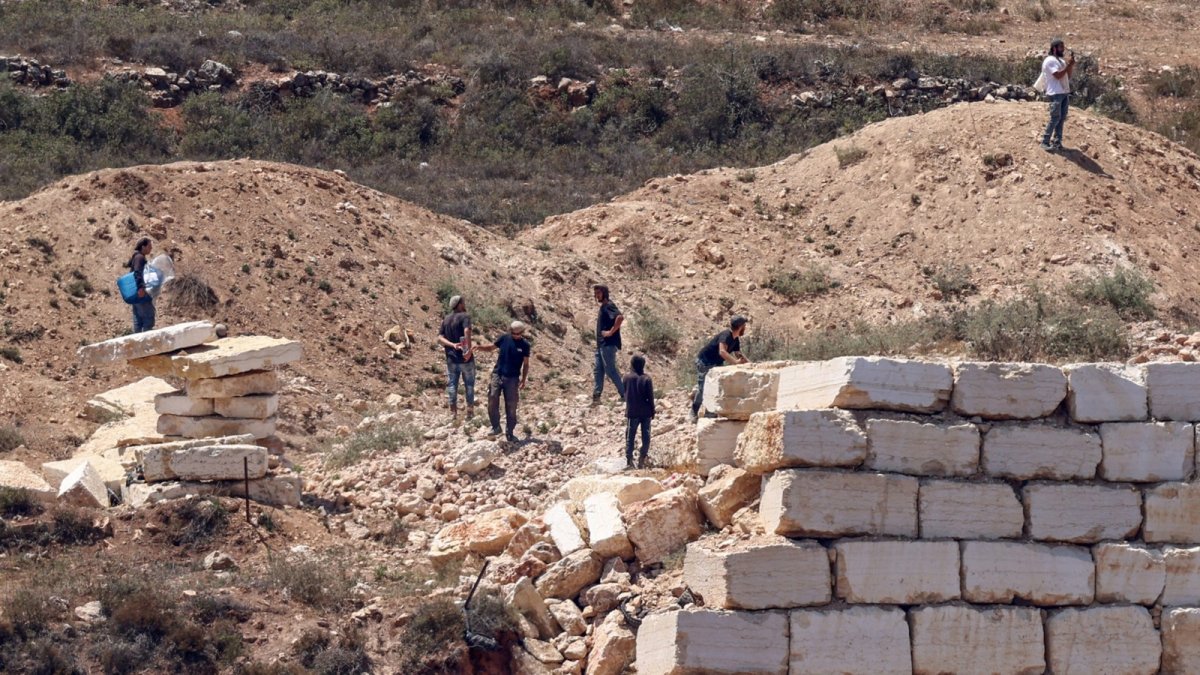
The Israeli army's entry into Qusra has done little to alleviate the siege. According to the Palestine Chronicle, troops seized Palestinian homes, with 16 reportedly converted into military positions. The soldiers arrived after days of settler violence, but they did not remove the settlers. Instead, residents say, the soldiers blocked food deliveries, effectively enforcing the siege rather than ending it. This dual role — ostensibly protective but practically complicit — has become a defining feature of the Israeli military's approach to settler violence in the West Bank.
West Bank commander Maj. Gen. Avi Bluth visited Qusra on Wednesday 12 August, after the siege drew international attention. His visit was widely seen as a public relations exercise, an attempt to project an image of control while the situation on the ground remained unchanged. Bluth's presence did not result in the removal of settlers or the lifting of the siege. Instead, it highlighted the disconnect between Israeli military rhetoric and the lived reality of Palestinians in the village. The soldiers occupying the Abu Ridi home and others have become part of the problem, their presence a constant reminder that the state is not neutral in this conflict.
The situation in Qusra is not an isolated incident. It is part of a pattern in which Israeli security forces and settlers operate in tandem to displace Palestinian communities. The UN human rights office (OHCHR) warned in July 2026 that settler violence in the West Bank is at an "all-time high" and that settlers and Israeli security forces have "often" acted together to attack Palestinian communities. This collusion, documented by multiple human rights organizations, has created an environment of impunity in which settlers can act with near-total freedom, knowing that the military will either look the other way or actively support their actions.
International Condemnation and Diplomatic Pressure
The siege of Qusra has drawn sharp international condemnation, but so far, words have not translated into action. The US ambassador called the siege a "horrific act of terror" on 13 August, a rare and unusually strong statement from Washington. The ambassador's remarks were welcomed by Palestinian leaders but met with silence from the Israeli government, which has consistently downplayed settler violence as the actions of a "small extremist minority."
Dutch diplomat Michel Rentenaar, based in Ramallah, visited a hilltop overlooking Qusra and condemned the settler siege of the homes. His visit was symbolic, a gesture of solidarity from the international community, but it underscored the limits of diplomatic pressure. Rentenaar's condemnation, like the US ambassador's, has not resulted in any concrete measures to end the siege or hold the perpetrators accountable. The international community, it seems, is content to issue statements while the families in Qusra remain trapped.
The mounting international pressure has, however, forced the Israeli government to acknowledge the situation. Officials have promised to "look into" the matter, but no timeline has been given, and no action has been taken. For the families in Qusra, the promises ring hollow. They have seen this movie before — international outrage, diplomatic statements, and then nothing. The siege continues, the settlers remain, and the world moves on to the next crisis.
The Broader West Bank Context: A Campaign of Erasure
The siege of Qusra is not an anomaly; it is the latest chapter in a long and brutal campaign to displace Palestinians from their land. Human Rights Watch reported on 20 August 2026 that settler attacks are increasingly driving forced displacement of Palestinian communities, with dozens at risk of erasure. The report documented a pattern of violence, intimidation, and state complicity that has made life untenable for Palestinians in large parts of the West Bank.
The case of Mahmoud al-Tubasi's family is a chilling precedent. On 22 July, the family was driven from two homes in the village of Jalud, south of Nablus, after which settlers seized the properties. The family, like the Abu Ridis, had lived on that land for generations. Their displacement was swift, brutal, and permanent. The settlers who took their homes did so with impunity, and the Israeli authorities did nothing to restore the family to their property. The al-Tubasi case sent a clear message to Palestinian communities: no one is safe, and no amount of documentation or international appeal will protect you.
The UN Office for the Coordination of Humanitarian Affairs (OCHA) has documented that Israeli operations, demolitions, settlement expansion, and settler violence continue to drive displacement and undermine access to housing, livelihoods, and essential services. The data paints a grim picture: thousands of Palestinians have been displaced in 2026 alone, and the pace of displacement is accelerating. The West Bank, which was once seen as the heartland of a future Palestinian state, is being systematically fragmented, with Palestinian communities reduced to isolated enclaves surrounded by settlements, military zones, and checkpoints.
Analysis and Implications: The Changing Character of the West Bank
The siege of Qusra signals a dangerous shift in the character of the West Bank. What was once a conflict defined by military occupation and checkpoints has evolved into a campaign of settler-led ethnic cleansing, with the Israeli state playing the role of enabler and participant. The fact that a US citizen can be besieged in his own home, with the American flag flying overhead, is a testament to the failure of international law and the impotence of diplomatic pressure.
The implications of this shift are profound. If the international community cannot protect a US citizen, what hope is there for ordinary Palestinians who lack the protection of a powerful passport? The siege of Qusra is a test case for the international community's commitment to human rights and international law. So far, it has failed that test. The statements from the US ambassador and the Dutch diplomat are welcome, but they are not enough. What is needed is concrete action: sanctions on settlers, pressure on the Israeli government to rein in the military, and a genuine commitment to enforcing international law.
The siege also highlights the growing radicalization of the settler movement. The settlers who have surrounded the Abu Ridi home are not acting out of desperation; they are acting with the confidence of a movement that believes it has the backing of the state. Their tactics — cutting off water and electricity, blocking food deliveries, occupying homes — are designed to make life so unbearable that Palestinians will leave voluntarily. This is not a spontaneous outburst of violence; it is a coordinated campaign of forced displacement.
For the families in Qusra, the siege is a daily struggle for survival. They are running out of food, water, and hope. The children have not been outside in over a week. The elderly are growing weak. And the world, it seems, is watching but not acting. The siege of Qusra is a stain on the conscience of the international community, a reminder that when we fail to act, we become complicit in the suffering of others.
As the siege enters its third week, the question is not whether the Abu Ridi family will survive — they are resilient, and they will endure. The question is whether the international community will finally wake up to the reality of what is happening in the West Bank. The settlers are not going to stop on their own. The Israeli military is not going to rein them in. Only sustained, meaningful international pressure can change the calculus. The families in Qusra are waiting, but their patience is not infinite. Neither is their time.
By Fatima Al-Rashid, Staff Writer
This article was produced with AI-assisted research and editorial support. Reporting is based on sources cited in the article.
What's Your Reaction?
 Like
0
Like
0
 Dislike
0
Dislike
0
 Love
0
Love
0
 Funny
0
Funny
0
 Wow
0
Wow
0
 Sad
0
Sad
0
 Angry
0
Angry
0

Gulf/MENA Correspondent at Global1.News. Based in Doha, covering Gulf politics, energy markets, diplomacy, and development across the Middle East and North Africa. Tracks the economic transformation of the Gulf states.














Comments (0)