
Argentina drops investigation into President Milei over crypto fraud
The decision, announced on 23 October 2026, reflects both the legal ambiguities surrounding crypto promotions and the fierce political battles that have erupted since the coin’s spectacular rise and collapse.
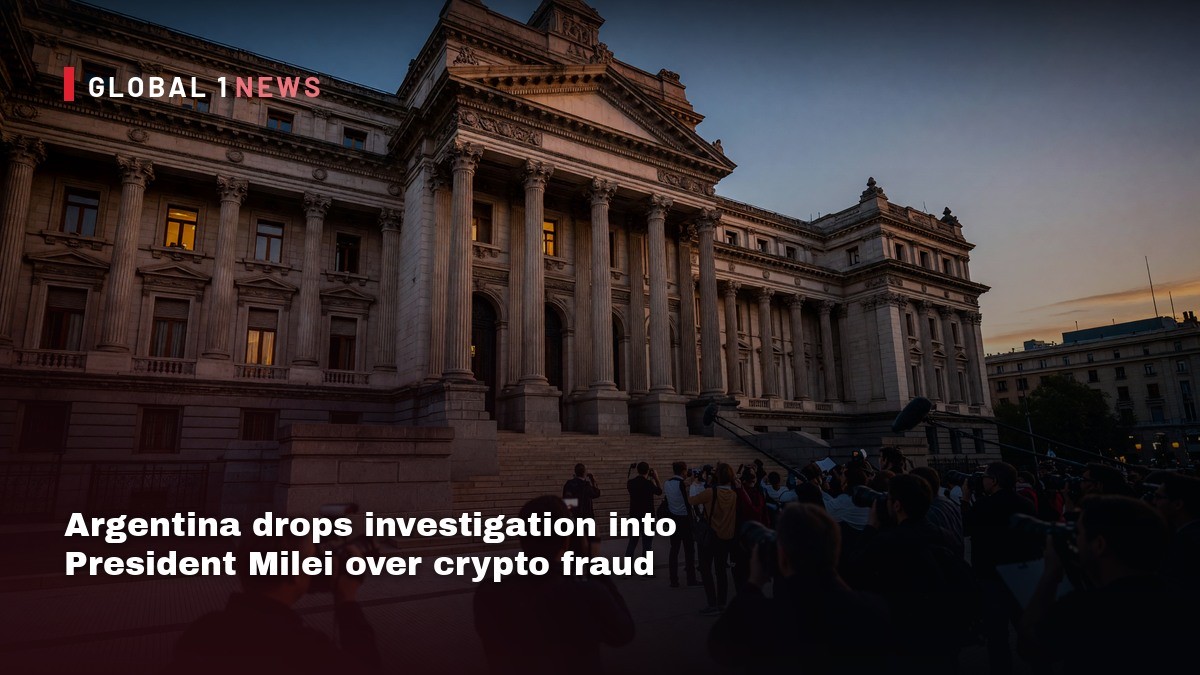
In a dramatic turn that underscores the volatile intersection of politics and digital finance in Latin America, a federal judge in Argentina has dismissed the criminal investigation into President Javier Milei and his sister Karina over their alleged ties to the failed cryptocurrency $Libra. The decision, announced on 23 October 2026, reflects both the legal ambiguities surrounding crypto promotions and the fierce political battles that have erupted since the coin’s spectacular rise and collapse.
The legal dismissal and its rationale
Judge Marcelo Martinez de Giorgi, acting on a request from prosecutors, concluded that the alleged actions “do not fall under a legal category” and that no “criminally relevant deception” could be proven. In his written ruling, the judge emphasized that the evidence presented did not meet the threshold required to constitute fraud under Argentine law. This legal phrasing leaves open the question of whether future investigations might revisit the case, but for now, the criminal charge against Milei and his sister has been formally closed.
The dismissal does not equate to a declaration of innocence; rather, it signals that prosecutors could not substantiate the specific elements of fraud needed to sustain a prosecution. The judge’s language suggests a gap between the political outrage that followed the $Libra crash and the concrete legal standards required to convict a public official of a crime.
From promotion to panic: the $Libra saga
In February 2025, President Milei posted a link on X (formerly Twitter) encouraging followers to buy the newly launched $Libra token, describing it as a vehicle that could “help fund small businesses and start‑ups.” The post triggered a rapid surge in the coin’s price, a pattern familiar to observers of crypto markets where high‑profile endorsements can spark speculative frenzies. Within hours, however, Milei deleted the post, and the token’s value plummeted, erasing much of the gains investors had made.
The crash left many small investors with substantial losses, fueling accusations that Milei had orchestrated a “rug pull”—a term used in the crypto world to describe schemes where promoters lure buyers only to abandon the project and disappear with the funds. While the president denied any intention to deceive, the episode ignited a wave of public anger and political backlash that has reverberated through the Argentine Congress.
Political fallout and impeachment threats
The $Libra debacle quickly became a flashpoint for opposition lawmakers, who seized on the incident to launch impeachment proceedings against Milei. The rapid escalation from a financial mishap to a constitutional crisis illustrates how deeply intertwined economic policy and political legitimacy are in Argentina, especially under a president who has positioned himself as a radical reformer.
Even as the criminal case was dismissed, the political pressure remains. Opposition members have framed the incident as evidence of Milei’s reckless governance and alleged misuse of presidential influence for personal or partisan gain. The impeachment drive, while still in its early stages, signals that the controversy may continue to haunt Milei’s administration, regardless of the legal outcome.
The president’s defense and public messaging
In interviews with Todo Noticias and on television, Milei consistently asserted that he had not promoted $Libra but merely shared a link. He emphasized that he acted “in good faith” when the token’s price rose and that he deleted the post once he realized he “did not know the details of the project.” By framing his involvement as an inadvertent endorsement rather than a deliberate marketing campaign, Milei sought to distance himself from accusations of intentional fraud.
Moreover, the president argued that investors who bought $Libra did so “voluntarily” and were aware of the inherent risks of cryptocurrency investments. This line of defense reflects a broader narrative among crypto critics that the market’s volatility is a known hazard, and that responsibility ultimately lies with the individual investor.
The role of the Anti‑Corruption Office
Following the controversy, the presidential office announced that the Anti‑Corruption Office would examine whether Milei had acted improperly. While the office’s mandate includes investigating potential abuses of power, its findings have yet to be made public. The decision to involve this body underscores the administration’s attempt to demonstrate transparency and to preempt further political attacks.
Should the Anti‑Corruption Office uncover any procedural lapses, the implications could be significant. Even absent criminal charges, administrative sanctions or political repercussions could emerge, adding another layer to the ongoing scrutiny of Milei’s handling of the $Libra episode.
Broader implications for crypto regulation in Latin America
The $Libra incident arrives at a moment when many Latin American governments are grappling with how to regulate rapidly evolving digital assets. Argentina’s experience highlights the challenges of applying traditional legal frameworks to decentralized finance, where the line between endorsement and promotion can be blurry. The judge’s dismissal, citing a lack of a clear legal category, points to the need for more precise legislation that can address the unique dynamics of crypto markets.
Regional observers note that other countries in the area are watching Argentina’s response closely. The episode may spur lawmakers elsewhere to craft clearer statutes that define the responsibilities of public officials when they engage with emerging financial technologies, aiming to prevent similar controversies from erupting in the future.
What comes next for Milei and the Argentine public?
With the criminal case closed, President Milei now faces a political battlefield. The impeachment push, the pending anti‑corruption review, and the lingering public distrust over the $Libra crash form a triad of challenges that could shape his remaining term. For ordinary Argentines who lost money in the crypto collapse, the legal dismissal offers little consolation; the financial wound remains, and the broader debate over the role of cryptocurrency in the national economy continues.
As the nation watches the next moves of Congress and the anti‑corruption investigators, the $Libra saga serves as a cautionary tale about the power of digital hype and the responsibilities of those who wield influence. Whether Milei can weather the storm or will see his reform agenda stalled by the fallout remains to be seen, but the episode has already left an indelible mark on Argentina’s political and economic landscape.
This article was produced with AI-assisted research and editorial support. Reporting is based on the source material cited below. Sources: BBC News Latin America; bbc.co.uk; Global1.News (26 October 2026).
By Elena Vasquez, Staff Writer
What's Your Reaction?
 Like
0
 Dislike
0
 Love
0
 Funny
0
 Wow
0
 Sad
0
 Angry
0

Latin America Correspondent at Global1.News. Based in Mexico City, covering politics, economics, energy, and culture across the region. Brings an on-the-ground perspective to stories spanning from the Rio Grande to Patagonia.













Comments (0)