
Air Pollution's Black Crust Accelerating Decay of Humayun's Tomb, IIT Study Finds
IIT Roorkee & IIT Kanpur study finds black crust from air pollution is accelerating decay of Humayun's Tomb, threatening Delhi's Mughal-era world heritage.
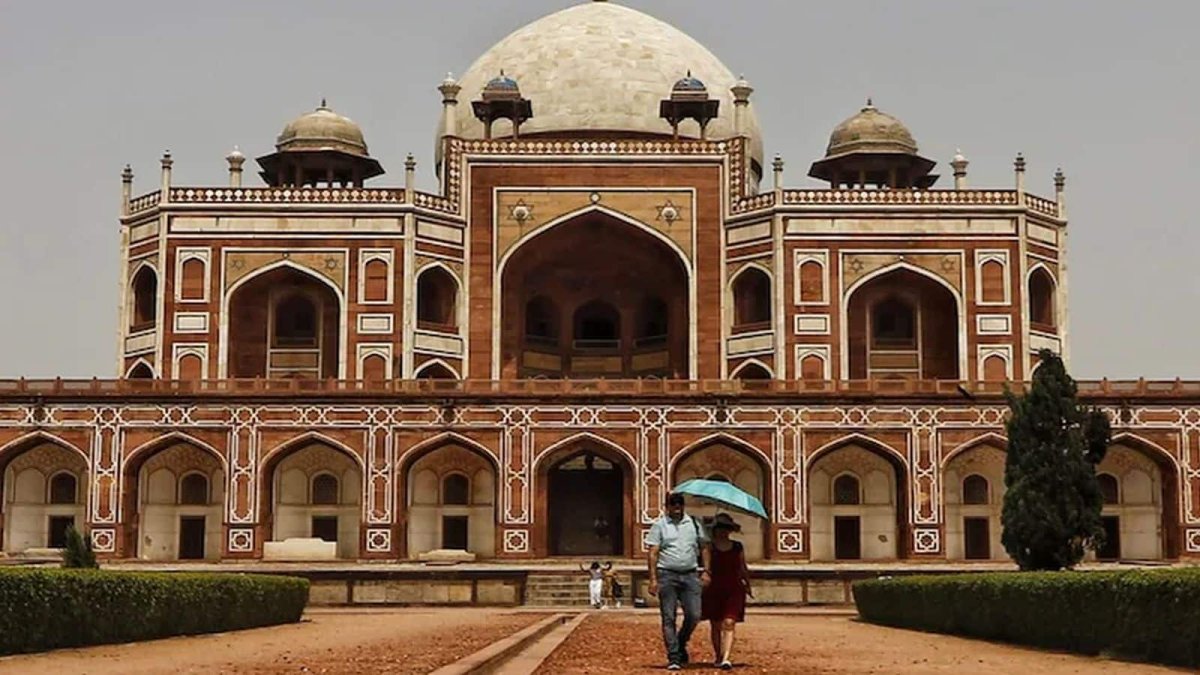
A joint study by IIT Roorkee and IIT Kanpur has revealed that black crust forming on the red sandstone of Humayun's Tomb is speeding up structural decay at this 16th-century UNESCO World Heritage Site in Delhi. Published in the International Journal of Architectural Heritage on August 2, 2026, the research shows how years of exposure to air pollution have created a gypsum-rich layer that traps pollutants and weakens the stone from within. The findings highlight an urgent threat to Delhi's Mughal-era monuments amid ongoing high pollution levels.
Air Pollution's Black Crust Accelerating Decay of Humayun's Tomb, IIT Study Finds
New Delhi, August 3, 2026 — Researchers from IIT Roorkee and IIT Kanpur have documented how black crust on Humayun's Tomb accelerates decay of its Vindhyan sandstone, with direct implications for conservation across India's heritage sites.
Formation and Composition of the Black Crust
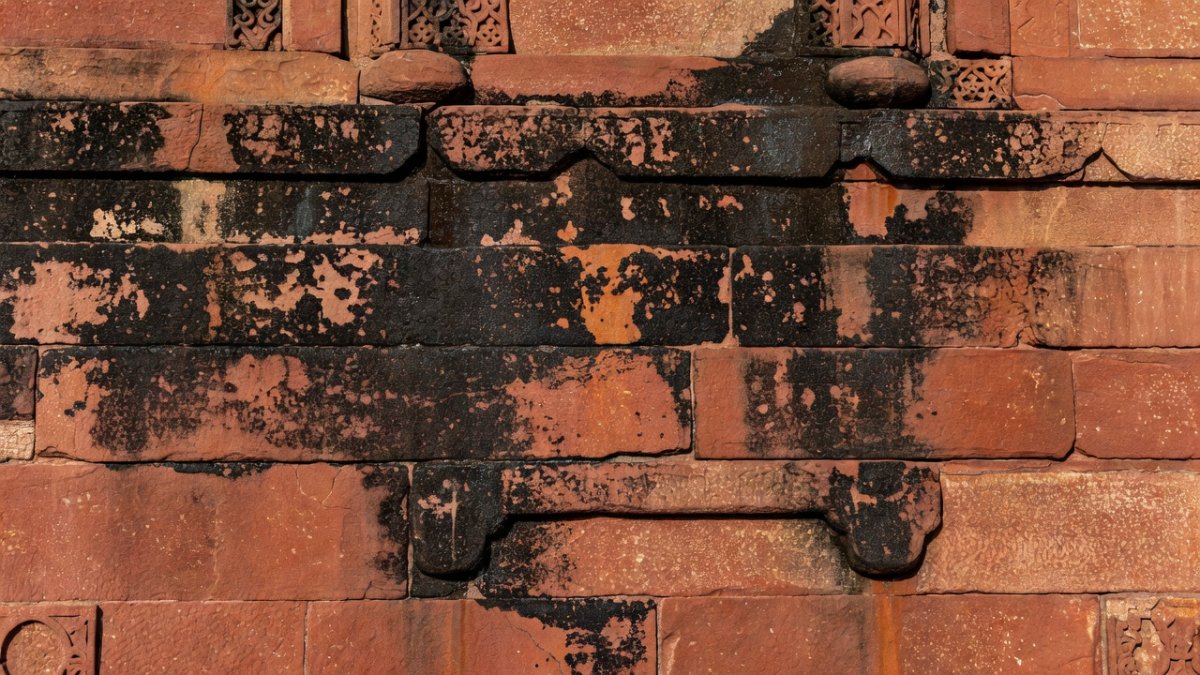
Researchers collected samples from sheltered and exposed sections of the tomb and examined their chemical makeup, mineral content, and microscopic structure. The crust consists primarily of gypsum created when sulphur dioxide from polluted air reacts with calcium-rich dust and moisture. This layer then incorporates soot, dust, and metal particles from vehicle emissions, construction dust, road dust, biomass burning, and industrial sources, forming a dark, damaging coating on the Vindhyan sandstone.
The black crust forms through a chemical pathway where sulphur dioxide from Delhi's air reacts with calcium-rich dust and the sandstone substrate to produce gypsum crystals. Microscopic analysis identified needle-like gypsum formations interspersed with carbon particulates and iron oxides, confirming that annual SO2 levels averaging 15-20 micrograms per cubic metre in central Delhi drive the reaction. Primary sources include emissions from coal-fired plants in the National Capital Region, heavy-duty vehicles on NH-44, and construction dust, compounded by seasonal stubble burning in Punjab and Haryana that spikes particulate loads to over 300 micrograms per cubic metre during October-November.
Further examination revealed that the crust's 0.5-2 millimetre thickness accelerates moisture retention, promoting salt crystallisation within the Vindhyan sandstone pores and hastening surface flaking. Data from the Central Pollution Control Board stations near the monument show that construction activities contribute nearly 25 percent of local PM10, directly feeding the calcium component of the crust.
Non-Uniform Damage Across the Monument
Damage patterns vary significantly across the site. Thickest crust deposits appear in rain-sheltered areas where pollutants accumulate without natural washing. Exposed surfaces show thinner layers because rainfall periodically removes some deposits. This uneven distribution means conservation efforts must target specific zones rather than applying uniform treatments across the entire structure built by Empress Bega Begum.
Link to Earlier Red Fort Research
The same research team previously studied similar crust on Red Fort sandstone, with findings published in the journal Heritage in 2025 alongside Italy's Ca' Foscari University of Venice and the Archaeological Survey of India. That crust measured 55 to 500 micrometres thick and contained gypsum, bassanite, weddellite, quartz, and microcline. It developed into dendritic formations that caused stone exfoliation. Annual average PM2.5 levels near the Red Fort exceeded 100 micrograms per cubic metre from 2021 to 2023, more than double India's National Ambient Air Quality Standard, while PM10 frequently surpassed three times the limit.
Threat to Delhi's Mughal-Era Heritage Sites
The pattern identified at Humayun's Tomb and Red Fort extends to other Delhi monuments constructed from the same Vindhyan sandstone, including Qutub Minar and Safdarjung's Tomb. Continuous exposure to high pollution levels threatens the architectural legacy that influenced later structures such as the Taj Mahal. The Archaeological Survey of India now faces mounting pressure to integrate these findings into routine maintenance schedules for all affected sites.
Delhi's Mughal-era monuments face accelerated decay from the same pollution matrix affecting over 1,200 protected structures under the Archaeological Survey of India's mandate in the National Capital Territory. The Vindhyan sandstone, quarried from Rajasthan and Madhya Pradesh deposits and used extensively in Humayun's Tomb, Qutub Minar, and Safdarjung's Tomb, proves especially vulnerable because its high calcium carbonate content readily forms gypsum when exposed to SO2. Historical parallels with the Taj Mahal, where similar black crust reduced marble reflectivity by 15 percent before 1990s interventions, underscore the risk that unchecked pollution could erode intricate carvings at these sites within 50 years. ASI officials have documented that Safdarjung's Tomb already shows 30 percent greater crust coverage than a decade ago.
Policy Connections and Recommended Actions
The study calls for periodic removal of black crust using tested conservation methods, continuous pollution monitoring around monuments, evaluation of protective coatings, and source-level pollution reduction through cleaner transport and lower-emission fuels. These align directly with the National Clean Air Programme and CPCB standards. Delhi's recent EV policy represents one step in this direction, yet sustained enforcement remains essential to protect both heritage assets and public health in the National Capital Region.
The National Clean Air Programme's 2024 target of 40 percent PM2.5 and PM10 reduction by 2025-26 against the 2017 baseline remains underfunded relative to the Rs 1,200 crore allocated for monument conservation by the Ministry of Culture in the current fiscal year. Electric vehicle policy incentives in Delhi, offering subsidies up to Rs 1.5 lakh per vehicle, could cut transport emissions by 25 percent if scaled to 20 percent fleet electrification by 2026, but current adoption stands at under 5 percent. Redirecting even 10 percent of air quality budgets toward monument-specific monitoring stations would allow ASI and state pollution boards to correlate real-time data with conservation interventions.
International Conservation Approaches
Global examples offer practical models. Conservators at Duomo di Milano employ sulfate-reducing bacteria to clean similar deposits, while Athens relocated original Acropolis sculptures indoors to the Acropolis Museum and installed exact replicas outdoors. Indian authorities could adapt such techniques through collaboration between ASI, IITs, and international partners to preserve Humayun's Tomb without compromising its original materials.
The Duomo di Milano's use of sulfate-reducing bacteria for bio-cleaning removed gypsum layers without mechanical abrasion, preserving 12th-century marble surfaces across 2,000 square metres. The Acropolis Museum's controlled relocation of sculptures reduced acid deposition damage by 70 percent, while St Paul's Cathedral in London and Cologne Cathedral employed laser and poultice methods to extract black crust with minimal substrate loss. These approaches demonstrate that combining microbial agents with environmental controls can extend stone lifespan by 30-50 years under comparable pollution loads. Under the ASI's existing international cooperation framework, a joint pilot at Humayun's Tomb could adapt bacterial cleaning protocols while training local conservators.
Implications for Indian Citizens and Taxpayers
Heritage sites like Humayun's Tomb generate tourism revenue and cultural identity for millions of Indians. Accelerated deterioration from pollution represents a direct loss for taxpayers who fund conservation through public budgets. Stronger integration of air quality targets under the National Clean Air Programme with heritage protection policies would safeguard both environmental health and national legacy for future generations.
Losing these assets would diminish India's UNESCO-listed cultural portfolio and tourism revenue exceeding Rs 2,000 crore annually from foreign visitors alone. The Ancient Monuments and Archaeological Sites and Remains Act 1958 empowers ASI to enforce 100-metre prohibited zones, yet enforcement remains inconsistent amid urban encroachment that now places 40 percent of Delhi's monuments within 500 metres of high-traffic corridors. Ministry of Environment, Forest and Climate Change data indicate that only 18 percent of NCAP city action plans have met interim milestones, leaving heritage sites exposed during peak pollution episodes. Annual heritage maintenance already exceeds Rs 300 crore nationally.
— By Dr. Raj Patel, Staff Writer
This article was produced with AI-assisted research and editorial support. Reporting is based on sources cited in the article.
What's Your Reaction?
 Like
0
Like
0
 Dislike
0
Dislike
0
 Love
0
Love
0
 Funny
0
Funny
0
 Wow
0
Wow
0
 Sad
0
Sad
0
 Angry
0
Angry
0

India/South Asia Correspondent at Global1.News. Analytical voice with a background in science and health journalism. Based in New Delhi, covering Indian politics, education, healthcare, technology, and policy. Breaks down complex data into clear, actionable reporting.















Comments (0)