
AIIMS Opens BSc Nursing Choice Filling; MSc Round 1 Result on August 6
AIIMS New Delhi has opened the online choice-filling window for B.Sc. (Hons) Nursing 2026 admissions while scheduling the M.Sc. Nursing Round 1 seat allotment result for August 6, 2026.
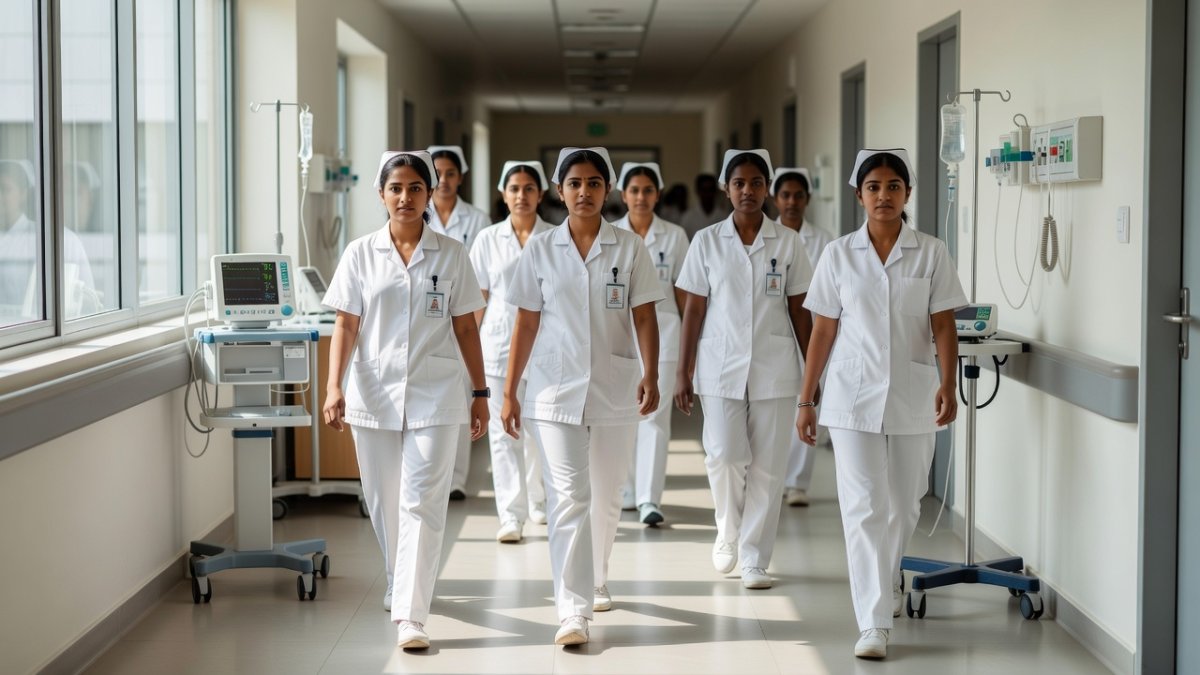
AIIMS New Delhi has opened the online choice-filling window for B.Sc. (Hons) Nursing 2026 admissions while scheduling the M.Sc. Nursing Round 1 seat allotment result for August 6, 2026. Candidates who cleared the entrance tests must now log into aiimsexams.ac.in to submit and lock preferences for institutes and specialisations before the deadline. This development marks a critical phase in the admission cycle for thousands of aspiring nurses across India.
AIIMS Nursing 2026: Choice Filling Open, M.Sc. Round 1 Result Aug 6
New Delhi, India - August 2, 2026 - AIIMS New Delhi has opened the online choice-filling window for B.Sc. (Hons) Nursing 2026 admissions while scheduling the M.Sc. Nursing Round 1 seat allotment result for August 6, 2026.

Core Announcement on Choice Filling and Results
The All India Institute of Medical Sciences (AIIMS), New Delhi, has activated the preference submission portal for B.Sc. (Hons) Nursing 2026. Eligible candidates can access their dashboards using Registration ID, Password, and Registration Unique Code (RUC) to select and rank AIIMS institutes according to priority. The process runs through the official site aiimsexams.ac.in and requires final locking of choices to avoid automatic deletion or saving of incomplete submissions. AIIMS has fixed August 6, 2026, as the date for publishing the M.Sc. Nursing Round 1 seat allotment result. The outcome will appear on the candidate portal and will factor in merit rank, category, vacancy position, and submitted choices.
Step-by-Step Guide for Candidates
Applicants should begin at aiimsexams.ac.in, select the Academic Courses section, and choose either B.Sc. Nursing or M.Sc. Nursing. After login with Registration ID, Password, and RUC, they enter the Counselling Dashboard to add and order preferred AIIMS institutes and specialisations. Candidates must verify the list, click Lock Choices before the deadline, and download the confirmation slip for records. Successful candidates must then complete online seat acceptance followed by document verification at the allotted institute.
Strategic ordering of AIIMS institutes requires candidates to weigh personal preferences against realistic admission probabilities derived from their merit rank and prior-year vacancy patterns across campuses. Placing high-demand specialisations only where scores offer competitive edges avoids wasted slots, while incorporating fallback options secures viable placements. Post-locking, thorough verification of the confirmation slip confirms accuracy, and secure retention of the RUC prevents login barriers or recovery issues in later stages, ultimately enhancing success rates in this rank-sensitive counselling framework.
What Candidates Should Do Now
Between now and the August 6, 2026 Round 1 seat allotment, candidates must check the portal daily for updates on choice filling and locking deadlines. They should prepare essential documents in advance, including Class 10 and 12 certificates, category certificates, and PWBD certificates where applicable, to enable swift online seat acceptance and verification. Understanding the lock deadline is critical, as unsubmitted or unlocked choices risk deletion by the system. Candidates are advised to finalise and lock their preferences well before the cutoff to secure consideration based on merit rank and vacancy position.
Submitting and locking choices early circumvents potential portal overload from mass submissions near the cutoff, allowing uninterrupted system validation without delays or errors. Failure to meet the window risks complete deletion of preferences, compelling candidates to enter subsequent rounds with diminished seat availability and heightened competition tied to updated merit positions. This forward planning preserves momentum toward the August 6, 2026 allotment while enabling focused preparation for verification processes.
Key Data from M.Sc. Nursing Entrance Examination
AIIMS conducted the M.Sc. Nursing entrance on June 20, 2026, and declared results on June 27, 2026. A total of 2,304 candidates qualified. The top rank secured 100 percentile while the lowest qualifying percentile stood at 50.84. Several candidates scored above 99 percentile, with many falling in the 80-99 range. Tie-break rules place candidates with fewer negative marks at a higher rank, and older candidates receive preference among equals. The result PDF lists roll number, category, PWBD status, percentile, and AIIMS rank.
Impact on India's Nursing Education Landscape
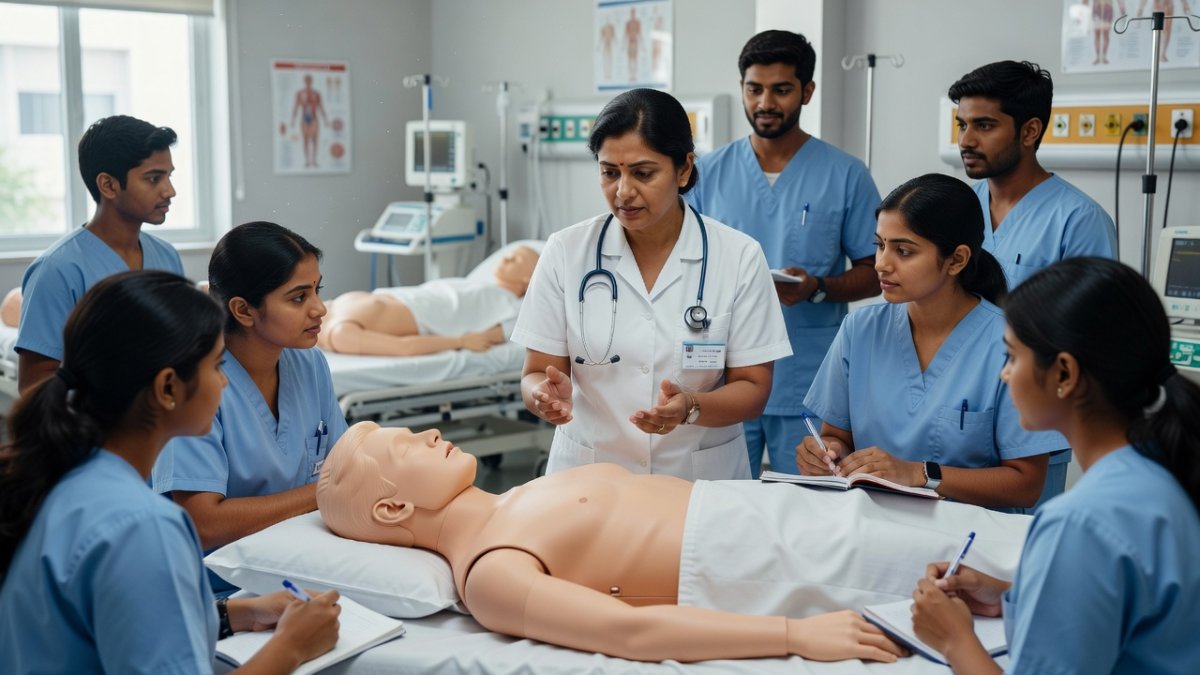
This admission cycle directly affects thousands of students from Delhi, Uttar Pradesh, Bihar, and other states seeking entry into premier nursing programmes. The centralised process at AIIMS New Delhi sets standards that influence state-level nursing colleges and private institutions across the country. The scale of nursing education demand in India continues to grow amid the expansion of the AIIMS network under the Pradhan Mantri Swasthya Suraksha Yojana, with new institutes opening in multiple states. AIIMS nursing degrees carry significant prestige in the healthcare job market, often positioning graduates for leadership roles in clinical practice and education.
AIIMS admission benchmarks encourage state nursing councils and private colleges to raise entry requirements and clinical hours to remain competitive. The limited number of premier seats heightens preparation intensity among candidates from across northern and eastern states.
The B.Sc. (Hons) curriculum's strong hospital-based training equips graduates for immediate roles in government hospitals, teaching positions, or overseas placements where Indian nursing credentials are recognised. This prestige reinforces AIIMS as a reference point for quality across the wider nursing education sector.
Role of Centralized Counselling in AIIMS Admissions
The single-window counselling model reduces duplication of applications and ensures seats are allocated strictly on merit and category. For Indian taxpayers who fund AIIMS expansion, this transparent system improves accountability and minimises seat wastage in government medical institutes. This approach closely parallels the NEET UG counselling conducted by the Medical Counselling Committee, applying the same merit-cum-choice logic where rank, category, vacancy position, and submitted preferences determine allotment. Reserved-category candidates benefit from dedicated seat matrices that maintain equity while allowing ordered choices across AIIMS institutes.
The centralised model consolidates application handling and vacancy tracking into one national system, freeing individual AIIMS campuses from duplicative administrative tasks and allowing them to redirect staff time toward clinical training and patient care. A single secure portal also simplifies identity verification and document checks, lowering the risk of data discrepancies that can arise when multiple institutes run parallel processes.
Experience with NEET UG rounds has shown that publishing detailed seat matrices before each round and conducting sequential allotments improves predictability for candidates and reduces last-minute vacancies. The August 6 result therefore initiates a predictable calendar of subsequent rounds, giving applicants clear windows to revise choices as seats are released across the expanding AIIMS network.
Broader Implications for Healthcare Workforce
Timely completion of these admissions will add qualified nurses to India's public health system, supporting the government's push to strengthen tertiary care at AIIMS facilities nationwide. Students who secure seats this year will join a workforce critical to meeting rising demand in Delhi-NCR and emerging AIIMS campuses in other states. India's nurse-to-population ratio remains a focus area for workforce planning, and AIIMS-trained nurses play a key role in leading nursing education and clinical standards at newly established institutes under the PMSSY framework. The August 2026 intake is particularly significant because these students will complete their programmes over the next four years, directly influencing staffing levels at expanding AIIMS facilities.
The four-year B.Sc. pipeline produces nurses ready to staff new facilities as they become operational, while M.Sc. graduates move directly into educator and leadership posts that sustain teaching capacity at both established and emerging campuses. These advanced qualifications are essential for maintaining clinical protocols and mentoring junior staff in high-volume tertiary settings.
Within Ayushman Bharat's emphasis on accessible care, AIIMS-trained nurses strengthen service delivery at district-level hubs and serve as multipliers by transferring skills to colleagues at newer PMSSY institutes. Their presence helps standardise practices across states where nursing education infrastructure is still developing.
- By Dr. Raj Patel, Staff WriterThis article was produced with AI-assisted research and editorial support. Reporting is based on sources cited in the article.
What's Your Reaction?
 Like
0
Like
0
 Dislike
0
Dislike
0
 Love
0
Love
0
 Funny
0
Funny
0
 Wow
0
Wow
0
 Sad
0
Sad
0
 Angry
0
Angry
0

India/South Asia Correspondent at Global1.News. Analytical voice with a background in science and health journalism. Based in New Delhi, covering Indian politics, education, healthcare, technology, and policy. Breaks down complex data into clear, actionable reporting.













Comments (0)