
Switch 2 security takes a hit as hackers unlock homebrew access
In the month after Nintendo’s Switch 2 hit shelves, a new software‑only jailbreak has shaken the console’s security reputation. While Nintendo can likely patch the flaw, the episode spotlights a recurring cat‑and‑mouse game between the company and a determined hacking community.
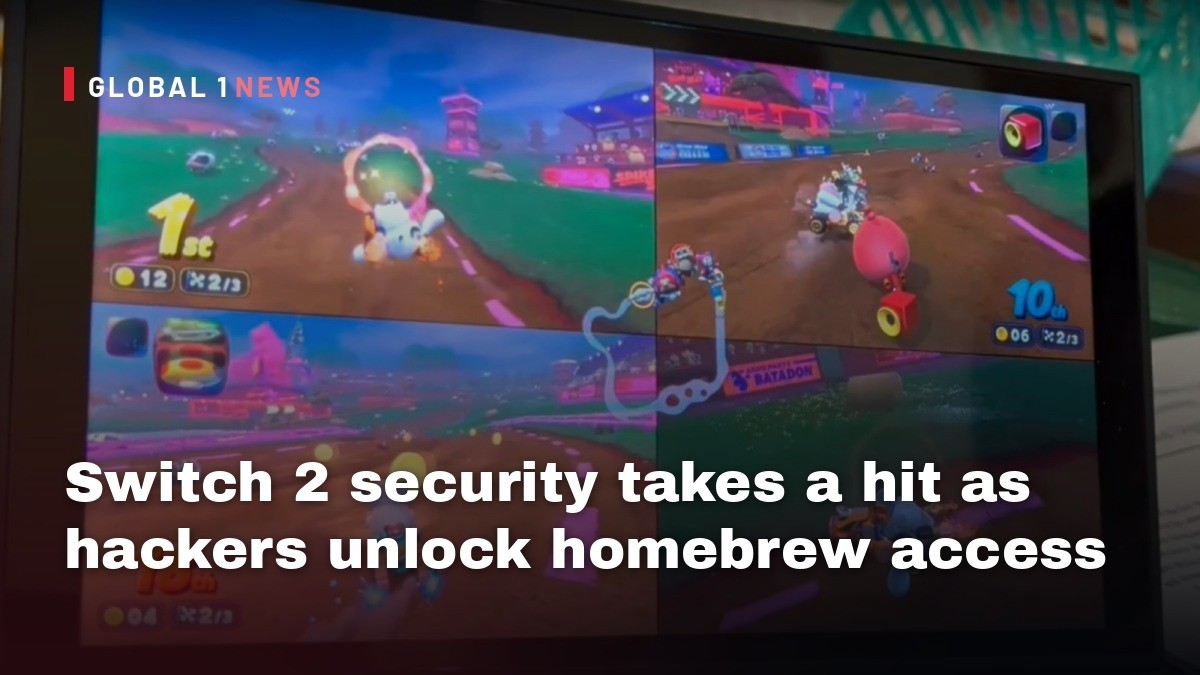
In the month after Nintendo’s Switch 2 hit shelves, a new software‑only jailbreak has shaken the console’s security reputation. Researcher Sammy Hajhamid, known online as Pepsipu, demonstrated a “partial” exploit that grants user‑level access—enough to run homebrew, back up saves and poke at peripherals, but still short of full kernel control. The hack hinges on an old‑school programming app, SmileBasic 4, and a two‑week deep dive using OpenAI’s Codex to coax a 32‑bit integer overflow out of the interpreter. While Nintendo can likely patch the flaw, the episode spotlights a recurring cat‑and‑mouse game between the company and a determined hacking community.
How the SmileBasic exploit works
The breakthrough starts with SmileBasic 4, a legacy programming environment that has long lived on Nintendo hardware. Hajhamid built a custom harness that talks to the Switch 2 over USB, flashes commands via HDMI, and even toggles power through a Bluetooth‑controlled light switch. Running the harness on a macOS or Linux PC—required by the “tethered” nature of the hack—he probed the SmileBasic interpreter for weaknesses.
After “substantial effort for ~2 weeks,” Hajhamid’s tool uncovered a 32‑bit integer overflow triggered when the interpreter removes items from an array. That overflow leaks an array pointer, opening a backdoor to read‑and‑write portions of system memory. With that foothold, he could explore deeper system modules, eventually finding a buffer overflow in the console’s FileSystem services that exposed a cached data pointer, granting arbitrary memory access and the ability to execute native code through a forged filesystem process.
What the hack actually gives you
The exploit lands hackers in what Hajhamid describes as a “relatively small sandbox.” It lets users run homebrew applications, reverse‑engineer games, back up save files, and interact with most peripherals via memory‑mapped I/O. Demonstrations included modded characters in Mario Kart World and a user‑land Vulkan GPU demo posted by a community member. However, the jailbreak stops short of kernel‑level control, meaning it cannot fully commandeer the hardware or bypass all of Nintendo’s security checks.
Because the hack is tethered—requiring a PC on the same network to run a node.js package—its practicality is limited to hobbyists with the technical chops to set up the environment. Still, for a console barely a year old, the fact that a partial userland breach is already possible signals a weakening of Nintendo’s software defenses.
The role of SmileBasic’s history
SmileBasic isn’t new to the hacking scene. Its 3DS predecessor was the vector for the “smilehax” exploit back in 2016, prompting Nintendo to yank the app from the 3DS eShop shortly after the breach went public. The same pattern repeats here: SmileBasic 4 has already been delisted from the Switch eShop worldwide, though a Japanese demo version that might behave similarly remains accessible as of this story’s publication.
The delisting is a defensive move aimed at slowing the spread of the exploit among Switch 2 owners who haven’t already installed the app. Yet the hacking community is already probing other games for similar vulnerabilities, suggesting that SmileBasic is just one of several potential attack vectors.
Nintendo’s patch window
The current exploit works on the latest firmware version, 23.0.1. Hajhamid notes that the vulnerability is likely to be patched in imminent firmware releases—updates that will also be required for continued access to Nintendo’s online services and upcoming game releases. This creates a narrow window for hackers to distribute tools and for users to experiment before the fix lands.
Historically, Nintendo has been quick to roll out firmware updates once a breach is public, as seen after the 2018 “unpatchable” Switch exploit that forced a hardware redesign. While the Switch 2 hack is less severe—lacking the deep hardware‑level access of the 2018 breach—it still forces Nintendo to allocate resources to a rapid response, potentially delaying other feature rollouts.
Impact on the homebrew ecosystem
The jailbreak breathes fresh life into the Switch 2 homebrew scene. Early demos show modded characters in Mario Kart World and a functional Vulkan GPU driver running in userland, hinting at the possibility of more ambitious projects like custom emulators or indie titles. However, the sandbox nature of the exploit means developers will still face limitations when trying to tap into low‑level hardware features.
For ordinary Switch 2 owners, the hack could translate into practical benefits such as backing up save data—a feature many gamers crave for preservation and cross‑device portability. Yet it also raises legal and warranty concerns; using the exploit may void warranties and could trigger bans from Nintendo’s online services if detected.
Why this matters beyond the console
The rapid emergence of a viable exploit underscores a broader trend: modern consoles are increasingly software‑centric, making them attractive targets for reverse engineers. Nintendo’s reliance on legacy tools like SmileBasic as a bridge for developers now doubles as an attack surface. As more devices integrate open‑source components and third‑party runtimes, the attack surface expands, forcing manufacturers to balance developer friendliness with security.
For the gaming industry, the Switch 2 case serves as a cautionary tale. A single overlooked overflow in a decades‑old interpreter can cascade into a system‑wide breach. Companies may need to audit legacy codebases more rigorously, especially when they become part of a new hardware generation.
What’s next for Nintendo and the hack community
In the short term, Nintendo’s likely response will be a firmware patch that closes the integer overflow in SmileBasic and the FileSystem buffer overflow. Once patched, the community will pivot to other vectors—already hinted at by “similar exploits that appear to work using other games.” The arms race will continue, with each side iterating on tools and defenses.
For gamers, the episode is a reminder that the line between legitimate customization and piracy is blurry. While the ability to back up saves or run homebrew can enhance the user experience, it also invites risk—both technical (potential bricking) and legal (possible bans). As the Switch 2 matures, the balance between openness and security will shape how the console’s ecosystem evolves, and whether Nintendo can keep its software fortress intact in an era of AI‑assisted hacking.
This article was produced with AI-assisted research and editorial support. Reporting is based on the source material cited below. Sources: Ars Technica; arstechnica.com; Global1.News (25 October 2026).
By Nova Chen, Staff Writer
What's Your Reaction?
 Like
0
 Dislike
0
 Love
0
 Funny
0
 Wow
0
 Sad
0
 Angry
0

Trend Reporter at Global1.News. Based in San Francisco, tracking the stories crossing from social platforms, forums, and community discussions into mainstream news — tech breakthroughs, cultural shifts, and world events that real people are engaging with right now.















Comments (0)